SOFT WOOD

Samuel stroked the narrow piece of old cottonwood thoughtfully, absorbing its smoothness. It called out to be carved.

He was one of only a handful of boys living in Elizabethtown, New Mexico Territory, in this year of 1871. Almost all the other children were girls. Even worse, he was the only boy in a house full of overly-particular and opinionated sisters. Samuel scowled at the wood and dug his dirty fingernail into it, cutting a rough zigzag. It felt good to mark up something that they couldn’t complain about, even if he did have to hide behind the woodshed to do it, and didn’t have a knife to cut it proper-like.

“What are you doing?” a young female voice inquired.

Samuel looked up warily. A girl with long honey-brown curls and large gray eyes stood at the corner of the shed, staring at the wood in Samuel’s hands. She moved closer, her eyes still on the old stick. “How’d you mark it like that?” she asked. “All the wood around this town is too twisted and tough to cut into.”

“This here’s cottonwood,” he said. “It’s softer than the pine and other stuff hereabouts.”

“Where’d you get it?”

He stiffened, remembering he was talking to a girl, one who was bound to boss him around. “What’s it to you?” he asked.

“Well, never mind,” she said. She shoved her hands into her pinafore pockets and turned to go, her head down. Her curls covered her face.

“I’m sorry,” Samuel said contritely. He flung the stick away.

The girl crossed the yard to the piece of wood and bent to pick it up. She ran her fingers down the side he hadn’t marked. “It’s very soft,” she said.

“I have a lot of sisters and they’re always bossing me,” Samuel said apologetically.

The girl lifted her head and grinned. “I only have one brother, but he’s always bossing me.”

“What’d you want to know about the wood for?”

“I want to learn how to carve,” she said. “My brother knows but he won’t teach me. He says carving’s only for boys. I was going to try to teach myself but I couldn’t find anything soft enough.”

“I found that stick in our woodpile,” Samuel said. “There’s more in there but I’ll have to dig through the stack in order to get at it.”

“When you do find some, could I have a piece?”

“Sure. Why not?” He looked at her thoughtfully. “You have a knife?”

She smiled triumphantly and pulled a penknife from her pinafore pocket. They grinned at each other. Then she stuck out her hand, ready to shake. “I’m Charlotte,” she said.

from Valley of the Eagles
 

Pike’s Peakers Arrive At Fort Union!!

Tuesday, March 10, 1862 was a momentous day for New Mexico. That morning, Confederate troops from Texas seized control of Santa Fe. Led by Brigadier General Henry Hopkins Sibley, the Texans had moved steadily north through New Mexico since the previous July, receiving little opposition and clashing with Union forces in only one major battle, which they’d won.

By this time, the Texans must have been feeling pretty confident about making it to Denver and its gold fields. The idea was to seize those resources and use them to restore the Confederacy’s fortunes (literally). Then Sibley and his men would press on to California and the Pacific, opening its ports to Confederate shipping and sidestepping the Union blockades on the Eastern seaboard.

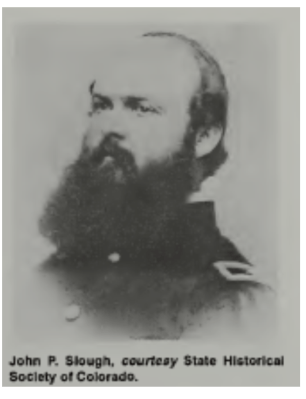
But late on March 10, Colonel John Potts Slough and his 950-man First Regiment of Colorado Volunteers (aka the Pike’s Peakers)  arrived at New Mexico’s Fort Union, more than doubling the number of men available in New Mexico to face down the Confederates.

Slough abruptly assumed command of the Fort. Although the Denver attorney had been in the military for only six months, he’d been a Colonel longer than twenty-seven-year veteran Colonel G.B.  Paul, who was in charge before the Pike’s Peakers arrived. But Slough, ever concerned about his rights and privileges, pulled rank, and Paul conceded his position as Commander, albeit unwillingly. Then Slough got busy outfitting his Pike’s Peakers with clothing, arms, and ammunition from the Fort Union supply depot.

march 10 illustration.john slough

Meanwhile in Santa Fe, Sibley’s Confederates  were also looking to their supplies. Their lines had been stretched thin on the march north and the Union supplies in Santa Fe had either been moved west to Las Vegas with the Governor’s baggage or skillfully hidden.

The Confederates’ stores were dangerously low. Although getting to Santa Fe had been quite an accomplishment, they badly needed Fort Union’s supplies if they were going to make it all the way to Denver.

But on March 10, they didn’t have a lot more time to worry about their situation. In less than two weeks, the thin-skinned and arrogant Slough would begin moving his men south out of Fort Union, then west toward Santa Fe. What would become known as the Battle of Glorieta or, more dramatically, the Gettysburg of the West, was about to begin.

Sources: Howard Bryan, Wildest of the Wild West, Santa Fe: Clear Light Publishing, 1988; Jacqueline D. Meketa, Louis Felsenthal, Citizen-Soldier of Territorial New Mexico, Albuquerque: UNM Press, 1982; David Grant Noble, Pueblos, Villages, Forts & Trails: A guide to New Mexico’s past. Albuquerque: UNM Press, 1994; Leo E. Oliva, Fort Union and the Frontier Army of the Southwest, Santa Fe: Southwest Cultural Resources Center Professional Papers No. 41, Division of History, National Park Service, 1993; Jerry D. Thompson, A Civil War History of the New Mexico Volunteers and Militia¸ Albuquerque: UNM Press, 2015.

VALLEY OF THE EAGLES

It was spring in the valley of the eagles, which meant it had been raining off and on for three weeks and the usually adobe-hard clay soil was soft enough to be dug. Once Old Bill had selected a likely spot for caching the packs of beaver fur, Pepe set to work. Old Bill stood farther up the hillside, chanting in a mixture of Osage and Ute. The prayers would help keep varmints away, Bill had said: both the two-footed and four-footed kind.

It was a good location for a cache, Pepe reflected: tucked under the hillside pines and marked by a massive sandstone boulder that would be easy to identify when they returned. After the Taos alcalde had decided that the few beaver plews they’d set aside to show him were truly Old Bill’s entire winter haul,  Pepe and Old Bill would slip back into the valley with a Taos trader to turn the cached furs into coin. Then Pepe would have a nice amount to take home to his wife while Old Bill gambled his own portion away.

Pepe chuckled and paused his digging to wipe his forehead with his cotton sleeve. He was always surprised at how warm it could get in this valley, as high up in the mountains as it was.

Small stones rattled past him and Old Bill came down the hillside. “War’s th’ other shovel?” he demanded in his nasal twang. “We ain’t got th’ rest o’ eternity!”

from Valley of the Eagles


Illegal Trappers Leave New Mexico, For Now

In February 1815, a group of St. Louis trappers led by Joseph Philibert left Taos for the Arkansas River and on to St. Louis. After five months under arrest in Taos, they were returning to the U.S. with a healthy load of beaver plews.

The entire group had been arrested by Spanish soldiers the previous September and charged with crossing the international boundary illegally. The furs they had with them were confiscated to cover the costs of their incarceration over the course of the winter. It’s not clear where they collected the furs they took back East the following spring. But they seem to have gathered enough plews to make the whole expedition worthwhile.

And to make them want to try the same stunt again. When Philibert headed to St. Louis, he went with the hope of arranging financial backing for yet another venture into New Mexico.

oct 29 illustration.pixabay

Under Spanish law, what Philibert had done and was proposing to do again was flatly illegal. Foreigners weren’t allowed across the New Spain/U.S. border without explicit permission from Spanish officials. In fact, in the five months the Philibert group was in Taos, at least four other illegal foreigners were arrested and sent to New Spain’s interior. Why Philibert’s group was allowed to remain is as much of a mystery as the source of the furs they took back to St. Louis.

What’s clear is that the border between the two countries was already extremely porous. It was almost inevitable that American trappers would continue to filter into Spanish territory. The furs there, and the money they were worth in the U.S., were just too tempting. New Mexico’s officials may have simply been bowing to the inevitable when they allowed Joseph Philibert and his band of men to remain in Taos the winter of 1814/15.

Sources:  Leroy R. Hafen, editor, Fur Trappers and Traders of the Far Southwest, Utah State University press, Logan, 1997; David J. Weber, The Taos Trappers, University of Oklahoma press, Norman, 1971.

William Workman Orders Still For Taos Lightning

On Monday, February 13, 1826, William Workman of Taos, New Mexico sent a letter to his brother David in Franklin, Missouri. William asked David to have two 80-gallon stills shipped to him from St. Louis. Copper stills were essential in the production of hard liquor like the wheat-based Taos Lightning that William produced and sold.

Not only did William Workman’s letter ensure that Taos residents would have more liquor available to them, it also may have triggered one of the American West’s most famous runaway stories.

David Workman, a saddle and harness maker, had a teenage apprentice named Christopher “Kit” Carson. The letter from New Mexico may have reminded the young Kit that there were more exciting ways to earn a living. When he took off for New Mexico that August, he may well have traveled in the same wagon train as the stills that William Workman had ordered.

Workman manufactured Taos Lightning until 1841, when he himself had to run away, this time from—rather than to—New Mexico. Workman and his distillery partner John Rowland fled Taos for California that September, after rumors spread that they were collaborating with a Republic of Texas expedition to annex New Mexico.

feb-13-illustration-workman-william-1855-mnm-13492.jpeg
William Workman, 1855. MNM 13492

While Carson stayed in New Mexico and made him name for himself, Workman, in California and still partnering with John Rowland, obtained a Mexican land grant of over 48,000 acres and founded  Rancho de la Puente, now a cultural landmark in Southern California.

In both cases, running away seems to have been the best move either Workman or Carson could have made. They both made a name for themselves as a result.


Sources: Samuel P. Arnold, Eating up the Santa Fe Trail, University Press of Colorado, Niwot, 1990; Leroy R. Hafen, editor, Fur Trappers and Traders of the Far Southwest, Utah State University Press, Logan, 1997; Hampton Sides, Blood and Thunder, Doubleday, New York, 2006; Marc Simmons, Kit Carson, and His Three Wives, University of New Mexico Press, Albuquerque, 2003.


U.S. Agency Triggers Colfax County War

On Wednesday, January 28, 1874, the U.S. Department of the Interior issued the order that began New Mexico’s Colfax County War.

The Department had decided to designate the approximately 2 million acres claimed by the Maxwell Land Grant and Railroad Company as public land, not private. This meant that the former Beaubien/Miranda land grant was now open to settlement under federal homestead laws.

The Interior Department’s decision was part of an ongoing dispute over the size of the Land Grrant. According to the Department, until that matter was settled in Federal Court, the land was public and therefore available to qualified homesteaders.

But the Land Grant Company wasn’t about to let anyone settle without payment on acreage they claimed as their own. And that payment certainly wasn’t going to go to the U.S. government.

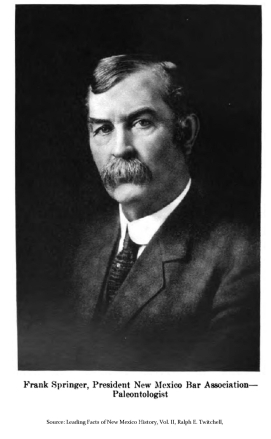
In fact, the Company was already fighting settlers on the vast acreage they claimed. Their attorney, Frank Springer, was hard at work in New Mexico’s Territorial Courts, evicting anyone the Board believed shouldn’t be there. With evictions already occurring, opening the Grant lands to federal homestead claims was simply asking for more trouble.

Jan 28 illustration.Springer, Frank

And it came. If the Company couldn’t get rid of “squatters” through the courts, they’d try other strategies. This all cost money, of course, something that the Board was often short of. But even as the Company teetered on the edge of bankruptcy, its board members continued the fight. If this required extra-legal methods, then so be it.

Right about the time the Department of the Interior announced its decision, another factor arrived in Colfax County. His name was Reverend Franklin J. Tolby. Tolby believed that the Maxwell Land Grant and Railroad Company was taking more than its share of local resources. In fact, he advocated that some of the acreage in dispute be handed over to the Native Americans who’d hunted and lived there long before anyone even thought that American capitalists would have a use for it.

Tolby was articulate and people listened to him. This put him solidly in the sights of the Company’s board members. A lot had happened on the Grant up to this point: legal and extra-legal evictions, miners’ protests in Elizabethtown, meetings of concerned citizens in Cimarron, heated newspaper articles for and against the Grant Company. But none of that compared to what occurred after January 28, 1874. The Colfax County War was about to begin.

By the time it was over, Reverend Tolby and others would be dead, homesteaders would be burned or run out, and the Land Grant Company would be on the verge of yet another reorganization. The grant never did return the profit its investors had hoped for.

As with most wars, everyone got hurt in the end.

Source: David L. Caffey, Chasing the Santa Fe Ring, University of New Mexico Press, Albuquerque, 2014; Moreno Valley Writers Guild, Lower, Lower, and Legends, a history of northern New Mexico’s Moreno Valley, Columbine Books, 1997; Victor Westphal, Thomas Benton Catron and His Era, University of Arizona Press, Tucson, 1973; Stephen Zimmer, editor, For Good Or Bad, People Of The Cimarron Country, Sunstone Press, Santa Fe, 1999.

SNOW, 3 of 3 — Homecoming

After an icy night huddled against his mule in the lee of a sandstone boulder, it took Peter another two days of slogging up Cimarron Canyon before he reached the valley above.

He had to lead the mule through the most treacherous part of the half-frozen marsh where the river formed up at the valley’s edge. “Come’n now,” he coaxed. “Can’t you smell the cabin smoke?” But she just rolled her eyes at him.

Finally they were through, his water-soaked boots heavy on his feet, the ten inches of snow on the ground making them colder. He turned left, toward home, and the mule’s pace quickened. “Smellin’ home?” Peter asked sardonically. They were close enough now to make out the cabin at the base of the rise. Smoke steamed from the chimney and the figure of a woman showed at the door, one hand to her forehead, gazing in his direction. Peter’s own pace quickened, in spite of the heavy boots.

from Valley of the Eagles

SNOW, 2 of 3 — Caught

Peter studied the icy river beyond his mule’s twitching ears. “I should’ve started back yesterday,” he muttered. The mule stirred restlessly and he reached to soothe her. The Cimarron was almost frozen over; the canyon sides above it were white with snow. Man and mule turned to look west, where the canyon climbed up into the Moreno Valley, toward home. The wind gusted straight toward them, carrying snowflakes heavy with moisture out of a lead-gray sky.

The snow was more wet than cold, which would make it heavy. And it was coming down fast. They’d have a rough time getting through to the valley. The marsh where the river formed up would be half frozen and nasty. The mule snorted irritably and Peter nodded. “Yeah, I guess we’re gonna wait this one out,” he said.

He dismounted and led the animal out of the wind, into the shelter of an upthrust sandstone boulder. “Hope Patricia’s all settled in,” he muttered.  He looked upward and shook his head. “Shoulda started back yesterday.”

from Valley of the Eagles

SNOW, 1 of 3 – Preparations

Patricia stood in the cabin doorway and looked west, across the valley. The Sangre de Cristo peaks were obscured by thick gray clouds and a white haze drifted down their lower flanks. A cold damp wind snapped against her face. There would be snow before nightfall, more by tomorrow.

“Winter is definitely here,” she muttered, heading toward the barnyard.

The chickens were already in their coop. She lifted the skim of ice from their water pan, filled the grain container, and latched the flap down over their entry door.

The horses and cow were huddled on the east side of the barn. She threw open the door and they crowded in. She ensured they had feed, then took the grain shovel back to the cabin with her, in preparation for tomorrow’s path-clearing.

All she needed now was some assurance that her husband was safe and dry, she thought ruefully as she bolted the cabin door behind her. Wherever he was.

from Valley of the Eagles

Soldier Arrested for Enlisting

On Saturday, December 21, 1861, a worker from Red River (aka the Rio Colorado) named George Montoya, enlisted in the New Mexico militia to fight the Confederate Texas invaders.

However, Montoya had a problem. He had a financial obligation to a rico in the Rio Colorado area. His master didn’t want Montoya to leave the area, so he persuaded the County judge to arrest him for enlisting. As a result, Montoya traded his military quarters for the county jail, in spite of the fact that Colonel Edward R. S. Canby, commander of New Mexico’s Union troops, had recently issued an order that required the masters of peóns who’d enlisted to file a writ of habeas corpus and petition the Territorial Court to have their workers returned. An order from a local judge wasn’t enough to recover their loss.

It’s not clear what happened in this particular case. However, records for the First New Mexico infantry show that two years later, on November 29, 1863, a twenty-five-year-old man named George Montoya was enrolled at Taos as a private. Montoya served as part of a wagon train escort to Tucson, Arizona in 1864 and 1865 and was still in the military in December 1865. It seems likely that this is the same person who was imprisoned for volunteering in 1861.

One can only hope that if he returned to the Taos area, Montoya’s military service gave him the means to address any outstanding financial obligations and enabled him to get on with his life without the specter of jail hanging over him.

Source: Jerry D. Thompson, A Civil War History of the New Mexico Volunteers and Militia, UNM Press: Albuquerque, 2015.