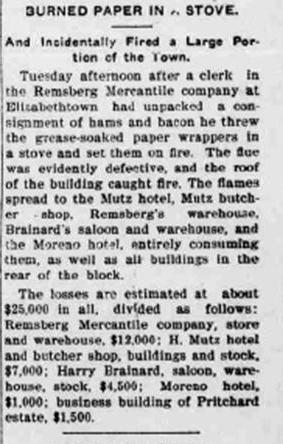
On Tuesday, September 1, 1903, a fire that lasted a little over an hour destroyed almost all of Elizabethtown, New Mexico’s business district and began the demise of the 36-year-old municipality.
The blaze began around 2:15 p.m. in a defective stove flue at Remsberg & Co. Mercantile. By three o’clock, nothing was left of the store except $300 in merchandise and the company’s books and cash on hand.
Santa Fe New Mexican, Sept. 4, 1903
In the meantime, the flames had spread to the Mutz Hotel next door. From there, Harry Brainard’s saloon and warehouse caught fire, then the general store next to Brainard’s. Flying embers ignited the Moreno Hotel and it was also destroyed.
By 3:30 p.m., almost all of Etown’s mercantile district had been reduced to ashes. The only store left standing was Herman Froelick’s.
Although the Mutz Hotel would be rebuilt in stone, the conflagration was the beginning of the end for Etown. Over the next two years, miners, store owners, the local schoolteacher, and even Elizabethtowns’ favorite vegetable wagon man would flee town for other locales. Some of the remaining buildings would eventually be dismantled and then reassembled in what is now the Village of Eagle Nest, three miles to the south.
It’s a little amazing what a single fire can do.
Sources:The Elizabethtown New Mexico Story, F. Stanley, Dumas, Texas, 1961; September 4, 1903, Santa Fe New Mexican
“Rues? Your last name is Roo-ess?” The young white man sitting at the Elizabethtown restaurant table looked at the old black man quizzically. “You mean Ruiz? Roo-eez? You got some Spanish in you?”
The cook shook his head. “All I know’s what my mama tol’ me,” he said. “My daddy was a Frenchman visiting ’round in Alabama. He stayed at the Big House for three weeks and took a shine to my mama while he was there. When I was born, she give me his last name.”
“Your master let her do that?”
The black man studied the plate of food in his hands for a long minute. “After the war, we could choose what last name we wanted,” he said quietly. “I chose my daddy’s name.”
“That food sure looks good,” the white man said. He moved his knife and fork farther apart on the bare wooden table.
Louis Rues put the plate down and turned away. He shook his head. People are people, no matter where you go, he thought ruefully as he went back to his stove.
“Why have a wife at all?” Joseph Herburger grumbled as he slammed out the door into Elizabethtown’s morning cold. “I still must feed myself.” He gripped his stone masonry tools in his mittened hands and scowled at the icy December wind. Dolores had been too busy with the children to prepare a hot meal. She seemed to forget where her first duty lay.
The irritation stayed with him all day, as he chipped out the headstone for a small child in the cemetery on the hill. When he was done, he gathered his tools and glanced eastward. Baldy Mountain loomed against a darkening sky. The sweet scent of burning Ponderosa pine drifted from cabin chimneys. Joseph shrugged, scowled, and stomped down the mud-frozen path toward home.
But as he opened the door, there was the smell of just-baked bread and the sound of Dolores laughing.
“Say it again, mamá!” little George demanded.
“Dijo el gallo: ¡Cocorocó! ¡Cristo nació!” Dolores said. She swung the baby in her arms to the rhythm of the words. “Said the cock, ¡Kokoroko! Christ is born!”
Georgie ran to his father. “¡Kokorokó!” he cried, flapping his arms. “I am a rooster! Cristo is born!”
Joseph laughed in spite of himself and scooped the child into his arms.
As Jorgé Ruibal wandered up the middle of the road toward Elizabethtown proper, the men outside the taberna watched him sympathetically. “El joven es como alma en pena,” Carlos Otero the jeweler said. “The young man is like a lost soul.”
“Si,” said the boy’s uncle. “He has lost his laborer job with Señor Bergmann. His papá is very angry with him.”
“I heard he was in love and that his love was unrequited,” Eduardo Suaso, the taberna’s musician, said.
María de la Luz, the boy’s cousin, appeared from around the corner of the building. She carried a basket of clean linens for delivery to Henri Lambert’s Etown restaurant and hotel. She gazed at Jorgé, who’d stopped to poke his foot at a stone in the road. “He wants to leave here, but his mamá is unwilling,” she said.
Jorgé, oblivious to these speculations, still stood in the dusty street, poking at the stone with his boot. It was so inert and yet so full of a kind of compressed energy. He looked east, toward the massive bulk of Baldy Mountain. The gullies that swung out from its sides were full of rocks and men scrambling through them looking for gold. Yet the mountain bulked there impassively, impervious to the miners who crawled over it. Jorgé crammed his hands in his pockets and stared upward, drinking in its stony greenness, its lack of engagement with the tiny men poking at its skin.
Outside the taberna, the americano miner called Hobart Mitchell came to the door with a drink in his hand and considered the staring boy. “He looks like’n idiot, standin’ there,” Mitchell said. “Touched in the head.”
The others all nodded noncommittally and continued to gaze sympathetically after Jorgé as he wandered on up the road.
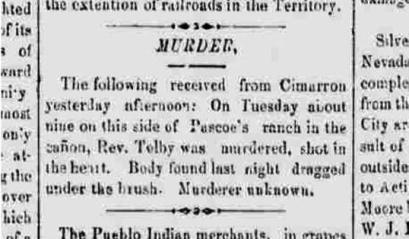
On Thursday, September 16, 1875, 142 years ago today, the body of Methodist missionary Franklin J. Tolby was found lying beside the Cimarron Canyon road near the mouth of Clear Creek, shot in the back. He’d been there two days, killed while returning from church services at Elizabethtown. His horse was tethered nearby and none of Tolby’s goods were missing. It was clearly a case of assassination and many people believed they knew why he was killed. But who did it and who’d ordered the killing? Those were the burning questions that some people believe were never answered.
Tolby had begun preaching vehemently against the Maxwell Land Grant & Railway Company almost as soon as he’d arrived in Colfax County in early 1874. The Company had bought the Beaubien-Miranda Grant from Lucien B. Maxwell and his wife four years before. The fact that the Grant boundaries were disputed wasn’t going to stop them from maximizing their profits from every bit of its roughly 1.9 million acres. They would use whatever means necessary to keep anyone they deemed a squatter off the Grant, even people the Maxwells had work/share agreements with prior to the sale.
Source: Las Vegas Gazette, Sept. 18, 1875
The 33 year old Reverend Tolby preached that the farmers and ranchers were more in the right than the Grant people. After all, the U.S. Department of the Interior had ordered the grant land to be treated as public, which made it available to homesteaders.
In addition, Tolby advocated that part of the grant be set aside a reservation for the bands of Utes and Arapahoes who traditionally hunted there. And he said so quite strongly.
Tolby became increasingly annoying to the Company, whose board of directors included Dr. Robert Longwill (Colfax County Probate Judge), Stephen B. Elkins (New Mexico Territorial delegate to Congress), and Thomas B. Catron (U.S. Attorney for New Mexico Territory), all members of the Santa Fe Ring and working hard to extract as much money as possible from the Territory in general and the former Maxwell Grant in particular.
Any of these men and their associates, including Cimarron Attorney Melvin W. Mills and its part-time Justice of the Peace (who was Mills’ office clerk) had reason to wish Tolby dead. After all, the Reverend was interfering with their business interests! But consensus among the anti-Grant folks in the County was that none of the Ring men were likely to dirty their hands with the actual deed itself. In fact, many suspected substitute mail carrier Cruz Vega of killing Tolby. After all, Vega’s Tuesday, September 14 mail route took him through the Cimarron Canyon, but he hadn’t reported seeing a body. This seemed mighty suspicious. Clearly, he knew something.
But Vega spoke only Spanish, which was a problem for the primarily English-speaking men who suspected him. They couldn’t find out what he knew. And they weren’t getting much help from the County’s Spanish-speaking population.
But there was another stubborn Methodist minister in Cimarron, and this one would prove to be even more tenacious than his predecessor. Rev. Tolby’s assistant Rev. Oscar P. McMains was now in charge, and he was hell bent on finding out what Vega knew. It would take six weeks before that confrontation occurred, and when it did it would create even more havoc. Stay tuned . . .
Sources: David L. Caffey, Chasing the Santa Fe Ring, UNM Press, 2014; Moreno Valley Writers Guild, Lure, Lore and Legends of the Moreno Valley, Columbine Books 1997; Chuck Parsons, Clay Allison, Portrait of a Shootist, Pioneer Book Publishers, 1983; Stephen Zimmer, For Good or Bad, People of the Cimarron Country, Stephen Zimmer, Sunstone Press, 1999.
The tiny Elizabethtown church reeked with the late June stench of unwashed miners, but Dr. Robert Longwill pressed through the door anyway. He could just see the top of Reverend Tolby’s blond head at the front of the room. On Cimarron’s dusty streets, the little man’s carefully groomed handlebar mustache had often given Longwill the urge to laugh, but here in Etown the miners weren’t snickering.
Tolby’s voice filled the room. “The Maxwell Land Grant Company has no right to the land on which your mines rest,” he said flatly. “You work the land and bring forth value from it. They sit in their offices and collect the rewards of your God-driven labor. Let us be done with such greed! Let us return to the scriptural truth that a man must work by the sweat of his brow and reap the labor of his hands!”
Dr. Longwill eased out the church door and down the hillside, toward the livery stable where he’d left his horse. “The man’s been here less than six months, and already he’s an expert on the Grant and the miners’ rights,” he muttered bitterly. Which wouldn’t be a problem, if the miners weren’t listening to him.
On Sunday, August 25, 1867, the miners of New Mexico Territory’s Willow Creek Mining District organized themselves for the second time that year. They’d done a rush job in June. With miners pouring onto the slopes of Baldy Mountain, there hadn’t been time for organizing and mining too. But it didn’t look like things were going to settle down any time soon: There were up to 7,000 miners in the region, and activity everywhere. On Willow Creek alone, over 350 placer claims would be staked between 1867 and 1868, from high up Baldy Mountain almost to the edge of what is now Eagle Nest Lake. With the staking of claims came the potential for conflict. The only answer was to take the time to reorganize, and Sunday seemed as good a day as any.
The new Willow Creek rules allowed four claims per miner. A man could file a ravine claim (200 feet along the bottom and from bank to bank); a hill claim (200 feet along the stream by 300 feet toward the ridge), a flat claim ( 300 feet by 300 feet); and a quartz or lode claim (300 feet along the lode, with no specified width). In addition, a man who discovered a new creek, hill, flat, or load claim could also file one extra claim of any of the four types. To be considered “alive,” a claim had to be worked one day in every ten and at least once within the 15 days after it was recorded.
The Willow Creek Mining District lay on the south slopes of Baldy Mountain, much of it within the boundaries of the 20th century town of Eagle Nest, NM. The District was bounded on the east and north by the ridges that extended south from Baldy, and on the west by a divide that separated the creek’s drainage from Anniseta Gulch, which ran west in the direction of Moreno Creek and Elizabethtown.
While it never produced much lode gold, the Willow Creek District yielded well to placer operations. In fact, at one point, the main channel of Willow Creek was the highest producing creek bottom along the south and west slopes of Baldy Mountain, topping both Humbug Gulch and Grouse Gulch (see the table below). In addition, a Willow Creek side canyon called Last Chance Gulch and an area at the head of this gulch called Last Chance Flats, were both rich in gold. As a result, the District’s placers brought in 40% of the area’s placer gold in 1868 and 1869 and remained just behind Grouse Gulch’s placer production throughout the next decade.
The high levels of gold from Willow Creek may explain why there were at least twenty miners involved in an 1869 court fight over placer claims and water rights on the creek. The battle was not resolved until Spring 1870, when Lucien Maxwell intervened, purchased all the water rights in question, and then proceeded to lease them back to just a handful of individuals. Even though Maxwell was in the process of selling the land grant, he was keeping the Willow Creek Mining District water rights—perhaps its most lasting wealth—firmly in his own hands.
Sources: R. F. Pettit, Jr. “History of mining in Colfax County, New Mexico,” Taos-Raton-Spanish Peaks Country (New Mexico and Colorado), Northrop, S. A. & Read, C. B., eds., New Mexico Geological Society 17th Annual Fall Field Conference Guidebook, 128 p., 1966; R. F. Pettit, Jr., Mineral Resources in Colfax County, NM, NMBM&MR Open-File Report 15, 1946; Colfax County New Mexico real estate records.
The men in Seligman’s Mercantile watched silently as the young woman in the trailing pale blue silk skirts swept out of the store.
“She’s a lardy dardy little thing, isn’t she now?” Charles Idle, the expatriate Englishman, asked. He shook his head and stretched his feet closer to the wood stove. “That dress and hat.”
Joseph Kinsinger spat a stream of tobacco toward the empty lard can by the stove. “Those silks ain’t gonna last long in this mud. And the wind’l take that hat.”
His brother Peter grinned. “You’re just worried Desi’s gonna see her and want a getup just like it,” he said.
“I wonder where’s she’s staying,” Idle said thoughtfully. “Hey Jim, where’d she say to deliver that sterling brush and comb set?”
The clerk hesitated, then shrugged. It would be all over town soon enough anyway. “The Moreno Hotel,” he said.
There was a short silence, then Idle said, “Well, I guess I’d better go see how my mine’s doing this morning,” and rose from his chair.
“I’ll bet,” Peter said sardonically, but Idle only smiled and went out.
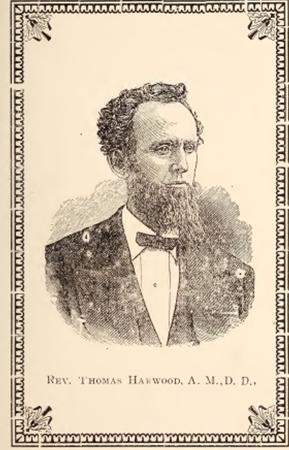
Exactly 146 years ago today, on Friday, August 4, 1871, three Methodist missionaries en route to Elizabethtown, New Mexico were struck by lightning and almost killed in Cimarron Canyon. Illinois natives Reverend N. S. Buckner and his 19 year old wife Annette had recently been appointed to take over Rev. Thomas Harwood’s responsibilities in Etown. They were travelling with Harwood, the man would go on to become the Methodist Bishop of New Mexico and co-found what is now the Harwood School in Albuquerque. The Buckners had just been assigned to assist him by taking over in Elizabethtown, where Harwood had dedicated a church building the year before.
The sun was beginning to set when Harwood and the Buckners reached the first section of Cimarron Canyon. Rev. Harwood’s buggy provided protection from the rain, so they weren’t uncomfortable. In fact, they were enjoying the thunderstorm and discussing the properties of electricity, when suddenly, thunder crashed, lightning flashed, and the smell of sulfur filled the air. The buggy itself had been struck and its passengers stunned to immobility. The force of the strike tore two large holes in the ground underneath the wheels, broke the crossbar behind the horses, and knocked the animals themselves off their feet.
Once the Buckners and Harwood were able to move again, they left the horses and walked back towards Cimarron “under the blazing lightnings and almost deafening thunder, muddy, wet and barefoot, . . . three miles to the nearest American house, and thence in wagon to Cimarron City” (Harwood, Vol. I, 129).
Although they were all still feeling the effects of their lightning experience, the next morning, the little group of missionaries were back in the canyon, this time on the Saturday stage to Elizabethtown, where the men preached at the morning and evening church services the next day.
It was an inauspicious beginning to the Buckner’s work in New Mexico Territory and things don’t seem to have improved much after that. Elizabethtown was a center of resistance to the Maxwell Land Grant Company’s plan to dispossess the area’s miners, ranchers, and farmers of their land. The town was rife with tension. The Buckners returned to Colorado in 1872. A year and a half later, in January 1874, they were replaced by Rev. Franklin J. Tolby, who lived in Cimarron but held services in Elizabethtown on a regular basis. Tolby himself would not last long. He was gunned down on September 14, 1875 on his way home from the Elizabethtown church, a date that many consider to be the beginning of the Colfax County War.
For fiction based on Reverend Tolby’s life and assassination, and historical information about his death, see my May 24, 2017 post and watch for them throughout September.
Source: Thomas Harwood, History of New Mexico Spanish and English Missions of the Methodist Episcopal Church, Vol. I and II, El Albogado Press, Albuquerque, 1910; Lawrence R. Murphy, Philmont, A History of New Mexico’s Cimarron Country, UNM Press, 1972, Albuquerque; ttps://www.timeanddate.com/calendar/?year=1871&country=1 accessed 7/17/2017
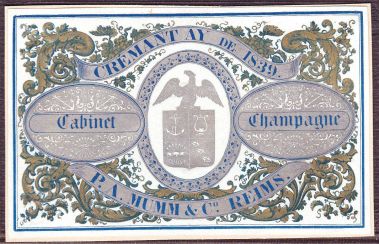
On Wednesday, July 1, 1868, the newly constructed Moreno Hotel opened in Elizabethtown, New Mexico with a dinner for 83 guests, and Etown congratulated itself on its prosperity. The hotel was a living symbol of how far the town had come since its gold-mine camp beginnings early the previous year. This inaugural dinner was served on “the finest china in the territory” and accompanied by bottles of Mumm’s Dry Imperial Champagne. The hotel was nicely located on 3rd Street between Broadway and Washington and would have had a fine view of Baldy Mountain on the eastern side of the valley as well as the various gold mining claims on the Moreno Creek in the valley directly below the town.
It’s not clear who owned the Moreno when it opened, but two months later, it passed into the hands of Augusta Forbes, a German-born woman who, when she divorced her runaway husband the following spring, was granted the right to revert to her maiden name of Augusta Meinert as well ownership of the hotel and “all the personal property, household, and kitchen furniture now on the premises.”
Meinert operated the hotel for about four and a half years. She remarried in late December 1872 and formally handed off the Moreno to her new husband, Chancy Storey a month later. She seems to have retired from active involvement in running the business at that point, because she’s listed as a housewife in the June 1880 census while Chancy is listed as a hotel keeper, presumably of the enterprise that had such an elegant beginning twelve years before.
Sources: Colfax County Real Estate records, 1868-1888; U.S. Census Data, Colfax County, New Mexico Territory, 1870 and 1880.

 Fiction and Fact From Old New Mexico