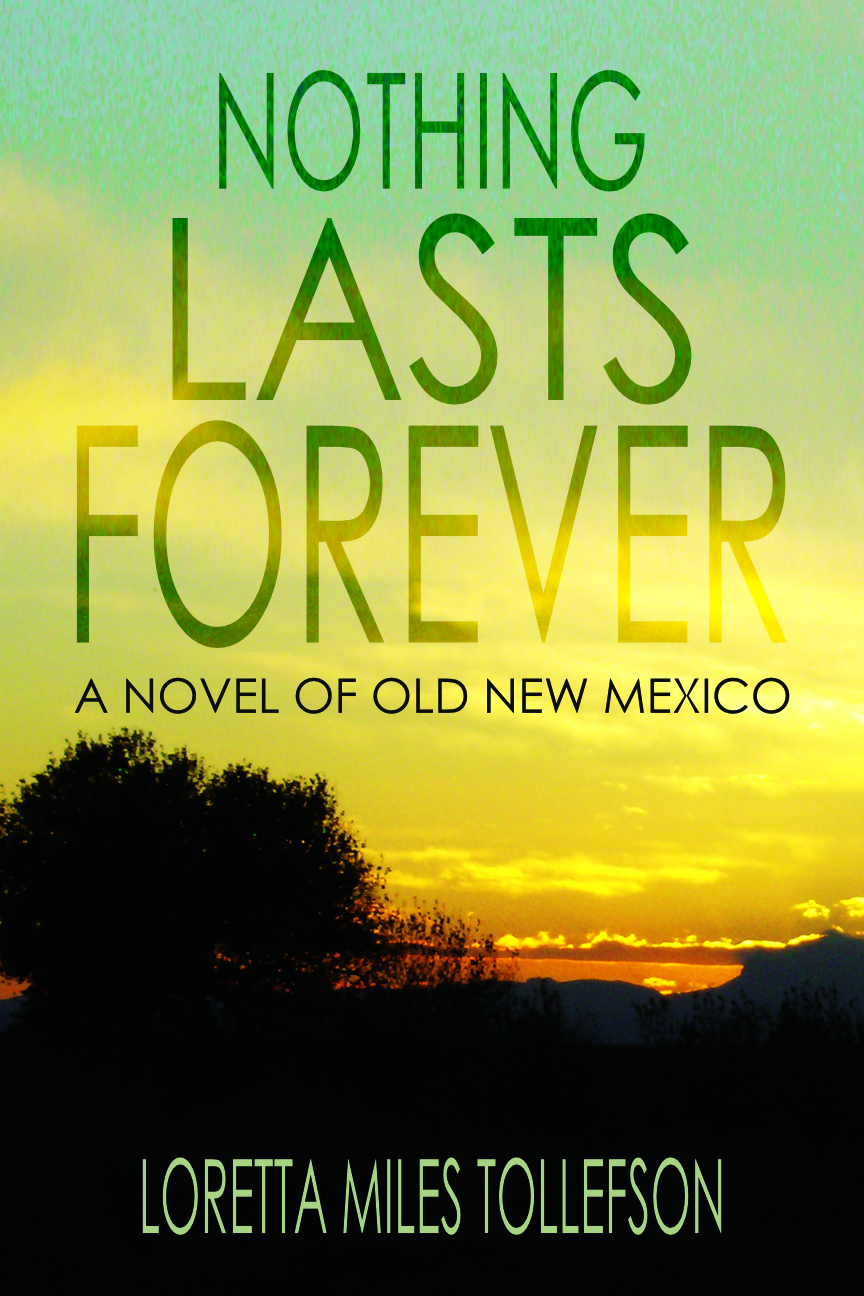
I am pleased to announce the publication of Nothing Lasts Forever, my latest Old New Mexico novel and the fourth volume of my Locke Family Saga series.
This book continues my emphasis on deeply researched historical fiction set in mid-1800s New Mexico and finds Alma Locke in Taos in late 1846/early 1847. Here’s the book description:
On Thursday, January 19, 1847, long-simmering tensions erupted in bloodshed in Taos, New Mexico, brought to a head by the recent American takeover during the Mexican American War. Within 24 hours, almost all the Americans in Taos were dead, including Governor Charles Bent.
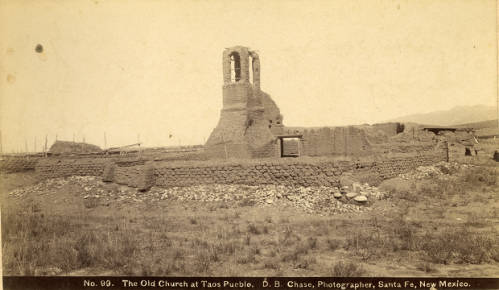
The insurrection was eventually crushed by American forces in a final battle that destroyed the Taos Pueblo church. The trials that followed are renowned for their biased juries, foregone conclusions, and speed of execution.
Nothing Lasts Foreverexplores the tensions that fed the 1847 rebellion from the point of view of the fictional Alma Locke, in Taos to bury her mother, and Governor Bent’s five-year-old daughter, Teresina.
A heartbreaking novel of love, loss, and conflicting loyalties, Nothing Lasts Forever explores the personal conflicts behind the rebellion and how two families coped with their losses and struggled to make sense of unimaginable tragedy.
Although this is Book 4 of the Locke Family Saga, it can be read as a stand-alone novel.
In mid April 1847, the Taos Valley was still experiencing the aftermath of theJanuary 20 rebellion.
The U.S. Army had captured a total of 45 rebels. They released 24 for lack of evidence and tried 21. The trials were over, but the executions weren’t. Seventeen men would hang, one of them for high treason.
The high treason charge was questionable. An argument could be made that a person couldn’t rebel against a country to which they had not pledged allegiance. The war with Mexico wasn’t over. New Mexico was still officially part of occupied Mexico, and its people were still citizens of that country. There’d been a trial in early January which had found the high treason charge suspect. But that didn’t stop 26-year-old prosecuting attorney Francis P. Blaire, Jr. from continuing to use it.
In early March, Blaire filed the charge against three men: Antonio Maria Trujillo, Pantaleon Archuleta, Trinidad Barceló, and Pedro Vigil. Apparently the only rebel trials held in Santa Fe, the charges against Archuleta, Barceló, and Pedro Vigil were eventually dropped after the proceedings ended in a mistrial.
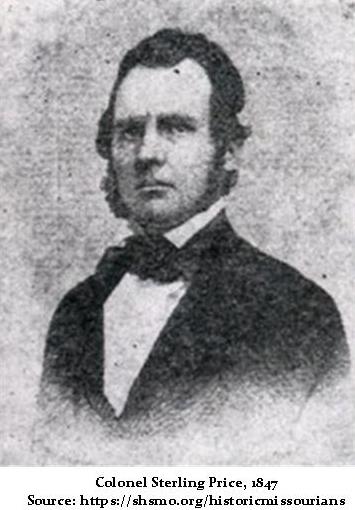
Trujillo was found guilty, but because he was elderly and unwell, the jury and judge requested that the sentence be commuted. Military GovernorSterling Price granted the pardon, and Santa Fe was spared a demonstration of the effectiveness of the gallows.
Taos wasn’t. Of the eighteen prisoners tried there, all were convicted and hung.
There had been a single execution on February 7 of Pablo Montoya, one of the rebellion leaders, but the remainder waited until April, when the formal trials began.
These hangings started on Friday, April 9, when Hipolito (Polo) Salazar, Jose Manuel Garcia, Pedro Lucero, Juan Ramon Trujillo, and the Romero brothers Ysidro and Manuel, age sixteen, were executed two days after their trials. Salazar had been convicted of high treason, but the rest of these men were found guilty of killing American-appointed Governor Charles Bent.
The eleven remaining convicted rebels had to wait to meet their end. Most of them would die three weeks later, on Friday, April 30. These executions seem to have occurred in two batches. The six men from Taos Pueblo—Francisco Naranjo, Jose Gabriel Romero (or Samora), Juan Domingo Martin, Juan Antonio Lucero, and a man called El Cuervo—were apparently hanged at the same time. They were buried at the Pueblo at the church which had been destroyed by the Americans in early February.
Ruins of the Taos Pueblo church. Source: Palace of the Governors Archives
Four other men—Manuel Miera, Juan Pacheco, Manuel Sandoval, and Rafael Tafoya—were also executed that day. Then, on the following Friday, Juan Antonio Avila was hanged for his role in the insurrection.
Why the week-long delay? There’s no information in the records. I’d love to know the answer to this question, just as I’d like to know why the trials of Trujillo, Barceló, Archuleta, and Vigil were held in Santa Fe and the reasons for the mistrials for latter three men. Was this a procedural issue? Was family pressure brought to bear?
I’m especially curious about the case of Trinidad Barceló. He was the older brother of businesswoman Gertrudes Barceló, who had assisted the U.S. occupiers in suppressing a revolt the previous December. Did her support of the regime play a part in her brother’s release?
What about the other two: Archuleta and Vigil? Were they related to Acting Governor Donaciano Vigil or some other prominent New Mexican who the Americans wanted on their side?
And then there are the stories of the men who died: their reasons for resistance, the impact on their families, the pain or joy they left behind.
Sources: David C. Beyreis, Blood in the Borderlands; Mary J. Straw Cook, Doña Tules; James A. Crutchfield, Revolt at Taos; Mark L. Gardner and Marc Simmons, eds., The Mexican War Correspondence of Richard Smith Elliott; Lewis H. Garrard, Wah-to-ya and the Taos Trail; Lucy Lippard, Pueblo Chico, Land and Lives in Galisteo since 1814; Michael McNierney, ed. Taos 1847, The Revolt in Contemporary Accounts; Alberto Vidaurre in Corina A. Santistevan and JuliaMoore, Taos, A Topical History.
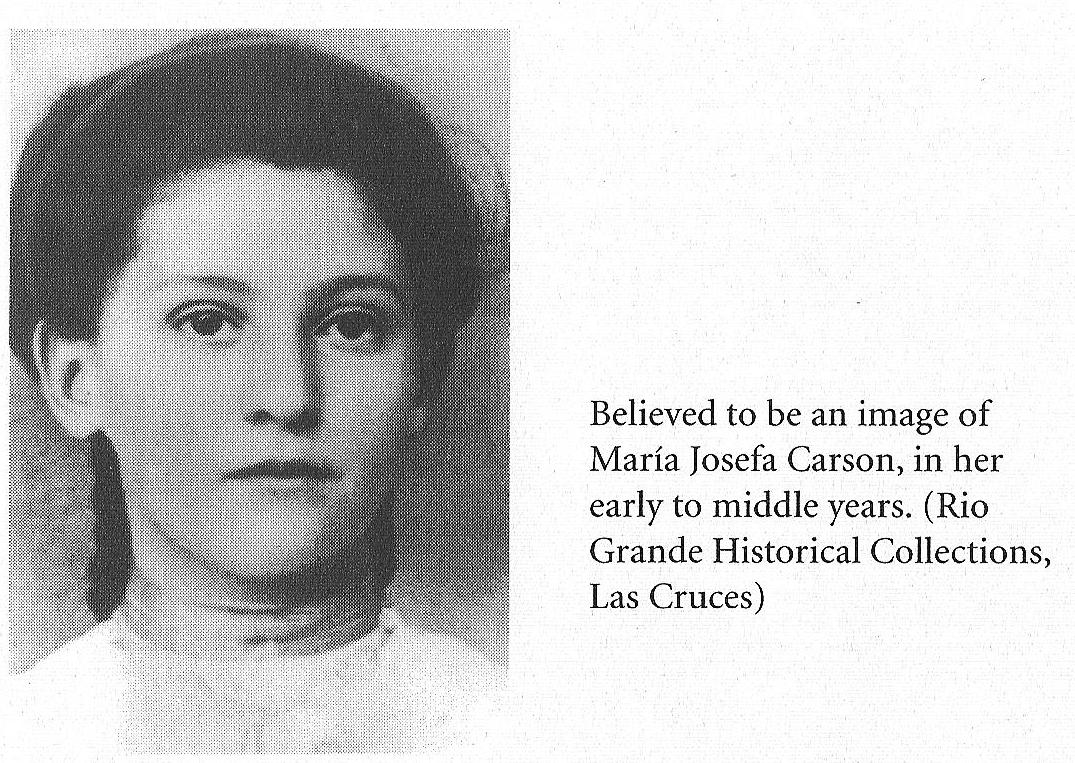
On Thursday, March 27, 1828 in Portrero, New Mexico, María Josefa Jaramillo was born to Francisco Esteban Jaramillo and María Apolonia Vigil in Portrero, New Mexico. Her parents moved to Taos before the end of the year, María Josefa and her older siblings, including three sisters, in tow.
Josefa, called “Josefita” by her family, and her older sister Ignacia would grow up to ally themselves with two prominent americanos—Christopher “Kit” Carson and Charles Bent. In the early 1830s, the now-widowed Ignacia entered into a common-law marriage with American merchant Charles Bent. About ten years later, on February 6, 1843, Josefa married newly-converted Catholic Christopher “Kit” Carson, exactly seven weeks before her fifteenth birthday.
Source: Kit Carson and His Three Wives, Marc Simmons
Four years later in mid-January, while Kit was away and Josefa was staying with Ignacia and Charles in Taos, the Jaramillo girls’ brother and Bent were killed by an angry mob. The nineteen-year-old testified at the trial of the accused men. Refined in dress and manners, she had a heart-breaking beauty, one observer said, that “would lead a man with the glance of the eye, to risk his life for a smile.”
After that, Josefa’s life settled down a little, though it seems to have never been truly calm. Carson was gone for long stretches of time: trapping and hunting, and serving as a scout for John C. Fremont, as a courier during the Mexican war, as a military officer during the Civil War, and as commander of the troops that forced the Mescalero Apaches and Navajos onto the Bosque Redondo reservation in 1863-64. In the meantime, Josefa moved from Taos to Rayado to Bent’s Fort and back again, then followed Carson to Fort Garland and finally Boggsville, Colorado.
But Carson and the woman he called “Chepita” and “Little Jo” seem to have had a loving relationship. They had eight children, the last one born just ten days before her death in April 1868. Carson followed her a month later. They are buried side by side in a small cemetery in Taos, ending their journey together in the town where it began.
Sources: Don Bullis, New Mexico Biographical Dictionary, 1540-1980, Vol. I, Los Ranchos de Albuquerque: Rio Grande Books, 2007; Lewis H. Garrard, Wah-to-yah and the Taos Trail, Norman: University of Oklahoma Press, 1955; Leroy R. Hafen, Ed., Fur Traders of the Far Southwest, Logan: Utah State University Press, 1997; Howard R. Lamar, Reader’s Encyclopedia of the American West, New York: Harper & Row, 1977; Marc Simmons, Kit Carson and His Three Wives, Albuquerque: University of New Mexico Press, 2003
On Thursday, January 14, 1847, Charles Bent, New Mexico’s first American governor, left Santa Fe for his home in Taos. A few weeks earlier, Bent had nipped an uprising against his new administration in the bud. He was confident that the U.S. occupation of New Mexico was now secure enough to allow him a visit with his family in Taos. He took with him Narciso Beaubien, the 19-year-old son of newly-appointed American judge Carlos Beaubien, who had recently returned from school in Missouri.
By Sunday, January 17, Charles Bent, Narciso Beaubien, and at least ten others would be dead as the result of an uprising Bent had failed to foresee. In December, he’d thrown men of wealth and position into prison. He believed this was all he needed to do to stamp out any real opposition to the U.S. takeover of New Mexico.
He would discover how wrong he was as he lay dying at the hands of the unimportant people he had discounted, people who may have been striking out at New Mexico’s class system as much as the American occupiers. Bent and the other men killed that week in January were all linked in some way to the U.S. occupation or were believed to have taken advantage of their status as Americans, even if they were originally from another country. And they were all ricos—men of wealth and connections.
While Narciso Beaubien was the son of a rico, he hadn’t played a role in the American invasion, or even been in New Mexico when the takeover occurred. Why he was slain in mid-January 1847 remains a mystery. Did he die simply because he was Charles Beaubien’s son?
Sources: Marc Simmons, Kit Carson, And His Three Wives, University of New Mexico Press, Albuquerque, 2003; David J. Weber, The Taos Trappers, University of Oklahoma Press, Norman, 1971; Lewis H. Garrard, Wah-to-yah and the Taos Trail, University of Oklahoma Press, Norman, 1955.
On Tuesday, Sept. 22, 1846, just over a month after Brigadier General Stephen Watts Kearny seized New Mexico for the United States, he appointed Virginia-born Taos businessman Charles Bent as New Mexico’s first American civil governor. When Kearny and the majority of his 1700-man force headed on to California to participate in acquiring it as well, Colonel Sterling Price, as senior U.S. Army officer in New Mexico, became its military governor.
Bent had been in Nuevomexico since 1829, first as a fur trapper, then as a Santa Fe trail trader based in Taos. He occupied his post as Governor less than four months. In mid-January 1847, he died at the hands of a New Mexican mob protesting the American occupation.
Two-and-a-half weeks later, Colonel Price, supported heavily by American businessmen and trappers in New Mexico, crushed that rebellion and assured that New Mexico would remain part of the United States.
Ironically, Price’s own career would include participation in an even larger rebellion against the nation he had helped to force on New Mexico. Following a term as Governor of Missouri, he joined the Confederate Army, rising to the level of General. He died on September 29, 1867, almost exactly 21 years after he took over as military governor of New Mexico.
Sources: Leroy R. Hafen, Ed., Fur Trappers and Traders of the Far Southwest, Logan: Utah State UP, 1977; Marc Simmons, New Mexico, an interpretive history, Albuquerque, UNM Press, 1988



 Fiction and Fact From Old New Mexico