In 1846, early in the Mexican American War, General Stephen Watts Kearny led his Army of the West from Missouri to Santa Fe. He received no resistance in New Mexico and raised the American flag over the Santa Fe plaza in mid-August. By early November, he had moved on to assist in the subjugation of California, leaving troops behind to hold New Mexico. Local leaders laid plans to kick out the remaining troops, but the plot was discovered in mid-December and the most of them were apprehended.
One of the men jailed was Manuel Antonio Chaves, who seems to have been the only one who went to court for his activities. Maybe his was the first and last case at this time because his American lawyer, Captain William Z. Angney, got him off.
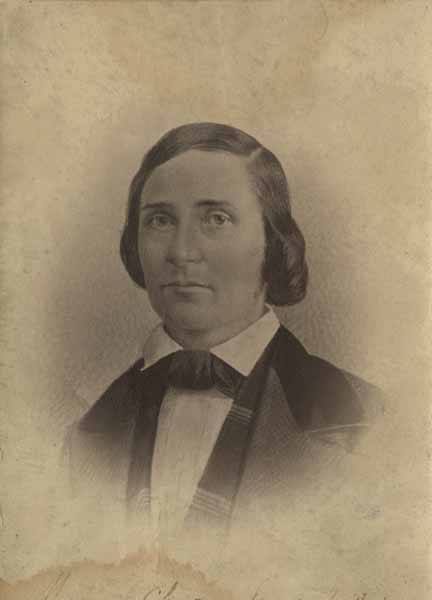
Angney’s arguments were powerful. Chaves had been charged with treason against the United States. Angney argued that, since the war was still in progress, New Mexico was technically still part of the country of Mexico, and therefore Chaves was not an American citizen. You can’t try someone for treason against a country they don’t belong to. In fact, it was not treason, but patriotism, that motivated his actions.
Chaves was acquitted and released. His experience with Angney and in the courtroom seems to have permanently changed his view of Americans. Six months earlier, he’d argued fiercely that New Mexico ought to fight the invaders. The month after his release, he was fighting alongside the Americans to suppress the New Mexican revolt that broke out in Taos. He went on to serve in the Civil War on the side of the Union, rising to the rank of Lieutenant Colonel and playing a key role in the pivotal battle of Glorieta Pass. All because his perceived enemy (Captain Angney) defended Chaves’s right to rebel.
Sources: Mark L. Gardner and Marc Simmons, eds., The Mexican War Correspondence of Richard Smith Elliott; Rubén Sálaz Márquez, New Mexico, A Brief Multi-History; Marc Simmons, The Little Lion of the Southwest, a life of Manuel Antonio Chaves; Ralph Emerson Twitchell, The History of the Military Occupation of the Territory of New Mexico.
© Loretta Miles Tollefson, 2025

 Fiction and Fact From Old New Mexico
Wonderful account of how civil wars can be messy. Good work, Loretta!
LikeLike
Great job Loretta! Your account captures how messay rebellions can be.
LikeLike