“Did you know the Maxwell Land Grant Company is evicting people who’ve been farming here for decades?” the Reverend Franklin Tolby demanded.
At the other end of the small pine table, Mary Tolby moved a raised biscuit from the chipped ceramic platter to her plate. “That’s terrible,” she said. “These biscuits are quite good this time. I think I’ve finally gotten used to that stove. Ruthie, eat your peas or there’ll be no dessert.”
Her husband picked absently at his food. “It’s a moral outrage,” he said. “They have no right.”
Mary looked anxiously at his pale face. Since they’d arrived in Cimarron, Franklin had been on horseback constantly, west to Elizabethtown, south to Fort Union and beyond, yet his cheeks showed no evidence of windburn or sun.
“I’ve made strawberry pie for desert,” she said. “An Indian girl came by selling berries. They’re very sweet. The result should be quite tasty.”
Franklin’s eyes focused on her for a split second, then his head snapped up, as if he were listening to something outside the house. “And the Indians,” he said. “With this much land, there’s room for them also.” He paused for a long moment, fork in the air, then said, “Excuse me,” dropped his frayed linen napkin onto the table, and hurried from the room. She heard him scrabbling through the papers on his desk as he prepared to write down whatever had just come to him.
Mary sighed and reached to cover the food on his half-empty plate with a clean napkin. “Ruthie, eat your peas,” she said absently.
It was spring in the valley of the eagles, which meant it had been raining off and on for three weeks and the usually adobe-hard clay soil was soft enough to be dug. Once Old Bill had selected a likely spot for caching the packs of beaver fur, Pepe set to work. Old Bill stood farther up the hillside, chanting in a mixture of Osage and Ute. The prayers would help keep varmints away, Bill had said: both the two-footed and four-footed kind.
It was a good location for a cache, Pepe reflected: tucked under the hillside pines and marked by a massive sandstone boulder that would be easy to identify when they returned. After the Taos alcalde had decided that the few beaver plews they’d set aside to show him were truly Old Bill’s entire winter haul, Pepe and Old Bill would slip back into the valley with a Taos trader to turn the cached furs into coin. Then Pepe would have a nice amount to take home to his wife while Old Bill gambled his own portion away.
Pepe chuckled and paused his digging to wipe his forehead with his cotton sleeve. He was always surprised at how warm it could get in this valley, as high up in the mountains as it was.
Small stones rattled past him and Old Bill came down the hillside. “War’s th’ other shovel?” he demanded in his nasal twang. “We ain’t got th’ rest o’ eternity!”
150 years ago today, on May 13, 1867, a group of New Mexico Territory miners met to organize the Baldy Peak/Elizabethtown Mining District. Chaired by John E. Codlin of New Jersey, the committee established the dimensions for lode and placer claims and the amount of necessary to keep a claim active. They also elected a recorder to take responsibility for filing mining, water, and timber rights notices, along with bills of sale and property deeds.
The need for organization was urgent: As many as 400 mining claims had already been staked within an eight mile radius of Baldy Peak. This included Ute Park, where prospectors Tim Foley, Matthew Lynch, and Robert Doherty had found gold in the bed of Ute Creek, a find that would lead the following year to the discovery of the Aztec Mine, a mine that would produce over $100,000 in gold between October 1868 and July 1869.
Most of the districts placer claims were on Baldy’s western slopes, in gulches that ran from the mountain into Moreno Creek, and in the gravel in the Creek. The mines were concentrated along the lower slopes and along the Creek between Mills Gulch, three miles north of Etown, and Anniseta Gulch, 2 miles south. In addition, there were placers along the upper reaches of Willow Creek on Baldy’s southern slopes, on Ute Creek below the Aztec, and in the upper reaches of South Ponil Creek, near the outcrop of the Aztec vein.
It was only fitting that the 27-year-old New Jersey-born John Codlin should chair the effort to organize all this. He’d been part of the group (with Irishman Patrick Lyons, Prussian-born Fred Pfeffer, and a man called “Big Mich”) who’d first discovered gold at what is now Elizabethtown, a few hundred yards east of the where the town was eventually laid out, in what they named Michigan Gulch. They worked the gulch as the Michigan Company.
Codlin seems to have developed a taste for politics. He would go on to become the chairman of the Colfax County Commission in 1897-98 and to fight the 1897 transference of the county seat from Springer to Raton, a legal challenge that eventually made its way to the Supreme Court, which decided in favor of Raton. He died in April 1908 and is buried in the Springer, NM cemetery.
She could be incandescently angry and Gerald’s trip to Santa Fe and back had taken a week longer than he’d told her it would, so he braced himself as he opened the cabin door. But Suzanna barely raised her head from the rocking chair by the fire. She wasn’t rocking. Her shawl was clutched to her chest, her face drawn and gray under the smooth, creamy-brown skin. She glanced at Gerald, then turned her face back to the flames, her cheeks tracked with tears.
Gerald’s stomach clenched. “What is it?” he asked. “The children?”
Suzanna shook her head without looking at him. “The children are fine,” she said dully. She moved a hand from the shawl and placed it on her belly. The tears started again and she looked up at him bleakly. “This is the fourth time,” she said. “There will—” She closed her eyes and shook her head. “There will be no third child,” she choked, and he crossed the room, knelt beside her, and wordlessly took her into his arms.
In May 1870, the newly-incorporated Maxwell Land Grant and Railway Corporation, with a capital stock of $5 million, began the process of taking possession of what had been the Beaubien/Miranda Land Grant, and what formed the majority of New Mexico’s Colfax County. A $1.35 million contract to purchase the grant from Lucien Bonaparte Maxwell and Maria de la Luz Beaubien Maxwell had been signed in late April. However, there’d been a small glitch in the process because the investors purchasing were English. Only Americans were allowed to hold property in New Mexico Territory. So a corporation board of Americans was assembled. Even then, most of the men on the board would have been considered “outsiders” by anyone who’d been born and raised in New Mexico. Only one of them was originally from New Mexico and only two of them would die here.
The most prominent member of the board was William A. Pile, New Mexico Territorial Governor. Pile hailed from Indiana and would go on to represent the U.S. in Venezuela—and Venezuela in the U.S.—before his death in California in 1889.
Dr. Thomas Rush Spencer, Territorial Surveyor General, was originally from Ontario County, New York. Besides his participation in the Maxwell Land Grant and Railway Corporation board, Spencer also owned a 20 percent interest in the Mora Land grant. He died in Santa Fe two years after the board incorporated.
John S. Watts, former New Mexico Chief Justice and Territorial delegate to Congress, had been in New Mexico almost twenty years. Originally from Indiana, he would return there within the next few years and be buried there in 1876.
General William Jackson Palmer, Pennsylvania-born Colorado real estate magnate and railroad builder, seems to have never actually lived in New Mexico, although he was prominent in Colorado Territory, co-founding the Denver & Rio Grande Railroad and founding Colorado Springs, where he passed away in 1909.
Source: Ralph Emerson Twitchell, The Leading Facts of New New Mexican History
The only “native” member of the Maxwell Land Grant and Railway Corporation board was Miguel Antonio Otero, the father of future Territorial Governor Miguel Otero (1897-1906). The elder Otero was born in Valencia County in 1829 and educated in the eastern United States as a lawyer. He returned home to serve as the Territorial Delegate to Congress from 1855 to 1861 and to participate in various mercantile, banking, and railroad ventures, including the Maxwell Land Grant & Railway Corporation. He died in Las Vegas, New Mexico in 1882.
“Where’d that damn pup get to now?” Old Pete muttered as he and the mule reached the rocky outcropping that overlooked the southern part of the valley. He could see through the ponderosa into a good stretch of grassland below, but there was no evidence of the curly-haired black Indian dog. Pete shook his head in disgust, jammed his rabbit-fur hat farther down on his head, and snapped the mule’s lead rope impatiently.
At least the mule didn’t need voice direction. Which was more than could be said for the dog, but Pete wasn’t callin’ the damn thing, no matter how aggravated he might feel. There’d likely be Jicarilla Apaches roamin’ the valley for elk, and Pete was taking no chance of being found before he wanted to be. The dog could go to hell, for all he cared. He grunted irritably as he worked his way down the hillside. Idiot pup.
He paused at the tree line, getting his bearings, the air crisp on his face. A light snow powdered the ground. A good-sized elk herd was bunched on the hillside to his left. He squinted. They seemed a mite restless. Then he saw the wolves, eight or nine of them waiting downwind while two big ones trotted the herd’s perimeter, checking for weakness.
Then he caught the sound of a low whine emanating from the prickly ground-hugging branches of a nearby juniper. As Pete watched, the black pup eased from the tree’s grip and came to crouch at his feet, tail between its legs. It looked anxiously toward the elk and whined again.
“Not as dumb as I took ya fer,” Old Pete said, readjusting his hat.
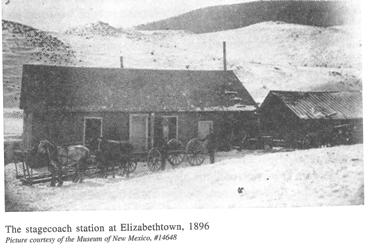
On May 1, 1894, the stagecoach once again arrived in Etown, New Mexico: The Springer and Moreno Valley Stage Line began daily passenger runs between Elizabethtown and Springer, where passengers could connect with the railroad. Even with fares at $5 a day, demand was high. The line was soon running double headers every other day. It didn’t just carry passengers. There were also contracts with Wells Fargo Express and the United States Post Office. In fact, the endeavor was so lucrative that H.H. Hankins jumped to serve the same route with the Moreno Valley Stage and Freight Company line.
These transportation services replaced Col. Valentine “Jim” S. Shelby’s 1868 Moreno Valley Stage and Freight Line, which had run three times a week between Maxwell’s Ranch (today’s Cimarron) and Elizabethtown, departing from Maxwell’s one day and returning from Elizabethtown the next. Fares in 1868 were $8 each way. Shelby, a former army wagon master, seems to have enjoyed a good challenge. A co-owner of the Aztec Mine, he also helped fund the construction project that diverted water from Red River to the Baldy Mountain mining district, then took it over when it failed to live up to projections, on the chance that he could find a buyer—which he did. Shelby eventually left the Etown area and ended up in Santa Fe, where he ran a large gambling “resort”—yet another service in high demand in New Mexico Territory.
There was a reason it was called Apache Canyon and Old Pete proceeded cautiously, aware that there’d been a recent outbreak of hostilities between the Jicarillas and the locals. Somebody had gotten twitchy-brained and shot off their gun without thinkin’ twice and now the whole Sangre de Cristos was on edge. Didn’t matter that he’d had no part in the original quarrel.
However, Pete hadn’t seen a soul in three days, and he was beginning to think he was gonna get to Taos in one piece after all, if the damn half-grown dog taggin’ him would quit wanderin’ off then comin’ back, widening the scent trail with his idiot nosin’ around. Pete scowled as the puppy reappeared, this time from a thicket of scrub oak, dead leaves rattling on the ground. The dog went into a half-crouch as it came closer. It was holding something in its mouth, its curly black tail drooping anxiously.
“What ya got there?” Pete asked. He squatted and held out his hand and the dog released the item into his palm. “Shit!” Pete said, dropping it. Then he leaned closer and sniffed. It really was shit. Human, too. Fresh enough to still stink. He rose, studying the slopes on either side, turning to examine the pass behind him. So much for bein’ alone.
The half-grown pup had followed Old Pete and the mule from the Ute Indian encampment down-canyon. It was a gangly thing, large for an Indian dog, with dirt-matted curly black hair. Pete looked at it in disgust as it half-crouched at his feet.
“Damned if the thing ain’t smilin’,” Pete muttered. He poked the dog’s side with his foot. “You a doe or a buck?” The animal rolled over obligingly, paws in the air. “Buck.” Pete toed it again. “Well, you won’t last long, I expect. Be runnin’ off to the first camp with a bitch in heat.” He turned and twitched the mule’s lead rope. “Giddup.”
They trailed the Cimarron River up-canyon through the afternoon and settled into camp under an overhanging sandstone boulder as the light began to fade. It was still early: the sunlight went sooner as the canyon walls narrowed. But Old Pete was in no particular hurry and the pup was acting a mite tired.
“Gonna hafta keep up,” Pete told it as he cut pieces of venison off the haunch he’d traded from the Utes. The dog slunk toward the fire and Pete tossed it a scrap. “Too small fer my roaster anyway,” he muttered as he skewered a larger chunk onto a sharpened willow stick and lifted it over the flames.
Augusta Meinert stood firmly in the center of the makeshift courtroom, her eyes on the judge. At thirty-seven, she was still attractive, though the stubborn tilt to her chin said she didn’t often take “no” for an answer.
Judge Watts studied her. “You understand what divorce means?” He spoke slowly, as if unsure her English could withstand the strain of the concept.
Augusta’s chin went up. “I understand no longer the bastard takes the money I earn.” A ripple of suppressed laughter ran through the onlookers behind her. She turned and glared, and the men fell silent.
“You will be a marked woman,” Judge Watts warned. “This isn’t Germany.”
She frowned. “In Germany, he takes my money, and I can do nothing.” She smiled suddenly, her eyes twinkling. “It is why I like America.”
The Judge nodded and gaveled the rough wooden planks of the table before him. “The first divorce in Colfax County, New Mexico Territory, is hereby declared final,” he announced.
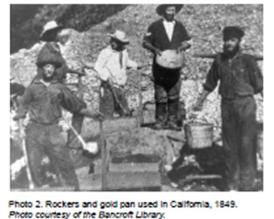 The need for organization was urgent: As many as 400 mining claims had already been staked within an eight mile radius of Baldy Peak. This included Ute Park, where prospectors Tim Foley, Matthew Lynch, and Robert Doherty had found gold in the bed of Ute Creek, a find that would lead the following year to the discovery of the Aztec Mine, a mine that would produce over $100,000 in gold between October 1868 and July 1869.
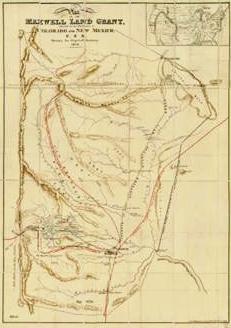 In May 1870, the newly-incorporated Maxwell Land Grant and Railway Corporation, with a capital stock of $5 million, began the process of taking possession of what had been the Beaubien/Miranda Land Grant, and what formed the majority of New Mexico’s Colfax County. A $1.35 million contract to purchase the grant from Lucien Bonaparte Maxwell and Maria de la Luz Beaubien Maxwell had been signed in late April. However, there’d been a small glitch in the process because the investors purchasing were English. Only Americans were allowed to hold property in New Mexico Territory. So a corporation board of Americans was assembled. Even then, most of the men on the board would have been considered “outsiders” by anyone who’d been born and raised in New Mexico. Only one of them was originally from New Mexico and only two of them would die here.

 Fiction and Fact From Old New Mexico