Illegal Trappers Leave New Mexico, For Now

In February 1815, a group of St. Louis trappers led by Joseph Philibert left Taos for the Arkansas River and on to St. Louis. After five months under arrest in Taos, they were returning to the U.S. with a healthy load of beaver plews.

The entire group had been arrested by Spanish soldiers the previous September and charged with crossing the international boundary illegally. The furs they had with them were confiscated to cover the costs of their incarceration over the course of the winter. It’s not clear where they collected the furs they took back East the following spring. But they seem to have gathered enough plews to make the whole expedition worthwhile.

And to make them want to try the same stunt again. When Philibert headed to St. Louis, he went with the hope of arranging financial backing for yet another venture into New Mexico.

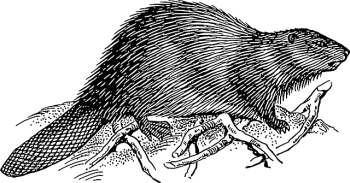
oct 29 illustration.pixabay

Under Spanish law, what Philibert had done and was proposing to do again was flatly illegal. Foreigners weren’t allowed across the New Spain/U.S. border without explicit permission from Spanish officials. In fact, in the five months the Philibert group was in Taos, at least four other illegal foreigners were arrested and sent to New Spain’s interior. Why Philibert’s group was allowed to remain is as much of a mystery as the source of the furs they took back to St. Louis.

What’s clear is that the border between the two countries was already extremely porous. It was almost inevitable that American trappers would continue to filter into Spanish territory. The furs there, and the money they were worth in the U.S., were just too tempting. New Mexico’s officials may have simply been bowing to the inevitable when they allowed Joseph Philibert and his band of men to remain in Taos the winter of 1814/15.

Sources:  Leroy R. Hafen, editor, Fur Trappers and Traders of the Far Southwest, Utah State University press, Logan, 1997; David J. Weber, The Taos Trappers, University of Oklahoma press, Norman, 1971.

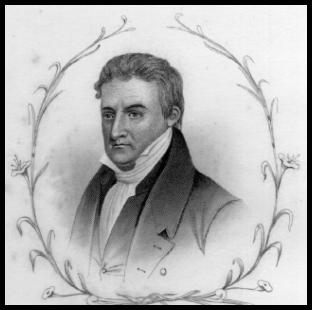
William Workman Orders Still For Taos Lightning

On Monday, February 13, 1826, William Workman of Taos, New Mexico sent a letter to his brother David in Franklin, Missouri. William asked David to have two 80-gallon stills shipped to him from St. Louis. Copper stills were essential in the production of hard liquor like the wheat-based Taos Lightning that William produced and sold.

Not only did William Workman’s letter ensure that Taos residents would have more liquor available to them, it also may have triggered one of the American West’s most famous runaway stories.

David Workman, a saddle and harness maker, had a teenage apprentice named Christopher “Kit” Carson. The letter from New Mexico may have reminded the young Kit that there were more exciting ways to earn a living. When he took off for New Mexico that August, he may well have traveled in the same wagon train as the stills that William Workman had ordered.

Workman manufactured Taos Lightning until 1841, when he himself had to run away, this time from—rather than to—New Mexico. Workman and his distillery partner John Rowland fled Taos for California that September, after rumors spread that they were collaborating with a Republic of Texas expedition to annex New Mexico.

feb-13-illustration-workman-william-1855-mnm-13492.jpeg
William Workman, 1855. MNM 13492

While Carson stayed in New Mexico and made him name for himself, Workman, in California and still partnering with John Rowland, obtained a Mexican land grant of over 48,000 acres and founded  Rancho de la Puente, now a cultural landmark in Southern California.

In both cases, running away seems to have been the best move either Workman or Carson could have made. They both made a name for themselves as a result.


Sources: Samuel P. Arnold, Eating up the Santa Fe Trail, University Press of Colorado, Niwot, 1990; Leroy R. Hafen, editor, Fur Trappers and Traders of the Far Southwest, Utah State University Press, Logan, 1997; Hampton Sides, Blood and Thunder, Doubleday, New York, 2006; Marc Simmons, Kit Carson, and His Three Wives, University of New Mexico Press, Albuquerque, 2003.


U.S. Agency Triggers Colfax County War

On Wednesday, January 28, 1874, the U.S. Department of the Interior issued the order that began New Mexico’s Colfax County War.

The Department had decided to designate the approximately 2 million acres claimed by the Maxwell Land Grant and Railroad Company as public land, not private. This meant that the former Beaubien/Miranda land grant was now open to settlement under federal homestead laws.

The Interior Department’s decision was part of an ongoing dispute over the size of the Land Grrant. According to the Department, until that matter was settled in Federal Court, the land was public and therefore available to qualified homesteaders.

But the Land Grant Company wasn’t about to let anyone settle without payment on acreage they claimed as their own. And that payment certainly wasn’t going to go to the U.S. government.

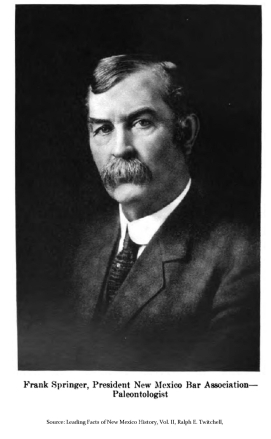
In fact, the Company was already fighting settlers on the vast acreage they claimed. Their attorney, Frank Springer, was hard at work in New Mexico’s Territorial Courts, evicting anyone the Board believed shouldn’t be there. With evictions already occurring, opening the Grant lands to federal homestead claims was simply asking for more trouble.

Jan 28 illustration.Springer, Frank

And it came. If the Company couldn’t get rid of “squatters” through the courts, they’d try other strategies. This all cost money, of course, something that the Board was often short of. But even as the Company teetered on the edge of bankruptcy, its board members continued the fight. If this required extra-legal methods, then so be it.

Right about the time the Department of the Interior announced its decision, another factor arrived in Colfax County. His name was Reverend Franklin J. Tolby. Tolby believed that the Maxwell Land Grant and Railroad Company was taking more than its share of local resources. In fact, he advocated that some of the acreage in dispute be handed over to the Native Americans who’d hunted and lived there long before anyone even thought that American capitalists would have a use for it.

Tolby was articulate and people listened to him. This put him solidly in the sights of the Company’s board members. A lot had happened on the Grant up to this point: legal and extra-legal evictions, miners’ protests in Elizabethtown, meetings of concerned citizens in Cimarron, heated newspaper articles for and against the Grant Company. But none of that compared to what occurred after January 28, 1874. The Colfax County War was about to begin.

By the time it was over, Reverend Tolby and others would be dead, homesteaders would be burned or run out, and the Land Grant Company would be on the verge of yet another reorganization. The grant never did return the profit its investors had hoped for.

As with most wars, everyone got hurt in the end.

Source: David L. Caffey, Chasing the Santa Fe Ring, University of New Mexico Press, Albuquerque, 2014; Moreno Valley Writers Guild, Lower, Lower, and Legends, a history of northern New Mexico’s Moreno Valley, Columbine Books, 1997; Victor Westphal, Thomas Benton Catron and His Era, University of Arizona Press, Tucson, 1973; Stephen Zimmer, editor, For Good Or Bad, People Of The Cimarron Country, Sunstone Press, Santa Fe, 1999.

Governor Bent Misreads New Mexico

On Thursday, January 14, 1847, Charles Bent, New Mexico’s first American governor, left Santa Fe for his home in Taos. A few weeks earlier, Bent had nipped an uprising against his new administration in the bud. He was confident that the U.S. occupation of New Mexico was now secure enough to allow him a visit with his family in Taos. He took with him Narciso Beaubien, the 19-year-old son of newly-appointed American judge Carlos Beaubien, who had recently returned from school in Missouri.

By Sunday, January 17, Charles Bent, Narciso Beaubien, and at least ten others would be dead as the result of an uprising Bent had failed to foresee. In December, he’d thrown men of wealth and position into prison. He believed this was all he needed to do to stamp out any real opposition to the U.S. takeover of New Mexico.

He would discover how wrong he was as he lay dying at the hands of the unimportant people he had discounted, people who may have been striking out at New Mexico’s class system as much as the American occupiers. Bent and the other men killed that week in January were all linked in some way to the U.S. occupation or were believed to have taken advantage of their status as Americans, even if they were originally from another country. And they were all ricos—men of wealth and connections.

Jan 14 illustration.Charles Bent

While Narciso Beaubien was the son of a rico, he hadn’t played a role in the American invasion, or even been in New Mexico when the takeover occurred. Why he was slain in mid-January 1847 remains a mystery. Did he die simply because he was Charles Beaubien’s son?

Sources: Marc Simmons, Kit Carson, And His Three Wives, University of New Mexico Press, Albuquerque, 2003; David J. Weber, The Taos Trappers, University of Oklahoma Press, Norman, 1971; Lewis H. Garrard, Wah-to-yah and the Taos Trail, University of Oklahoma Press, Norman, 1955.

Ewing Young, On The Move Again

On Sunday, January 1, 1832, Tennessee-born Ewing Young was once again on the move. Young had arrived in New Mexico in 1822. In the following ten years, he’d trapped the San Juan, Gila, and Salt Rivers, as well as the Colorado as far as the Grand Canyon. That was during the trapping season. The rest of the year, he kept busy hauling goods from Missouri over the Santa Fe Trail and selling them in Taos and Santa Fe.

Apparently all this activity wasn’t enough for Young. In 1831, he was looking for further adventure and profit. He recruited thirty-six other trappers** and headed farther afield. Young had a Mexican passport that allowed his party to travel to Chihuahua. But he and his men made no attempt to even look like they were headed south from Taos. Instead, they moved almost straight west to the Zuni villages.

There they traded for supplies, then moved across country to the headwaters of the Black River, in what is now eastern Arizona, and down it to the Salt. From the upper Salt, they crossed to the Gila River, then trapped the Gila to its junction with the Colorado. This is where they landed on the first day of 1832.

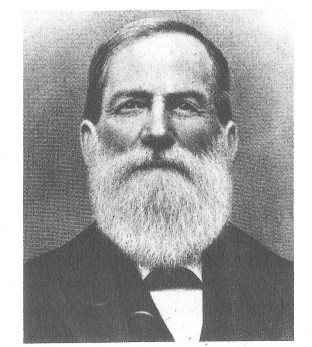
Jan 1 illustration.Young, Ewing.young man
Ewing Young as a young man

The group’s beaver catch hadn’t been very good. They were apparently all using the same traps, ones with a defect that allowed the beaver to escape from the sprung device. Young must have thought he’d solved the problem with the traps, because he made one last effort to gather plews by trapping down the Colorado to tidewater. When that didn’t work either, the larger group split up and Young and twelve men headed to California.

California had been Young’s destination all along. His business partner David Jackson was already there, trying to gather enough horses and mules to make it worthwhile to drive them east to the New Orleans markets. But by the time Young arrived in California, Jackson had only been able to collect about a quarter of the animals they needed.

The men with Young scattered at this point, some of them remaining in California and others returning to New Mexico and points East. Young himself stayed to hunt sea otter, and eventually settled on the West Coast. He’d wandered over a decade before he landed there.

Sometimes it takes a while for a man to settle down.


**Young’s band of trappers included Job F. Dye, Sidney Cooper, Moses Carson, Benjamin Day, Isaac Sparks, Joseph Gale, Joseph Dofit, John Higans, Isaac Williams, James Green, Cambridge Green, James Anderson, Thomas Low, Julian Bargas, Jose Teforia, John Price, J.J. Warner, and William Day.

Sources: Robert Glass Cleland This Reckless Breed of Men, Knopf, 1950; Leroy R. Hafen, editor, Fur Trappers and Traders of the Far Southwest, Utah State University Press, 1997;  Leroy R. Hafen, editor, Mountain Men and the Fur Trade of the Far West, Vol. I, Arthur  H. Clark, Spokane, 2000.


Soldier Arrested for Enlisting

On Saturday, December 21, 1861, a worker from Red River (aka the Rio Colorado) named George Montoya, enlisted in the New Mexico militia to fight the Confederate Texas invaders.

However, Montoya had a problem. He had a financial obligation to a rico in the Rio Colorado area. His master didn’t want Montoya to leave the area, so he persuaded the County judge to arrest him for enlisting. As a result, Montoya traded his military quarters for the county jail, in spite of the fact that Colonel Edward R. S. Canby, commander of New Mexico’s Union troops, had recently issued an order that required the masters of peóns who’d enlisted to file a writ of habeas corpus and petition the Territorial Court to have their workers returned. An order from a local judge wasn’t enough to recover their loss.

It’s not clear what happened in this particular case. However, records for the First New Mexico infantry show that two years later, on November 29, 1863, a twenty-five-year-old man named George Montoya was enrolled at Taos as a private. Montoya served as part of a wagon train escort to Tucson, Arizona in 1864 and 1865 and was still in the military in December 1865. It seems likely that this is the same person who was imprisoned for volunteering in 1861.

One can only hope that if he returned to the Taos area, Montoya’s military service gave him the means to address any outstanding financial obligations and enabled him to get on with his life without the specter of jail hanging over him.

Source: Jerry D. Thompson, A Civil War History of the New Mexico Volunteers and Militia, UNM Press: Albuquerque, 2015.

American Civil War Reaches New Mexico

On Wednesday, December 4, 1861, Governor Henry Connelly issued his first proclamation as New Mexico’s governor. Ironically, his message came almost exactly fifteen years after he’d been arrested south of Mesilla by Mexican authorities and taken to Chihuahua.

In 1846, Connelly has been suspected of being part of the invading American Army, which was sweeping south across New Mexico, en route to the Sonora desert, California, and possession of the entire continent.

Now, in 1861, Connelly’s proclamation warned of another invasion, this one moving north from the Mesilla area into the rest of New Mexico. This time, the invasion was from Texas, which had recently joined the Confederate States of America. The Governor’s proclamation called for volunteers to fight the invading forces.

Near Mesilla, at Fort Bliss, the former commander of New Mexico’s Fort Union, Confederate General Henry H. Sibley, was preparing his own proclamation to the citizens of New Mexico. It was addressed to his “old comrades in arms” and declared that his troops’ goal was to free New Mexicans from the “yoke of military despotism.”

But the thought of Texas trying yet again to invade New Mexico, as they had in 1841, swayed the Territory’s citizens more powerfully than Sibley’s reminder that they lived under a rule enforced from Washington DC.

Governor Connelly’s rhetoric was more convincing. “The enemy is Texas and the Texans,” he declared. That was enough for New Mexico’s citizens. The Territory raised five regiments of volunteers and one of militia, as well as three independent militia companies and four independent cavalry companies with three-month enlistments. In all, 3,500 New Mexicans fought for the Union—and against Texas—in the War Between the States.

Sources:  Rubén Sálaz Márquez, New Mexico, a brief multi-history, Cosmic House, Albuquerque, 1999; Jerry D. Thompson, A Civil War History of the New Mexico Volunteers and Militia, UNM Press, Albuquerque, 2015.

Spoiled Meat Nearly Starts Indian War

In mid November, 1875, the Utes and Apaches gathered at New Mexico’s Cimarron Indian agency for their treaty-mandated weekly distribution of food, and their patience ran out.

Both tribes had been complaining for several years that the flour doled out to them was hardly fit for anything and that the distributed meat was from worn-out Santa Fe Trail oxen too tough to eat. But the meat they were offered in mid November 1875 was worse than anything they’d seen yet. It was rotten.

This was the last straw. The Apaches, at least, had had enough, and shots rang out. The agency employees retreated into the agency office, in what is now Cimarron’s Old Mill Museum.

With Indians firing into the mill, and agency staff firing outside, several people, including Indian agent Alexander G. Irvine, were injured.

Nov 23 llustration.Aztec mill.j.s. pierce collection
Aztec Grist Mill, Cimarron, New Mexico. J.S. Pierce Collection

Eventually, the Apaches withdrew. In spite of his wounds, Irvine headed to the telegraph office and wired Fort Union for reinforcements, which arrived the next day. The troop officer went to the Apache camp and talked them into a meeting in Cimarron. But the gathering wasn’t a productive one. Irvine was interested only in who’d fired a gun, not the quality of the food he’d been distributing. He issued an ultimatum: If the Apaches didn’t hand over Juan Barilla, Juan Julian, and a man named Chico, he’d stop distributions entirely.

The Apaches refused this proposal and headed back to camp. But somewhere along the way, Juan Barilla was unlucky enough to get himself arrested and thrown into the Cimarron jail. On Tuesday, November 23, he attempted to break out and was killed in the ensuing scuffle.

The Apaches were furious. They wanted someone to pay for what they viewed as Barilla’s murder.

Irvine just wanted out. He resigned his position and suggested that the Army take over. The authorities at Fort Union not only agreed to this proposition but wired General Nelson A. Miles in Kansas for help.

As a well-known Indian fighter, General Miles could have been expected to move immediately into action against the Apaches in the Cimarron area. Instead, he took the time to do a little investigating and concluded that the government had failed miserably in its responsibilities toward the Native Americans assigned to the Agency. He put a military man in charge at the Mill, established new procedures, and left town satisfied that he’d averted serious hostilities.

Whether Juan Barilla’s friends and families were satisfied is another question entirely. But at least they had better food distributed to them after his death.

Source:  Lawrence R. Murphy, Philmont, a history of New Mexic’s Cimarron Country, UNM Press, Albuquerque, 1972.

Shoot out at Fort Stanton Over Indian Deaths!!

In mid October 1862, troops led by Captain James “Paddy” Graydon of  Fort Stanton killed at least eleven Mescalero Apaches at Gallinas Springs, on the west slopes of New Mexico’s Gallinas Peak. The circumstances were murky, but Graydon was thought to have gotten the Mescaleros drunk and then shot them down in cold blood.

Whatever had occurred, Graydon’s fellow officer Major Arthur Morrison believed Graydon had acted improperly. He demanded an official investigation. But when Colonel Christopher “Kit” Carson took command at the Fort Stanton later that month, he declined to get involved. After all, he wasn’t sure what had actually happened at Gallinas Springs.

However, Carson knew what happened next. Dr. John Marmaduke Whitlock of Las Vegas and Santa Fe arrived at Fort Stanton in early November and he wasted no time forming an opinion about Gallinas Springs. He heard all about it from Major Morrison, who he knew from Las Vegas. Whitlock was outraged at the news of the purported massacre, and he wasted no time in jumping into action. He excoriated Graydon at the Fort and also wrote a letter to the Santa Fe Gazette condemning the Captain.

Nov 5 illustration.Arthur Morrison.Felsenthal book.
Major Arthur Morrison, Museum of New Mexico Photo Collection

Graydon was not pleased, to put it mildly. On the evening of Thursday, November 4, he  confronted Whitlock and demanded an explanation. Whitlock put him off, saying he’d give Graydon the “satisfaction you desire” in the morning.

They were both apparently ready to render ‘satisfaction’ the next morning. The two men fired simultaneously. Although they were just yards apart, neither was hit. They continued to exchange shots, with Graydon behind a wagon and Whitlock crouched behind a nearby soldier’s tent in true gunfight style. Eventually, they managed to hit each other at the same time. Graydon was wounded in the chest and Whitlock took bullets in his side and his hand.

Soldiers carried Graydon into a nearby tent while Whitlock retreated into the sutler’s store, pursued by thirty of Graydon’s men,  Lt. Philip Morris in the lead. When bullets started breaking through the store windows and door, Whitlock exited through the back door toward headquarters and Colonel Carson’s protection.

He didn’t make it. He was shot down, thrown into an icy ditch, and then shot some more. Lt. Morris was so beside himself with rage that when he ran out of bullets, he began pelting Whitlock’s body with rocks.

Three days later, 31-year-old Captain Graydon was also dead. One of Whitlock’s bullets had pierced his left lung.

In Carson’s opinion, the men responsible for Whitlock’s death deserved to “swing before sunset.” They got a court-martial instead, a somewhat pedestrian outcome to a bloody deed, especially the one at Gallinas Springs that precipitated the whole episode.

Source:  Jerry D. Thompson, A Civil War History of the New Mexico Volunteers and Militia, UNM Press, Albuquerque, 2015.

There’s Always a Way – Fur Trapping Under Mexican Law

On Friday, October 29, 1824, Santa Fe Trail originator William Becknell swerved from the Trail he’d inaugurated three years before and instead got a license from the Mexican government to go trapping. He may have been the first American to do so.

Getting a trapping license that October was complicated. Four months earlier, the Mexican government  had ordered New Mexico’s governor to ban all non-citizens from trapping. Only Mexican nationals were allowed to hunt beaver, although even they needed a license to do so. The process required the applicant to pay a fee, provide information about the number of hunters in the party, the type of hunting to be done and the weapons used, and the length of the planned expedition.

The American trappers got around the new restrictions by asking Mexican citizens to apply for the permits, then allow the Americans to hunt under their licenses. This subfertuge seems to have done with the Governor’s knowledge: Becknell sent Governor Baca a letter to confirm receipt of the permission he’d obtained through Manuel Rada, the priest at Santa Cruz de la Canada.

oct 29 illustration.pixabay

And Becknell wasn’t the only trapper to do this. A year later, Sylvester Pratte and Jean Pierre Cabanné went through customs collector Juan Bautista Vigil y Alarid to get a permit.

However, there was a slight problem with this approach. Different officials read the law differently, and difficulties could develop. For example, in May 1826, the Taos alcalde confiscated the pelts of Sylvestre Pratte and Francois Robidoux, even though they both had permits issued by the Governor. (Robidoux’s had been obtained through Juan Bautista Vigil.) When Pratte and Robidoux protested the seizure, Santa Fe officials ordered the alcalde to return the plews.

But this approach made life uncertain. Additional conflicts occurred the following summer over plews brought in by Ewing Young and his trappers.

And there was another solution to the license problem. A naturalized Mexican citizen could obtain one without a go-between.

This fact seems to have triggered a rash of applications for Mexican citizenship. In 1830 alone, thirteen men (Abraham Ledoux, William Wolfskill, Geronimo Lonte, Pedro Laliberte, Antoine Leroux, Jose Bissonette, Amablo Para, Antonio Blanchilla/Blanchard, Jean Baptiste Trudeau, Luis Ambroise, Carlos Guara, Francisco Siote, Pierre Lesperance, and Paul Anderson) all became Mexican citizens. They joined Richard Campbell, Antoine Robidoux, John Rowland, and Gervais Nolan, who’d already made the switch.

These are the men for whom citizenship records are still extant. Who knows how many other men also decided to live by the old adage, “If you can’t beat ’em, join ’em?”

Sources: Daniel J. Weber, The Taos Trappers, Norman: U of Oklahoma P, 1971