LONGER THAN USUAL

Mary Tolby frowned at the potatoes she was peeling, then out the kitchen window at the dusty Cimarron sky. It seemed as if a grit-filled wind had blown every day of the eighteen months since she and Franklin had arrived here to begin his Methodist Episcopal mission work. Mary sighed, washed her hands, and lifted the towel sheltering her rising bread dough. It was taking longer than usual to double its size. But then, Franklin was taking longer than usual to return from his Sunday services at Elizabethtown. He was usually back before Tuesday noon, following his meeting with the church board and various other discussions on Monday.

Mary frowned and looked out the window again. There was so much dust in the air, she could hardly see the sun. Franklin was undoubtedly talking with someone in Etown or Ute Park about the Maxwell Land Grant and its wholesale eviction of the small farmers who’d been here before the present corporation had purchased the grant.

She shook her head and turned back to her work. She very much doubted that her husband was speaking with anyone about the state of their soul. Not many people in Colfax County seemed to care about God or religion. Land and water were all that mattered. That and gold. How she longed sometimes for Indiana!

* * *

Two days before, the man had hovered outside Etown’s tiny Protestant church just long enough to confirm that Franklin Tolby was preaching there. He couldn’t stay longer: the air sucked out of his lungs at the thought of Tolby’s teachings, so contrary to Holy Church. But it was long enough to confirm that the heretic minister would be traveling down-canyon this Tuesday morning, as he always did after a Sunday in Elizabethtown.

The man waited now, rifle tucked to his chest, in the shadow of the big ponderosa at the mouth of Clear Creek. How pleasant it would be to stop the minister’s preaching. The men who’d paid him to silence Tolby had other reasons for desiring his death, reasons of power and money and land. The waiting man cared nothing for those things, although the gold they’d given him would be useful enough. He could  leave the grant now, take his family someplace where americanos had not yet stolen the land from those who farmed it, those whose fathers had tilled it before them.

He turned his head, listening. Someone was coming: A man singing a raucous heretical hymn. Tolby, most certainly. The minister would stop at Clear Creek as usual, to water his horse and drink from the hollowed-out wooden trough placed there for the refreshment of travelers. His back would be to the big ponderosa. But there was no dishonor in shooting a heretic in the back: a man who would steal one’s very soul if he could, destroy the very fabric of one’s Catholic life.

The rider in his clay-brown coat dismounted and the gunman eased into position. He held his breath as his finger touched the trigger, squeezing so gently and slowly that Tolby dropped to the ground before the shooter registered the sound of the bullet’s discharge, saw the neat hole it made in the brown coat.

Copyright © 2016, 2017 Loretta Miles Tollefson


UNWELCOME

The tiny Elizabethtown church reeked with the late June stench of unwashed miners, but Dr. Robert Longwill pressed through the door anyway. He could just see the top of Reverend Tolby’s blond head at the front of the room. On Cimarron’s dusty streets, the little man’s carefully groomed handlebar mustache had often given Longwill the urge to laugh, but here in Etown the miners weren’t snickering.

Tolby’s voice filled the room. “The Maxwell Land Grant Company has no right to the land on which your mines rest,” he said flatly. “You work the land and bring forth value from it. They sit in their offices and collect the rewards of your God-driven labor. Let us be done with such greed! Let us return to the scriptural truth that a man must work by the sweat of his brow and reap the labor of his hands!”

Dr. Longwill eased out the church door and down the hillside, toward the livery stable where he’d left his horse. “The man’s been here less than six months, and already he’s an expert on the Grant and the miners’ rights,” he muttered bitterly. Which wouldn’t be a problem, if the miners weren’t listening to him.

Copyright © 2016 Loretta Miles Tollefson


ELEGANCE IN ETOWN

The men in Seligman’s Mercantile watched silently as the young woman in the trailing pale blue silk skirts swept out of the store.

“She’s a lardy dardy little thing, isn’t she now?” Charles Idle, the expatriate Englishman, asked. He shook his head and stretched his feet closer to the wood stove. “That dress and hat.”

Joseph Kinsinger spat a stream of tobacco toward the empty lard can by the stove. “Those silks ain’t gonna last long in this mud. And the wind’l take that hat.”

His brother Peter grinned. “You’re just worried Desi’s gonna see her and want a getup just like it,” he said.

“I wonder where’s she’s staying,” Idle said thoughtfully. “Hey Jim, where’d she say to deliver that sterling brush and comb set?”

The clerk hesitated, then shrugged. It would be all over town soon enough anyway. “The Moreno Hotel,” he said.

There was a short silence, then Idle said, “Well, I guess I’d better go see how my mine’s doing this morning,” and rose from his chair.

“I’ll bet,” Peter said sardonically, but Idle only smiled and went out.

from Moreno Valley Sketches, II

Lightning Strikes Missionaries in Cimarron Canyon

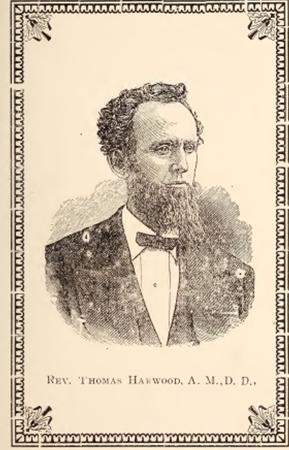
Exactly 146 years ago today, on Friday, August 4, 1871, three Methodist missionaries en route to Elizabethtown, New Mexico were struck by lightning and almost killed in Cimarron Canyon. Illinois natives Reverend N. S. Buckner and his 19 year old wife Annette had recently been appointed to take over Rev. Thomas Harwood’s responsibilities in Etown. They were travelling with Harwood, the man would go on to become the Methodist Bishop of New Mexico and co-found what is now the Harwood School in Albuquerque. The Buckners had just been assigned to assist him by taking over in Elizabethtown, where Harwood had dedicated a church building the year before.

The sun was beginning to set when Harwood and the Buckners reached the first section of Cimarron Canyon. Rev. Harwood’s buggy provided protection from the rain, so they weren’t uncomfortable. In fact, they were enjoying the thunderstorm and discussing the properties of electricity, when suddenly, thunder crashed, lightning flashed, and the smell of sulfur filled the air. The buggy itself had been struck and its passengers stunned to immobility. The force of the strike tore two large holes in the ground underneath the wheels, broke the crossbar behind the horses, and knocked the animals themselves off their feet.

Once the Buckners and Harwood were able to move again, they left the horses and walked back towards Cimarron “under the blazing lightnings and almost deafening thunder, muddy, wet and barefoot, . . . three miles to the nearest American house, and thence in wagon to Cimarron City” (Harwood, Vol. I, 129).

Aug 4 illustration.Thomas Harwood photo

Although they were all still feeling the effects of their lightning experience, the next morning, the little group of  missionaries were back in the canyon, this time on the Saturday stage to Elizabethtown, where the men preached at the morning and evening church services the next day.

It was an inauspicious beginning to the Buckner’s work in New Mexico Territory and things don’t seem to have improved much after that. Elizabethtown was a center of resistance to the Maxwell Land Grant Company’s plan to dispossess the area’s miners, ranchers, and farmers of their land. The town was rife with tension. The Buckners returned to Colorado in 1872. A year and a half later, in January  1874, they were replaced by Rev. Franklin J. Tolby, who lived in Cimarron but held services in Elizabethtown on a regular basis. Tolby himself would not last long. He was gunned down on September 14, 1875 on his way home from the Elizabethtown church, a date that many consider to be the beginning of the Colfax County War.

For fiction based on Reverend Tolby’s life and assassination, and historical information about his death, see my May 24, 2017 post and watch for them throughout September.


Source: Thomas Harwood, History of New Mexico Spanish and English Missions of the Methodist Episcopal Church, Vol. I and II, El Albogado Press, Albuquerque, 1910; Lawrence R. Murphy, Philmont, A History of New Mexico’s Cimarron Country, UNM Press, 1972, Albuquerque; ttps://www.timeanddate.com/calendar/?year=1871&country=1 accessed 7/17/2017

Etown’s Moreno Hotel Opens With Elegant Dinner

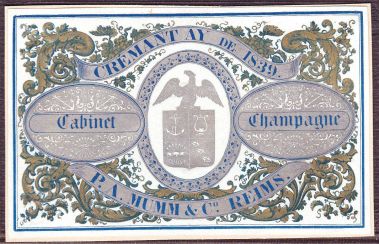
On Wednesday, July 1, 1868, the newly constructed Moreno Hotel opened in Elizabethtown, New Mexico with a dinner for 83 guests, and Etown congratulated itself on its prosperity. The hotel was a living symbol of how far the town had come since its gold-mine camp beginnings early the previous year. This inaugural dinner was served on “the finest china in the territory” and accompanied by bottles of Mumm’s Dry Imperial Champagne. The hotel was nicely located on 3rd Street between Broadway and Washington and would have had a fine view of Baldy Mountain on the eastern side of the valley as well as the various gold mining claims on the Moreno Creek in the valley directly below the town.

July 1 illustration.Mumm champagne label

It’s not clear who owned the Moreno when it opened, but two months later, it passed into the hands of Augusta Forbes, a German-born woman who, when she divorced her runaway husband the following spring, was granted the right to revert to her maiden name of Augusta Meinert as well ownership of the hotel and “all the personal property, household, and kitchen furniture now on the premises.”

Meinert operated the hotel for about four and a half years. She remarried in late December 1872 and formally handed off the Moreno to her new husband, Chancy Storey a month later. She seems to have retired from active involvement in running the business at that point, because she’s listed as a housewife in the June 1880 census while Chancy is listed as a hotel keeper, presumably of the enterprise that had such an elegant beginning twelve years before.

Sources: Colfax County Real Estate records, 1868-1888; U.S. Census Data, Colfax County, New Mexico Territory, 1870 and 1880.

Colfax County Serial Killer’s Wife Bears Him a Son

On June 24, 1869 a baby boy was born to Charles and Gregoria Kennedy, presumably at their cabin at the foot of Palo Flechado Pass on the road between Taos and Elizabethtown. Baptized in September that year at Our Lady of Guadalupe church in Taos, he was the only living child of Charles (age 31) and Gregoria (age 17) when the U.S. census taker arrived at the cabin the following summer. Charles Kennedy would become known in New Mexico Territory as the serial killer whose wife turned him in after he killed their child. Following a hung jury in Elizabethtown in Fall 1870, a mob led by Colfax County rancher and gunslinger Clay Allison would spring Kennedy from jail and see that justice was done anyway—at the end of a rope.

June 24 illustration.Christening record
Samuel Kennedy (Canady) Christening Record

Legend has it that Allison then took a butcher knife to Kennedy’s neck, severing his neck and presenting it to hotelkeeper Henri Lambert for display outside his establishment as a warning for all evildoers in Colfax County. It is also said that before he died Kennedy confessed to killing twenty-one men. Without the birth and subsequent death of that little boy, many more men might have died at his father’s hands.

If you’re interested in a fictional account of these events, please consider ordering my novel The Pain and the Sorrow, which will be released by Sunstone Press in early August.


Sources: New Mexico, Births and Christenings, 1726-1918; Howard Bryan, Wildest of the Wild West, Clear Light Publishers, 1988; Southwest Sentinel, Silver City, NM, November 24, 1885.

HOLLOW

Lucien Maxwell, single largest landowner in New Mexico Territory, stepped from the Middaugh Mercantile porch into early June sunlight and gazed unseeing across the green valley. On the flanks of Baldy Mountain, construction workers scurried like ants around a long wooden aquaduct-like structure. When finished, the flume it held would carry water from the Red River’s source to Baldy Mountain’s base. Then high pressure hoses would spray the sides of the gulches that drained the mountain, flushing out gravel and the gold the miners hoped it contained.

They were calling the flume the Big Ditch. It was a first for New Mexico Territory. Maxwell was a major investor, likely to make a substantial return both from water sales and from men wanting to buy mining rights. Yet all he could see was the letter in his hand.

Kit Carson was dead. Kit, the companion of so many of Lucien’s wilderness adventures, always so full of energy, so confident in his quiet-spoken way, with his sixth sense for trouble and how to meet it. Yes, Kit had been ill, but it was still incomprehensible that he could be gone. Lucien Maxwell gazed at the men scrambling across the hillside opposite and could feel no joy in their activity and its outcomes. It all seemed rather hollow, somehow.


Copyright © 2016 Loretta Miles Tollefson

Baldy Mountain Mining Problems Solved!!!!

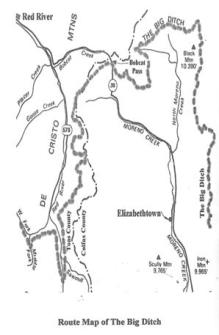
May 28 illustration.Big Ditch route map
Source: Red River Museum pamphlet

The miners in the Elizabethtown, New Mexico area were mighty frustrated. There just wasn’t enough water to satisfy their need to wash the gold out of the flanks of Baldy Mountain. They were willing to pay, but there was no one selling. But on May 28, 1868, their problem appeared to be on the way to being solved, because construction began on the Big Ditch.

Designed by a East Coast-educated former Army Engineer Capt. N.S. Davis, the Big Ditch project would employ over 400 men to construct a 41-mile system of reservoirs, dams, and wooden trestles that would funnel Red River’s headwaters to the placer mines on Baldy Mountain’s western flanks. About 7.6 million gallons per day (600 miner’s inches) were anticipated, water enough to supply all the miners in the district.

Or so they thought. The problem was that, as the water sat in the three reservoirs, then flowed through the landscape and the primarily wooden flumes on its 41 mile route to the mines, leakage in the flume and evaporation into the dry New Mexico air sucked much of the anticipated liquid right out of the system. When the water bean to flow the following July, only about 1/6 of the expected amount actually reached its destination. Just over one million gallons a day, or about 100 miners inches, remained for the miners to use.

May 28 illustration.Big Ditch flume

Not only was there not enough water, selling what there was wouldn’t return the $280,000 cost of construction to the original investors. The price of 50 cents per miner’s inch simply didn’t cover the amount invested. The Big Ditch changed hands several times until it was eventually sold to Irish-born Matthew Lynch, who jerry-rigged the system sufficiently to provide for his own hydraulic mining operations and leave a small surplus to sell. So the Big Ditch did turn out to be useful, just not to the level originally projected.

Sources: Red River City, A history of northern New Mexico, J. Rush Pierce, JRP Publications, Red River, NM, 2008; The Leading Facts of New Mexican History, Ralph Emerson Twitchell, Sunstone Press, 2007.


Etown Has Stagecoach Service Again!

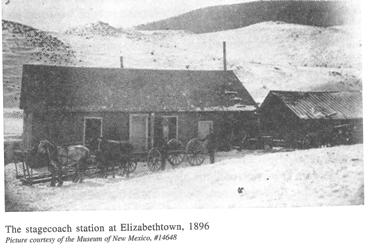
On May 1, 1894, the stagecoach once again arrived in Etown, New Mexico: The Springer and Moreno Valley Stage Line began daily passenger runs between Elizabethtown and Springer, where passengers could connect with the railroad. Even with fares at $5 a day, demand was high. The line was soon running double headers every other day. It didn’t just carry passengers. There were also contracts with Wells Fargo Express and the United States Post Office. In fact, the endeavor was so lucrative that H.H. Hankins jumped to serve the same route with the Moreno Valley Stage and Freight Company line.

These transportation services replaced Col. Valentine “Jim” S. Shelby’s 1868 Moreno Valley Stage and Freight Line, which had run three times a week between Maxwell’s Ranch (today’s Cimarron) and Elizabethtown, departing from Maxwell’s one day and returning from Elizabethtown the next. Fares in 1868 were $8 each way. Shelby, a former army wagon master, seems to have enjoyed a good challenge. A co-owner of the Aztec Mine, he also helped fund the construction project that diverted water from Red River to the Baldy Mountain mining district, then took it over when it failed to live up to projections, on the chance that he could find a buyer—which he did. Shelby eventually left the Etown area and ended up in Santa Fe, where he ran a large gambling “resort”—yet another service in high demand in New Mexico Territory.

May 1 illustration.etown stagecoach station

Sources: Lure, Lore and Legends of the Moreno Valley, Moreno Valley Writers Guild, Columbine Books, 1997; Philmont, A History of New Mexico’s Cimarron Country, Lawrence R. Murphy, UNM Press,

Prussian-Born Officer Becomes Etown Miner

On April 18, 1867, U.S. Army Lt. Colonel Edward Bergmann resigned from a promising military career to become a miner in Elizabethtown, New Mexico’s Baldy Peak mining district. But Bergmann wasn’t just any miner. He was the superintending partner in Lucien Maxwell’s Aztec Mine on the east slopes of Baldy, a venture that would haul out roughly $1.5 million in gold in the first five years of operation. Bergmann’s work there and in other operations was so successful that he was worth $60,000 in real estate by the summer of 1870.

Born in Prussia around 1833, Bergmann had been a 28 year old private in the U.S. Army when the Civil War broke out in 1861, a private who was granted an immediate discharge from his clerking duties at Departmental headquarters in Santa Fe so he could accept a 1st Lieutenant commission in the New Mexico Volunteers.

He rose quickly. By September 1862, Bergmann was a Captain and responsible for rebuilding and resupplying Fort Stanton. By early 1867, he was a Lt. Colonel leading scouting expeditions on the San Juan and Las Animas Rivers.

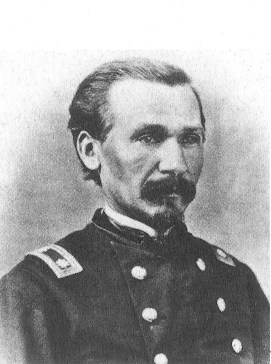
April 18 illustration.Edward H.Bergmann
Edward Bergmann in military uniform. Source: Louis Felsenthal, Citizen-Soldier by J. Meketa, UNM Press, 1982

But news of the gold on Baldy Mountain seems to have roused the mining fever in the Lt. Colonel, because he resigned his commission shortly thereafter and was soon on the ground in Etown and its surrounding mines.

He did well. By 1870, Bergmann owned $60,000 worth of real estate and was secure enough to attract the attention of local belle Augusta Sever, whom he married in December. Over the next fifteen years, he continued his activities in the area, participating in the Spanish Bar mine at the mouth of Grouse Gulch just east of Etown and taking on other roles, including acting as Etown Justice of the Peace during the Colfax County War.

Oddly, Bergmann’s real estate holdings seemed to have diminished to a mere $1,500 by April 1875, when the Territorial property tax assessment was made. However, he’d apparently made some powerful friends by that time, because when the New Mexico Territorial Penitentiary opened in Santa Fe in August 1885, Bergmann was named its first warden, a position he held until at least 1893. He must have gotten the mining fever once again, though, because he died in Colorado’s Bowl of Gold, near Cripple Creek, in 1910.


Sources:  Louis Felsenthal, Citizen-Soldier of Territorial New Mexico, Jacqueline Meketa, UNM Press, 1982; Lure, Lore, and Legends of the Moreno Valley, Moreno Valley Writers Guild, 1997, Columbine Books, Angel Fire, NM; Roadside History of Colorado, Candy Moulton, Mountain Press, Missoula, 2006; Philmont, A History of New Mexico’s Cimarron Country, Lawrence Murphy, UNM Press, Albuquerque, 2014; Red River City: A history of Northern New Mexico 1800-2000, J.R. Pierce, JRP Publications Press, Red River, 2006; The Eagle Nest, New Mexico Story, F. Stanley, Dumas, Texas, 1961; A Civil War History of the New Mexico Volunteers and Militia; Jerry Thompson, UNM Press, Albuquerque, 2015; Myth of the Hanging Tree, Robert J. Torrez, UNM Press, 2008.