Reporter Soldiers in the Mexican American War

Reporter Soldiers in the Mexican American War

According to Britannica.com, the practice of placing journalists with a military unit and permitting them to accompany troops into combat zones started in the U.S. during the Iraq War.

While  assigning career journalists to specific units may have originated during the 2003-2011 conflict, the concept was almost 150 years old by that point. It had begun with the 1846 Mexican American War.  

One of the embedded reporters was Lt. Richard Smith Elliott, who served as a correspondent for the St. Louis Reveille from June 1846 to June 1847. Elliott was posted with General Stephen Watts Kearny’s Army of the West. His reports to the paper provided news of the military conquest and subsequent activities, including first-hand accounts of the news of the Taos revolt.

Elliott’s pen name was John Brown. He had some newspaper experience, as he’d worked as a publisher and printer at small papers in Kentucky and Pennsylvania before giving it up to become a lawyer.  But they say newspaper ink gets in your blood, and when the U.S. decided to invade Mexico and Elliott joined up, he also volunteered to report on subsequent events for the Reveille. He began work the day he left St. Louis with the Laclede Rangers, writing about their presentation swords and grand send off.

During the following year, Elliott wrote around seventy items for the paper.  Other soldiers wrote for the Reveille, too, but Elliott’s work was the most voluminous.

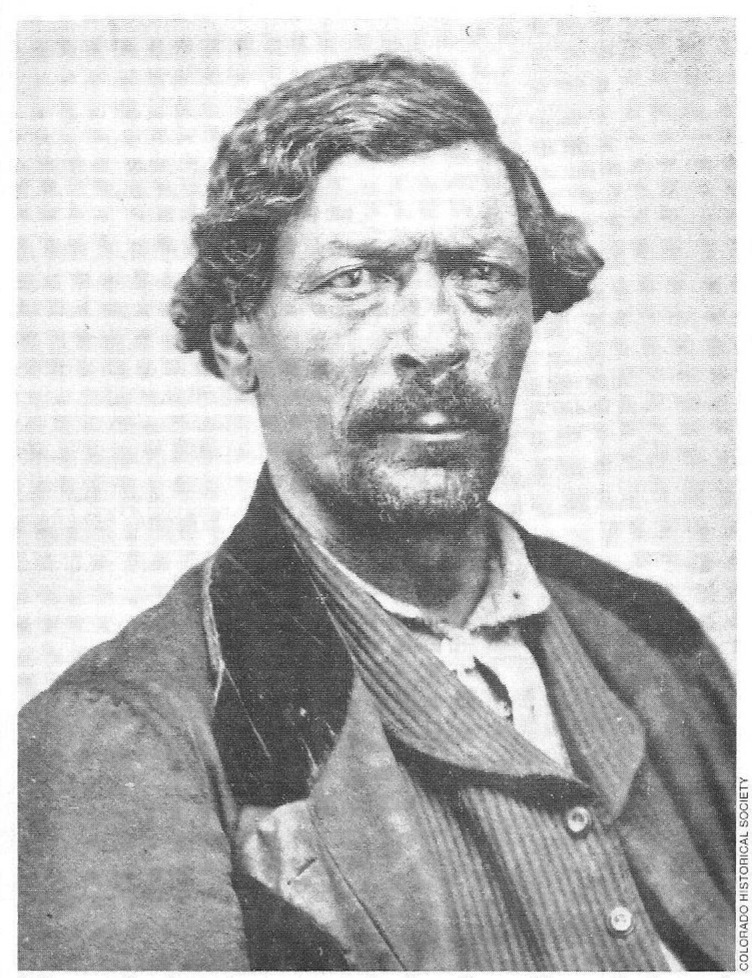
Farther south, the practice of embedded reporters was also incorporated into the American military activity. One of the embedded correspondents was New Orleans Picayune publisher George Wilkins Kendall, who had been in Mexico in 1841-1842 as part of the ill-fated Santa Fe Texas Expedition. He’d written a scathing three-volume bestseller about his experiences and was apparently anxious to participate in what he saw as payback for his imprisonment.

George Wilkins Kendall, Source: Kendall of the Picayune, F. Copeland

However, Kendall did not participate in the war directly. As what one biographer calls “the first modern war correspondent,” Kendall instead chose to observe from a distance. He set up a systematic program to aggregate the news in his portable “Picayune office” that followed General Zachary Taylor through northern Mexico and General Winfield Scott from Tampico to Mexico City. His employees gathered news, sold subscriptions, and did other business for the paper while Kendall ran the operation and sent editorials back to New Orleans complaining about the slowness of the mail.  

So there were different ways one could experience and report on the Mexican American War. All of them embedded in one way or another and each providing yet another way for newspaper readers back home to get a sense of what was happening “on the ground.”

 Whether this helped or hindered the war effort is anyone’s guess, but it certainly must have been a boon to newspaper circulation.

© Loretta Miles Tollefson

Source: Fayette Copeland, Kendall of the Picayune; Marc L. Gardner and Marc Simmons, The Mexican War Correspondence of Richard Smith Elliott; http://www.britannica.com/topic/embedded-journalism, accessed 1/27/25

What’s the Name of That Town Again?

What’s the Name of That Town Again?

The name “Taos” conjures many things. An ancient pueblo. A Mexican outpost. Gringo mountain men. A violent revolt. A funky 21st century village. But the village and pueblo are two separate places. There are Spanish villages and Indigenous pueblos side by side all over New Mexico. As far as I know, only in the Taos valley do the two settlements carry the same name.

And where does the name come from and what does it mean? Now there’s a question. According to F.R. Bob Romero in Santistevan and Moore, Taos, A Topical History, it’s been attributed “to an Indian word meaning ‘Red Willow’ or ‘people of the Red Willow.’” But no one knows for sure. All we know is that it’s what the pueblo was called after the Spanish arrived. Romero says it’s likely a “Tiwa Indian term that perhaps began with the T sound and was Hispanicized as Taos.”

So that explains (or doesn’t!) that. But then there’s the question of the name of the village which is three miles southwest. We call it “Taos,” but it was originally called Don Fernando de Taos, San Fernando de Taos, San Fernandez de Taos, and various forms of these three names, such as Don Fernando, San Fernando, San Fernandez, or simply Fernando or Fernandez. Although the latter two don’t appear very often in the historical record. Even then, if the name is shortened, it becomes simply “Taos.”

As far as I know, Don Fernando de Taos is the only location in New Mexico which has the honorific “Don” attached to it. The Don Fernando for whom it was named was actually a Don Fernando Durán y Chávez, who had a hacienda near Taos Pueblo in the late 1600s. He and his son fled south during the Pueblo Revolt of 1680 and didn’t return. In 1795, the grant was ceded to settlers from the nearby Cañon area, but the village didn’t really start to thrive until French-Canadian and American mountain men [post link here] began to trickle in in the 1820s.The village was a restocking and trading point for the fur trappers. Some of them stayed to set up mercantile businesses and intermarry and the community became the center of americano settlement in the valley.

Ironically, the location that developed in response to the American presence became the flash point of resistance to the 1846 American invasion. Maybe the locals just got sick of us.

© Loretta Miles Tollefson

Sources: Source: Francis L. and Roberta B. Fugate, Roadside History of New Mexico; Robert Julyan, The Place Names of New Mexico, Revised Edition; F.R. Bob Romero in Santistevan and Moore eds., Taos, A Topical History; http://taoscountyhistoricalsociety.org/taoshistory.html, accessed Jan 3, 2017

The Black Avengers of Ceran Saint Vrain – TAOS REVOLT, Part 2

The Black Avengers of Ceran Saint Vrain – TAOS REVOLT, Part 2

When Sterling Price set out from Santa Fe in late January to meet the Mexican insurgency from Taos, he was accompanied by a rag-tag group of men who would be instrumental to his ability to carry out his mission.

He had sworn the group of men Ceran St. Vrain called the Avengers into Federal service the Saturday they left and seen their worth at Santa Cruz de la Cañada they next day, when they were instrumental in keeping the rebels from seizing the U.S. supply wagons.

The Avengers were an interesting group of Mexican and American merchants, laborers, and mountain men. One of the mountain men was Jim Beckworth, son of a Virginia plantation overseer and a woman named “Miss Kill,” almost certainly a slave. Renowned for his exploits as a mountain man and his ability to tell a story, Beckworth had more than one thing in common with the Bent family slave who also signed up as an Avenger. Neither of them was supposed to be there.

By law, people of color could not join the U.S. military. They’d been banned from serving since the Federal Militia Acts of 1792. But there Beckworth and Green both were, marching with the rest of the Avengers.

Jim Beckworth, Source: Wild West Magazine, June 1993

And fighting. Although Dick Green was badly wounded at the battle of Embudo Canyon on Friday, January 29, there are reports that he also fought at Taos Pueblo the following week. The Bent family was so grateful for his service that they freed Green, his wife Charlotte, and his brother Andrew. The three of them headed east toward Missouri that summer and, hopefully, some place where they could live in peace.

We don’t know anything more about them. There are some tantalizing clues. The 1829 manifest for a schooner to New Orleans includes a five-foot-tall 14-year-old slave girl named Charlotte Green. Could she have ended up in the Bent household? And there’s an August 1863 New Orleans interment record for a “colored” man named Richard Green. Is this the man who was wounded at Embudo Canyon?

Unfortunately, I have been unable to find any definitive link between these pieces of information and the Dick Green who fought alongside his Mexican and Anglo cohorts in early 1847. And may have been one of only two Black men to enlist in the U.S. Army between 1792 and the Civil War.

© Loretta Miles Tollefson

Sources: James A. Crutchfield, Revolt at Taos, The New Mexican and Indian Insurrection of 1847; Ferguson, Paul-Thomas, “African American Service and Racial Integration in the U.S. Military,” http://www.army.mil/article/243604/, accessed 9/15/24; Mark L. Gardner and Marc Simmons, eds., The Mexican War Correspondence of Richard Smith Elliott; Howard R. Lamar, The Far Southwest, 1846-1912, A Territorial History; Ralph Emerson Twitchell, The History of the Military Occupation of the Territory of New Mexico; Alberto Vidaurre,” 1847: Revolt or Resistance?” in Corina A. Santisteven and Julia Moore, Taos, A Topical History.  

Sheriff’s Leniency Isn’t Enough – TAOS REVOLT, Part 1

Sheriff’s Leniency Isn’t Enough – TAOS REVOLT, Part 1

On Friday, January 22, 1847, the residents of Santa Fe, in the occupied territory of New Mexico, were on high alert. News had arrived two days before that the U.S.-appointed governor, Charles Bent, was dead at the hands of a mob loyal to Mexico. This came as a surprise because Bent and the U.S. military commander, Sterling Price, had assured everyone that all opposition to the U.S. invasion had been quelled the month before.

Apparently not. The outbreak had started in the early hours of Tuesday, January 19 during an altercation at the village jail about whether Sheriff Stephen Lee would release three men who’d been incarcerated for theft. Lee, intimidated, was about to let them go when Prefect Cornelio Vigil showed up and intervened. In the ensuing argument, friends of the jailed men killed Vigil and released the prisoners, while Lee escaped to his house.

But not for long. Despite the fact that he’d been willing to release the prisoners, Lee would die along with five other men, including Bent, his brother-in-law Pablo Jaramillo, and Judge Carlos Beaubien’s nineteen-year-old son Narciso.

Taos, January 1847. The crosses mark the location where people died. Source: The Taos Massacres, John Durend, 2004.

By the time news of the deaths reached Santa Fe late Wednesday, the fighting at Taos had spread north to Arroyo Hondo and the compound of whisky purveyor Simeon Turley. Of the nine men at Turley’s, seven had died and two escaped before Price could complete his arrangements to head north. He would march out on Saturday morning with 290 men, four howitzers, and a ragtag mob of about fifty men under mountain man Ceran St. Vrain.

It would not be an easy trek. January 1847 was an unusually cold month and there was snow in the north. There weren’t enough horses to carry Price’s men. Even the dragoons were on foot. And the rebels didn’t wait for the Americans to come after them. They mobilized and headed toward Santa Fe. Fortunately, they wouldn’t get that far. But it would still be a campaign to remember.

© Loretta Miles Tollefson

Sources: James A. Crutchfield, Revolt at Taos, The New Mexican and Indian Insurrection of 1847; John Durand, The Taos Massacres; Mark L. Gardner and Marc Simmons, eds., The Mexican War Correspondence of Richard Smith Elliott; Howard R. Lamar, The Far Southwest, 1846-1912, A Territorial History;  Ralph Emerson Twitchell, The History of the Military Occupation of the Territory of New Mexico; Alberto Vidaurre, “1847: Revolt or Resistance?” in Corina A. Santisteven and Julia Moore, Taos, A Topical History.

When is a Rebel Not a Traitor?

When is a Rebel Not a Traitor?

In 1846, early in the Mexican American War, General Stephen Watts Kearny led his Army of the West from Missouri to Santa Fe. He received no resistance in New Mexico and raised the American flag over the Santa Fe plaza in mid-August. By early November, he had moved on to assist in the subjugation of California, leaving troops behind to hold New Mexico. Local leaders laid plans to kick out the remaining troops, but the plot was discovered in mid-December and the most of them were apprehended.

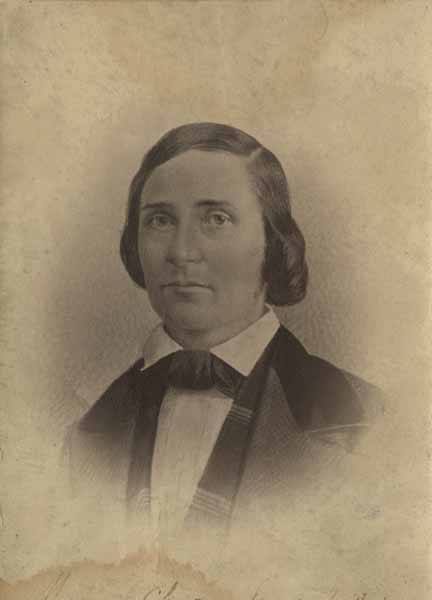
One of the men jailed was Manuel Antonio Chaves, who seems to have been the only one who went to court for his activities. Maybe his was the first and last case at this time because his American lawyer, Captain William Z. Angney, got him off.

Manuel Antonio Chaves, courtesy of Gill Chaves, 2019

Angney’s arguments were powerful. Chaves had been charged with treason against the United States. Angney argued that, since the war was still in progress, New Mexico was technically still part of the country of Mexico, and therefore Chaves was not an American citizen. You can’t try someone for treason against a country they don’t belong to. In fact, it was not treason, but patriotism, that motivated his actions.

Chaves was acquitted and released. His experience with Angney and in the courtroom seems to have permanently changed his view of Americans. Six months earlier, he’d argued fiercely that New Mexico ought to fight the invaders. The month after his release, he was fighting alongside the Americans to suppress the New Mexican revolt that broke out in Taos. He went on to serve in the Civil War on the side of the Union, rising to the rank of Lieutenant Colonel and playing a key role in the pivotal battle of Glorieta Pass. All because his perceived enemy (Captain Angney) defended Chaves’s right to rebel.

Sources: Mark L. Gardner and Marc Simmons, eds., The Mexican War Correspondence of Richard Smith Elliott; Rubén Sálaz Márquez, New Mexico, A Brief Multi-History; Marc Simmons, The Little Lion of the Southwest, a life of Manuel Antonio Chaves; Ralph Emerson Twitchell, The History of the Military Occupation of the Territory of New Mexico.

© Loretta Miles Tollefson, 2025

New Year in Old New Mexico

New Year in Old New Mexico

There were many celebrations connected with the Christmas season in Old New Mexico, ranging from la posadas, or reenactments of the Christ Child’s birth, to midnight masses on Christmas Eve, to dances at the Rio Grande Pueblos.

However, in New Mexico, the merry making didn’t end on December 25. A week later came Los Días de Los Manueles. January 1 is the feast of Emmanuel, another name for Jesus Christ, and therefore the name day of people christened Manuel or Manuela.

To honor these people, the new year would start just after midnight. The entire community came out under the night sky to visit the homes of anyone named Manuel or Manuela, sing songs in their honor, and feast on posole, chile, and bizcochitos, among other New Mexican traditional foods.

If you happened to live in the village of Ranchos de Taos south of Taos, you would also be honored with dances performed by villagers of Comanche and Hispanic heritage. The performers would start at the church in the plaza and then proceed to the homes of the name day honorees. They performed a set of dances at each location, including a buffalo dance (El Toro), an eagle dance (El Áquila), an enemy dance (El Espantao), courtship dances, and a captivity dance (La Rueda) during which someone is captured and ransomed. This tradition has continued into the 21st century and was enacted as late as 2019, as recorded in the video below. Some of the songs date to the middle 1700s.

What a great way to start the new year!

© Loretta Miles Tollefson

Source: Mary C. Montaño, Tradiciones Nuevomexicanas, Hispano Arts and Culture of New Mexico, UNM Press, Albuquerque, 2001

Nine Days of Christmas, A Tale of Old New Mexico

Nine Days of Christmas, A Tale of Old New Mexico

by Loretta Miles Tollefson

Christine is the only American girl in her New Mexico village. She badly wants to participate in the village’s traditional nine-day-long Christmas celebration, but her mother thinks she’ll be infected with “foreign” ideas. The village’s old women also think la gringa should stay home. Will Christine find a way to get what she wants? And what will she learn if she does?

Gabriela looked bravely into the young priest’s face. “Christina wants to sing in las posadas,” she said. She squeezed her blond americano friend’s hand. The two girls looked at each other triumphantly. There, she’d said it. She’d really and truly asked.

“For shame!” hissed the old woman at the priest’s elbow. She adjusted the black shawl that covered her head and glared at the two girls. “La americana es no catolica!” She stamped the ground with her cane and moved forward, trying to catch Padre Paul’s eye, but he remained stubbornly focused on the children.

“Have you consulted your parents?” he asked Christine.

The child’s eyes dropped and she shook her head.

“But she wants it!” Gabriela tossed her long black braids over her shoulders and bounced a little on her heels. “It’s important to her!”

The priest gave her a stern look. “What is the fifth commandment?”

The girls looked at each other and repeated in unison, “Honra á tu padre y á tu madre.” Honor your father and your mother.”

He nodded to Christine. “If your parents agree, you may participate in las posadas.” He lifted a stern finger. “But only if they agree.”

The girls nodded solemnly and turned away, heads together, plotting how best to obtain permission. Christine’s father would be easy. It was her mother who would resist.

“Humph!” The old woman moved forward again, boldly blocking the padre’s path. She tilted her black-covered head, looked him in the face, and tapped her cane on the ground authoritatively. “The American girl is not Catholic,” she repeated. “She is not one of us.”

The priest gave her a long look. “What you say is true, Señora Martín,” he said. “But she is a child and wishes to be part of our community. Would you deny her that wish?”

“She is a gringa!” María Antonia Martín snapped. “She knows nothing of la comunidad. And less than nothing of las posadas and its meanings.”

The priest’s mouth twitched. As a Frenchman, he knew only a little more about New Mexico’s  Christmas traditions than did the ten year old Protestant girl. “Participating in the rituals could bring her to a knowledge of the true church,” he said mildly.

“Humph.” The old woman turned away. “It is no matter. I am sure her mother will not allow her to participate.” Her lips twisted and she nodded toward the little village chapel behind the priest. “El sanctuario is undoubtedly safe from such a travesty.” The señora stumped off across the cold and dusty plaza. The priest watched her go. The black reboso that covered her head and shoulders merged with her long black dress and made her look from the back like a cloth-covered tree stump with two black feet.

A smile glimmered on Padre Paul’s lips, then he shook his head wearily and turned back to the church.

* * *

“And why in creation would you want to participate in such a travesty?” Christine’s mother turned from the cook stove, her long-handled wooden spoon in the air. “A clutch of villagers parading down the middle of a muddy street, making what they call music and screeching at the top of their voices.” She shook her head. “It won’t be like the services at Christ Church last Christmas,” she warned.

“I know it will be different from Philadelphia, Mama.” Christine tried to keep the impatience from her voice as she placed the dinner china on the rough wooden table. “But the songs they sing are very old and Gabriela says they are quite beautiful. They reenact the story of Mary and Joseph finding a place to stay in Bethlehem. It’s not for just one night like at Christ Church. It lasts for nine whole nights, and each night ends with food and drink and Christmas carols.”

“Not our Christmas carols, I’ll be bound!” her mother said. “And how will you know what the songs say? They’ll all be in that heathenish Spanish!” She shook her head and turned back to the pot of stew. “Nine days of Christmas. What will they think of next?” She shook her head. “I’ll not have you cavorting around with those Mexican children any more than you absolutely must.” Her eyes narrowed and she turned to look at Christine. “You were up quite early this morning, young lady. When I called you for prayers, you were already outside. Where did you go?”

Christine kept her eyes down as she straightened the knife and fork at her father’s place setting. “I was with Gabriela. She was talking to the priest.”

“What? The priest?” Her mother took a step away from the stove, then recovered herself, placed the dripping spoon on the counter and turned, her hands on her hips. “You stay away from that man, you hear? Catholic priests—” She paused. “Well. They are not good people, that’s all there is to it. They have a propensity—” She stopped again. “Not only is he Catholic, but—.” She shook her head and raised her chin. “I will not permit it!” she declared. “You stay away from that man and that church, or I’ll have your father whip you from here to next week! Do you hear me?”

Christine’s hands dropped to her sides. She stared down at the scarred surface of the wooden table. “Yes, Mama.”

“Good. That’s settled then.” Her mother turned back to the stove and began stirring the stew more vigorously than was strictly necessary. “Not only do I have to contend with primitive conditions and a lack of decent food supplies, but now my own daughter is being sucked down into the Catholic morass.” She lifted the spoon, knocked it sharply against the edge of the pot to remove the excess stew, and moved to the sink. “Nine days of Christmas, indeed. We’ve been six months in this dirty hell hole already and who knows how much longer? What that man was thinking is beyond my comprehension.” The spoon dropped into the sink and she whirled around and glared at her daughter, who still stood staring at the table. “And from now on, we will have prayers every morning and you will attend them,” she said, hands on her hips. “If you do not, you will be restricted to the house for the remainder of that day. Do you hear me?”

“Yes, Mama,” Christine said again, trying not to let the tears show in her voice. “I hear you.”

“Now go out and bring in more wood,” her mother snapped. “But not piñon. I don’t want the oven to get too hot, or the biscuits will burn again. I’d like them to be edible this time, for a change.”

Nothing was said at dinner about Christine’s desire to participate in the village’s Christmas procession, but her father could see that his women had been quarreling. He didn’t ask what the argument was about. He’d learned long ago that he had great authority over his mercantile operation,  but little or none in his household. Especially when his wife sat tight-lipped at the other end of the table and his daughter kept her golden curls between his eyes and her own.

He read to them after dinner, a little something from Miss Austen’s Pride and Prejudice while his women did their handiwork by the light of the fire. But even Mrs. Bennett couldn’t bring a smile to his wife’s lips.

After a bit, he set the book aside. “Something interesting happened at the store today,” he said.

She looked up, eyes smoldering. “I don’t understand how you can think that anything which happens in that shop is the least bit interesting,” she snapped. “Unless you’ve finally come to your senses and discovered that there’s no real money to be made trading in wool and we can leave this God forsaken place once and for all, and return to Philadelphia and civilization!”

He raised his eyebrows, opened his mouth, shut it again, then lifted himself out of his seat. “Well, I’m going to bed,” he said. “It’s been a long day.”

As he left the room, he heard a small sniff from Christine’s chair. He glanced back. The child’s  face was still bent over her work, but her hand had slipped up to wipe away a tear. He sighed and shook his head. Well, if she wanted badly enough for him to know what the quarrel was about, she’d find a way to tell him.

Sure enough, when he left the mercantile for lunch the next day, Christine was waiting at the bottom of the broad wooden steps in the brilliant December sunshine. She wore her bonnet, which he knew she despised, so he guessed that she was trying once again to accommodate her mother. He smiled to himself. The child must want whatever it was she wanted very badly. First the bonnet, and then coming to meet him this way. It wasn’t often that she joined him for his noonday walk home.

He slipped his hand over hers. “Hello, sweet girl of mine,” he said. “How has your day been so far?”

Christine tilted her head to one side. “All right, I suppose,” she said. “How has yours been?”

“Well, something happened yesterday that I thought you’d find interesting,” he said.

She lifted her chin. He could just see a slice of her face beyond the bonnet’s broad rim. “Is it what you were going to tell us last night?” she asked.

He nodded, pleased at the spark of interest in her voice. “Both clerks and all three laborers came to me yesterday,” he said. “They asked to leave early each evening for the nine days before Christmas. In fact, they suggested that I close the store up early on those nights. They want to participate in what they call las posadas. Do you know what that is?”

Her head jerked back and her delighted eyes blazed into his, then she turned back to face the dusty, hard-packed dirt street.  “I’ve heard of it,” she said indifferently. “Gabriela told me a little.”

He gave her a long, considering look. So that’s what she and her mother had been arguing about. “What did she tell you?”

“Just that it’s the old Mexican way to celebrate Christmas,” she said, still watching the street. “Only it’s not right at Christmas, it’s before, and they act everything out. And there’s music and singing, and they go from house to house and people give them good things to eat and the whole village—” She stopped, suddenly aware of the way her voice had risen with excitement and interest.

“That’s more than the men told me,” her father said. “Although it did sound as if the entire village participates in the event. The clerks don’t seem to think we’ll have any customers during those evenings.”

“The entire village except for me,” Christine said to the dusty street.

“What was that?”

Christine looked up at him bleakly. “I wanted to belong—” She caught herself. “To participate. Even if it was just a little of the singing for some of the nights. And Padre Paul said I could—”

“Padre Paul?”

“The priest. The one who comes every two weeks to say mass.”

“Oh yes. The Frenchman.”

“He said I should ask my parents for permission and if you said it was all right, then he would allow—” She bit back her tears. “But Mama said not to even think of it. And she was angry and said he was wicked. And I know he’s not. He’s a very nice man. And he wouldn’t be there anyway, not every night. It’s the village that makes the procession. The celebration goes on for almost a week and a half and the padre has other villages to tend to. Everyone in the village participates in las posadas and sings the different parts for the play, and Gabriela says it’s the most important event of the year and Mama is so—”

“Adamant,” her father said sadly.

Christine sniffed and nodded her head.

“She is afraid for you,” he said gently. “She wishes you to preserve your Protestant Episcopal faith and grow up to be a proper young lady.”

“She’s wrong about Padre Paul,” Christine said stubbornly. “He’s a nice man.”

“I’m sure he is,” her father said. “But I don’t think that’s the best point of argument to use with your mother.”

Christine giggled in spite of herself. She looked up hopefully. “Will you speak with her?”

“I’ll try,” he said soberly. “But I can’t promise you anything. And I’ll have to wait for the appropriate opportunity.”

She squeezed his hand. “I’ll wait,” she said. “And I’ll be patient and good and try not to aggravate her.”

He smiled down at her and they went on to the house, the child hopeful and the man a little sad at the thought that the two of them felt it necessary to plot in this way, that the girl knew so well the strategies she needed to implement to chip away at her mother’s resistance.

* * *

Tía Luz looked up from her handiwork as Gabriela entered the adobe casita. “You should be wearing your chal,” Luz scolded. “The cold is coming on. You don’t want to be sick for las posadas.”

The child crossed the room to sit on the adobe banco beside her aunt. She lifted a strand of the deep red wool yarn Luz was threading into her needle. “What a beautiful color,” Gabriela said. “What are you making?”

Luz lifted a small coverlet of white wool from her lap. Three red flowers bloomed along one edge. “It’s a new blanket for el niño cristo,” she said. “The grandmothers have decided the old one should be replaced and they asked me to create this for him.”

“It is a great honor,” Gabriela said listlessly.

“Oh child,” Luz said. “Are you still fretting about your friend?”

The girl shrugged and got up to poke another stick of wood into the curved adobe fireplace in the corner.

“It is a commandment,” her aunt said. “She must obey it.”

““Honra á tu padre y á tu madre,” Gabriela recited. “I know.”

“Besides, she is not from here.” Luz slid her needle into the soft white coverlet. “She knows nothing of our customs.”

“She could learn.” The girl came back to sit on the banco. She leaned against the adobe wall and watched the red flowers form under her aunt’s fingertips. “I could explain it.”

“She would not experience it in the way that you do.” Luz began to fill in the flower’s petals with long careful stitches. “You have las posadas in your blood. It is part of who you are. She would be merely a spectator.”

Gabriela was silent, not wanting to contradict her aunt, but not believing her either. How was it possible to participate in the Christmas procession and not be moved by its simple richness?

* * *

It had rained in the night and Christina was glad for what her mother called her “good thick American boots.” When she met Gabriela at the village well, she felt a stab of pity for her friend’s feet in their muddy Indian moccasins. But Gabriela met her with smiles. She bounced a little on her heels. “What did your father say about las posadas?”

Christine shrugged, her hands in the air. “He said he’d talk to mi mamá. All I have to do is be patient.”

Gabriela groaned. “How I hate it when adults say that!” The two girls giggled companionably as Gabriela lowered her bucket into the well and Christine once again admired the curve of the brown adobe village walls against the blue sky.

* * *

“This dirty little village in the middle of nowhere!” Christine’s mother sobbed. “I hate it!”

Christine, trying not to listen from her bed in the next room, heard a rustle. Then her father said something in a soothing voice.

“No! It will not be all right!” her mother said. “And Christine! What damage is this doing to her, this being thrown in with these dirty Catholic peasants? There isn’t even a school house! We need to get out of here, Stephen! For Christine’s sake, if not for mine! She needs proper schooling and to know how to behave around civilized people! The mercantile is just not bringing in enough to make coming here worthwhile!”

Christine covered her ears then, knowing what was coming, not wanting to hear her mother’s lamentations yet again. Silent tears seeped from her closed eyelids as despair settled over her. There would be no las posadas for her. Her mother hated this place and all it represented too much to allow her to participate in its rituals. All her mother wanted was to return to Philadelphia and “civilization.” The child turned, flopping onto her belly, and dug her chin into her pillow to stifle her sobs.

She woke the next morning feeling drained of all hope and dressed listlessly. There was no point in hurrying with her chores to meet Gabriela at the well, to see her friend’s disappointment when she heard the news. She might as well stay home, imprisoned between the barren board walls of this americano house, the only wooden house in the village. A house tight with bitterness and the smell of burnt cooking because her mother was unable to adjust to the heat produced so prodigiously by the local piñon firewood.

Christine wandered morosely out of her room and stopped at the end of the hall. Her mother was at the cook stove, pouring pancake batter. Christine’s father stood beside her, speaking firmly, his voice low.

“All right!” Christine’s mother snapped. “I said she could, didn’t I?” She scraped her spatula across the cast iron griddle and lifted a blackened pancake from the stove. “Now see what you’ve made me do! It’s scorched black! I tell you, I hate cooking here!”

He backed away, giving her room, and moved toward the front door. “I need to get to the store.” He smiled sadly at Christine as he turned. “Good morning, sweet girl.”

“Just one minute!” Christine’s mother slapped the burnt pancake into the sink on the other side of the kitchen and turned to glare at Christine, then her husband. “I want you to hear this. I don’t want any confusion about what I’m about to say.”

He stood, watching her warily. She nodded curtly at Christine, her lips tight. “Your father has decided you may participate in this nativity play,” she said. “I am not happy about it, but I won’t stand in your way.”

Christine brightened and opened her mouth. Her mother lifted the spatula. “However, there are conditions. You will not attend that papist mass at that so-called church, do you hear? And I expect you to participate in prayers with me every morning and before bedtime each night.”

“Yes, Mama.”

“Furthermore, you will memorize a psalm of my choosing each day. A psalm a day until Christmas, do you hear me?”

Christine hated memorizing. Let them be short psalms, she thought fervently. But she only said, “Yes, Mama,” again.

“And if I see you slacking in your chores in any way, your father will withdraw his permission.”

Across the room, Christine’s father opened his mouth, but his wife’s head jerked in his direction, her eyes flashing, and he closed it again.

She turned back to the girl. “Do you understand?”

“Yes, Mama,” Christine said meekly. She kept her eyes on the floor, afraid they would show her delight too clearly and cause the permission to be rescinded. She looked up only after she heard the front door close behind her father. Her mother was crouched in front of the cook stove’s open fire compartment, poking angrily at the fire logs in an effort to separate them and thus lower the stove top heat. Christine slipped back to her room to make sure her bed was made properly.

* * *

Gabriela and Christine stood at the edge of the group of villagers and clutched their shawls against the December night’s chill. Long black rebosas created a disapproving wall in front of them, shouldering the girls to the outer edge of the procession. This was the seventh night of las posadas and the cold shoulders didn’t seem to have softened at all.

Christine lifted her chin defiantly. She had worked hard to be here. She wasn’t going  to let her happiness be dimmed by people who disapproved of her simply because she was a gringa. Besides, Gabriela’s arm was linked in hers, and Gabriela’s voice was in her ear, explaining what was about to happen and translating the songs.

After six nights of the event, Christine didn’t really need this information, although she appreciated her friend’s affection and care. She stifled a yawn. Each evening had followed the same pattern: As daylight faded from the turquoise-blue sky, the villagers assembled in front of the tiny adobe church. The man and woman chosen to play Mary and Joseph this year sang the traditional songs for their roles as the small crowd moved slowly through the dark streets under flickering torches. Everyone chimed in on the choruses. The only real difference each evening was the house where the villagers finally stopped, the man who opened the door and sang the part of the innkeeper, and the quality of the refreshments provided afterwards.

Christine didn’t want to admit it, but she was becoming a little bored. The man who sang the part of Joseph had a really beautiful voice and Christine enjoyed listening to him, but it was cold out here on the edge of the crowd and she had heard it all before.

“En nombre del cie-e-e-e-lo os pido posa-a-a-ada,” he sang. Gabriela whispered the translation and Christine nodded impatiently. She already knew what he was singing:  In the name of heaven, I ask for shelter.

“Pues no puede andar-ar-ar-ar-ar ya mi esposa ama-a-a-a-ada,” he sang. Can go no farther, my beloved wife. Christine huddled a little closer to her friend and thought of the hot chocolate Gabriela had said would be served tonight. The host house was one of the wealthier ones in the village and the women there always served New Mexican-style hot chocolate. According to Gabriela, the drink would be different from anything Christine had ever tasted.

Christine licked her lips, thinking of it. They added cinnamon to the chocolate. That sounded odd, but she’d tasted odder things in her time here: burritos, enchiladas, chicharrones. And red chile sauce with everything. Sauce so hot that the inside of her nose burned at the thought of it.

The wind picked up, scattering tiny flakes of snow before it and bringing Christina back to the present. She stood on tiptoe to see the house’s blue-painted door. Its owner was singing the final verse of the innkeeper’s role. “Entren, peregri-i-i-i-nos,” he bellowed in a not very melodious voice. “No los conocí-í-í-í-í-í-í-í-ía.” Enter pilgrims, I didn’t recognize you.

Good, they’d be warm soon. Christina moved forward impatiently, but Gabriela giggled and tugged her back. The villager playing Joseph sang the response, then the crowd surged into the house singing, not all together, and not all in tune, the final refrain.

Christine joyfully lifted her voice. “Esta noche es de alegría, de gusto y de regocijo,” she sang happily. Tonight is for joy, for pleasure and rejoicing. “Porque hospedaremos aquí a la Madre de Dios Hijo.” For tonight we will give lodging to the Mother of God the Son.

The child’s clear little soprano soared above the others and Señora María Antonia Martín, who happened to be just in front of her, turned and scowled. “Silencia, niña!” the old woman snapped. “Tú es indecorosa!”

Gabriela giggled, but Christine flushed and fell silent. Unexpected tears sprang into her eyes and she hastily brushed them away.

Gabriela pulled on Christine’s arm and the girls edged away from the old woman, toward the front of the room. “Pay her no attention,” Gabriela whispered. “La señora is never happy with anything and no girl is ever silent enough for her.”

Christine flashed her friend a thankful smile but didn’t answer. Then they were at the edge of the crowd, where they could see the long wooden table laden with food. The hosts and their assistants moved between the guests and the table, bringing them hot beverages in small silver cups. Gabriela nudged Christine. “Look! It’s chocolate! I told you!”

Gabriela’s Aunt Luz was helping distribute the drinks. She came toward the girls and held out a cup. Gabriela reached for it, but her aunt looked at her reprovingly and said something in Spanish that Christine didn’t understand.

Gabriela stepped back and Luz offered Christine the cup. “Hace calor,” she cautioned. It is hot.

Christine curled her fingers around the warm silver. “It feels good,” she said. “Gracias.”

Luz smiled and turned away. Christine took a small sip. Her eyes widened and Gabriela giggled. Christine blinked hard. It was hot all right, but not from the stove. “Is it chile?” she asked.

Gabriela nodded mischievously. “It is polite to drink the entire cup,” she said. “It is rude to not drink all of it.”

Christine took a deep breath and lifted the cup to her lips. She would drink it all in one gulp and get it over with. She tilted her head and swallowed, but her throat rebelled at the chile’s scorching heat and closed against it. She choked helplessly. The laughing room fell silent and everyone turned to look at her. Chocolate spurted from her mouth and down her chin and Christine turned away, looking wildly for somewhere to hide her embarrassment.  

“Oh dear,” Gabriela giggled helplessly.

Then her Aunt Luz was at Christine’s elbow, a cloth in her hand. She steered Christine onto a cushioned bench in the corner  as she snapped “Leche!” at her niece.

“Lo siento mucho,” Luz said, bending over the girl. I’m so sorry. “Los chiles hacer mucha calor.” The chiles are very hot. She glared at Gabriela as she appeared with a large mug of milk and hissed something that Christine didn’t understand.

Christine drank the milk carefully, grateful for the way it coated and soothed the hot chile burn on her tongue and throat. “Gracias,” she whispered. The voices in the room rose again as the guests refocused on the food and the candy-filled piñata strung from the ceiling.

Luz patted Christine’s arm. “Los chiles hacer mucha calor,” she said again.

“She says the chiles are very hot,” Gabriela offered.

Christine nodded. She knew what the woman had said. More importantly, she heard the sympathy in her voice. She wished she knew enough Spanish to thank her properly for rescuing her. “Gracias,” she said again, looking her full in the face.

Luz smiled kindly. She turned to Gabriela with a frown and said something in rapid Spanish. Then she turned back to Christine, patted her shoulder kindly, and went back to the party.

“I’m sorry,” Gabriela said contritely. “I should have warned you.”

Christine nodded miserably. Then Gabriela giggled. She pointed at Christine’s chest. “The chocolate dripped.”

Christine looked down in dismay. A large brown blob decorated her dress. She closed her eyes against the threatening tears. She couldn’t just return to the party and pretend nothing had happened. Not with this reminder splashed down her front. She felt Gabriela’s hand on her shawl, gently rearranging it so the chocolate wouldn’t show, but she shook her head. “I want to leave,” she said.

Gabriela glanced toward the table. “But we haven’t eaten.”

“I’m not hungry,” Christine said.

Gabriela considered her for a long moment. “I’ll bring you some,” she offered.

Christine nodded and Gabriela disappeared across the room.

Christine hunched on the bench. She clutched the shawl around her shoulders and over her chest. Señora Martín stumped up with her cane, stopped directly in front of Christine, and stared into her face. She said something incomprehensible in Spanish, gave Christine a sharp little nod, thumped her cane twice on the floor, and moved on.

Christine looked bleakly at the crowded room, the bountiful table, the colorful piñata. A little boy’s stick whacked a hole in the piñata and candy rained down on the squealing children. It was all very picturesque. And the music was beautiful and very rich, although very different from home. Home. Wherever that was. Christine closed her eyes, suddenly overcome with a strange sadness.

Gabriela returned with a plate full of goodies and more milk, sent by their hostess to calm the americano girl’s tongue after the hot chiles. Christine accepted the milk gratefully and widened her eyes at the taste of the anise-flavored cookies Gabriela called “biscochitos,” but a part of her remained strangely removed from the evening’s pleasures.

An hour later, as the two girls said their goodbyes and slipped out the door, someone began singing a song from another Christmas play, one about the shepherds. The song was inexpressibly sad, something about Jesus being born to die for our sins. Christine shivered a little at the pain of it, so odd for a Christmas celebration and yet so hauntingly beautiful.

As Gabriela slipped through the big wooden door of her casa, Christine turned and touched the house’s outer wall. The adobe was slightly rough under her fingers and even now, at the end of a December day, it contained a bit of sun warmth. She patted the wall softly and mulled over the week’s events as she moved down the street toward the clapboard house at the village’s edge. Her mother was right. She didn’t belong here. And yet— If her father should give up the mercantile and return to Philadelphia, she suspected she wouldn’t feel that she belonged there, either.

She lifted her face to the now-clearing sky. This was a part of her now. The warm adobe walls, the broad blueness of the sky, the long horizons. Gabriela’s laughter.

Christine drew in a deep breath of spicy smoke. Someone was burning piñon in their fire tonight.  Even the wood smoke was beautiful. It seemed to surround her, then move on, leaving its fragrance behind. Somehow, the smoke reminded her of Tía Luz’s kind eyes. The girl smiled. Yes, it truly was all part of her. And she was part of it, no matter what Señora Martin or her mother might have to say.

THE END

© Loretta Miles Tollefson 2017

All rights reserved
November Sale!

November Sale!

My novel The Pain and the Sorrow is on sale through Friday, November 22. The ebook is $.99 and is available in Kindle and other formats. The paperback (available through Amazon) is $10.99.

At the foot of a lonely mountain pass between Taos and Elizabethtown, a single log cabin huddles under the pines. Travelers are invited inside to stop, rest, and eat.

But they should be careful how they look at the young woman who serves them. Her husband, Charles Kennedy, is subject to jealous rages. At least, he says that’s why he kills the unwary: It’s all Gregoria’s fault.

Based on a true story.

FLASH SALE!!!

FLASH SALE!!!

Subscribe to continue reading

Subscribe to get access to the rest of this post and other subscriber-only content.

NOT JUST ANY MAN – CHAPTER 9

NOT JUST ANY MAN – CHAPTER 9

The following material is an extract from NOT JUST ANY MAN, A Novel of Old New Mexico, Copyright © 2018 Loretta Miles Tollefson. Published by Palo Flechado Press, Santa Fe, NM

A Note about Spanish Terms: This novel is set in northern New Mexico and reflects as much as possible the local dialect at that time. Even today, Northern New Mexico Spanish is a unique combination of late 1500s Spanish, indigenous words from the First Peoples of the region and of Mexico, and terms that filtered in with the French and American trappers and traders. I’ve tried to represent the resulting mixture as faithfully as possible. My primary source of information was Rubén Cobos’ excellent work, A Dictionary of New Mexico and Southern Colorado Spanish (University of New Mexico Press, 2003). Any errors in spelling, usage, or definition are solely my responsibility.

CHAPTER 9

Williams and Gerald move down the Cimarron over the course of the next week, trapping as they go, a day or two in each location, setting traps, pulling in beaver, skinning carcasses, and stretching plews. They eat what they trap until the aroma of fatty flesh drifting from the fire begins to turn Gerald’s stomach.

Occasionally, they see wild turkey. The sleek birds slip through the forest without any apparent awareness of the humans, but keep well out of reach. Old Bill claims he doesn’t want to shoot them for fear of bringing larger, two-footed varmints into range, but Gerald suspects the red-haired man has an affinity with the birds that precludes killing them unless absolutely necessary.

Gerald himself finds the turkeys unaccountably beautiful. There’s a wild wariness to them unlike anything he’s ever encountered in barnyard fowl. Although he has to admit that an alternative to beaver flesh would be nice. When the men and their mules break into the small snow-drifted valley Williams calls Ute Park, it’s more than the scenic value that lifts Gerald’s heart. A herd of perhaps thirty elk browses at the base of a small rocky cliff to his left.

Williams halts, studying the herd. Although the elk seem unaware of the trappers, they also seem restless. Suddenly, a large cow bolts toward the river on the other side of the valley. As the other elk follow, three wolves—two small grays and a big black—circle into sight, tagging the stragglers.

The elk barrel across the snow and grass, surge into the icy stream, then scramble up the far bank into the trees. A young bull, its left hind leg dragging, balks at the river’s edge, perhaps wishing for a more shallow ford. The wolves move in swiftly. As they cut the elk away from the stream, a raven caws overhead.

Williams chuckles, drops his mule’s lead rope, and lifts his rifle. As its muzzle roars, an identical blast erupts from the base of the stone outcropping, and the bull stumbles and goes down. The wolves dart in, then pull slightly back. The big black looks over his shoulder, toward the cliff.

Williams’ head swivels, following the wolf’s gaze. “Well, I’ll be hornswoggled,” he says.

An Indian man, his hair in the long braids and tall pompadour characteristic of Ute men, moves from the cliff. He waves an arm at the wolves and they slink, tails between their legs, toward the leafless willow brush that crowds the riverbank a half-dozen yards downstream. Then they turn and crouch in the grass, eyes flicking between the approaching man and the elk.

“Waagh!” Old Bill groans. “That Ute’s gonna claim that bull, and now him and those wolves have that whole herd most righteously spooked. We don’t have a chance in hell of gettin’ another one, and all we’ve got for supper is that quarter beaver that’s on the edge of sour, and that little bit of tail.”

“It may have been your shot that brought that bull down,” Gerald points out.

“Don’t matter,” Williams says. His eyes rake the valley. “He appears to be alone,” he adds thoughtfully. Then he shrugs. “Well, it’s worth a try anyhow. We’re two against one.”

He grabs his mule’s lead rope and moves forward, Gerald and his mule slightly behind.

The Indian looks up as they move toward him. Then he raises his knife and slices deep into the elk’s belly. He yanks out a long handful of glistening entrails and turns to toss it toward the wolves. The black darts in, mouths the food, and drags it off, his companions following obsequiously.

“That’s us,” Williams says over his shoulder. “Those grays.”

Gerald grins and nods, his eyes on the Ute, who’s pulled off his buckskin shirt and gone back to work on the elk carcass, pointedly ignoring the two trappers. Gerald and Williams are within ten feet before he looks up again.

Old Bill signs “Hello” and the other man nods noncommittally as his knife continues to slice into the elk.

“That there was a good shot,” Williams says, then repeats himself with a few fluent hand signs.

A smile flashes across the Indian’s face. “You shot wide,” he says in English.

Williams chuckles. He looks down at the carcass and gestures toward its front quarters. “Mind if I just turn him a mite?”

The Indian, who’s now crouched at the elk’s tail, incising careful circles around its hooves, nods and pauses in his work. Williams moves forward, grasps the bull’s neck in both hands, and lifts, twisting the body first one way, then the other.

“There’s a bullet in each shoulder,” he says.

The Indian grins. “I arrived first. Made first cut.”

“You did at that,” Williams agrees. “But that’s a whole lot of elk for one man to feed on.”

The man’s eyes flash and the knife in his hand lifts slightly. Gerald shifts his rifle, but the Ute’s eyes remain on Old Bill’s face. He gestures toward the rocky outcropping and the mouth of the narrow valley that stretches further north. “My family waits.”

“I don’t suppose we could trade you a bit of beaver for a haunch?” Gerald asks.

Williams nods at Gerald. “Beaver fat would be just the thing to flavor that elk,” he says. He turns to the Ute. “You know how dry and tough elk can be. Especially this time of year, when the little grass they’ve had is all dried out and worthless.”

The Indian’s gaze moves across the valley’s patches of still-thick brown grass, then to Williams’ face.

“Though, I have to tell you we’ve got a righteous hunger for beaver,” the trapper says. “My partner here likes it so well he just truly can’t get enough of it. So you could say he’s makin’ a sacrifice, offering you some. We can spare you some tail, too, for that matter.” He looks at Gerald. “If that’s all right with you.”

Gerald nods and Williams looks at the Ute. “We just thought we’d do you a favor, is all. Give you somethin’ to sweeten the pot and put some taste in that rangy old winter elk.”

“Show it me.”

Gerald fumbles with the leather thongs that secure the wrapped portion of beaver to his mule’s packsaddle and lifts the meat down. “It was fresh yesterday morning,” he says.

The Indian leans forward slightly, his nostrils flaring. Then he pulls back, nods, and gestures toward the elk carcass. “I trade front left shank,” he says. He grins at Williams. “Your piece.”

Gerald grins. The front pieces are smaller than the hindquarters.

Old Bill nods. “That’ll do right well.” He sticks out a hand. “My name’s Old Bill Williams and this here’s Gerald Locke.”

The Ute frowns at Gerald. “I know older man this name.”

Gerald smiles. “My father and I are both named Gerald Locke,” he says. “I am called Gerald Locke Junior.” The man looks puzzled. “Gerald the younger,” Gerald explains.

The Ute nods, studying Gerald’s face. “I can see it is so.” He lifts a bloodied hand toward his chest. “I am Stands Alone.” His gesture takes in the valley, then the peaks upstream. “This my place.”

Gerald nods. How far does the Ute’s place extend? But he merely says, “We’ve been trapping beaver on the river here. Is that all right with you?”

Williams swings his head, glaring, but neither Gerald nor Stands Alone respond. They stand, looking into each other’s faces, then the Ute says, “For beaver to flavor the pot,” and Gerald grins and nods.

Williams shakes his head in disgust. He jerks his thumb downstream. “We’re trappin’ that direction.” His tone makes it clear that he’s not asking permission.

Stands Alone nods. “No beaver there beyond a half-day journey,” he says. “The water is swift.” He jerks his head southwest, toward the other side of the river. “That way, toward the black valley, there may be beaver.”

Williams frowns. “Not in the Moreno Valley,” he says. “We was just there and there ain’t any there. Never has been, far’s I know.”

Stands Alone gestures toward the peaks that rise above the opposite bank. “That way is a smaller valley with many seeps. I have seen beaver.” He shrugs. “Too far for too little meat.” He spreads his hands and a ghost of a smile glimmers in his eyes. “I give them to you.”

Old Bill throws back his head and barks a laugh. “We can have all we want, huh? As long as we leave the elk here for you?”

Stands Alone smiles noncommittally.

Gerald chuckles and gazes toward the pine-covered slopes. “I suppose the quickest way there is back the way we came.”

Stands Alone nods. “There is a way when grass is green,” he says. “But when snow comes, following water is best.” He bends and goes back to his work, deftly cuts a section of meat from the elk’s shoulder, then proffers it to Old Bill.

Williams shrugs, wraps the meat in a piece of buckskin, and attaches the bundle to his mule’s packsaddle. Stands Alone returns to his labors and doesn’t look up as the trappers turn and move up the valley.

As the canyon narrows around them, Gerald glances back. The Ute man has been joined by two female figures and a horse-drawn travois. The women bend over the elk while he washes his hands in the river.

~ ~ ~ ~

Intermittent snow slides in over the canyon brim as the trappers move west. The flakes become steadily smaller and more intense, and the cold increases proportionately. Gerald and Williams camp again at the foot of the eagle nesting cliff. When they wake, the snow has stopped and the valley beyond is blindingly white. As Gerald squints, trying to see the peaks on the other side, Old Bill grabs charcoal from the coolest edge of the fire and begins smudging it onto his face below his eyes.

“You best be doin’ this, too,” he tells Gerald. “It keeps the glare from gettin’ your eyes. Your skin’s darker’n mine but even the Injuns do it this time of year.”

Gerald swings his head, waiting for Williams to speculate on the difference in their skin tone, but Old Bill has turned away and is smearing charcoal on his mule’s cheeks, as well. The animal pulls back, resisting, and Gerald chuckles and reaches for his own piece of burnt wood.

They move out, into a sweep of icy, concentrated sunlight. The glare bounces from the snow and forces the men’s eyes into mere slits. Gerald’s head feels like it’s being split in two, first by the dry sharpness of the cold, then by the piercing light. Even with the charcoal smudged on his cheeks, he has to work to see Williams, a mere ten feet ahead.

Old Bill hugs the valley’s eastern edge, skirting the base of the snow-covered hills as they move south. On the west, the mountaintops are buried behind a mass of gray clouds that seem to only intensify the blaze of the sun above them.

Then a breeze springs up. It lifts the top layer of snow and spins an icy spray around the men and mules. “Might as well be snowin’ again!” Williams yells. His voice drops, still muttering, then rises. “That Ute can have it!”

Gerald’s lips are too stiff with cold for him to even smile in response, but when they stop to noon in the lee of a snow-covered ridge and he’s recovered a little, he grins at Williams. “You think Stands Alone spends much time up here in winter?”

“Not in a teepee!” Old Bill says. “These winds’d blow his lodge poles to smithereens.” He grunts disparagingly and uses a finger to work a piece of jerky from behind a molar. He pulls the half-chewed meat out, looks at it, puts it back in his mouth, and tilts his canteen. Nothing comes out. “Frozen solid.” He looks at Gerald. “You got any?”

Gerald reaches for his own water container and jiggles it. “It sounds like something’s still liquid,” he says. He hands Williams the canteen.

“See, that’s the difference between an Injun and a white man,” Williams says. “You just hand it to me, knowing I’m wantin’ a drink. An Injun’ll bargain with you, daylight to dark, to see what he can get out of you. Make you beg for what he’s planning to give you.”

Gerald tilts his head. A white man, huh? Well, that answers that question. But he can’t, in all fairness, let the mischaracterization slide. “I wish my experience bore that out,” he says. “I’ve known white men who wouldn’t so much as let you step on their land without making conditions.”

Williams shrugs. “I reckon there’s bad apples in every lot,” he concedes. He turns and looks up the valley. “But that Ute saying this valley is his? Well, that just ain’t so. For one thing, the Apaches come through here regular-like. They might have a difference of opinion about who all it belongs to.” He nods toward the cloud-covered peaks on the other side of the valley. “And, sure as shootin’, the Taos Injuns on the other side of those mountains would have a righteous something to say about his claim. It’s their hunting grounds, too.”

He shakes his head as he returns Gerald’s canteen. “But see, most Injuns don’t see the land the same way we whites do, with clear boundaries marked out and a man’s right to work it. To them, the country’s just something to hunt on and gather from, not to plant and work and turn it into more than it was at the start. Except for the Pueblos, it takes a righteous amount of palaver to get them so’s they’re willing to divide it up between them and actually plow it. Not like us.”

Gerald looks at the other man, thinking of his preference for blazing trail over living in a cabin. Yet here he is, asserting the value of making the land more than a place to hunt and gather. Gerald’s own propensities are toward plowing and planting, so he tends to agree with Old Bill, but the Utes and Apaches have been hunting and gathering on this land for generations. Which gives them some rights. It’s a different way of looking at it, is all. They just don’t feel the need to sink their fingers in the soil, the way he does. A need which is very strong.

Old Bill rises and Gerald grimaces at the quandary, wraps his mule’s lead rope around his gloved hand, and prepares to follow Williams back into the wind-driven snow.

The cold intensifies as the setting sun silhouettes the western clouds. When Gerald lifts his hand to his face, his glove bumps numb cheeks as stiff as boards. He turns stiffly, scanning for another sheltering abutment. Then, out of the corner of his eye, he sees Williams move abruptly left. Numbly, Gerald follows.

A trickle of half-frozen water flows from the tree line, forming a slushy black line in the snow. The men and mules move along the rivulet and into the trees. The wind drops sharply in the lee of the hill and Gerald releases breath he hasn’t realized he’s been holding.

The next morning they discover that Stands Alone spoke truly. Beaver ponds dot the small valley that parallels the larger one. And they’re not completely frozen over. It takes a good two weeks to trap them out.

When the men return to the larger valley, the snow has abated and the grass is visible again. Gerald pauses beside the small, still slushy stream, and gazes at the western peaks, especially the massive middle one. He looks south, then north, and nods. Yes, he has seen this before. From this angle, it’s recognizable as the valley he crossed with Ewing Young’s mule train. The one with the long grasses, the winding streams, the soil so black his fingers itched to to touch it, to tuck seed into its fertile protection.

As he follows Williams’ mule down the valley, he studies the pine trees on its slopes. They’re black against a now-turquoise sky. And to think that same sky was thick with grey snow-bearing clouds just a week ago! What a changeable place it is! He has a sudden urge to laugh out loud.

Copyright © 2018 Loretta Miles Tollefson