Damn Pup

“Where’d that damn pup get to now?” Old Pete muttered as he and the mule reached the rocky outcropping that overlooked the southern part of the valley. He could see through the ponderosa into a good stretch of grassland below, but there was no evidence of the curly-haired black Indian dog. Pete shook his head in disgust, jammed his rabbit-fur hat farther down on his head, and snapped the mule’s lead rope impatiently.

At least the mule didn’t need voice direction. Which was more than could be said for the dog, but Pete wasn’t callin’ the damn thing, no matter how aggravated he might feel. There’d likely be Jicarilla Apaches roamin’ the valley for elk, and Pete was taking no chance of being found before he wanted to be. The dog could go to hell, for all he cared. He grunted irritably as he worked his way down the hillside. Idiot pup.

He paused at the tree line, getting his bearings, the air crisp on his face. A light snow powdered the ground. A good-sized elk herd was bunched on the hillside to his left. He squinted. They seemed a mite restless. Then he saw the wolves, eight or nine of them waiting downwind while two big ones trotted the herd’s perimeter, checking for weakness.

Then he caught the sound of a low whine emanating from the prickly ground-hugging branches of a nearby juniper. As Pete watched, the black pup eased from the tree’s grip and came to crouch at his feet, tail between its legs. It looked anxiously toward the elk and whined again.

“Not as dumb as I took ya fer,” Old Pete said, readjusting his hat.

Copyright © 2016 Loretta Miles Tollefson

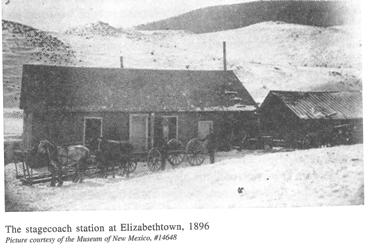
Etown Has Stagecoach Service Again!

On May 1, 1894, the stagecoach once again arrived in Etown, New Mexico: The Springer and Moreno Valley Stage Line began daily passenger runs between Elizabethtown and Springer, where passengers could connect with the railroad. Even with fares at $5 a day, demand was high. The line was soon running double headers every other day. It didn’t just carry passengers. There were also contracts with Wells Fargo Express and the United States Post Office. In fact, the endeavor was so lucrative that H.H. Hankins jumped to serve the same route with the Moreno Valley Stage and Freight Company line.

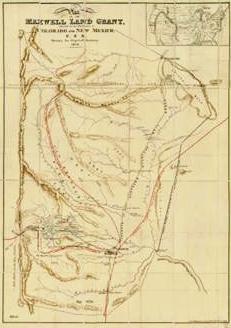
These transportation services replaced Col. Valentine “Jim” S. Shelby’s 1868 Moreno Valley Stage and Freight Line, which had run three times a week between Maxwell’s Ranch (today’s Cimarron) and Elizabethtown, departing from Maxwell’s one day and returning from Elizabethtown the next. Fares in 1868 were $8 each way. Shelby, a former army wagon master, seems to have enjoyed a good challenge. A co-owner of the Aztec Mine, he also helped fund the construction project that diverted water from Red River to the Baldy Mountain mining district, then took it over when it failed to live up to projections, on the chance that he could find a buyer—which he did. Shelby eventually left the Etown area and ended up in Santa Fe, where he ran a large gambling “resort”—yet another service in high demand in New Mexico Territory.

May 1 illustration.etown stagecoach station

Sources: Lure, Lore and Legends of the Moreno Valley, Moreno Valley Writers Guild, Columbine Books, 1997; Philmont, A History of New Mexico’s Cimarron Country, Lawrence R. Murphy, UNM Press,

Condemnation Process Begins for Future Eagle Nest Lake

In April 1909, the Cimarron Valley Land Company filed a lawsuit to condemn land that was destined to lie under what is now known as Eagle Nest Lake in northern New Mexico’s Rocky Mountains. The land in question seems to have belonged entirely to widow Mary Gallagher and her eight children, the youngest of whom was 16.

Mary’s husband John had purchased the property with proceeds from his 1870’s gold mining days in the Elizabethtown area at the northern end of the valley. He was a committed farmer: he’d constructed canals from both Willow and Cieneguilla Creek to irrigate his crops.

When the Cimarron Valley Land Company in Springer requested a State permit to construct a dam at Eagle’s Nest that would back up water onto her and other landowners’ property, Mary Gallagher took action. In January 1908, she filed a formal protest against the proposal. However, the State Engineer approved the permit in early July and the Company began negotiating with the three property owners affected.

April 27 illustration.Eagle Nest Dam location prior to construction.Office of State Engineer
Eagle Nest Dam location prior to construction. Source: New Mexico Office of State Engineer

But Mary Gallagher held out. Eventually, the Cimarron Valley Land Company realized that only a condemnation suit was likely to dislodge her. So they went to court in April 1909. And that’s when the real delays began. Initially, there was no Judge in the County to take up the matter. Even when that issue was resolved, the proceedings moved at glacial speed. There were appeals, demands for a jury trial, a commission established to determine the value of the property, and so forth. In fact, the process took so long that it didn’t formally end until after Mary’s death in 1916. Work on the dam and its related reservoir began the following spring, after her children had been paid off.

Oddly enough, in April 1915 the Company had requested an extension of the State permit, citing “unprecedented financial conditions” which made the Company “unable to procure the necessary funds.” The application for extension didn’t mention the land condemnation suit. Perhaps the Cimarron Valley Land Company was a little embarrassed by the fact that a little old widow lady (Mary was about 62 at the time) was blocking their progress so effectively. It must have seemed simpler to blame the delay on the international crisis of World War I.


Sources: Sept. 1, 1909 Charles Springer letter to NM Territorial Engineer Vernon S. Sullivan; Sept. 16, 1909 Charles A. Spiess affidavit; Jan 27, 1908 letter from Mary Gallagher to NM Territorial Engineer Vernon S. Sullivan; Jan. 31, 1908 protest from Gallagher family to NM Territorial Engineer Vernon S. Sullivan; March 30, 1915 application for extension of time for construction, NM Territorial Engineer Permit # 71.

Apache Canyon

There was a reason it was called Apache Canyon and Old Pete proceeded cautiously, aware that there’d been a recent outbreak of hostilities between the Jicarillas and the locals. Somebody had gotten twitchy-brained and shot off their gun without thinkin’ twice and now the whole Sangre de Cristos was on edge. Didn’t matter that he’d had no part in the original quarrel.

However, Pete hadn’t seen a soul in three days, and he was beginning to think he was gonna get to Taos in one piece after all, if the damn half-grown dog taggin’ him would quit wanderin’ off then comin’ back, widening the scent trail with his idiot nosin’ around. Pete scowled as the puppy reappeared, this time from a thicket of scrub oak, dead leaves rattling on the ground. The dog went into a half-crouch as it came closer. It was holding something in its mouth, its curly black tail drooping anxiously.

“What ya got there?” Pete asked. He squatted and held out his hand and the dog released the item into his palm. “Shit!” Pete said, dropping it. Then he leaned closer and sniffed. It really was shit. Human, too. Fresh enough to still stink. He rose, studying the slopes on either side, turning to examine the pass behind him. So much for bein’ alone.

“Thankee pup,” he muttered. “I think.”

Copyright © 2016 Loretta Miles Tollefson


Half-Grown Pup

The half-grown pup had followed Old Pete and the mule from the Ute Indian encampment down-canyon. It was a gangly thing, large for an Indian dog, with dirt-matted curly black hair. Pete looked at it in disgust as it half-crouched at his feet.

“Damned if the thing ain’t smilin’,” Pete muttered. He poked the dog’s side with his foot. “You a doe or a buck?” The animal rolled over obligingly, paws in the air. “Buck.” Pete toed it again. “Well, you won’t last long, I expect. Be runnin’ off to the first camp with a bitch in heat.” He turned and twitched the mule’s lead rope. “Giddup.”

They trailed the Cimarron River up-canyon through the afternoon and settled into camp under an overhanging sandstone boulder as the light began to fade. It was still early: the sunlight went sooner as the canyon walls narrowed. But Old Pete was in no particular hurry and the pup was acting a mite tired.

“Gonna hafta keep up,” Pete told it as he cut pieces of venison off the haunch he’d traded from the Utes. The dog slunk toward the fire and Pete tossed it a scrap. “Too small fer my roaster anyway,” he muttered as he skewered a larger chunk onto a sharpened willow stick and lifted it over the flames.

Copyright © 2016 Loretta Miles Tollefson

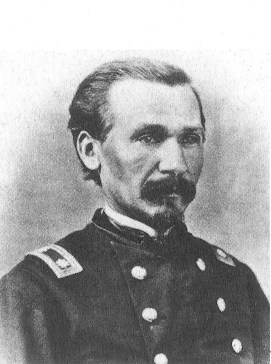
Prussian-Born Officer Becomes Etown Miner

On April 18, 1867, U.S. Army Lt. Colonel Edward Bergmann resigned from a promising military career to become a miner in Elizabethtown, New Mexico’s Baldy Peak mining district. But Bergmann wasn’t just any miner. He was the superintending partner in Lucien Maxwell’s Aztec Mine on the east slopes of Baldy, a venture that would haul out roughly $1.5 million in gold in the first five years of operation. Bergmann’s work there and in other operations was so successful that he was worth $60,000 in real estate by the summer of 1870.

Born in Prussia around 1833, Bergmann had been a 28 year old private in the U.S. Army when the Civil War broke out in 1861, a private who was granted an immediate discharge from his clerking duties at Departmental headquarters in Santa Fe so he could accept a 1st Lieutenant commission in the New Mexico Volunteers.

He rose quickly. By September 1862, Bergmann was a Captain and responsible for rebuilding and resupplying Fort Stanton. By early 1867, he was a Lt. Colonel leading scouting expeditions on the San Juan and Las Animas Rivers.

April 18 illustration.Edward H.Bergmann
Edward Bergmann in military uniform. Source: Louis Felsenthal, Citizen-Soldier by J. Meketa, UNM Press, 1982

But news of the gold on Baldy Mountain seems to have roused the mining fever in the Lt. Colonel, because he resigned his commission shortly thereafter and was soon on the ground in Etown and its surrounding mines.

He did well. By 1870, Bergmann owned $60,000 worth of real estate and was secure enough to attract the attention of local belle Augusta Sever, whom he married in December. Over the next fifteen years, he continued his activities in the area, participating in the Spanish Bar mine at the mouth of Grouse Gulch just east of Etown and taking on other roles, including acting as Etown Justice of the Peace during the Colfax County War.

Oddly, Bergmann’s real estate holdings seemed to have diminished to a mere $1,500 by April 1875, when the Territorial property tax assessment was made. However, he’d apparently made some powerful friends by that time, because when the New Mexico Territorial Penitentiary opened in Santa Fe in August 1885, Bergmann was named its first warden, a position he held until at least 1893. He must have gotten the mining fever once again, though, because he died in Colorado’s Bowl of Gold, near Cripple Creek, in 1910.


Sources:  Louis Felsenthal, Citizen-Soldier of Territorial New Mexico, Jacqueline Meketa, UNM Press, 1982; Lure, Lore, and Legends of the Moreno Valley, Moreno Valley Writers Guild, 1997, Columbine Books, Angel Fire, NM; Roadside History of Colorado, Candy Moulton, Mountain Press, Missoula, 2006; Philmont, A History of New Mexico’s Cimarron Country, Lawrence Murphy, UNM Press, Albuquerque, 2014; Red River City: A history of Northern New Mexico 1800-2000, J.R. Pierce, JRP Publications Press, Red River, 2006; The Eagle Nest, New Mexico Story, F. Stanley, Dumas, Texas, 1961; A Civil War History of the New Mexico Volunteers and Militia; Jerry Thompson, UNM Press, Albuquerque, 2015; Myth of the Hanging Tree, Robert J. Torrez, UNM Press, 2008.

First Divorce

Augusta Meinert stood firmly in the center of the makeshift courtroom, her eyes on the judge. At thirty-seven, she was still attractive, though the stubborn tilt to her chin said she didn’t often take “no” for an answer.

Judge Watts studied her. “You understand what divorce means?” He spoke slowly, as if unsure her English could withstand the strain of the concept.

Augusta’s chin went up. “I understand no longer the bastard takes the money I earn.” A ripple of suppressed laughter ran through the onlookers behind her. She turned and glared, and the men fell silent.

“You will be a marked woman,” Judge Watts warned. “This isn’t Germany.”

She frowned. “In Germany, he takes my money, and I can do nothing.” She smiled suddenly, her eyes twinkling. “It is why I like America.”

The Judge nodded and gaveled the rough wooden planks of the table before him. “The first divorce in Colfax County, New Mexico Territory, is hereby declared final,” he announced.

from Moreno Valley Sketches II

Troops Save Gold Miner From Etown Mob

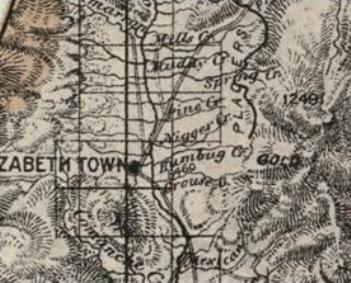
On Thursday, April 9, 1868, gold prospector William “Wall” W. Henderson killed a man in Humbug Gulch east of Elizabethtown, New Mexico Territory. Being a law-abiding man, Henderson went to Etown to turn himself into the authorities. The authorities seem to have been fairly weak at the time, because a mob of about eighty men threatened to take matters into their own hands. Fortunately, a messenger was able to reach the Fort Union cavalry troops stationed thirty miles away at Maxwell’s Ranch (today’s Cimarron) in time to request assistance.

April 9 illustration.Humbug Gulch Map
Source: 1889 Sectional map of Colfax & Mora Counties, New Mexico Territory

A sergeant and ten men travelled up Cimarron canyon overnight to reach Elizabethtown early the next morning and disperse the mob. They took Henderson back to Maxwell’s, out of harm’s way, and the miners went back to work. In fact, things calmed so much that Henderson returned to Elizabethtown and went back to mining. He was still there the following year, when he served as a member of the petit jury during the Colfax County District Court’s 1869 Spring session. And he did well financially. By the summer of 1870, Henderson had amassed $5,000 in real estate.

That year, he also stood security for Charles Kennedy’s bond to appear before the Fall Court response to embezzlement and assault charges. Ironically, Kennedy himself would be lynched by an Etown mob later that fall, following accusations that he’d killed and robbed a series of men at his cabin about ten miles south of Humbug Gulch.

Sources: Fort Union and the Frontier Army in the Southwest, Leo E. Oliva, Southwest Cultural Resources Center, National Park Service, 1993; 1870 Colfax County Census, Etown precinct; New Mexico Territory District 1 Court Records, 1869 through 1870.

Save

Calling the Jury, Elizabethtown, New Mexico Territory

Judge Palen flattened his palms against the rough wooden table that served as the Court bench and scowled at Sheriff Calhoun. “Are you telling me that you called twenty-one men for jury duty and only seven showed up?”

Calhoun was a big man, but he fingered the broad-brimmed hat in his hands like a schoolboy. “Yes, sir.”

“Well, go get fourteen more.”

The Sheriff nodded, turned, and crossed the creaking wooden floor.

Palen turned his attention to his seven potential jury members. “All right,” he said. “Now how many of you are going to have good excuses for not fulfilling your civic duty?”

Three of them sheepishly raised their hands. Palen nodded to his court clerk to begin taking their excuses and closed his eyes. And he’d thought this appointment as Chief Justice of New Mexico Territory and Judge of its First Judicial District was a logical step up from postmaster of Hudson, New York. He suppressed a sigh. How he missed the broad sweep of the river, the bustle of the town’s port. He grimaced and opened his eyes. Only four jurymen left. Damn this town, anyway. The whole of New Mexico Territory, for that matter.

from Moreno Valley Sketches II


New Mexico Territory’s Chief Justice is Fooled Again

Friday, April 1 was the first day of the Spring 1870 Court session in Colfax County, New Mexico Territory, and Judge Joseph G. Palen must have thought someone had pulled an April Fool’s joke on him. At the end of the 1869 Fall session, he’d made three local men responsible for selecting jurors for the Spring term, but it hadn’t done much good. Only six of the identified grand jury members had showed up, so the Judge ordered Sheriff Andrew J. Calhoun to bring in 15 more potential jurors. Which he did but eleven of them had excuses. The 57-year-old Harvard-educated Judge Palen must have wished he’d never accepted President Ulysses S. Grant’s offer to promote him from Hudson, New York postmaster to Chief Justice of the New Mexico Territorial Court and therefore Judge of the Territory’s First District, which included Colfax County.

April 1 illustration.1870 court transcript.resized

Something similar had happened at the beginning of the Fall 1869 session, Judge Palen’s first in Colfax County, and he’d thought he’d solved the problem by giving E.B. Dennison, Benjamin F. Houx, and John Sutton the task of ensuring there’d be enough jurors for the Spring Session. But even their fellow citizens couldn’t corral the miners and ranchers of Colfax County to do their civic duty.

Late that day, the Sheriff finally brought in enough men to fill out the grand jury panel, none of them with reasons strong enough excuse them from the task. However, Palen still had no petit jury members. It was the morning of Tuesday, April 5 before he had both panels in place. Which wouldn’t have been too much of a problem, except that the court session was scheduled to end on Saturday, April 9. There wasn’t much time to address the over 70 separate actions that came before the court during the week-long Spring 1870 session.

Sources: Chasing the Santa Fe Ring, David L. Caffey, UNM Press, 2014; Colfax County District Court Civil and Criminal Record 1, 1869-1871, Serial No. 14400; The Leading Facts of New Mexico History Vol. II, Ralph E. Twitchell, Sunstone Press, 2007.