If you’ve been fortunate enough to tour an adobe home here in New Mexico, you may have noticed the corner fireplaces which are a signature element in these houses.
Often built in a corner, the traditional fireplace, or fogón, had a low hearth, between six and eight inches high. The structure was usually roughly a quarter round with a narrow opening of about twenty inches. The firebox was relatively shallow. In fact, the wood was usually placed upright and leaned against the back of the space, instead of flat on the hearth.
Corner fireplace. Source: Bainbridge Bunting, Early Architecture in New Mexico
If one fireplace couldn’t warm the room sufficiently or wasn’t large enough to cook a meal for the entire family, there were several options. One was to build another cooking area in the opposite corner. Another was to build a larger bell-shaped one, up to four feet, four inches wide, that could accommodate more wood. A third alternative, especially useful when there was more than one cook, was to construct a double-arched bell-shaped structure.
Double arched fireplace. Source: Bainbridge Bunting, Of Earth and Timber Made
In every case, the arched opening was constructed using two large specially shaped adobe bricks. The chimney was usually a rectangular cuboid roughly 10 x 10 inches in diameter and made of thin adobe bricks set on edge with their ends fit into channels cut into the supporting walls
Not all adobe fireplaces were placed in the corner of a room. If a heat source was needed elsewhere, a “spur” of adobe would be extended out from the wall in the desired location and then a fireplace was constructed in the resulting corner.
As the Americans began to pour into New Mexico after 1846, they began remaking the traditional adobe houses to meet their Eastern expectations. This included encasing the adobe fireplaces with wooden chimney breasts and mantel shelves.
Source: Bainbridge Bunting, Early Architecture in New Mexico
Personally, I prefer the older style. All the little indentations in those fake pillars would have just collected dust. And probably soot. Give me the clean lines of traditional adobe anytime!
In mid April 1847, the Taos Valley was still experiencing the aftermath of theJanuary 20 rebellion.
The U.S. Army had captured a total of 45 rebels. They released 24 for lack of evidence and tried 21. The trials were over, but the executions weren’t. Seventeen men would hang, one of them for high treason.
The high treason charge was questionable. An argument could be made that a person couldn’t rebel against a country to which they had not pledged allegiance. The war with Mexico wasn’t over. New Mexico was still officially part of occupied Mexico, and its people were still citizens of that country. There’d been a trial in early January which had found the high treason charge suspect. But that didn’t stop 26-year-old prosecuting attorney Francis P. Blaire, Jr. from continuing to use it.
In early March, Blaire filed the charge against three men: Antonio Maria Trujillo, Pantaleon Archuleta, Trinidad Barceló, and Pedro Vigil. Apparently the only rebel trials held in Santa Fe, the charges against Archuleta, Barceló, and Pedro Vigil were eventually dropped after the proceedings ended in a mistrial.
Trujillo was found guilty, but because he was elderly and unwell, the jury and judge requested that the sentence be commuted. Military GovernorSterling Price granted the pardon, and Santa Fe was spared a demonstration of the effectiveness of the gallows.
Taos wasn’t. Of the eighteen prisoners tried there, all were convicted and hung.
There had been a single execution on February 7 of Pablo Montoya, one of the rebellion leaders, but the remainder waited until April, when the formal trials began.
These hangings started on Friday, April 9, when Hipolito (Polo) Salazar, Jose Manuel Garcia, Pedro Lucero, Juan Ramon Trujillo, and the Romero brothers Ysidro and Manuel, age sixteen, were executed two days after their trials. Salazar had been convicted of high treason, but the rest of these men were found guilty of killing American-appointed Governor Charles Bent.
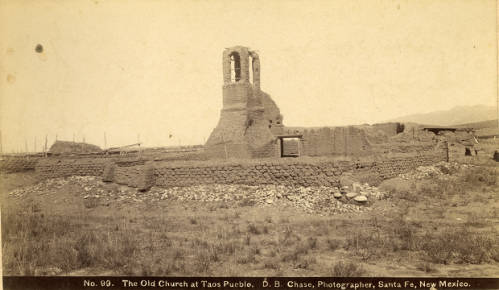
The eleven remaining convicted rebels had to wait to meet their end. Most of them would die three weeks later, on Friday, April 30. These executions seem to have occurred in two batches. The six men from Taos Pueblo—Francisco Naranjo, Jose Gabriel Romero (or Samora), Juan Domingo Martin, Juan Antonio Lucero, and a man called El Cuervo—were apparently hanged at the same time. They were buried at the Pueblo at the church which had been destroyed by the Americans in early February.
Ruins of the Taos Pueblo church. Source: Palace of the Governors Archives
Four other men—Manuel Miera, Juan Pacheco, Manuel Sandoval, and Rafael Tafoya—were also executed that day. Then, on the following Friday, Juan Antonio Avila was hanged for his role in the insurrection.
Why the week-long delay? There’s no information in the records. I’d love to know the answer to this question, just as I’d like to know why the trials of Trujillo, Barceló, Archuleta, and Vigil were held in Santa Fe and the reasons for the mistrials for latter three men. Was this a procedural issue? Was family pressure brought to bear?
I’m especially curious about the case of Trinidad Barceló. He was the older brother of businesswoman Gertrudes Barceló, who had assisted the U.S. occupiers in suppressing a revolt the previous December. Did her support of the regime play a part in her brother’s release?
What about the other two: Archuleta and Vigil? Were they related to Acting Governor Donaciano Vigil or some other prominent New Mexican who the Americans wanted on their side?
And then there are the stories of the men who died: their reasons for resistance, the impact on their families, the pain or joy they left behind.
Sources: David C. Beyreis, Blood in the Borderlands; Mary J. Straw Cook, Doña Tules; James A. Crutchfield, Revolt at Taos; Mark L. Gardner and Marc Simmons, eds., The Mexican War Correspondence of Richard Smith Elliott; Lewis H. Garrard, Wah-to-ya and the Taos Trail; Lucy Lippard, Pueblo Chico, Land and Lives in Galisteo since 1814; Michael McNierney, ed. Taos 1847, The Revolt in Contemporary Accounts; Alberto Vidaurre in Corina A. Santistevan and JuliaMoore, Taos, A Topical History.
Aaaaaand. Drumrolls please! It’s here! My novel An Unhappy Country is now available wherever books are sold. And I’m celebrating with a sale!
It’s August 1846. The U.S. army has taken Santa Fe without firing a shot. The Mexican American War is over in New Mexico. Or is it?
Two days after the Army arrives, seventeen-year-old Jessie Milbank and her friends stumble on a man with a knife in his back in the Santa Fe plaza. Then someone close to Jessie’s friend Juanita is murdered. When an insurrection is suppressed in December, Jessie begins to wonder if the three events are linked.
Were the murdered men part of a conspiracy to throw out the invaders? And were they the only ones hoping for a fight? After revolt does finally break out and the Americans suppress it at the battle of Taos Pueblo, yet another man is murdered. Will the reasons for his death provide clues to the earlier ones?
Early readers are raving about Jessie, the book’s insight into these little-known events, and the beautiful writing in this novel.
As I said, I’m celebrating with a sale.
The ebook is $.99 through the end of April. This is over 80% off its $5.99 list price. You can purchase it from your favorite e-reader outlet, including BarnesandNoble and Amazon.
The paperback is currently priced at $13.99. This is 26% off its $18.99 list price. You can order it through your local bookstore or from Bookshop.org, BarnesandNoble, and Amazon.
I normally review books set in or about New Mexico in the 1800s, but I couldn’t resist sharing In The Shadow of Sunrise by Jennifer Bohnhoff with you. This novel tells a story from a much earlier time frame—the Folsum Culture period about 9,000 years ago. So it’s definitely a trip back in time.
And it’s a really special trip. This is one of those stories that linger in your mind long after you’ve read it. Its protagonist is a young man named Earth Shadow, who is physically handicapped and feels inferior to his stronger twin brother, Sunrise. As the boys join the healthy adults of their clan for the annual migration to hunt and meet other groups, Earth Shadow must come to terms with his physical handicaps and learn that his mental capabilities give him a capacity for leadership that his brother will never have.
Although this book is written for middle grade readers, its characters and situations make for fascinating reading for adults, as well. Bohnhoff does an excellent job of presenting her meticulous research in a way that informs but never gets in the way of the story and its characters. I highly recommend In The Shadow of Sunrise to audiences of all ages.
You can find a free teacher’s guide and special rates for class sets at jenniferbohnhoff.com/in-the-shadow-of-sunrise.html.
The recent suggestion that the U.S. should annex Canada and Greenland sounds strikingly familiar. The same argument—that the land masses in question are strategically important and therefore must become part of the U.S.—was used in the runup to what we now call the Mexican American War.
Throughout the 1840s public sentiment grew in support of seizing what was “rightfully ours.” It was our manifest destiny to own everything to the Pacific Ocean. And it would be easy enough to do. After all, as Sam Houston put it “Mexicans are no better than Indians,” and we’d seized indigenous lands easily enough. Besides, Mexican leadership was corrupt and cowardly. George Wilkins Kendall had asserted this in his book about the 1841 Texas Santa Fe Expedition. So it must be true.
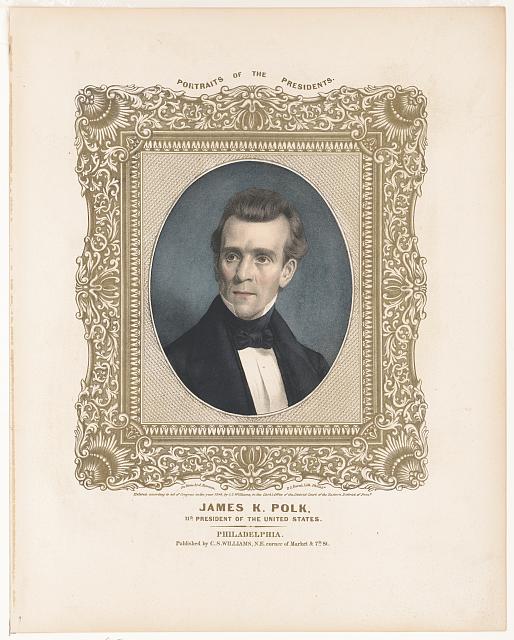
The only question was how to make the war Mexico’s fault. First, we needed to elect a President who was committed to the Big Steal. This was accomplished when James A. Polk was elected. Then, we needed to aggravate Mexico into an angry response. This was initiated at Polk’s March 4, 1845 inauguration when he promised to annex Texas, the “Republic” which Mexico still considered in rebellion and not independent from it at all.
James K. Polk, Source: Library of Congress
In reply to Polk’s pronouncement, Mexico’s minister to Washington lodged a formal objection, closed his mission, and left for home. Mexico City severed ties. This gave Polk the excuse he was looking for. He ordered General Zachary Taylor to move his troops to the southern border and then into the Nueces Strip, which both Texas and Mexico claimed.
While Taylor was doing that, the President sent John Fremont to find a western route to California. He also ordered Major Richard B. Lee to Santa Fe. Lee’s subsequent September 1845 report to Washington included an invasion route, pertinent distances, recommended rendezvous points, estimated costs, and the proposed composition of the necessary military forces.
But the Mexicans still weren’t cooperating. They still hadn’t declared war. So, in December 1845, Polk upped the stakes by overseeing the formal annexation of Texas to the U.S. That did it. Four months later, Mexican soldiers crossed the Rio Grande and killed American troops. This and other bloody encounters gave the President the excuse he needed to present the U.S. House of Representatives with a declaration of war.
The bill he sent them wasn’t just a declaration of war. It also authorized funding for General Taylor’s men. A vote against the war was a vote against the troops on the ground. This was the first coercive declaration/funding bill combination in American history. Former President and now Congressman John Quincy Adams was one of the courageous 14 who voted against the proposal. Everyone else caved. It took them two hours.
Polk still had to get the legislation through the U.S. Senate. The powerful Thomas Hart Benton, who agreed that the country should expand westward, was opposed to taking the land by force, at least not “without full discussion and much more consideration”. However, after much arm-twisting, he eventually voted in favor. Senator John C. Calhoun of South Carolina didn’t. He abstained. Polk was “pregnant with evil,” he declared later, and what the Executive Branch had done by combining the two bills would “enable all future Presidents to bring about a state of things, in which Congress shall be forced, … to declare war, regardless of its justice or expediency.”
They called it “Mr. Polk’s War.” Not everyone supported it, of course. There were letters to the editor and other resistance, especially in abolitionist New England. In Concord, Massachusetts, abolitionists Henry David Thoreau and Bronson Alcott (Louisa May Alcott’s father) both refused to pay taxes because they saw what Polk and his faction were doing as a bid to expand slavery into the Southwest.
U.S. and Mexico Boundaries, 1846
None of the vituperations and protests did any good, though. The drive west continued, taking everything before it. In the end, President Polk had his way, and the U.S. annexed the land mass that became what is today the states of New Mexico, Arizona, Utah, Nevada, and California as well of parts of Colorado, Wyoming, Kansas, and Oklahoma.
I’m not sure what the events of 1846/47 suggest regarding the current proposal to annex Canada and Greenland. That resistance is futile? That resistance is important even if it’s ultimately unsuccessful? Or, that we should try to make every effort to ensure that history doesn’t repeat itself?
All I know is, this isn’t the first time an American President has pushed forward with his agenda regardless of the question of right or wrong. There are, of course, plenty of other examples of this approach to U.S. political life, though the runup to the Mexican War is perhaps the most explicit correlation to current events. Will we add the acquisition of Canada and Greenland to the list of sins we need to expiate? Only time will tell.
Sources: James A. Crutchfield, Revolt at Taos, the New Mexican and Indian Insurrection of 1847; Amy S. Greenberg, A Wicked War: Polk, Clay, Lincoln, and the 1846 U.S. Invasion of Mexico; W. Eugene Hollon, The Southwest: Old and New; Wilson in David Grant Noble, Santa Fe, History of an Ancient City; historyofmassachusetts.org/henry-david-thoreau-arrested-for-nonpayment-of-poll-tax
In myforthcoming novel set in Santa Fe, New Mexico, the young people at the heart of the story don’t go home after church. They go to the plaza. They aren’t the only ones. In fact, American newcomers to the city were often shocked at what they saw as a desecration of the Sabbath. People weren’t merely walking. They were shopping, dancing, and gambling, and probably drinking as well.
This Sunday ritual didn’t change after the U.S. Army invaded in 1846. Lt. Abert tells us that “in the square all the people congregate to sell their marketing and one constantly sees objects to interest and amuse. It is filled with donkeys laden with immense packs of wood, fodder, melons, and other articles. The soldiers too are constantly passing and mingling in a motley group.”
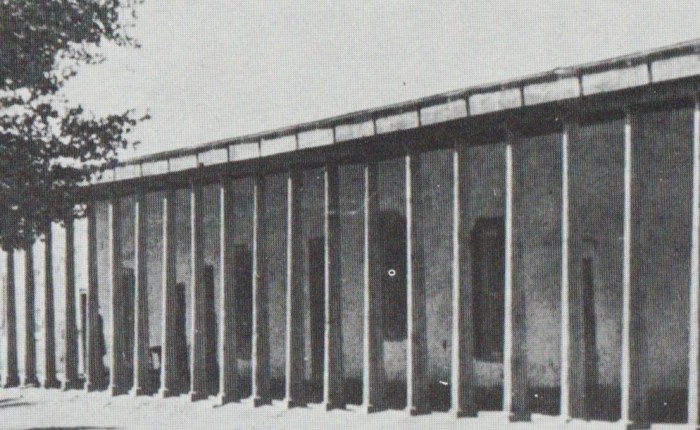
Part of the reason for this activity on the plaza was that it was a pleasant place to be. Even Susan Magoffin, who had little else good to say about New Mexico, found that the square made for “a fine walk.” “The Plaza or square is very large,” she reported. The Governor’s Palace, or palacio, with a wide portal in front, formed the north side of the square, while a church and dwelling houses faced it on the south. “The two remaining sides are fronted by stores and dwellings, all with portals,” she added. “In rainy weather there is no use for an umbrella.”
The portales, or verandas, Magoffin mentioned provided shade for the buildings and were shaded themselves by what Magoffin described as a circle of trees around the square. These were cottonwoods which had been planted only a couple years before, probably using the pole planting method. A small irrigation ditch, or acequia, ran alongside the trees.
Under the portales, vendors sold everything from pottery to sweet onions. There were plenty of other ways to spend one’s money as well, namely gambling. One didn’t have to go indoors to indulge in this pastime. Out-of-doors games included pitarria, which was played on smooth ground inside a marked square, with short sticks of two colors. Quoit pitching, using pegs driven into the ground, was also available.
Those who wanted to gamble could play monte, both with a full deck of Spanish cards, and a three-card version. Roulette was also popular, as were various games of dice.
Later, if one liked, someone in town was apt to be holding a dance, and everyone was welcome, from the priest to the criminal released from jail for the evening. Everybody danced, the lady with the ragged farm worker, the old man with the little girl.
Newcomers also disapproved of the city’s open door dancing policy. Matt Fields tells us of a ball given by the Governor in 1839 which “all the beauty and fashion attended, and also all the rabble,” adding, “the dances, as well as all the manners and customs in Santa Fe, are of a demi-barbarian character”. Nineteenth century Americans, whose country was founded on democratic principles, were certainly quick to make negative social distinctions.
Sources: W.H.H. Allison, Old Santa Fe Magazine, 2:2, “Santa Fe During the Winter of 1837-1838”; Sheila Drumm, Down the Santa Fe Trail and Into Mexico, Diary of Susan Shelby Magoffin 1846-1847; Janet LeCompte in Joan M. Jensen and Darlis M. Miller, New Mexico Women, Intercultural Perspectives; Clyde and Mae Reed Porter, Matt Field on the Santa Fe Trail.
In my March 5 post, I mentioned that one of the things that nineteenth century Americans disparaged when they first arrived in New Mexico was what they called “mud houses.” Newspaper correspondent Matt Field wasn’t the only person to describe Santa Fe as a “mud built city” of one-story buildings that reminded him “of an assemblage of mole hills.”
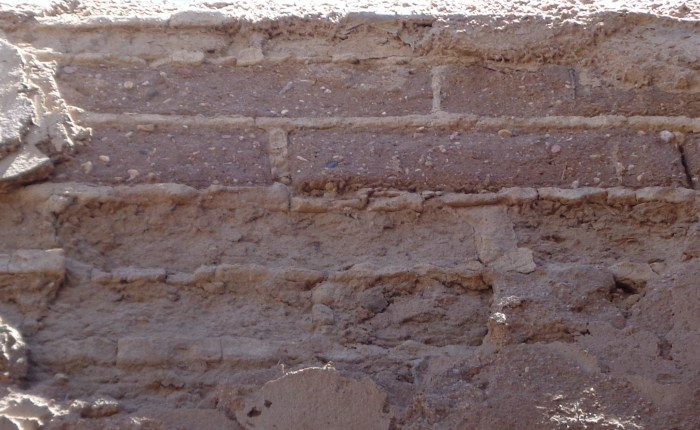
Technically, Field was right. The buildings, even the churches, were in fact built of a mixture of earth and water. These carefully formed bricks had evolved from the indigenous practice of puddled mud construction and by the 1800s were created by packing a stiff, dough-like mud into a rectangular wooden frame that was then lifted away from the resulting block. Two days later, the brick was dry enough to be turned on end and a week later, hard enough to be stacked and cured for another month. To speed up the drying process, adobe makers in the upper Rio Grande region often added straw.
Adobe bricks were used to construct one-story buildings but, with proper buttressing, the walls could be extended higher. Field noted that the Santa Fe parish church was built “as high and quite as large as any of our [U.S.] ordinary size meeting houses.”
He also noted that the adobe walls were strong and durable. In fact, they were so strong and durable that the Fort the invading Americans constructed on the hill overlooking the church in the Fall of 1846 was made of double walls of adobe bricks with a core of rubble between them.
Diagram of Fort Marcy, constructed Fall 1846. Source: Fort Marcy Park interpretive signage.
Early the following year, the Americans got a taste of just how resilient adobe walls could be. After the January 1847 Taos uprising, the U.S. Army hauled four mounted howitzers and a six-pound cannon north to deal with the rebellion. The insurrectos had retreated to the mission church at Taos Pueblo, but the American artillery made little headway against its adobe walls. Lt. Richard Smith Elliott reported later that the walls were so thick, the cannon balls would not go through them.
In fact, the artillery crews made little headway against the pueblo church until they positioned the smallest cannon closer to it and began using grapeshot in a spot already damaged by an axe-wielding soldier. Only then were the attackers able to enter the church.
Not even adobe could withstand the fury and tenacity of Americans with newly acquired land to protect.
Sources: Bainbridge Bunting, Early Architecture in New Mexico; Stella M. Drumm, Down The Santa Fe Trail and Into Mexico, Diary of Susan Shelby Magoffin 1846-1847; Mark L. Gardner and Marc Simmons, eds., The Mexican War Correspondence of Richard Smith Elliott; Michael McNierny, ed., Taos 1847, The Revolt in Contemporary Accounts; Clyde and Mae Reed Porter, Matt Field on the Santa Fe Trail.
The thirty-day countdown to publication of my novel An Unhappy Country has begun!
It’s August 1846. The U.S. army has taken Santa Fe without firing a shot. The Mexican American War is over in New Mexico. Or is it?
Two days after the Army arrives, seventeen-year-old Jessie Milbank and her friends stumble on a man with a knife in his back in the Santa Fe plaza. Then someone close to Jessie’s friend Juanita is murdered. When an insurrection is suppressed in December, Jessie begins to wonder if the three events are linked.
Were the murdered men part of a conspiracy to throw out the invaders? And were they the only ones hoping for a fight? After revolt does finally break out and the Americans suppress it at the battle of Taos Pueblo, yet another man is murdered. Will the reasons for his death provide clues to the earlier ones?
Early readers are raving about Jessie, the book’s insight into these little-known events, and the beautiful writing in this novel.
The Americans in Santa Fe before the U.S. invasion in 1846 were almost all merchants. These men brought a range of goods into New Mexico. Fabric, from calico to cashmere. Butcher and other types of knives. Ready-made clothes, including neckties. And also apothecary scales, snuff, turpentine, canned oysters, champagne, claret, and chintz mugs.
Chintz mugs were not made of fabric, as the term “chintz” would imply, but of china. That these pieces of fragile tableware made it from Missouri to New Mexico is a testament to the shippers’ packing ability. The cups were decorated with an all-over flower pattern copied from 18th century fabric designs. Entire dish sets were and are still being made using these patterns, though only the mugs seemed to have made it to New Mexico in the mid1800s.
Chintz mug. Image courtesy of Replacements.org
The mugs were undoubtedly used to drink the coffee which was also imported. Although a luxury item in the eastern United States, the beverage seems to have been considered by New Mexico’s Anglo travelers to be an essential, regardless of the cost. And it was expensive: 50 cents a pound in 1846, at a time when a typical male wage earner brought in $2 to $5 a month.
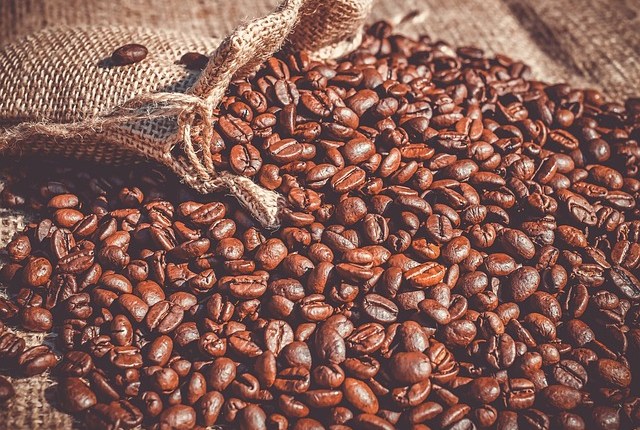
The coffee would have travelled in bean form, probably green beans, as they can be stored up to twelve months in comparison to about thirty days for roasted beans. So purchasers had to roast and grind the beans themselves. Lewis Garrard provided a vivid description of how this was done in on the road.
AWe selected two flat stones from the [water] channel at hand, twenty-five to thirty inches in diameter, which we placed on the fire ’til heated; then one was taken off, the coffee [beans] poured on, and stirred with a stick. The stones served alternately as they became cool. When the coffee was sufficiently burned, a piece of skin was laid on the ground, and a clean stone, a foot in diameter, rested on the knees of the grinder, with one edge on the skin. A smaller stone, held in the hand, reduced the grains between it and the larger one to powder by a rotary motion.@
The resulting grind was poured into boiling milk, where it sank to the bottom of the pan. When the grounds resurfaced, the coffee was ready. “How we feasted!” Garrard reported. “It was splendid!”
It’s unlikely Garrard and his friends drank from chintz mugs that night. They were still on their way to New Mexico. Any china would have been safely packed away. But I’m willing to bet that coffee served in chintz mugs accompanied the September 1846 oyster and champagne supper James Magoffin served his brother and sister-in-law to celebrate their safe arrival in Santa Fe.
Life in New Mexico in 1846-1847 could be quite civilized, for those who could afford it.
Sources: David C. Beyreis, Blood in the Borderlands, Conflict, Kindship, and the Bent Family, 1821-1920; Stella M. Drumm, ed., Down the Santa Fe Trail and Into Mexico, Diary of Susan Shelby Magoffin, 1846-1847; Lewis H. Garrard, Wah-to-yah and the Taos Trail; http://www.antiquesandteacups.com/collections/chintz, accessed 2/14/25
American visitors to 1800s New Mexico found much that was strange to them. “Mud” (adobe) houses, low-impact agriculture, and the clothing styles all gave Anglos something to feel superior about. New Mexican women’s smoking habits were something else entirely. Scandalous, repulsive, and, at least for one young American, titillating.
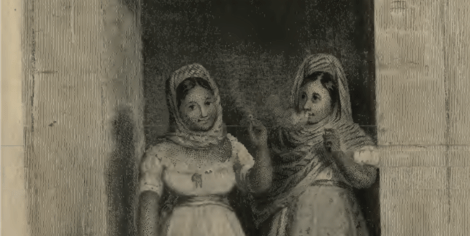
Seventeen-year-old Lewis Garrard, while decrying the custom, also admitted that smoking enhanced “the charm of the Mexican señoritas, who, with neatly rolled-up shucks [cigarettes] between coral lips,” smiled winningly, “their magically brilliant eyes … searching one’s very soul.” And they offered the treats to him! “These cigarillos they present with such a grace, and so expressive an eye, so musical a tongue, and so handsome a face” that it was impossible to refuse.
New Mexican women smoking. Source: G.W. Kendall, Narrative of the Texan Santa Fe Expedition, Vol. II
What exactly is a cigarillo? Susan Magoffin described them as “a delicate cigar made with a very little tobacco rolled in a corn shuck or bit of paper.” Needless to say, she didn’t try them herself. After all, she was a proper American woman.
The personal production of individual cigarillos was common in the Mexican states of Chihuahua, Sonora, and New Mexico at the time, although elsewhere in the country they were manufactured commercially. The commercial ones always rolled in paper, while New Mexico cigarillos were often made with pre-cut pieces of corn husk, or shuck.
The tobacco used for the New Mexican cigarettes wasn’t necessarily imported, either. They were often made with wild tobacco, or punche. If that wasn’t available, mullein (punchon) was substituted, though the two tasted quite different from each other, with punche being preferred.
The tobacco or its substitute was dried and shredded and carried in a small pouch or silver box. The corn husks or papers for rolling were kept separate, with women often carrying theirs in embroidered cloth cases.
Preparation of the corn shucks consisted of scraping the large pieces smooth, then cutting them into sections roughly three by one and a half inches. When a smoker wanted a cigarette, they (she!) pulled out a piece, moistened it with their mouth, sprinkled tobacco on one end, then rolled it up, pinching the ends to hold the contents.
This process in itself must have been erotic for the teenage Garrard. No wonder he found the cigarillos New Mexican women offered him so irresistible, threatening to draw him into “the giddy vortex of dissipation!”
Sources: Stella M. Drumm, ed., Down the Santa Fe Trail and Into Mexico, Diary of Susan Shelby Magoffin, 1846-1847; Marc L. Gardner and Marc Simmons eds, The Mexican War Correspondence of Richard Smith Elliott; Lewis H. Garrard, Wah-to-Yah and the Taos Trail; Albin O. Korte, Tobacco Tales, La Herencia, Summer 2005; Michael Moore, Los Remedios, Traditional Herbal Remedies of the Southwest.











 Fiction and Fact From Old New Mexico