What’s the Name of That Town Again?

What’s the Name of That Town Again?

The name “Taos” conjures many things. An ancient pueblo. A Mexican outpost. Gringo mountain men. A violent revolt. A funky 21st century village. But the village and pueblo are two separate places. There are Spanish villages and Indigenous pueblos side by side all over New Mexico. As far as I know, only in the Taos valley do the two settlements carry the same name.

And where does the name come from and what does it mean? Now there’s a question. According to F.R. Bob Romero in Santistevan and Moore, Taos, A Topical History, it’s been attributed “to an Indian word meaning ‘Red Willow’ or ‘people of the Red Willow.’” But no one knows for sure. All we know is that it’s what the pueblo was called after the Spanish arrived. Romero says it’s likely a “Tiwa Indian term that perhaps began with the T sound and was Hispanicized as Taos.”

So that explains (or doesn’t!) that. But then there’s the question of the name of the village which is three miles southwest. We call it “Taos,” but it was originally called Don Fernando de Taos, San Fernando de Taos, San Fernandez de Taos, and various forms of these three names, such as Don Fernando, San Fernando, San Fernandez, or simply Fernando or Fernandez. Although the latter two don’t appear very often in the historical record. Even then, if the name is shortened, it becomes simply “Taos.”

As far as I know, Don Fernando de Taos is the only location in New Mexico which has the honorific “Don” attached to it. The Don Fernando for whom it was named was actually a Don Fernando Durán y Chávez, who had a hacienda near Taos Pueblo in the late 1600s. He and his son fled south during the Pueblo Revolt of 1680 and didn’t return. In 1795, the grant was ceded to settlers from the nearby Cañon area, but the village didn’t really start to thrive until French-Canadian and American mountain men [post link here] began to trickle in in the 1820s.The village was a restocking and trading point for the fur trappers. Some of them stayed to set up mercantile businesses and intermarry and the community became the center of americano settlement in the valley.

Ironically, the location that developed in response to the American presence became the flash point of resistance to the 1846 American invasion. Maybe the locals just got sick of us.

© Loretta Miles Tollefson

Sources: Source: Francis L. and Roberta B. Fugate, Roadside History of New Mexico; Robert Julyan, The Place Names of New Mexico, Revised Edition; F.R. Bob Romero in Santistevan and Moore eds., Taos, A Topical History; http://taoscountyhistoricalsociety.org/taoshistory.html, accessed Jan 3, 2017

Rebellion Ends With a Bang – TAOS REVOLT, Part 3

Rebellion Ends With a Bang – TAOS REVOLT, Part 3

By Friday, February 5, 1847, the Taos insurrection against the American occupation of New Mexico was over. All that remained was the formal surrender of Taos Pueblo leader Tomás Romero.

The Americans had conditioned the end of hostilities on Romero’s surrender. And the people at the pueblo were eager for things to end. Their church, where the rebels had made their stand, was in ruins. Any further action put the massive housing complexes in danger.

So, Romero surrendered. But he was never tried for his actions in a court of law. While he made it to the Taos village jail, that’s as far as he got. A U.S. dragoon named Fitzgerald shot and killed the Taos leader that morning, instead.  

Fitzgerald later bragged about the killing to seventeen-year-old Lewis Garrard, who reported that Fitzgerald killed Romero and three other men as vengeance for the death of his older brother Archibald Fitzgerald. Archie had been a member of the 1841 Texas Santa Fe Expedition and later died during a prison breakout. Why his younger brother thought the death of Romero and the others avenged him is unclear.

What is clear is that Tomás Romero’s death on February 5 was the last shot fired in the Taos Revolt. Other men would die, but they would do so after a cursory court case and the administration of at least the semblance of law. The Taos leader’s death was simple murder.

Fitzgerald was locked up afterwards in the Taos village courthouse, where he was allowed to escape a month later. On March 18 he was dishonorably discharged from his company at Albuquerque, apparently for desertion. He had fled east by that time and would eventually make his way to Geelong, Australia, become the owner/operator of the Western Sea bathhouse, and die in 1882.

Source: Find-a-Grave.com

Fitzgerald’s action at Taos was one of two links between the revolt and the 1841 Texas Santa Fe Expedition. The Texans had brought along a six-pound cannon which was captured along with them and left behind when they were marched south. The cannon ended up in Santa Fe and was still there when the U.S. Army arrived. They took it with them to Taos, where it was key to the action that breached the pueblo church walls.

While the use of this particular piece of artillery may simply have been convenient, its presence may also have sparked the younger Fitzgerald’s memories of his brother and triggered the subsequent shooting at the Taos village jail. Or maybe he’d planned Romero’s death all along. Or was simply a confused young man with a propensity for killing people.

Like most historical or even current events, it’s doubtful we will ever know why the U.S. dragoon did what he did and why Tomás Romero had to die.

© Loretta Miles Tollefson

Sources: James A. Crutchfield, Revolt at Taos, The New Mexican and Indian Insurrection of 1847; John Durand, The Taos Massacres; Mark L. Gardner and Marc Simmons, eds., The Mexican War Correspondence of Richard Smith Elliott; Lewis Garrard, Wah-to-yah and the Taos Trail; Ralph Emerson Twitchell, The History of the Military Occupation of the Territory of New Mexico; Alberto Vidaurre,” 1847: Revolt or Resistance?” in Corina A. Santisteven and Julia Moore, Taos, A Topical History.  

When is a Rebel Not a Traitor?

When is a Rebel Not a Traitor?

In 1846, early in the Mexican American War, General Stephen Watts Kearny led his Army of the West from Missouri to Santa Fe. He received no resistance in New Mexico and raised the American flag over the Santa Fe plaza in mid-August. By early November, he had moved on to assist in the subjugation of California, leaving troops behind to hold New Mexico. Local leaders laid plans to kick out the remaining troops, but the plot was discovered in mid-December and the most of them were apprehended.

One of the men jailed was Manuel Antonio Chaves, who seems to have been the only one who went to court for his activities. Maybe his was the first and last case at this time because his American lawyer, Captain William Z. Angney, got him off.

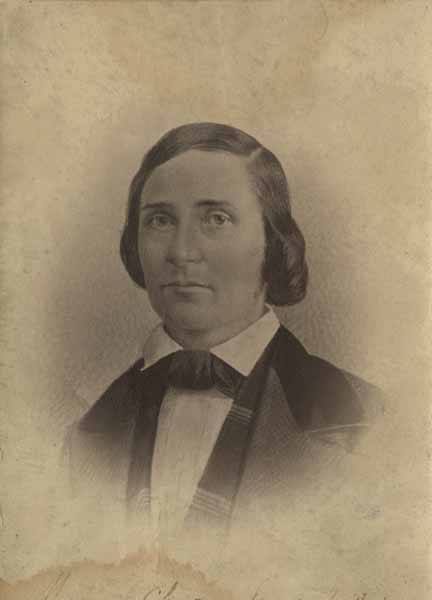
Manuel Antonio Chaves, courtesy of Gill Chaves, 2019

Angney’s arguments were powerful. Chaves had been charged with treason against the United States. Angney argued that, since the war was still in progress, New Mexico was technically still part of the country of Mexico, and therefore Chaves was not an American citizen. You can’t try someone for treason against a country they don’t belong to. In fact, it was not treason, but patriotism, that motivated his actions.

Chaves was acquitted and released. His experience with Angney and in the courtroom seems to have permanently changed his view of Americans. Six months earlier, he’d argued fiercely that New Mexico ought to fight the invaders. The month after his release, he was fighting alongside the Americans to suppress the New Mexican revolt that broke out in Taos. He went on to serve in the Civil War on the side of the Union, rising to the rank of Lieutenant Colonel and playing a key role in the pivotal battle of Glorieta Pass. All because his perceived enemy (Captain Angney) defended Chaves’s right to rebel.

Sources: Mark L. Gardner and Marc Simmons, eds., The Mexican War Correspondence of Richard Smith Elliott; Rubén Sálaz Márquez, New Mexico, A Brief Multi-History; Marc Simmons, The Little Lion of the Southwest, a life of Manuel Antonio Chaves; Ralph Emerson Twitchell, The History of the Military Occupation of the Territory of New Mexico.

© Loretta Miles Tollefson, 2025

New Year in Old New Mexico

New Year in Old New Mexico

There were many celebrations connected with the Christmas season in Old New Mexico, ranging from la posadas, or reenactments of the Christ Child’s birth, to midnight masses on Christmas Eve, to dances at the Rio Grande Pueblos.

However, in New Mexico, the merry making didn’t end on December 25. A week later came Los Días de Los Manueles. January 1 is the feast of Emmanuel, another name for Jesus Christ, and therefore the name day of people christened Manuel or Manuela.

To honor these people, the new year would start just after midnight. The entire community came out under the night sky to visit the homes of anyone named Manuel or Manuela, sing songs in their honor, and feast on posole, chile, and bizcochitos, among other New Mexican traditional foods.

If you happened to live in the village of Ranchos de Taos south of Taos, you would also be honored with dances performed by villagers of Comanche and Hispanic heritage. The performers would start at the church in the plaza and then proceed to the homes of the name day honorees. They performed a set of dances at each location, including a buffalo dance (El Toro), an eagle dance (El Áquila), an enemy dance (El Espantao), courtship dances, and a captivity dance (La Rueda) during which someone is captured and ransomed. This tradition has continued into the 21st century and was enacted as late as 2019, as recorded in the video below. Some of the songs date to the middle 1700s.

What a great way to start the new year!

© Loretta Miles Tollefson

Source: Mary C. Montaño, Tradiciones Nuevomexicanas, Hispano Arts and Culture of New Mexico, UNM Press, Albuquerque, 2001

The Real Gertrudis Barceló

The Real Gertrudis Barceló

The illustration for this post is a picture of New Mexico monte dealer, power broker, and business woman María Gertrudis Barceló. It accompanied an April 1854 Harper’s Weekly Magazine article by Lt. G. Douglas Brewerton about New Mexico. The evidence suggests it was created by a Harper’s artist who never actually met Barceló.

The picture appeared alongside a lengthy quote about Barceló from Josiah Gregg’s 1844 Commerce of the Prairies:

“Some twelve or fifteen years ago, there lived, or rather, roamed in Taos a certain female of very loose habits, known as La Tules. Finding it difficult to obtain the means of subsistence in that district, she finally extended her wanderings to the capital. She there became a constant attendant upon one of those pandemoniums where the favorite game of monte was dealt … for some years she spent her days in lowliness and misery. At last her luck turned … [and she was able] to open a [monte] bank of her own, and being favored with a continuous run of good fortune, she gradually rose higher and higher in the scale of affluence … [and is] now known as Señora Doña Gertrudes Barceló… ”[1]

While Gregg’s book seems to contain solid data about the goods that moved between Missouri and New Mexico in the 1830s, I’ve found him less than accurate in his reports about the people he met in Santa Fe. This is certainly true in the case of Gertrudis Barceló.

For example, Barceló was not from Taos. She was born in Sonora circa 1800 and in 1815 moved with her parents and siblings to the hamlet of Valencia, New Mexico, about 100 miles south of Santa Fe. They were well-off—her parents are identified as Don and Doña in extant baptism records.

In addition to these rico beginnings, Gertrudis became wealthy in her own right as a result of her skill with numbers and cards. As a monte dealer in the mid to late 1820s, she spent time in the mining camps of what is now Cerrillos, New Mexico where she accumulated a large enough stake to set up a gambling salon in Santa Fe. There, she entertained officials, dealt cards, loaned money at interest, purchased property, and provided a home for her mother, an adopted daughter, and more than one foster child.

Barceló had married Manuel Antonio Sisneros on June 20, 1823. She was about 4 months pregnant at the time. That baby boy, and a subsequent son two years later, died in infancy. Her relationship with Sisneros may not have been ideal. They seem to have lived in separate houses on the same Santa Fe street from 1836 to at least 1841. He may have died or it’s possible they simply went their separate ways. The records don’t indicate that he participated in her business activities.

Barceló made ends meet not only as a money lender and monte dealer, but also by taking in boarders. This led to an 1835 accusation that she was illegally cohabiting with americano Lucius Thruston. She refuted the charge and it was withdrawn. She was still renting rooms out in the early 1850s, when she provided space to Governor  John Munroe.

Around 1846, Gertrudis did become romantically involved with a foreigner, a highly-educated Prussian lieutenant in the U.S. Army named Augustus de Marle, who provided security for her monte dealings and represented her in court during at least one debt collection process. They remained close until her death in 1852, when he served as an executor of her will.

Other anglos were not so friendly. In addition to quoting Josiah Gregg’s inaccuracies about Barceló’s background, Brewerton described her face as “scarred and seamed, and rendered unwomanly by those painful lines which unbridled passions … never fail to stamp upon the countenance.”[2]

Susan Shelby Magoffin also encountered Barceló and found her wanting, reporting that the “stately dame of a certain age” wore false hair (probably the curls then fashionable) and teeth, smoked, and exhibited “that shrewd sense and fascinating manner necessary to allure the wayward, inexperienced youth to the hall of final ruin.”[3]

These statements contradict other reports, which tell us Barceló had a neat figure and intelligent, shrewd eyes, and was an elegant dancer. However, she did like fashionable clothes and heavy jewelry, often wearing a gold chain with a large crucifix.[4] The jewelry is included in the Harper’s Weekly image. The artist also uses the fashionable curls and cigarette, wielding them to portray someone who’s everything he believes a woman shouldn’t be—haggard from “fast living,” with long straggly hair, and smoke billowing around her head from a dangling cigarette. In the eastern part of the United States at the time, smoking by women had long been associated with loose morals and dubious sexual behavior. So a picture showing Barceló  with a lit cigarette effectively placed her in the lowest possible social category, that of a sexually promiscuous woman.

I can find no evidence she was, in fact, promiscuous or involved romantically with anyone other than her husband and, later, Augustus de Marle. To the contrary, in some ways, Barceló could be held up as a model of how to behave toward others. She seems to have made a habit of taking in children who needed a home.

In March, 1826, she and Sisneros adopted at least one little girl, Maria del Refugio. In 1832, Gertrudis adopted another child, named María Guadalupé de Altagracia. She also fostered Petra Gutierrez, daughter of Diego Gutierrez and Dolores Sisneros. When Petra became pregnant at 14, Barceló raised the baby herself, freeing Petra to marry James Giddings four years later. When Barceló died, her will included provisions for the unmarried girls still in her care.

But nothing she did would be enough for the americanos. Even after Barceló died and was buried in the Santa Fe parish church, they couldn’t leave her alone. Almost immediately, the Missouri Daily Republican reported that “she took early to two professions [gambling and prostitution] common in this country of easy morals,”[5] a dig at both Barceló and New Mexico.

This attitude continued through the next century. In his 1912 discussion of the 1847 revolt, Ralph Emerson Twitchell called Barceló “a woman of shady reputation”[6] even while he credited her (in a footnote) with warning the Americans of the planned uprising and providing the names of its leaders. In 1984, Paul Horgan described Barceló “with her wig and false teeth”[7] whispering this same warning to Governor Bent, as if her appearance was somehow relevant to the service she provided.

Even in the 21st century, the defamation hasn’t stopped. An essay in the 2009 Telling New Mexico identifies Barceló as an unmarried woman with a dubious reputation.[8] The first statement is flat out wrong and the second depends on who your source is. Certainly, she had a dubious reputation with some Americans.

As far as I can tell, the primary reason they disliked her so much was that she had the audacity to be a successful businesswoman. No other New Mexico monte dealer is singled out in the historical record with the abuse and accusations that are levied against Barceló. This is doubly annoying considering that the U.S. would have had a much more difficult time occupying New Mexico in 1846/47 without her assistance. She not only provided valuable information during a precarious time, she also gave them a loan to cover Army salaries until funds arrived from the East.

The fact that this loan was from a woman must have galled them. A woman who’d acquired her riches via gambling and loaning money at interest. These were provinces of male endeavor, not female. And then (gasp!) she took a lover! So they tried to erase her with ugly words and grotesque drawings.

But María Gertrudis Barceló lives on, the very symbol of the independent New Mexican woman who could love and care for children she didn’t bear while using her brains and skills to amass enough wealth to provide for them after she died. The americanos tried to cancel her with jeering words and an ugly picture. These representations are what should be cancelled. I’ve tried to do so in my forthcoming novel There Will Be Consequences, by showing Barceló’s positive interactions with the women of Santa Fe during the revolt of 1836 and also with her employees and the children in her life. It’s only a small part of what I believe should be done to mitigate the nonsense that has been written about her.


[1] “Incidents of Travel in New Mexico,” G. Douglas Brewerton, Harper’s Weekly Magazine, Vol. XLVII, April 1854, p. 588.

[2] Ibid

[3] Susan Shelby Magoffin, Down the Santa Fe Trail and Into Mexico, Yale UP, 1926, pp. 119-120

[4] John E. Suner ed., Matt Field on the Santa Fe Trail, pp.207-209; Mary J. Straw Cook, Doña Tules,UNM Press, 2007, pp. 26-28

[5] Mary J. Straw Cook, Doña Tules, UNM Press, 2007, p. 100

[6] Ralph Emerson Twitchell, Leading Facts of New Mexican History, Vol. II, The Torce Press, p. 233, note 168

[7] Paul Horgan, Great River, Wesleyan University Press, 1984, p. 762

[8] Michael L. Olsen, “The Santa Fe Trail and  Nineteenth-Century New Mexico,” Telling New Mexico, ed. Marta Weigle, Museum of NM Press, 2009, p. 156.

Padre Martínez, Not Just a Priest 

Padre Martínez, Not Just a Priest 

As the priest at Taos in the 1830s, Padre Antonio José Martínez  played a pivotal role in the New Mexico government’s attempt to keep discontent at bay. He was especially active in 1837/38, working against the revolt that is the subject of my forthcoming biographical novel, There Will Be Consequences.

The rebellion centered in Santa Cruz de la Cañada, about fifty miles south of Taos, but after its initial suppression in September 1837, many of the revolutionaries seem to have headed north to Taos.

Antonio José had grown up in the Taos area, the oldest of six children from the wealthy Martín-Santistéban family. The fortress-like home his parents built outside town still stands as a monument to their status. Although he was well educated, his family had apparently not planned for Antonio José to enter the priesthood. He married María de la Luz Martín of Abiquiu in May 1812, in a joint ceremony with her brother José Manuel and Antonio José’s sister Juana María.

However, life didn’t go as planned. María de la Luz died the following year after giving birth to a little girl, also named María de la Luz. This seems to have begun a turning point for Antonio José. Four years later, at age 25, he entered the Tridentine Seminary in Durango, Mexico and began studying for the priesthood.  

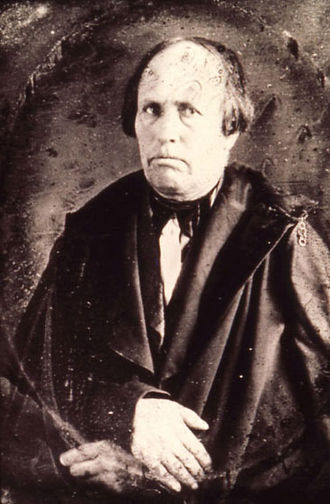
Padre Antonio José Martínez

When he returned to New Mexico in 1823, Antonio José was not only ordained, but he’d also adopted the use of the less-common last name Martínez. After an introductory period serving in temporary positions, he was assigned to the communities in the Taos area.    

By 1837, the padre was responsible for more than the religious lives of his parishioners. He was also running a school for local children and a preparatory seminary. At the same time, he served as consul for Americans in New Mexico, operated a printing press that produced literary publications as well as church forms, and was the Taos representative to New Mexico’s Departmental Assembly.

So Antonio José Martínez was a man to be reckoned with, both in his religious and secular roles. From what we know of his later interactions with Bishop Jean Baptiste Lamy, I think it’s safe to say he was also not someone who bowed easily to the opinions of others. As a rico and a priest, he seems to have been firmly on the side of what he might have called “law and order.” While I was writing There Will Be Consequences, I had great fun imagining his reaction in late 1837 when the rebels at Taos demanded that he quit preaching against the revolt. They also wanted him to stop asking for the customary church burial, baptism, and marriage fees. The evidence indicates that this conversation did not go well.

However, the rebels’ pushback does seem to have slowed Antonio José’s remarks down a little. After all, they were also threatening his younger brother, Subprefect Santiago Martínez.

But Martínez the brother was still padre at Taos. Although the exact sequence of events isn’t clear, we know his actions and language precipitated at least one other confrontation, one so intense that it required the appearance of the local magistrate and other loyalists to keep violence from erupting.

Tensions remained high. By early January 1838, Antonio José sent a letter to interim governor Manuel Armijo warning of the likelihood of another rebel outbreak. In the middle of the month he followed his missive to the capitol.

And stayed there. When Armijo began to prepare to meet the rebels one last time, Martínez volunteered to act as his chaplain. But he didn’t hover in the background. The padre was at the governor’s side during the final battle at Pojoaque Pass on Saturday, January 27. In fact, he reportedly went “heroically about attending to the wounded and consoling the dying with the last rites.”[1]

Antonio José Martínez may have been a man of the cloth, but he was clearly also a man of action. Will we ever know exactly what he was thinking that cold January day? Probably not, but it’s certainly interesting to consider the possibilities.


[1] Fray Angelico Chavez, But Time and Chance, pp. 56-57.

New Old New Mexico Ebook Set Available!

New Old New Mexico Ebook Set Available!

I’m pleased to announce that the first three novels of my Old New Mexico series, Not Just Any Man, Not My Father’s House, and No Secret Too Small are now available in ebook form as a “boxed set” titled The Locke Family Saga.

This story of secrets, prejudice, and the power of love, is told in three books, each from the perspective of a different family member. 

In Not Just Any Man, Gerald must survive the Sangre de Cristo mountains, the Mohave Indians, the arid south rim of the Grand Canyon, and the fellow trapper who hates him for the color of his skin before he can return to Taos and the girl he hopes is waiting for him. Can he prove to himself and to her that he is, after all, not just any man?

In Not My Father’s House, Suzanna does her unhappy best to adjust to married life in an isolated valley of the Sangre de Cristos, but postpartum depression, the cold, and the lack of sunlight push her to the edge. However, the mountains contain a menace far more dangerous than Suzanna’s internal struggles. The man Gerald killed in the Gila wilderness two years ago isn’t as dead as everyone thought. And his lust for Suzanna is even stronger than his desire for Gerald’s blood.

In No Secret Too Small, 1837 New Mexico is teetering on the verge of revolution when the Locke family experiences an upheaval of its own. Eight-year-old Alma’s father, Gerald, has never told her mother that his grandmother was a runaway slave. When his father shows up, the truth comes out. Stunned and furious, Suzanna leaves, taking Alma and six-year-old Andrew with her. However, by the time they reach Santa Fe, rebellion has broken out. Will the Locke family survive the resulting chaos? 

The Locke Family Saga is available at your favorite ebook retailer, Amazon.com, and Barnes and Noble.

Josefa Jaramillo is Born in New Mexico!

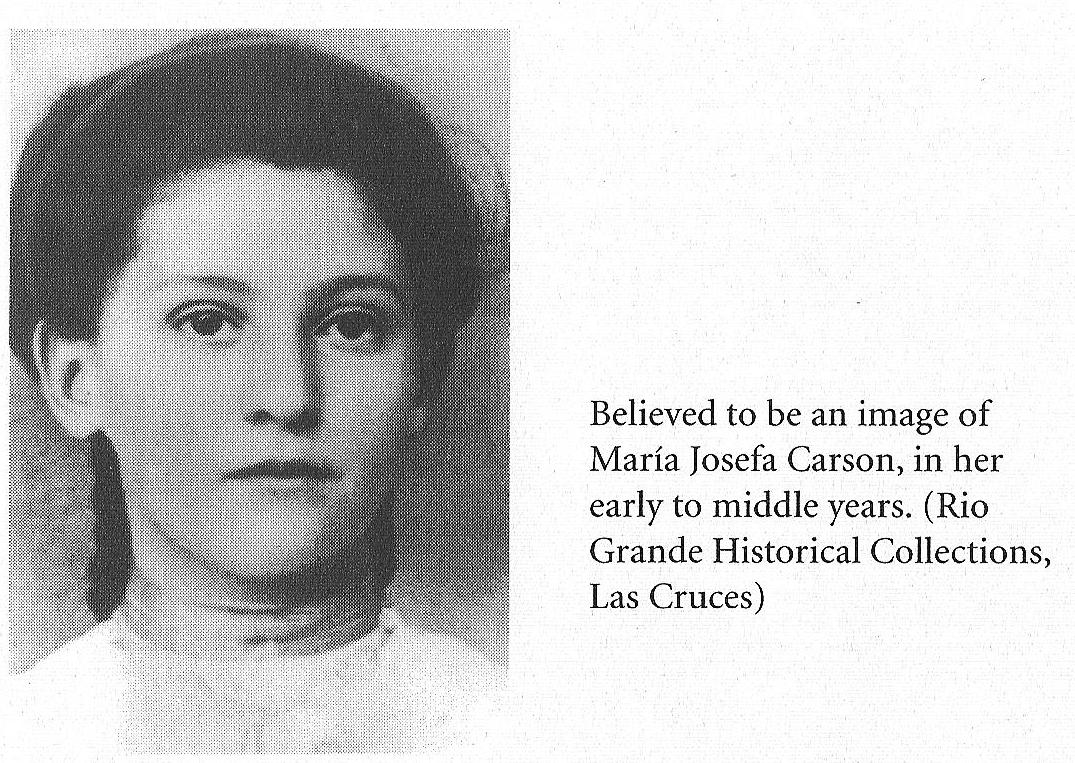
On Thursday, March 27, 1828 in Portrero, New Mexico, María Josefa Jaramillo was born to Francisco Esteban Jaramillo and María Apolonia Vigil in Portrero, New Mexico. Her parents moved to Taos before the end of the year, María Josefa and her older siblings, including three sisters, in tow.

Josefa, called “Josefita” by her family, and her older sister Ignacia would grow up to ally themselves with two prominent americanos—Christopher “Kit” Carson and Charles Bent. In the early 1830s, the now-widowed Ignacia entered into a common-law marriage with American merchant Charles Bent. About ten years later, on February 6, 1843, Josefa married newly-converted Catholic Christopher “Kit” Carson, exactly seven weeks before her fifteenth birthday.

Source: Kit Carson and His Three Wives, Marc Simmons

Four years later in mid-January, while Kit was away and Josefa was staying with Ignacia and Charles in Taos, the Jaramillo girls’ brother and Bent were killed by an angry mob. The nineteen-year-old testified at the trial of the accused men.  Refined in dress and manners, she had a heart-breaking beauty, one observer said, that “would lead a man with the glance of the eye, to risk his life for a smile.”

After that, Josefa’s life settled down a little, though it seems to have never been truly calm. Carson was gone for long stretches of time: trapping and hunting, and serving as a scout for John C. Fremont, as a courier during the Mexican war, as a military officer during the Civil War, and as commander of the troops that forced the Mescalero Apaches and Navajos onto the Bosque Redondo reservation in 1863-64. In the meantime, Josefa moved from Taos to Rayado to Bent’s Fort and back again, then followed Carson to Fort Garland and finally Boggsville, Colorado.

But Carson and the woman he called “Chepita” and “Little Jo” seem to have had a loving relationship. They had eight children, the last one born just ten days before her death in April 1868. Carson followed her a month later. They are buried side by side in a small cemetery in Taos, ending their journey together in the town where it began.

Sources: Don Bullis, New Mexico Biographical Dictionary, 1540-1980, Vol. I, Los Ranchos de Albuquerque: Rio Grande Books, 2007; Lewis H. Garrard, Wah-to-yah and the Taos Trail, Norman: University of Oklahoma Press, 1955; Leroy R. Hafen, Ed., Fur Traders of the Far Southwest, Logan: Utah State University Press, 1997; Howard R. Lamar, Reader’s Encyclopedia of the American West, New York: Harper & Row, 1977; Marc Simmons, Kit Carson and His Three Wives, Albuquerque: University of New Mexico Press, 2003

Another Excerpt from No Secret Too Small

This is another excerpt from my new Old New Mexico novel, No Secret Too Small.

CHAPTER 8

When the children appear in the doorway to the kitchen, Consuela looks up in surprise.

“Grandfather said we should have tea here,” Andrew tells her.

The cook waves a hand at the table. It’s covered with flour, baking utensils, and a tray that holds a blue-flowered teapot and a plate piled with biscuits. “There is no room.” In the corner fireplace, a big copper kettle begins to burble. She turns toward it. “And I am baking. It is not a good time.”

“We can go into the courtyard,” Alma offers. “We can have our tea there.”

“Two places,” the cook sniffs. She lifts the teakettle from the fire, moves to the table, and begins filling the flowered pot. She glances at the corner cupboard, where there’s another pot, a simple brown one. “Two teas and not one.”

“I can help.” Alma moves to the cupboard, lifts the pot from its shelf, and carries it to the table.

Consuela picks up the flowered pot, pours the water from it into the brown one, then drops tea leaves into the first pot and adds more hot water. She looks up and jerks her chin toward the cupboard. “The tea is in the wood box.”

Alma returns to the corner, lifts down a flat ornately carved container, and carries it to the table. When the cook lifts the lid, the rich scent of black tea fills the air. Alma leans forward to examine the oblong of compressed leaves inside. Three of the squares have been cut out and used already, so the block is no longer rectangular. The piece that juts out has been reduced to perhaps half its original size.

Consuela drains the water from the brown pot, then reaches for a small knife. She carefully slices a sliver of tea off the block, places it in the pot, and pours more hot water in. As she pours, she nods toward the pot on the tray. “You should take that in now. Before it gets bitter.”

Alma looks at her in surprise, then realizes the cook doesn’t know why she and Andrew were sent out of the room. She takes a deep breath and gingerly lifts the tray. When she nears the doorway, Andrew snatches a biscuit from the plate, then retreats into the hall and out the courtyard door. It thuds behind him as she moves carefully toward the parlor.

The tray is heavy and requires both hands. Alma pauses outside the door, uncertain how to hold it and open the door at the same time. She braces the edge of the tray between the adobe wall and her hip and reaches for the door.

Then she stops. Inside the room, her mother’s voice rises in frustration. “Tarnation! You haven’t heard a word of what I’ve just said!”

“I have heard you very well,” Alma’s grandfather answers. “However, I believe you are not being entirely truthful with yourself or with me.”

“Truthful! How dare—” There’s a short silence, then she speaks again. “Would you care to explain yourself?”

“Before Gerald asked me for your hand you made it very clear that you saw no need to pry into his background.” His voice drops. Alma has to strain to hear him. “You were in love.”

“I didn’t want you to discover something that would make you refuse him.” Her tone sharpens. “You were convinced I was too young. You would have latched onto anything to make us wait.”

“Hmm.” It’s the voice he uses when he doesn’t want to say what’s really on his mind.

“My age at the time is not relevant to this discussion.” Her mother sounds downright sulky. “He lied to me.”

“He wasn’t completely forthcoming. It’s not quite the same thing.”

A chair squeaks. When she speaks again, it’s clear she’s moved across the room. Her voice has changed. She sounds more puzzled than angry. “Doesn’t this news surprise you, at least? Concern you in any way?”

His tone is carefully neutral. “Why would it?”

“You knew.” There’s a pause, then she says again, “You knew! And you didn’t think I should be told?”

“You said you didn’t want to know anything about him but what you had seen with your own eyes and heard with your own ears. Perhaps not in those words. But that was clearly your intent.”

“Tarnation!” she says again.

There’s another moment of silence. Then suddenly the door to the room flies open. Alma straightens and lifts the tea tray. Her mother glares down at her. “You undoubtedly knew, also!” She stalks into the hall and toward the courtyard door. “Everybody seems to have known but me!”

The next morning, she stays in bed. Old One Eye Pete has gone off to visit friends at the pueblo. The children and their grandfather eat breakfast in silence at the kitchen table, although Alma stirs her porridge more than she eats it. There’s a hard lump in her belly that’s been there since her mother stormed out of the parlor.

Alma watches Andrew gulp down his food. When he eyes her dish, she scoots it across to him. When the bowl scrapes the table top, her grandfather looks up but doesn’t comment. Alma sits with her hands in her lap, waiting dully for whatever is going to happen next. She’s very tired. The night was a long one.

Finally, Grandfather Peabody puts his spoon in his bowl, drains the last of his strawberry leaf tea, and nods to the cook. “Thank you, Consuela. That was a fine repast.”

“I am sorry there were no eggs for you this morning, señor,” she says. “Gregorio is still trying to understand where the snake is entering the coop.”

“I’ll manage without eggs every morning,” he says. “Though I do enjoy them when they’re available.” He turns to Andrew. “I wonder if that dog of yours might help to locate the reptilian entrance point.”

Andrew nods eagerly. “Chaser can find anything!”

Consuela sniffs. “He is so big, he will destroy the nest boxes.”

Alma’s grandfather strokes his chin beard. “He might at that. Perhaps that wasn’t such a good idea.” He turns back to Andrew, whose mouth is twisted in disappointment. “But I know he is an excellent companion. Perhaps we should take him to the plaza with us and introduce him to mis vecinos.”

On the way to the center of town, their grandfather explains that the Don Fernando de Taos plaza consists of joined abode buildings constructed around a large hollow square. It has four entrances, each with a big wooden gate that can be barred and locked.

“To keep the Comanches out?” Andrew asks.

He nods. “Comanches or Utes or Navajo. It was constructed many years ago. Nowadays, the only Indians who raid in New Mexico are the Navajo and they’re more interested in the pastures than the towns. They primarily want sheep.”

Alma reaches for his hand. She’s heard the stories. “And boys to herd them and girls to spin and weave the wool.”

He squeezes her fingers in his. “But you have a mastiff to protect you. At any rate, I’m certain you aren’t foolish enough to wander the fields by yourself.”

Alma thinks wistfully of her mountain valley streams and their fat trout, and nods. Chaser Two loops around behind Andrew and her grandfather and nudges at her hand. She smiles at him and pats his big head.

They’re at the northeast corner of the plaza now. It looks like a much larger version of her grandfather’s courtyard, except instead of plants and woodpiles on its edges there are long, covered porches and people sitting or squatting in their shade.

Some of the people have laid out blankets and arranged produce, pots, or other goods on them for sale. Others stand talking or move from vendor to vendor, shopping. The sun beats down from a bright blue sky with a single white cloud in it.

Andrew steps to one side to investigate the contents of a blanket. He picks up a wooden whistle and turns to show it to Alma. “It looks like the one Old Pete made me!”

His grandfather gently takes the whistle from the boy’s hand and returns it to the blanket with an apologetic word to the vendor, a man wrapped in a big red-striped white blanket. “You must not touch something unless you are interested in purchasing it,” he tells the children. “It’s not polite.”

“Oh.” Andrew puts his hands behind his back and turns to the man. “Perdóneme.”

The corner of the man’s eyes crinkle as he smiles at the boy, then his sister. “De nada.”

“Are your grandchildren stealing again?” a deep voice says from behind them.

The children jerk around, but their grandfather only laughs. “Ah, Padre,” he says. “You’ve caught us at last.”

A thick-chested man with a high forehead and wearing a long black robe smiles at Andrew, then Alma, benevolently. There’s a sharpness in his eyes that doesn’t match his expression. Alma offers him a small smile anyway. Andrew studies him wide-eyed.

“Padre, these are my grandchildren, Alma and Andrew Locke,” their grandfather says. “Children, this is Padre Antonio José Martínez.”

Alma gives him a small curtsy, as her mother has taught her, and the priest laughs in delight. Andrew says, “I’ve heard about you!”

The Padre chuckles and gives their grandfather a sideways glance. “Only good things, I hope.”

“You share books with Grandfather Peabody and talk with him about important things,” Alma says before her brother can repeat the gossip Old One Eye Pete and Bill Williams have brought to the cabin. Things about women and money and power that she doesn’t really understand. Padre Martínez smiles at her, then turns back to her grandfather. “She looks remarkably like her father. That square-shaped face and that hair.”

Alma takes her grandfather’s hand and turns her head so the priest can’t see her left cheek. She should have worn her sunbonnet.

But the men aren’t paying attention to her anymore. Another man has joined them, a man taller than Grandfather Peabody. She tilts her head to get a better look. His skin is almost as pale as her New England grandfather’s, and he has dancing brown eyes and wavy black hair. He’s standing still, but it almost feels like he’s moving. Energy seems to radiate from him. He gives her a bright glance, then nods respectfully at something her grandfather is saying. Next to Gregorio, he’s the handsomest man she’s ever seen.

Then Grandfather Peabody turns to her and says her name. “This is Señor Donaciano Vigil.” He gives the man a questioning look. “I believe he’s a relative of Ramón.”

“Juan Ramón Chavez of Don Fernando de Taos?” The man laughs and spreads his hands, palms up. “Isn’t everyone in nuevo mexico related to Ramón?”

“I thought you were in prison for insubordination,” Padre Martínez asks. “Or can they jail presidio soldiers for insubordination when you aren’t being paid?”

Señor Vigil laughs again. “I am in town for only a short time, on an errand for the governor, but I have to report to el calabozo as soon as I return to Santa Fe.”

Padre Martínez looks at Alma’s grandfather. “Surely you’ve heard the story.” He nods toward the newcomer. “This one here didn’t give his superior officer due deference and the credit the officer thought he deserved at Valencia’s mercantile. As a result, the señor here was arrested for insubordination.”

Vigil spreads his hands, palms up. “Because Governor Pérez ran out of money for the troops, I was assisting my cousin in his store, translating and clerking, fetching and carrying.” He grimaces. “Now I’m either sitting in jail or running errands for the governor.” Then he grins. “Actually, working in the store and being in jail are much alike. Both involve a great deal of sitting around, interspersed with activity. Except for the pay and not carrying a weapon, I still have the duties of a soldier.”

“You’re a soldier?” Andrew breaks in. He stares at the tall man in admiration.

Alma’s grandfather frowns. Donaciano Vigil gives him a swift glance, then nods at the boy. “I am. But right now there is no money to pay me, so I do other work. Soldiering is not a good livelihood if one has a family. And it’s often quite boring.”

“Like the Navajo campaign you returned from in March,” Padre Martínez observes.

Señor Vigil grins. “That was both boring and cold.” He turns to Alma’s grandfather. “Although your man Gregorio Garcia comported himself well. I was glad to make his acquaintance.”

“He is not my man,” he answers. “Although he does work for me occasionally. But I will pass your kind words on to his mother, who was not pleased when he joined the militia.”

Padre Martínez frowns. “I will speak to her also. It is a man’s duty to participate in the militia when it is called upon. The Navajo are a constant danger to us and must be repelled at all costs. I and my brothers have lost many sheep and even cattle to them over the years.”

Señor Vigil is looking past Alma’s grandfather to the northeast entrance of the plaza. “Ah, but here is the man himself.”

Alma turns. Gregorio moves toward them, a bundle of linens in each hand. She smiles brightly at him, but he’s focused on her grandfather and the other men. He moves his hands toward his back, making the bundles seem smaller.

“Gregorio Garcia!” the priest says playfully. “It’s been a long time since I’ve seen you at mass!”

Gregorio nods respectfully to each of the men in turn. “Sargento,” he says to Señor Vigil.

“We were just speaking of you and military service,” Alma’s grandfather says.

Gregorio smiles slightly. “Although the campaign last winter was a cold one and we didn’t see any Navajo, I found I enjoyed it.”

Señor Vigil claps him on the back. “Good man!” He peers at Gregorio’s bundles. “And now, like me, you have returned to town and all the duties pertaining thereto.” He grins conspiratorially. “We do what we must to keep our households fed and warm.”

Gregorio gives him a rueful look. “My mother launders, I deliver.” Then he turns to Alma’s grandfather. “And assist others where I can. I will come this afternoon to search again for that snake.”

“Ah, Consuela will be glad to hear it.” He nods toward Chaser, who’s still standing patiently beside Alma. “Andrew and the mastiff may be of some assistance to you, also.”

“I can help too.” Alma looks into Gregorio’s face. “I’m not the least bit afraid of snakes.”

“Like mother, like daughter,” the priest chuckles.

Alma’s head jerks toward him. She certainly hopes not. She opens her mouth to say so, but his eyes are sharp as a serpent’s, even though his lips are smiling. She looks at Gregorio instead.

He grins back at her. “Of course you can help, nita.” He glances at her grandfather. “If your abuelo agrees.” He nods and gives the children a stern look. “Catching a snake is serious business. You must exercise caution and obey Señor Garcia in whatever he tells you to do.”

from No Secret Too Small

Manuel Armijo Marches Into Santa Fe

On Thursday, September 14, 1837, former New Mexico governor Manuel Armijo and his combined troops, about 1000 men, marched into Santa Fe to begin the push against the rebels who’d captured the city in early August.

The rebels had already left town. They’d installed Jose Angel Gonzales as governor and returned to their homes in Santa Cruz de la Canada, Chimayo, Truchas, and Taos. After all, it was the harvest season. They had wheat and other crops to harvest in preparation for the coming winter.

In Santa Fe, Manuel Armijo faced a similar lack of resources at the governmental level, but he was apparently less uncomfortable requisitioning what he needed.  This included seizing three large wagons to carry  provisions and also soliciting contributions from American merchants Jesse Sutton, John Scully, Luis and Antonio Robidoux, and David Waldo as well as New Mexico’s ricos, especially those who lived south of Santa Fe.

Money even came from Padre Antonio Jose Martinez in Taos. Martinez was probably feeling particularly anxious that the rebels be quelled. Even though he’d returned to Taos earlier in the month at the rebels’ request and come to terms with them, they still weren’t happy.

Not only did they want him to perform marriages, baptisms, and burials for alms, rather than the customary fees, they also wanted their dead buried inside the church. Martinez refused, saying he didn’t have the authority to do so and warning that anyone who undertook such a burial faced excommunication.

Sept 14 illustration.wheat

Nothing he said made a difference. The rebels seized the Los Ranchos de Taos chapel and buried a corpse by the chancel steps. When the Padre remonstrated, they gave him a document saying they took full responsibility.

By doing this, the rebels denied the priest’s authority in this and other areas of their lives.  While Manuel Armijo, in Santa Fe, was preparing physically for the coming altercation, the rebels in Taos were preparing mentally, establishing themselves and their comrades as the arbiters of their temporal and spiritual destinies.

They would need that self-assurance in the weeks to come.

Sources: Fray Angelico Chavez, But Time And Chance, The Story of Padre Martinez of Taos, 1793-1867, Santa Fe: Sunstone Press, 1981; Paul Kraemer, An Alternative View of New Mexico’s 1837 Rebellion, Los Alamos Historical Society, 2009; Janet Lecompte, Rebellion in Rio Arriba, 1837, Albuquerque: UNM Press, 1985; David J. Weber, The Mexican Frontier, 1821-1846, Albuquerque: UNM Press, 1982.