Fur Smuggling in New Mexico, 1827

In April 1827, as Thomas L. Smith returned from a rough, though productive, fur trapping season, he learned that there was a new Mexican Governor in New Mexico and he not as sympathetic as past administrations had been to Americans who trapped without the required permits. In fact, the new Governor was on the hunt for Americans with illegal furs.

Smith decided that the only way to protect his plews was to smuggle them to Taos, where the border was more porous and he was likely find someone willing to take the risk of smuggling them over the Mexican/American border to Missouri. Accordingly, Smith and his trapping partners skirted Santa Fe and headed north.

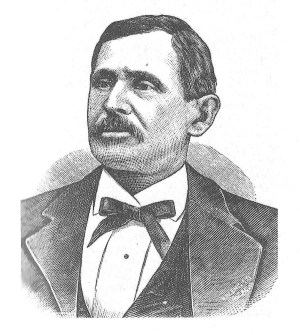
April 27 illustration.Thomas Smith.Hafen Vol IV
Source: Mountain Men and the Fur Trade of the Southwest, Vol. IV, Leroy R. Hafen

After a close brush with the law at an outlying cabin, they made it to the small settlement of Riitos. Here, they hid the packs of furs among the trees and stopped for breakfast. The people were neighborly and came out to offer the trappers tortillas and eggs. However, the local kids  discovered the packs in the trees. Smith did some quick thinking and explained that the furs were hidden because the sun would damage them. No one objected to this explanation, and the trappers continued on their way.

They hid the furs in a cave near the Rio Grande and rode into Taos the next day, where Smith was able to make the necessary arrangements. Although illegal and somewhat dangerous, Smith’s approach seems to have been the wiser one.

Ewing Young’s party cached their furs a little too close to Santa Fe, in the Pena Blanca home of a gentleman named Cabeza de Baca. De Baca’s help led to distaser for his family: When the soldiers arrived to confiscate the furs, there was an altercation and de Baca was killed.

Young’s furs were lost as well. When Young attempted to retrieve them from the Santa Fe authorities, he was imprisoned and only released when he came down with a debilitating fever. Eventually, the furs were sold at a fraction of their value. It’s unclear who ended up receiving the little money they brought in.

So, while Thomas Smith circumvented the law, he did make a profit. Ewing Young wasn’t so fortunate. It was a lesson that the American trappers would take to heart. The Mexican government would continue to try to keep the trappers under control, and the Americans would do their best to avoid that supervision.

Sources: Mountain Men and the Fur Trade of the Far West, Vol. IV, Leroy Hafen, Arthur H. Clarke Company, Spokane, 1966; The Taos Trappers, David J. Weber, U of Oklahoma, Norman, 1971.
New Mexico’s Rep Issues Warning About Americans

In January 1826, Santiago Abreú, New Mexico’s representative in Mexico City, sent a letter to the government officials in Santa Fe. In it, he cautioned them to be wary of the Americans in the province, especially those who wanted to settle, buy land, and marry without first obtaining the appropriate citizenship papers. In addition, the letter asked officials to record the activities of all non-Mexicans in New Mexico. This governmental policy of monitoring the Americans continued into the next decade, including after Abreú himself was appointed Governor in 1831. His duties included enforcing the laws that governed the americanos’ activities, including the regulations related to trapping and trading.

Jesus G. Abreu.Meketa
Jesus Abreu, Santiago Abreu’s son and Lucien B. Maxwell brother-in-law Source: Louis Felsenthal by J. D. Meketa

Ironically, Governor Abreú  was the father of Jesús Abreú, the man who would become Lucien Bonaparte Maxwell’s brother-in-law and fellow heir (through their wives) of a substantial portion of the Beaubien-Miranda land grant east of Taos. Although Canadian-born Carlos Beaubien, Jesus Abreú’s and Lucien Maxwell’s respective wives, had become a naturalized Mexican citizen prior to the grant’s being made, there is no record that Lucien Maxwell, ultimate owner of most of the land, was ever a naturalized Mexican citizen. However, by the time Beaubien died in 1864, Maxwell’s citizen was a moot point. The thing Santiago Abreú had feared, that the Americans would eventually take over, had occurred 18 years before and many of his countrymen were in eminent danger of losing their patrimony to the men who were flooding in from the eastern States.


Sources:   J. Rush Pierce, Red River City: A history of Northern New Mexico 1800-2000, JRP Publications, 2008; Marc Simmons, Kit Carson and His Three Wives, UNM Press, 2008; Jerry D. Thompson, A Civil War History of the New Mexico Volunteers and Militia, UNM Press, 2015; David J. Weber, The Taos Trappers, U of Oklahoma, 1971; Stephen Zimmer, ed., For Good or Bad, People of the Cimarron Country, Sunstone Press, 1999.

Taos Gets New Mexico’s First Press

When New Mexico’s first printing press arrived in Taos in late November 1835, its new owner Padre Antonio José Martinez didn’t waste any time putting it to work. On Friday, November 27, he announced that the press was be available to residents to use to publish “literary contributions.”

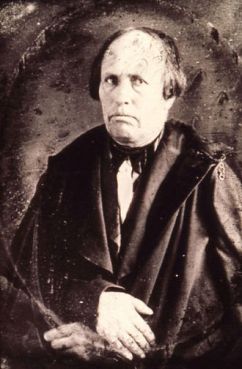
Antonio_José_Martínez
Padre Antonio Jose Martinez circa 1848

The press and its printer, Jesús María Baca of Durango, Mexico, had arrived in Santa Fe in 1832, brought there by Don Antonio Barreriro, a barrister and governmental deputy from Mexico City, apparently at the behest of nuevomexico Legislature’s Secretary, Don Ramón Abreu.

Barreriro used the new press to print a short-lived newspaper El Crepúsculo de la Libertad (The Dawn of Liberty), the first newspaper in New Mexico and possibly the first paper published west of the Mississippi. Abreu may have also used it to publish the first book printed in New Mexico, a spelling primer titled Cuaderno de Ortografía.

Following Barreriro’s return to Mexico, Ramón Abreu sold the printing equipment to Padre Martinez, the priest assigned to Taos’ Our Lady of Guadalupe chapel, who moved it to Taos. Once it and its printer were in place, Martinez put them to work, with output ranging from diligencia matrimonials (the standard forms for pre-nuptial investigations) to religious books. And hopefully Taos residents’ “literary contributions,” as well!

Sources: Fray Angelico Chavez, But Time and Chance, Sunstone Press, Santa Fe, NM 1981; Richard W. Etulain, New Mexican Lives: Profiles and Historical Stories, UNM Press, Albuquerque 2002; Rubén Saláz Márquez, New Mexico A Brief Multi-History, Cosmic House, Albuquerque, 1999.