The Takeover of New Mexico

The Takeover of New Mexico

Preparations for war were in full swing in Santa Fe that second week of August, 1846. Rumors of the approaching American army under Stephen Watts Kearny had been swirling all summer and became more concrete as time went on. New Mexico’s governor, Manuel Armijo, had fired letters off to the officials in Mexico City pleading for help and warning of the possibility that his paisanos would capitulate to the invaders without a fight.

Early in August, American trader Eugene Leitensdorfer arrived in Santa Fe with news. The U.S. Army was at Bent’s Fort. Armijo consulted with his council on Sunday, August 9, then sent out a call to New Mexico’s militia to assemble in Santa Fe. When they arrived, they headed for Apache Pass, east of the city, where they began digging trenches, throwing up barricades, and positioning cannon in. Things in Santa Fe were so tense that some of the American merchants there barricaded themselves in a store on the plaza, expecting to be arrested or even killed when the fighting began.

In the meantime, U.S. Army Capt. Philip St George Cooke and James Magoffin arrived in town on Wednesday, August 12. They carried a letter from Kearny and, rumor has it, a considerable amount of gold. They also brought news. Kearny’s army was not at Bent’s Fort any longer. It was already on New Mexican soil. In fact, Cooke was due to meet up with them at Las Vegas in the next couple days.
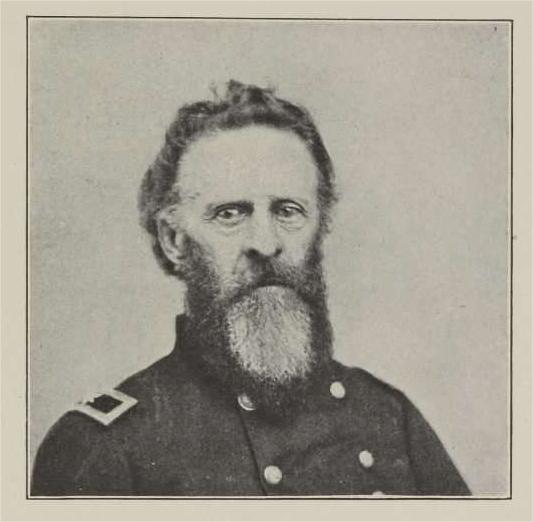
Philip St. George Cooke, circa 1860s. Courtesy of encyclopediavirginia.org

By the time that happened, on Saturday, August 15, it was clear to New Mexican officials that Governor Armijo was no longer anxious to defend the region from the invaders. He had gone from firing off letters, issuing bellicose proclamations, marshaling troops, and positioning cannon, to asking his officers whether he should really try to fight. When several of them said a vehement “yes!”, Armijo began complaining that the defenses he’d thrown up weren’t strong enough and that the men behind them were cowards who would run at the first shot.

Manuel Armijo, wearing the medal he’d received for his capture of the 1841 Texas Expedition to Santa Fe

Maybe word of Kearny’s takeover of Las Vegas and the number of U.S. troops had reached Armijo and he’d given up the idea of fighting. Or maybe he’d made his decision the night of August 12, during his conversation with Cooke and Magoffin. The only thing certain is that by the end of August 16th, the last Mexican governor of New Mexico had headed south toward Albuquerque and ultimately the interior of Mexico.

When Kearny and his men reached Apache Pass, they found it empty, although at least one of his officers thought the location could have been used effectively to at least slow them down.

But by then it was too late. The U.S. Army was in control of New Mexico and would quickly set up a new government to replace the old. All that excitement and fear had been for nothing. The New Mexicans had been completely cowed by America’s military might. Or so it seemed.

© Loretta Miles Tollefson

Sources: William A. Kelleher, Turmoil in New Mexico, 1846-1868; Marc Simmons, New Mexico; Howard R. Lamar, The Far Southwest; Ralph Emerson Twitchell, The Military Occupation of New Mexico.
Mormon Battalion Reaches Las Vegas

In early October 1846, the 500-member Mormon Battalion of Volunteers of the U.S. Army of the West marched through Las Vegas, New Mexico. They were on their way to California from Council Bluffs, Iowa, where they’d volunteered to fight in the Mexican-American conflict.

Their service had two conditions. First, each man would receive his $42 uniform allowance in advance but would wear his civilian clothing on the march. This enabled the men to donate most of their clothing money to the Church to buy wagons, animals, and other necessities for the coming move to what is now Utah. Second, the Battalion members would serve twelve months and no longer.

These men hadn’t volunteered because they supported the war against Mexico. Their leaders had asked them to join up. The Latter Day Saints needed Federal government agreement to cross what was rapidly becoming U.S. Territory and settle around the Great Salt Lake.

The LDS leadership also hoped that the Volunteers, the only single-religion battalion in U.S. military history, would help change public perception of the Church and its members by demonstrating their loyalty to the United States.

The Mormon Battalion was divided into two groups which traveled several days apart, but they were all in Santa Fe by mid-October 1846, where they met their new Captain, Philip St. George Cooke.

Oct 3 post illustration.Cooke

They were now about 45 percent through their 2,000 mile trek. Mountain man Jean Baptiste Charbonneau, the child born to Sacagawea during the 1805 Lewis and Clark Expedition, would guide them the rest of the way. Charbonneau, Cooke, and the men of the Mormon Battalion would create Cooke’s Wagon Road, a route used after American annexation to transport goods and people to California.

They arrived in California in January 1847, shortly after Mexican capitulation to John Fremont, and therefore didn’t see battle. But they completed other useful tasks and fulfilled their full twelve month contract. After their service expired, some of the Battalion members stayed in California. A few of them were working at Sutter’s Mill when gold was discovered there on January 24, 1848.

As a result, not only did the Church receive much of the $30,000 the volunteers had earned during their military service, it also received $17,000 in contributions from the first fruits of what would become the 1849 California Gold Rush. Those funds were instrumental in getting the LDS congregation through the winter, providing the means for their epic journey to the Great Salt Lake area, and helping to establish them there.

Sources: en.wikipedia.org/wiki/Mormon_Battalion Accessed 9/4/19; Paul J. Horgan, Great River, the Rio Grande in North American History, Connecticut: Wesleyan UP, 1984;  John W. Kirshon, Ed., Chronicle of America, Mt. Kisko: Chronicle Press, circa 1989; Benjamin M. Read, Illustrated History Of New Mexico, Santa Fe, 1912;  Ralph E. Twitchell The Leading Facts of New Mexican History, Vol. 2, Cedar Rapids: Torch Press;  www.mormonbattalion.com Accessed 9/4/19.