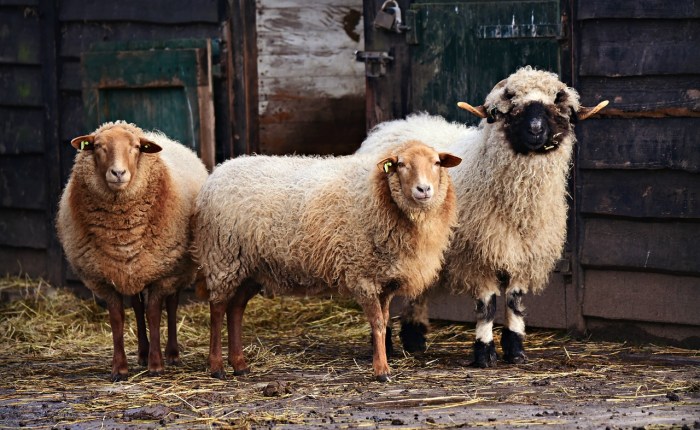
In No Secret Too Small , Suzanna learns how to weave. In her case, the wool has already been taken from the sheep and transformed into yarn. This video and the one I’ll post a couple days from now, provides a lot more information about the entire process than I could have possibly included in the novel. Enjoy!
Tag: Old New Mexico
Old New Mexico Ebooks Everywhere!
I’m pleased to announce that three of my Old New Mexico novels (Not Just Any Man, Not My Father’s House, and The Pain and The Sorrow) are now available in multiple ebook formats. This means that you can now read these books on Apple Books, Tolino, Bibliotheca, Vivlio, Scribd, OverDrive, and Borrow Box. It also means that if your local library offers digital checkout via one of these services, you can read these books for free!
If you want to purchase the novels as an ebook, they’re available in Kobo format from Barnes and Noble and RakutenKobo and in Kindle format from Amazon.
The plan is to make these books available via these outlets for six months, then revert to Kindle Unlimited. So, if you use these other formats, or want to get the books through your library, now’s your chance!
Happy reading!
YOU PROMISED ME GLASS WINDOWS
Suzanna’s eyes narrowed and her lips tightened. “I did not come to this god forsaken valley to live in a cave,” she snapped. The toddler on her hip started fussing but Suzanna only shifted impatiently and continued to glare at her husband on the other side of the room. “You promised me glass windows. You also said you wanted to farm, that you were finished with trapping.”
Gerald gestured at the beaver pelts lying just inside the cabin door. “I was finding the means to buy glass,” he said mildly.
Suzanna turned away. “The money will just go to something else.” Alma fussed again and Suzanna bent to place her on the floor. “The mule will go lame or cougars will take down a couple more calves.”
“Suzanna sweet–”
“Don’t you ‘sweet’ me!” She straightened, hands on her hips. “I will not be sweet-talked out of this! You can’t expect me to live in a cabin with just shutters at the windows, sitting in the dark whenever it rains!”
“We have lamps.”
“It’s not the same and you know it!”
Alma had toddled to her father. She clung to his leg, looking up at him. “Papa stay home?” she asked. “Mama ang’y.” She shook her dark curly head. “Me don’ like Mama ang’y.”
Gerald and Suzanna stared at each other for a long moment. Then Gerald scooped Alma into his arms and Suzanna threw her hands in the air helplessly and crossed the room. She leaned her head against his shoulder. “I had no idea when you would return,” she said into his sleeve.
Copyright ©2016 Loretta Miles Tollefson
NOTE: This is a prequel to my novel No Secret Too Small
U.S. Mail Heads to Santa Fe!
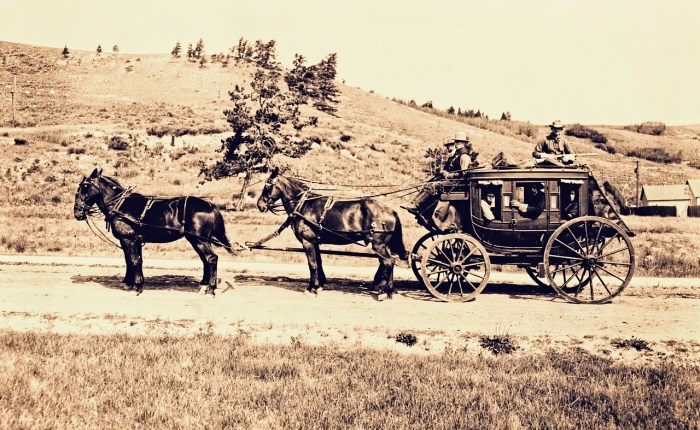
On Monday, July 1, 1850, the first stage-transported U.S. mail left Independence, Missouri for Santa Fe, New Mexico with eight men guarding the mule-drawn coach.
This was the first Congressionally authorized four-year contract for mail transported by vehicle between Independence and New Mexico. It had initially been set to leave Fort Leavenworth but the contract was modified to send it out of Independence instead, reducing the route distance from 885 to 840 miles.

The mail contractors in 1850 were Dr. David Waldo of New Mexico and Jacob Hall of Independence. The stage not only carried the mail, it also provided passenger service, with fares of $100 in the summer and $150 during the winter. A letter of less than half an ounce cost $0.10 and could be sent collect, postage to be paid by the recipient.
The company that Waldo and Hall formed in 1850 dissolved four years later, when Hall bought Waldo out and teamed up with John M. Hockaday to transport the mail for the next contract period. In 1857, service moved to semimonthly and the following year Hall again placed a successful bid, this time as sole proprietor. In 1862, he bid again, but the contract was awarded to George H. Vickroy and Thomas J. Barnum.
The Eastern terminus for the stage also shifted that year, moving west to Kansas City. Now the shortening of the line that had begun on the first run accelerated, responding to the growth of the railroads. Stage service to Santa Fe would end completely in 1880 with the arrival of the Atchison, Topeka, and Santa Fe. But the idea of the stage and its symbolic connection to the American frontier would linger much longer.
SMITH
They headed out of the Sangre de Cristos in mid-May, sleeting snow at their backs. They walked, all of them except the boy, and led the mules, packsaddles heavy with beaver plew. They were eight in all, counting the boy. They’d found him beside the smoking remains of a mountain cabin, the only survivor of an Indian raid. How he’d kept his scalp was a mystery to the trappers, but they shrugged at each other and agreed when Dutch George proposed that the kid come along as cook and general camp follower.
The men consisted of three Americans, two Mexicans, a half-Ute guide, and an uncommunicative grizzled-haired Black man who, when they’d run across him on the Rio Colorado, had asked if they minded if he threw in with them.
The trappers had looked at each other. In fur country, a man’s skin color wasn’t much of an issue, and he looked honest enough, but he wasn’t forthcoming about where he’d been or where he was headed, either. They’d all shrugged and he’d fallen in behind, but there was a certain amount of unease and the orphan boy was more skittish than usual, shoulders jerking at the croak of every raven overhead.
On the stranger’s third night, Dutch George crouched on the opposite side of the fire and studied him for a long stretch before asking abruptly, “Ain’t a runaway, are ya?”
The man was sitting on a large flat piece of sandstone, warming his hands. He looked across the flames at the German and shook his head with a small smile.
“Talkative, ain’t ya?”
The man chuckled and nodded slightly.
“You been trappin’ long?” Little Bill asked as he settled beside Dutch George. He was the tallest and broadest among them, though so young he didn’t yet have his full beard.
The black man shrugged and stared quietly into the flames. The orphan boy came alongside him and held out a tin plate of dutch oven cornbread and stewed jerky, his twitching shoulders sloshing the food dangerously.
“Thankee,” the man said, taking it. He looked at the plate thoughtfully, then began eating.
“Ya don’t chow like ya been starved,” George observed.
“It’s good,” the stranger said.
At the edge of the firelight, Webster had been trying to mend a trap. “Shit!” he said. “The dad blasted thing’s completely haywire. What’d that beaver do to this thing, anyhow?”
Archuleta took the trap from Webster’s hands and turned it over. “That beaver, he tried to eat him,” he said. “He chew the trap jaw instead of his own leg.”
“He done more to it than that,” Webster said. “He twisted it a good quarter turn. I ain’t never seen anything like it. And damn it to hell, that’s the second one that’s been shot all to pieces this trip. These contraptions’ll cost me twelve dollars in Taos!”
The Black man put his plate on the ground and stretched his hand toward the Mexican. Archuleta gave him the mangled trap. The stranger leaned into the firelight and examined the metal contraption carefully, then pulled a sturdy ten-inch knife from the scabbard at his waist. He used the blunt side of the blade to wedge one end of the jaw out of its stabilizing base, then began maneuvering it away from the encircling springs at either end, working the damaged bar free of the trap.
“Careful there,” Dutch George said, but the black man only grunted and continued to manipulate the metal pieces.
They all watched silently as he slipped the twisted two-legged curved jaw out of the trap, then nodded to the boy. “Add some o’ that fatty pine to the fire, son.”
When the flames flared hot in response to the pine pitch, the stranger pulled a wad of rags from his possibles bag, wrapped it around one end of the curved metal bar, and held the skewed portion over the hottest part of the fire. For a long while, nothing happened, then the metal began to darken, redden, and finally glow white as the boy added more wood to the flames.
When the bar was hot enough, the man edged off the piece of sandstone he’d been sitting on and gingerly placed the glowing metal on it. He crouched, picked up a nearby fist-size black rock, and began tapping it against the jaw, carefully working the metal straight. “Got water?” he asked over his shoulder. The boy brought a full bucket and the man plunged the hot metal in, leaning back to avoid the hissing steam.
When the trap jaw had turned dark again, the stranger took it from the pail, returned it to the sandstone, and bent for his plate. Little Bill edged toward the rock.
“Not cool yet,” the Black man warned.
Hands behind his back, Bill leaned to examine the repair. “Wagh!” he said. “That should do the trick.” He straightened and looked at the stranger. “Maybe you can look at the other one after you’ve chowed.” He grinned. “Guess we can just call ya Smith.”
A shadow of a smile crossed the Black man’s face and he nodded in agreement. From the edge of the firelight, the Indian-raid orphan boy studied him silently, shoulders still for the first time.[i]
from Old One Eye Pete
[i] References to black or ‘mulatto’ mountain men are scattered throughout the accounts of the Americans in the Rocky Mountains. Perhaps the most famous of these men was James Beckworth, who became, like so many of the mountain men, famous both for his exploits and his capacity to stretch those experiences into memorable stories.
Uncle Dick Wootton Marries Again!
On Saturday, June 17, 1871, Richens Lacey “Uncle Dick” Wootton married for the fourth time. He had recently turned 55. His bride was sixteen-year-old Maria Paulina Lujan of Mora, New Mexico. They would have ten children together, six of whom lived to adulthood.
Wootton had arrived in the Rocky Mountains at age twenty as a member of a Bent Brothers and St. Vrain wagon train and promptly turned his hand to trading with the Sioux. Following that venture, he went on to trap as far west as Fort Vancouver, serve as a hunter for Bent’s Fort, raise buffalo for sale to Eastern zoos, and scout for Colonel Doniphan during the U.S.’s 1846 invasion of Mexico.

In 1848, Wootton married Dolores Lefebvre of Taos, where he was based until 1854. When she died in childbirth in 1855, he went into business freighting goods between Kansas City and New Mexico. Around 1857, he married Mary Ann Manning and they moved to Denver, where he ran a saloon and hotel along with a general trading and loan business. After Mary Ann died in 1861, he sold out and built a house at Pueblo, where he farmed on the east side of Fountain Creek.
In 1863, Wootton married again, to Fanny Brown, who died just over a year later, leaving an infant daughter. The following year, he settled in the mountains between Colorado and New Mexico, and got permission from both legislatures for him and his partner to build a toll road through Raton Pass. By the early 1870s, he was also operating a stage station out of his log-and-stone home there.
All of this was going on when Wootton married the teenage Maria Paulina. Unlike her predecessors, she seems to have had little problem with childbirth. Wootton finally had a life partner and a steady business—the road itself averaged roughly $600 a month.
Then, in 1878, the Atchison, Topeka, and Santa Fe Railroad came calling. The toll road was in the way of the new track they wanted to lay. On the face of it, Wootton doesn’t seem to have made a good deal with them. He settled for $50 a month, with the stipend to continue to Maria Paulina after his death. However, she lived until 1935.
He may have gotten the best of that bargain after all.
Sources: LeRoy R. Hafen, Fur Trappers and Traders in the Far Southwest, Logan: Utah State University Press, 1997; Morris F. Taylor, First Mail West: Stagecoach Lines on the Santa Fe Trail, Albuquerque: University of New Mexico Press, 1971.
Volcanos in New Mexico
Did you know that there are volcanos in New Mexico?
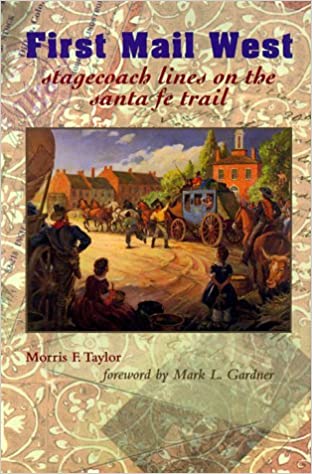
Book Review: First Mail West
For many Americans, the stagecoach symbolizes the 1800s in the West. And yet, stage mail and passenger service to Santa Fe lasted just thirty years, from 1850 to 1880. In that time, the route grew shorter and shorter, as the railroad crept toward New Mexico and finally ended the stagecoach era completely.
Morris F. Taylor’s book First Mail West: Stagecoach Lines on the Santa Fe Trail tells that story and much more. It begins with equine transport of military dispatches and goes on to describe when and how the first Post Office Department contracts were put in place and the many details connected with the mail stage system.
But this is not a dry fact-and-figures kind of book. It’s filled with the names of people associated with New Mexico history—the Bent brothers, David Waldo, Ceran St. Vrain, William W.H. Davis, Kit Carson, Governors Lane and Meriwether, and many more. It also identifies lesser-known individuals, including the stage conductors and drivers, and provides fascinating glimpses into life along the route to Santa Fe—descriptions of the stage stops, how they were operated, the people who ran them, and the dangers they encountered. In addition, because the stage had connections into Denver, there’s a good overview of the early Colorado mine fields and the towns that sprang up around them.
First Mail West is a pleasure to read and full of information you never realized you wanted to know. I recommend it to anyone researching New Mexico and Colorado history in the 1846-1880 time frame and also to those who’d simply like another approach to Old West history.
Albino Pérez Arrives in New Mexico!
Newly appointed Governor Albino Pérez arrived in New Mexico in May 1835 to general relief. The previous governor, Francisco Sarracino, was generally viewed as inept and Pérez was a breath of energetic fresh air. He brought funds for the Presidio troops and immediately set out on a tour that included visits to outlying communities as well as a successful action against the Navajo, who’d been picking off sheep and other prizes. When Pérez returned to Santa Fe, he gave an inaugural address in which he praised New Mexicans’ peaceful habits, love of order, and obedience to justice, among other virtues.
However, the longer Pérez was in office, the more complicated things became. The money he’d brought was spent and more was needed. Sarracino, now New Mexican Treasurer, was accused of embezzling funds. The Navajo were active again and another campaign was necessary. And Pérez’s idea of paying for it with forced loans from the region’s ricos was not met with universal acclaim.
Then New Mexico’s exemption from the national sales tax expired. The governing council asked Pérez to forward a petition for its renewal to Mexico City, but he didn’t do so right away. Instead, he started talking about how to collect the tax.
This didn’t go well with the populace. In fact, it may have been the spark that ignited what is popularly known as the Chimayó revolt, the rebellion that resulted in Pérez’s death in early August 1837. The good feeling surrounding Pérez’s arrival had disappeared completely by the time he lost his life and his head on the road outside the village of Agua Fría south of Santa Fe.
Which is a good reminder that no matter how an official begins their term, it’s what they do afterwards—and how their time in the sun ends—that people are most likely to remember.
Sources: Lansing B. Bloom, “New Mexico Under Mexican Administration,” Old Santa Fe Magazine, Vol. 2. Santa Fe: Old Santa Fe Press, 1914-1915; Janet Lecompte, Rebellion in Río Arriba 1837, Albuquerque: University of New Mexico Press, 1985; Read, Benjamin M. Illustrated History of New Mexico, Santa Fe: New Mexican Printing Company, 1912; Joseph P. Sanchez, “It happened in Old Santa Fe, The Death of Governor Albino Pérez, 1835-1837,” All Trails Lead to Santa Fe, Santa Fe: Sunstone Press, 2010; F. Stanley, Giant in Lilliput, the Story of Donaciano Vigil, Pampa, TX: Pampa Press Shop, 1963.
A Furry Conflict in New Mexico
On Wednesday, May 16, 1827, a man named Ignacio Sandoval showed up in Santa Fe, New Mexico with important information for Governor Antonio Narbona. Sandoval had just returned from a trapping expedition led by an American named Ewing Young. Young, who didn’t have a permit to trap, had come back with thirteen packs of furs—probably mostly beaver—and hidden them south of Santa Fe at the Peña Blanca home of Luis María Cabeza de Baca.
Narbona, in one of his last official acts as governor, sent men to confiscate the furs. Cabeza de Baca, trying to protect them, died as a result. Manuel Armijo, who took over as Governor on May 21, promptly issued an order for Ewing Young’s arrest in connection with the illegally obtained furs.
Young escaped incarceration for the time being, but the pelts remained confiscated. Well, most of them did. Some of them belonged to another American, Milton Sublette.
In July, Young and two other Americans obtained permission to clean the furs, which they worried had become damaged in storage. They and the local alcalde were busy shaking them out and taking inventory when Sublette appeared, grabbed a pack, threw it over his shoulder, and took off for the nearby home of Cristobal Torres.
The local authorities converged on the house, but it was too late. Sublette and his pelts had disappeared. Armijo blamed Young and called him into his office for explanations. When he threatened to incarcerate the American, Young walked out. Armijo had him arrested, threw him in jail, then released him when Young claimed a debilitating fever. But Armijo didn’t release the furs. Legally, they were now government property. They would eventually be sold, though at a fraction of what their original value.
So once again, a conflict between the Mexican administration and the Americans in New Mexico ended in a standoff, with no one the clear winner. I find this a fascinating story because it highlights the conflicts and complexities of American-Mexican interactions twenty years before the 1847 revolt at Taos, which stunned the Americans with its ferocity.
They weren’t looking at the larger picture. The kind of high-handedness and disregard for local customs Young and Sublette displayed were common among the American trappers during the Mexican period. The 1827 incident, among many others, appears to me to be directly linked to the events of early 1847, when the newly appointed American governor and former trapper and merchant Charles Bent was killed.
Retribution, no matter how long it takes, is still retribution.
Source: David J. Weber, The Taos Trappers, Norman: University of Oklahoma Press, 1971.