The Takeover of New Mexico

The Takeover of New Mexico

Preparations for war were in full swing in Santa Fe that second week of August, 1846. Rumors of the approaching American army under Stephen Watts Kearny had been swirling all summer and became more concrete as time went on. New Mexico’s governor, Manuel Armijo, had fired letters off to the officials in Mexico City pleading for help and warning of the possibility that his paisanos would capitulate to the invaders without a fight.

Early in August, American trader Eugene Leitensdorfer arrived in Santa Fe with news. The U.S. Army was at Bent’s Fort. Armijo consulted with his council on Sunday, August 9, then sent out a call to New Mexico’s militia to assemble in Santa Fe. When they arrived, they headed for Apache Pass, east of the city, where they began digging trenches, throwing up barricades, and positioning cannon in. Things in Santa Fe were so tense that some of the American merchants there barricaded themselves in a store on the plaza, expecting to be arrested or even killed when the fighting began.

In the meantime, U.S. Army Capt. Philip St George Cooke and James Magoffin arrived in town on Wednesday, August 12. They carried a letter from Kearny and, rumor has it, a considerable amount of gold. They also brought news. Kearny’s army was not at Bent’s Fort any longer. It was already on New Mexican soil. In fact, Cooke was due to meet up with them at Las Vegas in the next couple days.
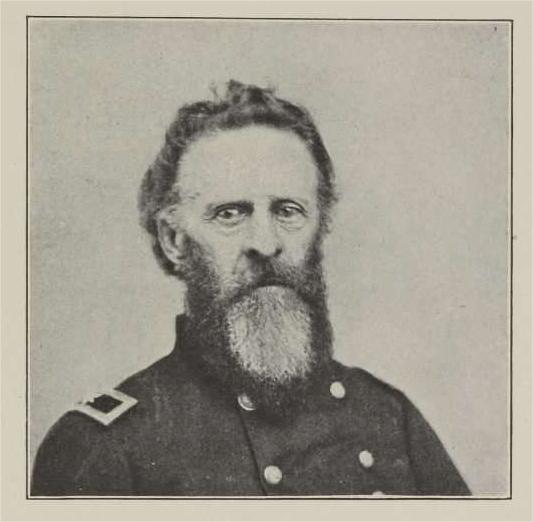
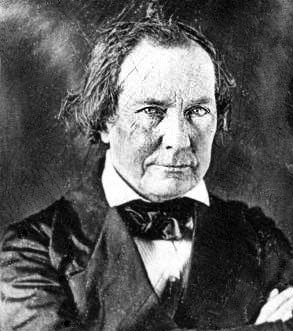
Philip St. George Cooke, circa 1860s. Courtesy of encyclopediavirginia.org

By the time that happened, on Saturday, August 15, it was clear to New Mexican officials that Governor Armijo was no longer anxious to defend the region from the invaders. He had gone from firing off letters, issuing bellicose proclamations, marshaling troops, and positioning cannon, to asking his officers whether he should really try to fight. When several of them said a vehement “yes!”, Armijo began complaining that the defenses he’d thrown up weren’t strong enough and that the men behind them were cowards who would run at the first shot.

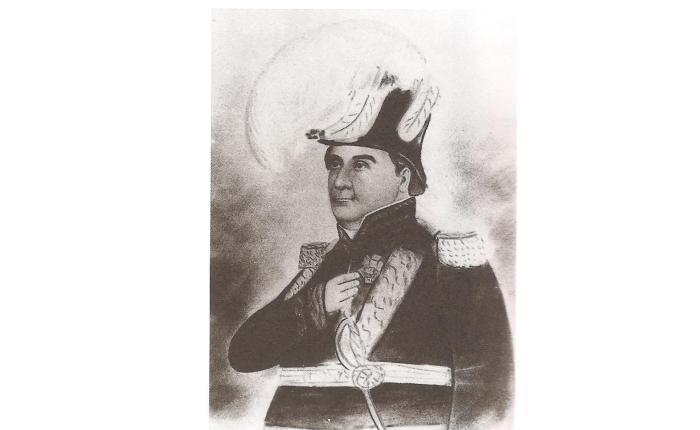
Manuel Armijo, wearing the medal he’d received for his capture of the 1841 Texas Expedition to Santa Fe

Maybe word of Kearny’s takeover of Las Vegas and the number of U.S. troops had reached Armijo and he’d given up the idea of fighting. Or maybe he’d made his decision the night of August 12, during his conversation with Cooke and Magoffin. The only thing certain is that by the end of August 16th, the last Mexican governor of New Mexico had headed south toward Albuquerque and ultimately the interior of Mexico.

When Kearny and his men reached Apache Pass, they found it empty, although at least one of his officers thought the location could have been used effectively to at least slow them down.

But by then it was too late. The U.S. Army was in control of New Mexico and would quickly set up a new government to replace the old. All that excitement and fear had been for nothing. The New Mexicans had been completely cowed by America’s military might. Or so it seemed.

© Loretta Miles Tollefson

Sources: William A. Kelleher, Turmoil in New Mexico, 1846-1868; Marc Simmons, New Mexico; Howard R. Lamar, The Far Southwest; Ralph Emerson Twitchell, The Military Occupation of New Mexico.

Contested Space: The Military Chapel of Santa Fe

Contested Space: The Military Chapel of Santa Fe

In a recent post about the Santa Fe plaza, I included a set of maps. If you look closely, you’ll notice that even the oldest of them identifies a small building on the south side of the square as the “military chapel.”

More properly called the Military Chapel of Our Lady of Light, and commonly referred to as La Castrense, this building was centered in the buildings on the south side of the Plaza and faced the Governor’s Palace on the north. The word Castrense means “belonging to the military profession,” so its nickname was appropriate, because the little church was built specifically for use by the members of the Santa Fe garrison. 

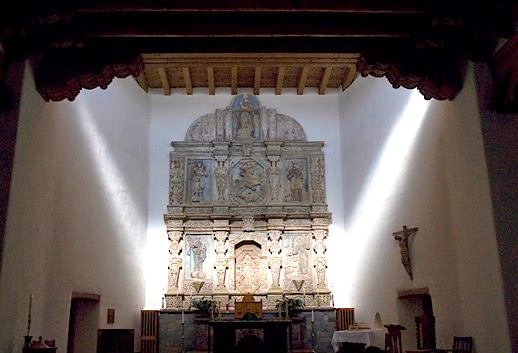
The original chapel was completed in 1717 and then rebuilt and rededicated in 1761. The reconstruction was funded by Governor Francisco Antonio Marin del Valle and his wife, Dona Maria Ignacia Martinez de Ugarte. This power couple also donated a new altar piece, or reredo, which was carved from large pieces of limestone quarried north of Santa Fe near Pojoaque. Said to be the largest and most ambitious piece of artistic work ever attempted in New Mexico to that point, the piece filled the entire altar end of the building. 

La Castrense altar piece today, courtesy El Cristo Rey Catholic Church, Santa Fe

The chapel received further decorations around 1813, when Pedro Bautista Pino, New Mexico’s representative to the Spanish Cadiz, returned from Europe with two marble bas-reliefs which were mounted on the outside wall above the door from the plaza. Colonel Francisco Perea remembered years later that one of them represented “Santa Gertrudes wrapped in the coils of a large serpent, while the other, I believe, represented the mother of Jesus, Nuestra Senora de la Luz (Our Lady of Light), recuing a human being from Satan.”

The military troops stationed in Santa Fe attended services in the chapel monthly as well as on special occasions. During Governor Manuel Armijo’s first two administrations, he and the full garrison attended regularly, with the officers in full uniform.  However, it seems unlikely that they continued to do so during his third term (July 1845 to August 1846) as the roof had fallen in. At least, that’s what Lt. James W. Abert reported in early October 1846. He also said the building contained “some handsome carved work behind the altar,” and that at least one of the bas-reliefs still remained over the door, the one that showed Our Lady of Light.  

Abert had entered Santa Fe in the Fall of 1846 with the occupying U.S. army. Five and a half years later, in Spring 1851, newly appointed Chief Justice Grafton Baker, needed a place to hold his court and decided to use La Castrense.

The building, apparently repaired by this time, was set up with the necessary furniture and the grand jury was called. Unfortunately for Judge Baker, the grand jury members included Santa Fe native and former Mexican soldier, Donaciano Vigil. Vigil and his wife had been married in the chapel, and his father and an infant son were buried there. As former provisional governor under the U.S. rule, he had enough political clout to risk protesting the use of the chapel for civil purposes and enough connections in the city to rally public opinion behind him.

Baker threatened to hold court anyway and to have Vigil arrested, but when a crowd began to assemble outside and the commanding officer of the American troops rallied behind Vigil, the Judge gave way. He ordered the court moved across the plaza to the Governor’s palace. The men responsible for shifting the furniture didn’t have to actually remove it from the building. The crowd had already dumped most of it in the plaza.

The building doesn’t seem to have been immediately converted back to being a chapel. According to the 1891 Silver City Enterprise, in the 1850s, it was instead used to store  captured cannons, including the Lone Star of Texas which had come into New Mexico in 1841 with the ill-fated Texas Santa Fe Expedition.

The guns must not have stayed there for long, because in 1859 Bishop Lamy exchanged the building for $2000 and  land in the vicinity of the Parish church. The money went to repairs for  church and the land became the site of St. Michael’s College and the Loreto Chapel.

La Castrense itself was demolished by its new owner, but not until the altar piece was preserved and carefully removed. It is now in El Cristo Rey, which offers a brochure about the reredos on its website. It’s nice to know that, even though the building itself had to give way to “progress,” at least some of its contents were preserved and still survive.

© Loretta Miles Tollefson July 2025

Sources: James W. Abert, Western America in 1846-47; https://www.cristoreyparish.org/; Roland F. Dickey, New Mexico Village Arts; Francois-Marie Patorni, The French in New Mexico; Colonel Francisco Perea in Allison, “Santa Fe in 1837-1838”, Old Santa Fe Magazine, Vol. II; Silver City Enterprise, Oct. 9, 1891; Marc Simmons, Spanish Government in New Mexico; Francis Stanley, Giant in Lilliput; Maurilio Vigil and Helene Boudreau, Donaciano Vigil.

The Lone Star of Texas in Mexico

The Lone Star of Texas in Mexico

Shortly after American troops invaded New Mexico in Autumn 1846, they discovered four pieces of Mexican artillery in a village south of Santa Fe. Apparently, Governor Manuel Armijo had taken the guns with him when he fled, but abandoned them at Galisteo. One of these pieces was of special interest to the Americans because it had arrived in New Mexico by way of Texas.

The cannon, made in Springfield, MA, had accompanied the ill-fated 1841 Texan expedition to New Mexico. A brass six pounder, it had been cast with a Texas star on its breach and paid for by “patriotic ladies” of the newly formed republic. When the Texans straggled into eastern New Mexico in Fall 1841, they still had the gun with them, despite its weight and their exhaustion.

New Mexico Governor Manuel Armijo confiscated the cannon, of course, and reportedly displayed it in the Santa Fe plaza after he sent the captured Texans on to Mexico City. It was still there in 1846, when it and other artillery pieces were transferred to Apache Pass during the runup to the impeding American invasion.

When Armijo decided to flee instead of fight, he took the Texan gun and other artillery with him. Three of the gun carriages apparently broke down at Galisteo, and the governor was forced to abandon them as well as the weapons they carried. This included the Texan six-pounder, which the American troops dubbed the “Lone Star of Texas.”

Six pound cannon from the 1840-1860s period. Courtesy: U.S. Library of Congress

They transported the gun back to Santa Fe, where it was apparently once again placed on the plaza. Lt. Richard Smith Elliott says it was used in early November to assemble the officers for training drill.

We have no official record of the Texas cannon again until Brigadier General Sterling Price took it with him to Chihuahua.  There, it saw action at Santa Cruz de Rosales, the last battle of the Mexican war, on March 16, 1848.

However, there is a possibility that this was not the first battle in which the Texan cannon was fired. A six-pound cannon played a conclusive role in the February 1847 battle at Taos Pueblo, when it was used to breach the walls of the church where the insurrectos were holed up. This gun may well have been the Lone Star.

After the battle at Santa Cruz de Rosales, the Texan cannon was returned to Santa Fe, where it was stored alongside other Mexican artillery pieces in La Castrense, the old military church on the south side of the plaza. It and the other guns were presumably cleared out when the Americans decided to use the building as a courtroom. What happened to it after that remains a mystery.

Sources: Mark L. Gardner and Marc Simmons, Eds., The Mexican War Correspondence of Richard Smith Elliott; Silver City New Mexico Enterprise, October 9th 1891, courtesy Silver City Library.

© Loretta Miles Tollefson

BOOK REVIEW: Matt Field on the Santa Fe Trail

BOOK REVIEW: Matt Field on the Santa Fe Trail

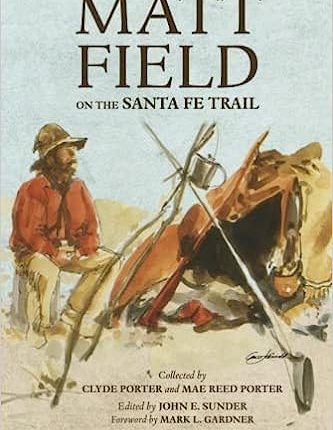
In 1839, a former actor named Matt Field decided to go to Santa Fe, New Mexico to regain his health. Although he failed to recover his physical well-being, Field did collect impressions and notes throughout his journey. After he returned to the U.S., he got a job at what is now the Time-Picayune/New Orleans Advocate and converted his jottings into a series of newspaper articles. The pieces were popular and were reprinted in papers as far away as London. I believe their positive reception inspired Picayune editor George Wilkins Kendall to make his own attempt to reach Santa Fe, a journey he would record in his Narrative of an Expedition Across the Great Southwestern Prairies from Texas to Santa Fé, which I discussed in June.

Over a hundred years after his trip, Matt Field’s articles were collected and published as Matt Field on the Santa Fe Trail. The young actor turned reporter definitely reflected the attitudes of his day, and some readers may find those biases upsetting, but there is also much to enjoy and to learn from this book. Field’s views of Santa Fe specifically and New Mexico in general are excellent examples of how Americans viewed the land and people that blocked their access to the Pacific Ocean. The book is a mixture of admiration for the women’s beauty, fascination with everything from Taos Lightning (wheat-based whiskey) to the New Mexican custom of community dances, and shock at the idea of priests and women who gamble and make money at it.

Matt Field on the Santa Fe Trail can be an exasperating book. His description of Governor Manuel Armijo’s wife as an elephant dancing is just rude and his misunderstanding of the role of Gertrudes Barceló as a business woman is a clear example of one society’s gender expectations being loaded onto another culture. However, these and other passages are precisely why I keep this book in my library. Matt Field on the Santa Fe Trail reminds me that we do not always see ourselves and our biases as clearly as we think we do. Even when we believe we’re open to new experiences, our unexpanded frames of references can still distort our perceptions.

And that is why I recommend Matt Field on the Santa Fe Trail to anyone interested in history in general and New Mexico in particular. It’s a fascinating historical document in itself and can also help keep us honest about our own take on the world around us and remind us that we may also possess attitudes we haven’t completely examined. And may not want others to know about a hundred years from now.

Texan Expedition Leaves for Santa Fe!

Texan Expedition Leaves for Santa Fe!

On Friday, June 18, 1841, Texan President Mirabeau Buonaparte Lamar accompanied Texas Santa Fe Expedition on the first leg of their journey to New Mexico.

Lamar sent an open letter with them, printed in both English and Spanish. This missive asserted Texas’s right to New Mexico east of the Rio Grande and said the Republic intended to “admit its remotest citizens to an equal participation of the blessings which have been acquired by our late glorious revolution.” It then went on to invite New Mexico to enter “the doors of the Temple which we have erected to Liberty,” and stated that if they weren’t interested, the Texans would leave quietly.

Mirabeau B. Lamar, courtesy Wikipedia.com

However, Lamar had told the three men he’d appointed to represent him in New Mexico that “upon entering the city of Santa Fe, your first object will be, to endeavor to get into your hands all the public property.” Admittedly, he said to do this without resorting to violence. But ninety percent of the men he’d sent were either current or recent members of the Texas Army. Maybe he thought the mere threat of violence would suffice.

The 300-strong Expedition marched eagerly out of Austin that bright Friday morning in June. On Saturday morning, Lamar reviewed them, delivered a speech, and sent them on their way. Everyone was in good spirits. They’d be home again in a matter of months, and the way to Santa Fe and all its wealth would be open at last. 

The trip wouldn’t go quite as planned, but they didn’t know that yet. For now, adventure awaited.

As did New Mexico Governor Manuel Armijo, who was already marshaling troops and ammunition, and arranging for the Comanches to monitor the Texans’ progress. Lamar’s Expedition would not find New Mexico unprepared.

Manuel Alvarez, Consul at Santa Fe

Manuel Alvarez, Consul at Santa Fe

On Friday, March 22, 1839, 45-year-old Spanish-born Manuel Alvarez was named U.S. Consul at Santa Fe. He was effectively the first American consul in New Mexico—the one appointed in 1825 had decamped to Chihuahua within the year.

As consul, Alvarez was responsible for dealing with American mercantile matters and also taking provisional possession of the estates of Americans who died without legal representation and sending word of their death back home. In addition, he voiced the concerns of Americans in the region, an activity that didn’t always make him popular with the governor.

Alvarez had been a merchant in New Mexico since 1824 and was comfortable complaining to the authorities. In July 1837, he’d signed on to a complaint to Governor Pérez about a confrontation between a group of Americans and some Mexican soldiers. After Pérez’s death the following month, Alvarez was one of the merchants who petitioned the Mexican government for repayment of loans made to the governor and his officials.

The real test of Alvarez’s ability to get things done came in September 1841, two-and-a-half years after he was named consul. Three hundred Texans, two-thirds of them soldiers, were marching toward Santa Fe and it was making everyone nervous. Some people believed the American merchants in New Mexico supported the Texan plan to take it over. Threats were made.

Manuel Alvarez’s signature. Source: Conflict and Acculturation, Manuel Alvarez’s 1842 Memorial by Thomas E. Chavez

Alvarez asked for formal assurance that the Americans would be protected from angry citizens. Governor Manuel Armijo responded that they would be—as long as no one gave aid to the Texans. If anyone did, Alvarez would be held personally responsible.

This warning doesn’t seem to have slowed the consul down much. When the Expedition members arrived and were taken into custody, he offered to act as intermediary, noting that the Republic of Texas had been recognized by the United States, but not by Mexico.

He also requested permission to meet with the American citizens among the Texans. He may have been especially concerned for the safety of George Wilkins Kendall. As publisher of a New Orleans newspaper that had printed disparaging articles about New Mexico in general and Armijo in particular, Kendall was likely to be unpopular with the governor and his associates.

Certainly, Alvarez’s concerns made him unpopular. In fact, the Governor’s shirt-tail relation Ensign Tomás Martín was so irritated that he and a group of friends confronted the consul in his Santa Fe office. During the ensuing altercation, Martín drew a knife and wounded Alvarez on the cheek. Alvarez likely would have suffered further if fellow merchant and New Mexico Secretary of State Guadalupe Miranda hadn’t arrived and dispersed the crowd.

Alvarez fled Santa Fe shortly thereafter, going East to report to Washington D.C. But he  returned to New Mexico and his duties, maintaining his position as consul until the American takeover  in 1846. At that point, the position was no longer necessary. But Alvarez didn’t turn to mere money making. He became active in regional politics and in 1850 was elected New Mexico’s Lt. Governor. He was also active in the faction that fought for New Mexico to be made a state instead of a territory.

Alvarez continued to be active politically until his August 1856 death in Santa Fe. The consul before him may have left quickly, but Alvarez, for all his faults, appears to have been committed to New Mexico. Or at least the Americans there.

Sources: William Campbell Binkley, “New Mexico and the Texan Santa Fé Expedition,” Southwestern Historical Quarterly, Vol. 27:2, Oct. 1923, pp. 85-107; Lansing Bloom, “Ledgers of a Santa Fe Trader,” New Mexico Historical Review, Vol. 21, April 1946, pp. 135-139; Lansing Bloom, “Texan Aggressions, 1841-1843,” Old Santa Fe Magazine, Vol. 2, pp. 143-156; Thomas Esteban Chavez, “The Trouble With Texans, Manuel Alvarez and the 1841 ‘Invasion,’” New Mexico Historical Review, Vol. 53:2, April 1978, pp. 133-144; Janet Lecompte, “Manuel Armijo, George Wilkins Kendall, and the Baca-Caballero Conspiracy,” New Mexico Historical Review, Vol. 59:1, Jan. 1984, pp. 49-66; Janet Lecompte, Rebellion in Rio Arriba, University of New Mexico Press: Albuquerque, 1985; Max L. Moorhead, New Mexico’s Royal Road, University of Oklahoma Press: Norman, 1958; Joy L. Poole, Ed., Over The Santa Fe Trail to Mexico: The Travel Diaries and Autobiography of Dr. Rowland Willard, University of Oklahoma Press: Norman, 2015; Benjamin M. Read, Illustrated History of New Mexico, New Mexican Printing Company: Albuquerque, 1912; Daniel Tyler, “Gringo Views of Governor Manuel Armijo,” New Mexico Historical Review, Vol. 45:1, Jan. 1970, pp 23-46; David J. Weber, The Mexican Frontier, 1821-1846, University of New Mexico Press: Albuquerque, 1982; Consular duties: https://adst.org/a-brief-history-of-the-consular-service/ accessed 1/18/22)

A Reward for El Coyote’s Death

A Reward for El Coyote’s Death

On Tuesday, March 6, 1838, Carlos Santistevan asked the New Mexico government for 50 pesos for killing rebel leader Juan Antonio “El Coyote” Vigil five-and-a-half weeks earlier during the battle of Pojoaque Pass. Vigil had co-led the New Mexico revolutonaries with José Angel Gonzales since late the previous year, and had issued the January 1838 call to arms that initiated the final phase of the rebellion and the battle just north of Pojoaque Pueblo.

We don’t know precisely how El Coyote Vigil died, but we do know what happened to his body afterward. It was hung at the nearest crossroads as a warning to anyone with further insurrectionary ideas.

Vigil, from the mountain village of Truchas east of Chimayó, seems to have spent most of late 1837 in Taos. There, he’d threatened Padre Antonio Jose Martínez’s life if the priest didn’t stop preaching against the revolution. This frightened Martínez enough to send him fleeing south to Santa Fe. But it also angered the priest. Once in the capitol, he volunteered to serve as Governor Manuel Armijo’s military chaplain during the January campaign.

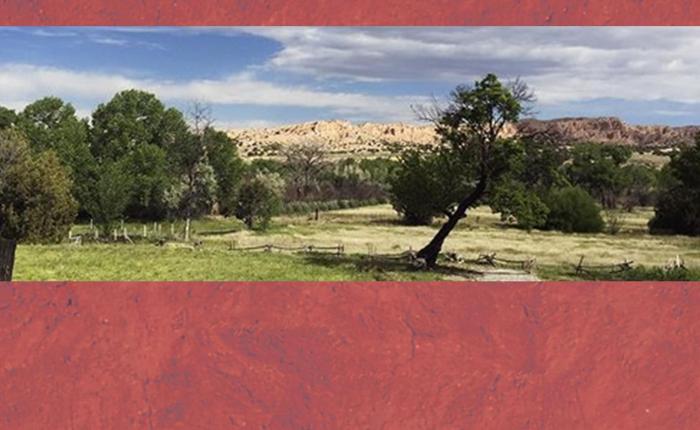
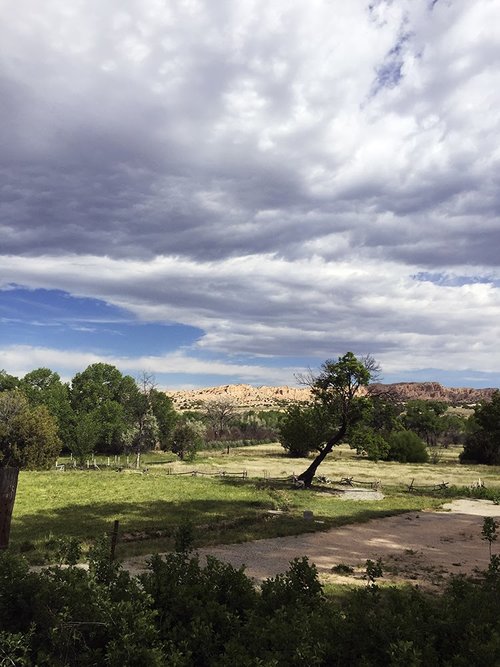
The cliffs of Pojoaque Pass in the distance. Courtesy: RanchoJacona.com

Martínez was at Armijo’s side at the battle of Pojoaque Pass and afterward. While the governor gave the order to hang Vigil’s body at the crossroads, one has to wonder if the priest had anything to do with the idea. Certainly, he doesn’t seem to have hesitated to comply with Armijo’s order later that day to hear José Angel Gonzales’ confession before he was taken out to be shot.

If you’re interested in learning more about Vigil, Gonzales, the rebellion, and the loyalist response, check out my recently-published novel There Will Be Consequences. You can find more information here.

 Sources: Lansing Bloom, “The Insurrection of 1837,” Old Santa Fe Magazine, Vol. II, Santa Fe: Old Santa Fe Press; Fray Angelico Chavez, But Time and Chance, the story of Padre Martinez of Taos, Sunstone Press, Santa Fe, 1981; Janet Lecompte, Rebellion in Rio Arriba, 1837, UNM Press, Albuquerque, 1985; Ralph E. Twitchell, The Leading Facts of New Mexican History, Vol. II, Torch Press, Cedar Rapids, 1911.

One Week to Consequences!

One Week to Consequences!

The countdown has begun! This time next week, my new novel There Will Be Consequences will be live and available for purchase at Amazon.com, BarnesandNoble.com, and other retailers! For the first week, both ebooks and paperbacks will be available at special discount prices, so pre-order or mark your calendar now to get this book!

It’s August 3, 1837, and rebellion has broken out in northern New Mexico. By the end of the week, Governor Albino Pérez and key members of his administration will be dead, and a governor with indigenous ancestry will be installed in Santa Fe.

Trouble’s been brewing for over a year, fed by new laws restricting the right to vote, the threat of new taxes, and a governor who’s quicker to borrow money than distribute it. On top of that, Pérez has jailed the Santa Cruz de la Cañada alcalde for making a decision he didn’t like. The locals free the alcalde and go to war, campesinos and Pueblo warriors against the ricos of the south.  

But the rich aren’t about to give up their privileges so easily. More people will die before the violence ends.

A deeply-researched biographical novel with implications for today, There Will be Consequences explores the events before, during, and after early August 1837 through the eyes of the people who participated in them. Twelve linked stories propel the narrative forward from the perspective of individuals as diverse as Albino Pérez, rebel governor José Angel Gonzales, Santa Fe gambler Gertrudes “Doña Tules” Barceló, Taos priest Antonio José Martinez, and that most flexible of New Mexico’s politicians, Manuel Armijo.

Manuel Armijo, The Ultimate Politician?

Manuel Armijo, The Ultimate Politician?

A man named Manuel Armijo repeatedly plays a critical role in my forthcoming biographical novel There Will Be Consequences, which is set during the 1837/38 New Mexico tax rebellion. This isn’t the only time Armijo appeared in New Mexico’s history. In fact, you could say he played a repeating role throughout the Mexican period (1821 to 1846).

One of 15 children from a rico Albuquerque-area family, Armijo was around 30 years old when Mexico gained independence in 1821. A tall, good looking man with family connections throughout New Mexico, he became civil governor in May 1827. His term was short, ending in 1828, and marked by conflicts with the American trappers and traders who had arrived with independence.

Over the next decade, Armijo remained active in politics, serving as Albuquerque alcalde and militia lieutenant and using his influence to get the Santa Fe postmaster reinstated after being removed for mismanagement. In Spring 1836, Armijo was made New Mexico’s interim treasurer while the appointee, Francisco Sarracino, was under investigation for embezzlement.

Shortly after Sarracino was reinstated in July 1837, rebellion broke out in northern New Mexico. The insurrectionists were initially successful in taking over the capitol at Santa Fe, but the rico landowners further south quickly rallied and named Armijo commander of the loyalist forces.

Through what appears to have been a combination of lucky breaks (a rebel governor who allowed himself to be jailed instead of fleeing) and persuasion (prominent rebels who later agreed to take the man’s place in said jail). Armijo managed to get the insurrectos out of Santa Fe. But they didn’t disperse, they merely withdrew. Now interim governor, Armijo spent the winter of 1837/38 alternately threatening to kill his rebel prisoners and cajoling the insurrectionists into behaving by asking them to clarify their grievances so he could address them.

In reality, Armijo was biding his time. One of his first actions as commander had been to send a request south to Chihuahua for troops to reinforce New Mexico’s militia and small garrison of presidio soldiers. When the requested dragoons arrived in January 1838, the governor’s gloves came off. He ordered his rebel prisoners beheaded and marched north.

This time, with adequate troops behind him, Armijo was able to deal a decisive blow that effectively ended the rebellion. His reward for suppressing the insurrection was to remain in office as both civil and military governor, positions that were usually split between two people. His administration lasted through 1844, when he was suspended for a short time.

Armijo was reinstated for a third term in 1845, but the third time was not the charm. The following year, the Americans invaded in what is now known as the Mexican-American War. After much rhetoric and possibly a payoff, Armijo fled south ahead of the U.S. Army. He would be much castigated for this, even by later American historians, although his flight may well have saved New Mexican lives.

The pundits saw him as weak, cowardly, and greedy, a view that may have influenced their perspective on events nine years earlier. They reported that Armijo balked at the January 1838 battle until a dragoon captain forced his hand and some accused him of fomenting the rebellion in order to regain his position as governor. They even claimed that he had the prisoners executed in January 1838 in order to suppress what they knew about his involvement in the rebel coup. I have found no evidence to support either assertion. However, the very fact they were made seems to say a great deal about the complexity and power of Armijo’s character and his hold on the imagination of subsequent historians.

While I was writing There Will Be Consequences, I spent a good deal of time ruminating on the motivations of a man who seemed to have a knack for persuading people to do things contrary to their own interests and who was also quick to put people to death if it suited his needs. Was Armijo simply a selfish, cowardly scoundrel? Or was there more to him than met the historians’ eyes? Why would he hesitate to face the rebels at Pojoaque Pass when the odds were in his favor? Perhaps he really cared about the people and peace of New Mexico and worried about the impact of yet more deaths. Maybe he believed the executions two days before would be enough to bring the insurrectionists to heel.

We know a good deal about what Armijo did—or is said to have done—in the Fall and Winter of 1837/38. However, we don’t know what he was thinking. His actions and hesitation together give me the sense of a complex man with varied motivations. This makes him a fascinating character to write.

Which is a good thing, because he’s bound to show up in future Old New Mexico novels, following There Will Be Consequences. After all, he didn’t fade from public view until after 1846. I can hardly wait.

Cover Reveal, There Will Be Consequences

Cover Reveal, There Will Be Consequences

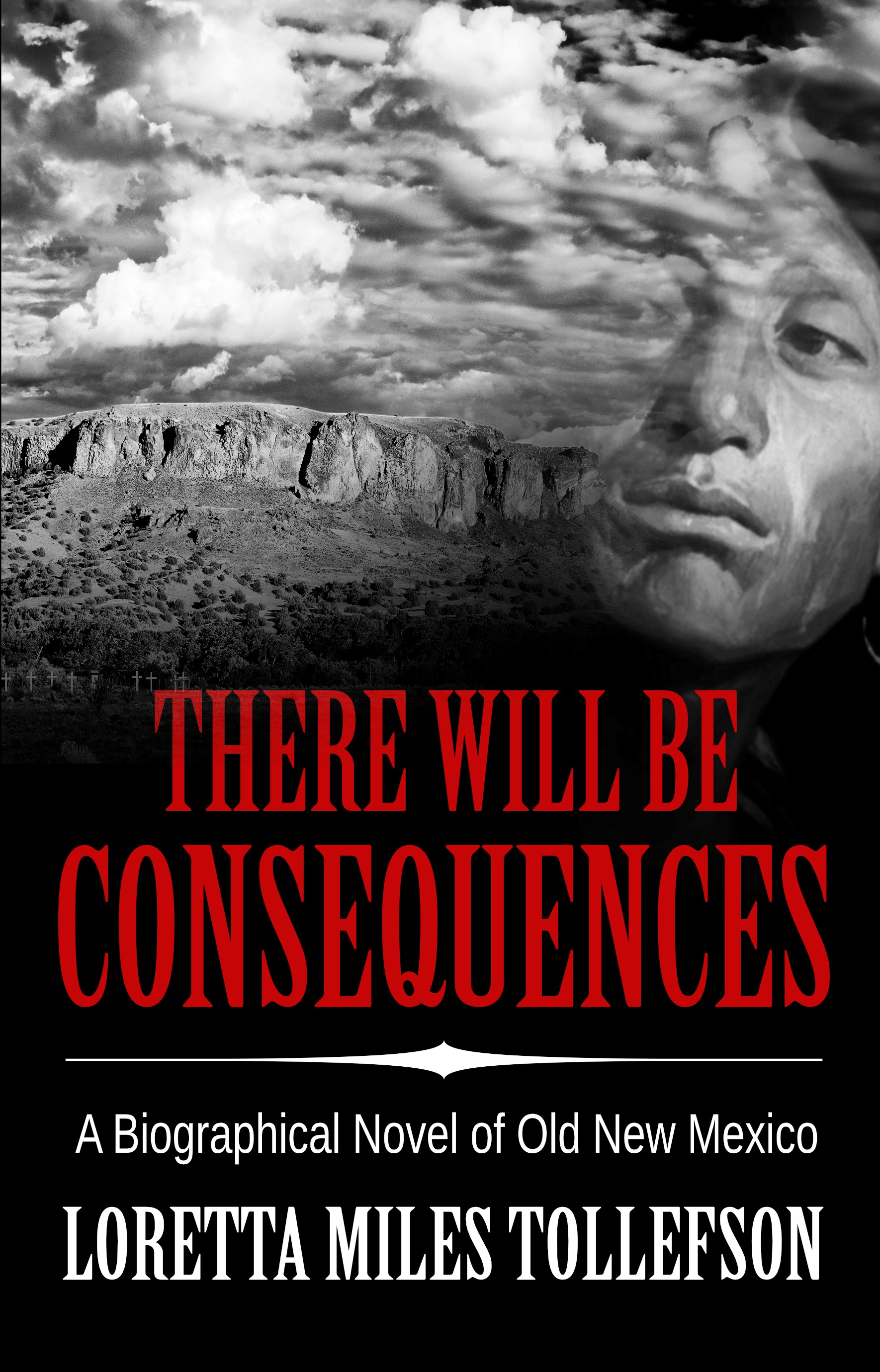
Here it is, the cover of my forthcoming biographical novel There Will Be Consequences! Thank you to everyone on my author Facebook page who provided feedback about the image and color options!

I’m very pleased with the end result and want to give a huge shout out to D.K. Marley at TheHistoricalFictionCompany.com for her design work on this.

You can find information about There Will Be Consequences at Amazon and Books2Read. Ebook preorders are now open!