Spring Equals Trappers in Taos

It happened every spring in the early 1800s: Taos was invaded by trappers, either future or current. It made law enforcement rather complicated

In 1817, Jules DeMun didn’t even make it to Taos before he was headed off by a contingent of Spanish soldiers, who had been sent out in response to rumors in Taos that DeMun and his partner Pierre Chouteau had 20,000 Americans camped on the Purgatoire River, set to invade New Mexico. Even though the rumors weren’t true, DeMun and Chouteau were ordered to return to St. Louis. Somehow, they talked the soldiers into allowing them to travel north before heading east, ostensibly to avoid the Pawnee. Of course, they didn’t head directly to St. Louis. They trapped, supposedly outside of the boundaries of New Spain.

When news of Mexico’s independence from Spain reached the United States in 1821, things only got worse. Trappers and merchants could now enter New Mexico legally, but they still had trouble following Mexico’s rules. Up to this point, the Sangre de Cristo mountains had provided a protective barrier between Taos and incursions from the eastern plains. But they didn’t stop the Americans. In fact, the mountains were a great place to cache furs before smuggling them east to Missouri without paying export taxes. And Taos was still the favorite way to enter, especially if you were doing something slightly illegal. There were just so many ways to get there from the Santa Fe trail, which paralleled the mountains between it and Taos.
March 8 Illustration.Dick Wootton.Twitchell vol 2 source
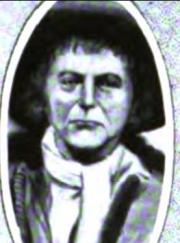
“Uncle Dick” Wootton, Source: Leading Facts of New Mexico History, R.E. Twitchell

It got so bad that Mexico Customs Officer Juan Bautista Vigil y Alarid had to deputize Rafael Luna as Taos’ border guard. Even that wasn’t enough. Eventually, Alarid authorized Luna and Taos Alcalde Severino Martinez to use the militia to intercept the Americans.

Calling out the militia seems like overkill until you realize how valuable the furs in question were. In 1837, “Uncle Dick” Wootton brought furs worth $25,000 into Taos. And that’s just what he was willing to pay the tax on. The trappers had incentive to skirt the law. And the Mexican authorities had incentive to try to keep them from doing so.

And so each spring the dance began again….

Sources: Den Galbraith, Turbulent Taos, Sunstone Press, Santa Fe, 1983; Leroy R. Hafen, Fur Trappers and Traders of the Far Southwest, Utah State UP, Logan, 1997; Joy L. Poole, editor, Over the Santa Fe Trail to Mexico, U of Oklahoma Press, Norman, 2015; David J. Weber, The Taos Trappers, U of Oklahoma Press, Norman, 1971.
HILLTOP VIEW

Alma turned at the top of the hill, sat down on the golden-brown grass, and pulled her knees to her chest. She hugged her skirts against her legs and gazed across the valley. How she loved this place.  Each mountain peak was an old friend. Each narrow stream snaking through the long grasses toward the marsh below held memories. She smiled and watched a coyote loiter around the clutch of elk browsing on the ridge to her left. A swarm of geese came honking in and settled at the edge of the marsh.

It would be only her and old José in the cabin now. She hadn’t asked Andrew to stay–she knew his heart wasn’t in it, that he needed a broader scope. José would remain as long as she did, out of loyalty to her long-dead father. But was it fair to ask that of him? She frowned and watched the sun edge westward, toward the other side of the valley.

The grass behind her rustled and Alma turned her head. José nodded to her, pushed his hat away from his thin, weathered face, and gazed at the elk beyond. “Might wanta bring in another one,” he said. “So we’ll have plenty for winter.”

“Winter will be cold,” she observed.

“It’s a good cold,” he said. “Best cold in the Territory.”

Alma smiled up at him, then turned back to watch the valley below.

Moreno Valley Sketches II


Mexico Declares Its Independence!

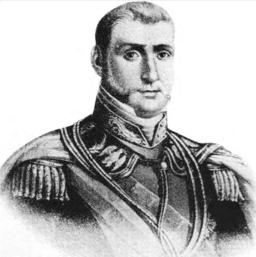
On Saturday, February 24, 1821, halfway between Mexico City and Acapulco, General Agustin de Iturbide published the Plan of Iguala and effectively established Mexico’s independence from Spain and set the stage for American conquest of New Mexico, California, and the land in between.

Feb24 illustration.Iturbide.Twitchell
General Augustin de Iturbide. Source: R. E. Twitchell

The plan of Iguala maintained the Catholic Church as the official religion of Mexico, created an independent limited monarchy, and established equal rights for Spaniards and creoles. The new government also reversed the Spanish policy which forbade foreign merchants to enter New Mexico, thus opening the door for William Becknell and his mule train of goods as well as the many trappers and traders who would follow him down the Santa Fe Trail.

However, the new relationship with the United States was fraught with complications. Within a few years, Mexican officials realized that the Americans were taking every opportunity to keep from paying customs duties on the goods they brought into and the furs they took out of nuevomexico. Although officials tried various measures to control the Americans, nothing was really effective. The American trappers and traders continued to be a thorn in the side of the Mexican government. In fact, it could be argued that the Americans that the Mexicans allowed in after 1821 would turn out to be a major factor in the lack of resistance to the American invasion in 1846, 25 years later.

Sources: Paul Horgan, Great River, The Rio Grande in North American History, Wesleyan Univeristy Press, Middletown, CT, 1984; : Ralph E. Twitchell, The Leading Facts of New Mexico History, Vol. II, The Torch Press, Cedar Rapids, 1912; David J. Weber, The Taos Trappers, David J. Weber, U of Oklahoma Press, Norman, OK, 1970.

TRAPPER IN LOVE

“I had me a little señorita once,” the old trapper said. “She was a real firecracker, that one. I never did learn Spanish real good and she could pull herself up all royal like and tighter’n a beaver trap all set to snap and not near as useful. She’d start spittin’ Spanish at me like some kinda wildcat and I didn’ know what she was sayin’ but I knew enough to let her be ’til she got over her fuss. She’d push her black hair away from her fire-flashin’ eyes and let out with ‘Es más feo que un dolor de estómago!’ and then she’d yell ‘Es más sabio que Salomón!’ I didn’t know a word o’ what she was sayin’ but I could tell from her tone that it was high time to skedaddle on outa there and go huntin’.”

The old man shook his head. “Guess I went huntin’ one too many times, ’cuz one day I come back with a nice big cougar pelt and she was done gone. Too bad. That was the prettiest skin I ever saw.”

He leaned forward. “What’s that you say? I was uglier’n a stomach ache and thought I was smarter’n King Solomon? That’s all she was sayin’? Here I was sure she was ready t’ take a knife t’ me or send her brother Sol t’ do it for her. An’ all she was doin’ was grumblin’? Hah! Well, if I’da known that I mighta stuck around more and tried lovin’ her back into some kinda reason. She sure sounded god awful unreasonable at the time.”

The old man sat back, clicked his tongue against his teeth, and shook his head. “Huh, ” he said. “You don’t say.”


Copyright © 2017 Loretta Miles Tollefson

More Victims of Fremont Expedition Die

By the middle of February, 1849, mountain man Bill Williams and the two men who’d survived the failure of the Fremont expedition in the Sangre de Cristos with him, were in Taos recovering. Before the end of the month was out, the 62-year old Williams and the Fremont expedition medical doctor Benjamin Kern headed back out into the snow-covered wilderness. Their mission was to retrieve Dr. Kern’s medical equipment and supplies and his two brothers’ art materials and papers. The goods were in a cache on the Continental Divide near the Rio Grande headwaters, where they’d been placed after the expedition’s pack mules succumbed to starvation and cold. Williams and Kerns were accompanied by a handful of Mexican assistants, who managed the pack outfit.

It was a fateful trip for the two Americans.  While they made it back to the cache, they did not make it out alive.

The Utes in the region had been in war mode since the previous summer. Since then, they’d been raiding the settlements up and down the Southern Rockies and the plains to the east. When they combined with the Apaches to clash with U.S. troops in the Raton mountains, the U.S. military leaders started getting concerned. Lt. Joseph H. Whittlesey was ordered out to bring the tribe into line.

Whittlesey started north from Taos on March 11 with 37 men and four scouts, one of them Lucien B. Maxwell. The next day, about fifteen miles north of Red River, his forces attacked a Ute village and forced those they hadn’t killed into the cold and snow.  About a dozen Utes fled toward the Rio Grande. When they happened on the Williams/Kerns encampment on the Continental Divide, they saw an opportunity to revenge what Whittlesey had done.

The Utes shot Old Bill Williams and Dr. Kern, ordered the men with them to stay put, and carried off the supplies and pack mules as partial payment for the destruction of their winter camp. It is said that when the Utes realized they’d killed Williams, they gave him a chief’s burial. If this is true, it’s more respect than he received from Fremont, whose family later blamed Williams for the failure of Fremont’s expedition and the subsequent death of so many of his men, an accusation that seems to have no basis in fact.


SOURCES: Robert G. Cleland, This Reckless Breed of Man, UNM Press, 1976; Alpheus H. Favour, Old Bill Williams, mountain man, U of Oklahoma Press, Norman, 1962; Leroy R. Hafen, Ed., Fur Trappers and Traders in the Far Southwest, Utah State UP, Logan, 1997.

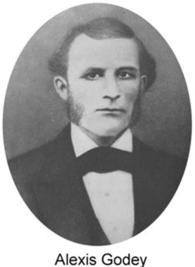
Alexis Godey Rescues Fremont’s Men

On Friday, February 9, 1849 eight of the original 33 in Colonel John C. Fremont’s Fourth Expedition rode into the settlement of Little Pueblo on the Colorado River. They were frostbitten, hungry, and unable to walk, but they were alive, thanks to Alexis Godey.

The Fremont expedition was supposed to identify a railroad route across the Rocky Mountains. Instead, virulent winter conditions brought it to a standstill. They’d started from the eastern slopes in November, but by mid-January it was apparent even to Fremont that they couldn’t go any farther.

With men and supplies giving out, Fremont, Alexis Godey, topographer Charles Preus and two other men went for help. However, by the time they got to Taos on January 13, Fremont was in no condition to return for the rest of his men, who by that time had broken into scattered groups, each trying desperately to survive.

Feb 9 illustration.Alexis Godey.Find a grave


Alexis Gody, originally hired as the expedition’s hunter, almost immediately headed back into the mountains for his companions. He fought his way north with 30 animals and four Mexican assistants. The first group he located consisted of the three Kern brothers, Captains Cathcart and Taplin, Missourian Micajah McGehee, and J.L. Steppenfeldt, all of them close to dying from starvation. He loaded them onto the mules and headed for the closest settlement. It took another three days, through yet more snow and ice, but they when they reached Little Pueblo on February 9, they were all still alive.

Godey was about 30 years old in 1849. He’d been with John Fremont during the Bear Flag Revolt in California and was cited for valor after the Battle of San Pasqual. He was known for his courage,  coolness under pressure, and stubborn resolution: courage and resolution he’d need to rescue the men Fremont had left behind.

Godey would go on to act as the head guide for another railroad survey expedition, this one Lt. Robert William’s 1853identification of a route from Texas to California along the 32nd parallel. Godey wasn’t the only member of William’s team who’d been in the mountains with Fremont. Williams’ cartographer was none other than Charles Preuss, Godey’s and Fremont’s companion on that initial January escape to Taos.

Sources: Alpheus H. Favour, Old Bill Williams, Mountain Man, U of Oklahoma Press, Norman, 1962; Leroy Hafen, Fremont’s Fourth Expedition, Arthur H. Clark Co., 1960; https://www.findagrave.com/memorial/15547524 1/2/18; http://www.longcamp.com/godey.html  1/2/18

ATTITUDES

“Rues? Your last name is Roo-ess?” The young white man sitting at the Elizabethtown restaurant table looked at the old black man quizzically. “You mean Ruiz? Roo-eez? You got some Spanish in you?”

The cook shook his head. “All I know’s what my mama tol’ me,” he said. “My daddy was a Frenchman visiting ’round in Alabama. He stayed at the Big House for three weeks and took a shine to my mama while he was there. When I was born, she give me his last name.”

“Your master let her do that?”

The black man studied the plate of food in his hands for a long minute. “After the war, we could choose what last name we wanted,” he said quietly. “I chose my daddy’s name.”

“That food sure looks good,” the white man said. He moved his knife and fork farther apart on the bare wooden table.

Louis Rues put the plate down and turned away. He shook his head. People are people, no matter where you go, he thought ruefully as he went back to his stove.

Copyright © 2016 Loretta Miles Tollefson

New Mexico’s Rep Issues Warning About Americans

In January 1826, Santiago Abreú, New Mexico’s representative in Mexico City, sent a letter to the government officials in Santa Fe. In it, he cautioned them to be wary of the Americans in the province, especially those who wanted to settle, buy land, and marry without first obtaining the appropriate citizenship papers. In addition, the letter asked officials to record the activities of all non-Mexicans in New Mexico. This governmental policy of monitoring the Americans continued into the next decade, including after Abreú himself was appointed Governor in 1831. His duties included enforcing the laws that governed the americanos’ activities, including the regulations related to trapping and trading.

Jesus G. Abreu.Meketa
Jesus Abreu, Santiago Abreu’s son and Lucien B. Maxwell brother-in-law Source: Louis Felsenthal by J. D. Meketa

Ironically, Governor Abreú  was the father of Jesús Abreú, the man who would become Lucien Bonaparte Maxwell’s brother-in-law and fellow heir (through their wives) of a substantial portion of the Beaubien-Miranda land grant east of Taos. Although Canadian-born Carlos Beaubien, Jesus Abreú’s and Lucien Maxwell’s respective wives, had become a naturalized Mexican citizen prior to the grant’s being made, there is no record that Lucien Maxwell, ultimate owner of most of the land, was ever a naturalized Mexican citizen. However, by the time Beaubien died in 1864, Maxwell’s citizen was a moot point. The thing Santiago Abreú had feared, that the Americans would eventually take over, had occurred 18 years before and many of his countrymen were in eminent danger of losing their patrimony to the men who were flooding in from the eastern States.


Sources:   J. Rush Pierce, Red River City: A history of Northern New Mexico 1800-2000, JRP Publications, 2008; Marc Simmons, Kit Carson and His Three Wives, UNM Press, 2008; Jerry D. Thompson, A Civil War History of the New Mexico Volunteers and Militia, UNM Press, 2015; David J. Weber, The Taos Trappers, U of Oklahoma, 1971; Stephen Zimmer, ed., For Good or Bad, People of the Cimarron Country, Sunstone Press, 1999.

ICY MORNING

At first, the girl thought it was snowing, the tiny flakes glinting in the early morning sun. Then she saw they were miniscule ice crystals, floating from the cabin’s cedar-shake roof and the long green needles of the ponderosas looming above it: sparkling flecks of ice drifting through the air like frozen sunlight. She held her breath for a long moment, taking it in.

Then her mother opened the heavy wood-plank cabin door behind her. “It’s freezing out there!” she exclaimed. “What are you doing? You’ll catch your death!” And the girl turned reluctantly toward the house.

from Moreno Valley Sketches II

John Fremont Stumbles Into Taos

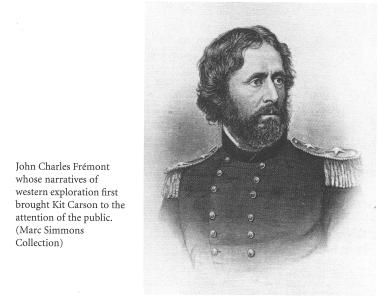
On this day in 1849, Saturday, January 13, celebrated explorer John C. Fremont stumbled into the Taos plaza so battered by exposure and starvation that no one recognized him.

Fremont had left what is now Pueblo, Colorado, 52 days earlier on a mission to identify a practicable railroad route across the Rockies to California. He had 32 men and 120 supply-laden mules with him.

Even before he’d left Pueblo, there was trouble. He’d already lost a guide. When former mountain man “Uncle Bill” Wootton took a look at the signs and realized just how bad the coming winter was likely to be, he backed out. But former Army Colonel Fremont refused to give up. He’d been forced to resign from the military in a cloud of disgrace two years earlier and was determined to redeem himself. Come hell or high water, he was determined to prove that a year-round transcontinental railroad operation across the mountains was feasible. If men and mules could cross the path he had in mind under winter conditions, then surely trains could, too.

Fremont hired “Old Bill” Williams to take Wootton’s place. While Williams was a brilliant tracker, he  wasn’t exactly known for his tact. Since Fremont was known for his stubbornness, the partnership seemed destined for trouble. And trouble happened pretty quickly. When Williams announced that the expedition should veer from the route Fremont had laid out, trouble ensued. Fremont relieved Williams of his guide duties and gave them to men who Fremont had worked with before but who didn’t know the region.

As Wootton had predicted, the weather turned treacherously nasty and grew increasingly difficult as Fremont’s men tried to force their way through snow-bound canyons and across icy mountainsides. All of the mules either died of starvation or froze to death. Frostbite and snow blindness plagued both the animals and the men. Not only was the expedition’s goal doomed, but the conditions were so bad that the men feared for their lives. In a desperate attempt to make it to safety, Fremont divided his company into small groups and sent them south to try to reach Taos.

John C. Fremont.Simmons 3 wives

Only 21 men of the original 32 would make it out alive and Fremont himself would need weeks of nursing by Josefa Carson before he fully recovered from the ordeal. Even with the survivors in Taos and whole, the loss of life would continue. Williams would die trying to retrieve valuable records and medical equipment  that had been left behind in the rush to escape the winter conditions Uncle Bill Wootton had warned Fremont about.

Although a year-round transcontinental railroad was eventually built across the Rocky Mountains, it was not constructed on the route that Fremont tried to blaze that winter of 1848/49. The glory of that deed would go to other men.  Fremont’s exploring days were over .

Sources:  Alpheus H. Favour, Old Bill Williams, Mountain Man, U of Oklahoma Press,  Norman, 1962; Leroy R. Hafen, Ed., Fur Trappers and Traders of the Far Southwest, Utah State U Press, Logan, 1972; Marc Simmons, Kit Carson and His Three Wives, UNM Press, Albuquerque, 2003.