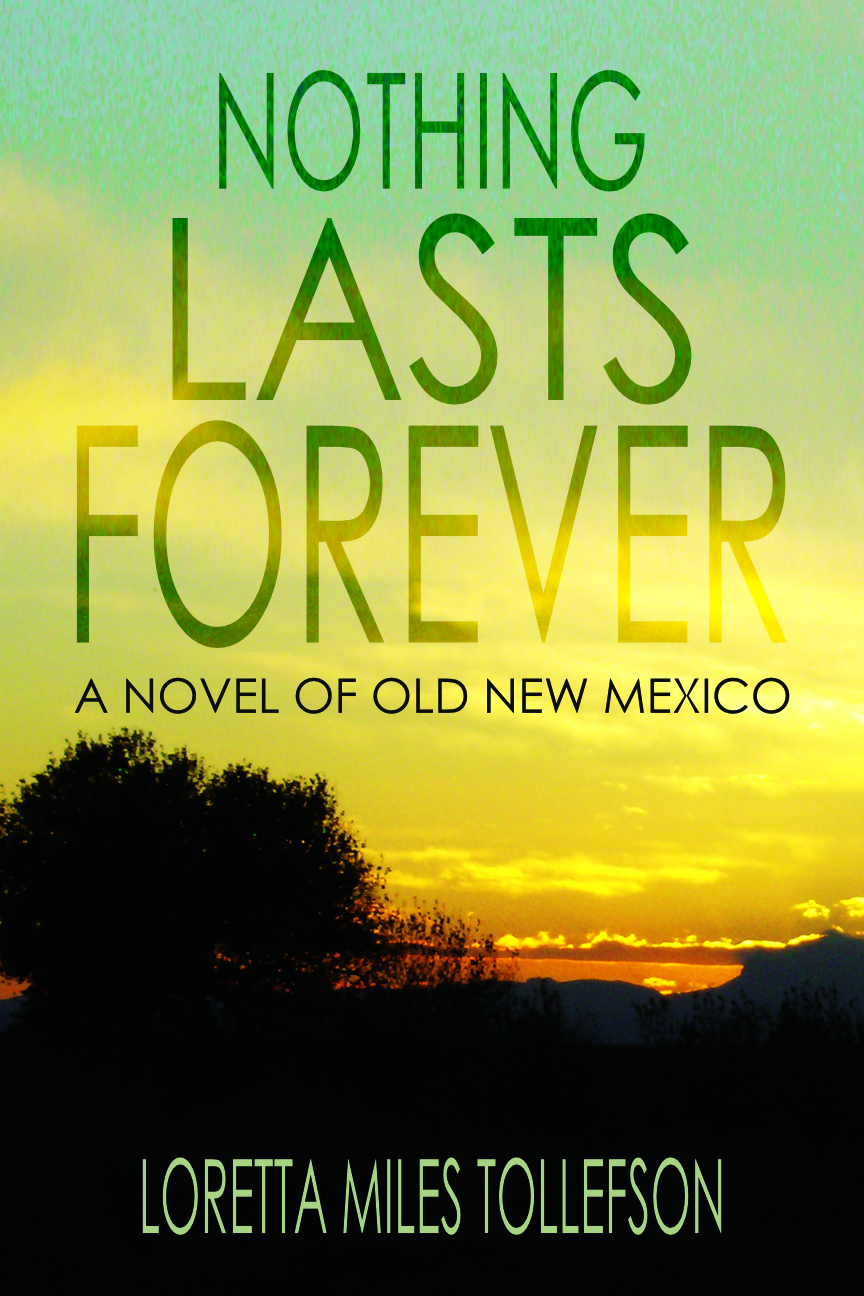
Introducing … NOTHING LASTS FOREVER

I am pleased to announce the publication of Nothing Lasts Forever, my latest Old New Mexico novel and the fourth volume of my Locke Family Saga series.

This book continues my emphasis on deeply researched historical fiction set in mid-1800s New Mexico and finds Alma Locke in Taos in late 1846/early 1847. Here’s the book description:

On Thursday, January 19, 1847, long-simmering tensions erupted in bloodshed in Taos, New Mexico, brought to a head by the recent American takeover during the Mexican American War. Within 24 hours, almost all the Americans in Taos were dead, including Governor Charles Bent.

The insurrection was eventually crushed by American forces in a final battle that destroyed the Taos Pueblo church. The trials that followed are renowned for their biased juries, foregone conclusions, and speed of execution.

Nothing Lasts Forever explores the tensions that fed the 1847 rebellion from the point of view of the fictional Alma Locke, in Taos to bury her mother, and Governor Bent’s five-year-old daughter, Teresina.

A heartbreaking novel of love, loss, and conflicting loyalties, Nothing Lasts Forever explores the personal conflicts behind the rebellion and how two families coped with their losses and struggled to make sense of unimaginable tragedy.

Although this is Book 4 of the Locke Family Saga, it can be read as a stand-alone novel.
Currently available from Amazon and other retailers, with the e-book at a special introductory price of $.99.

Josefa Jaramillo is Born in New Mexico!

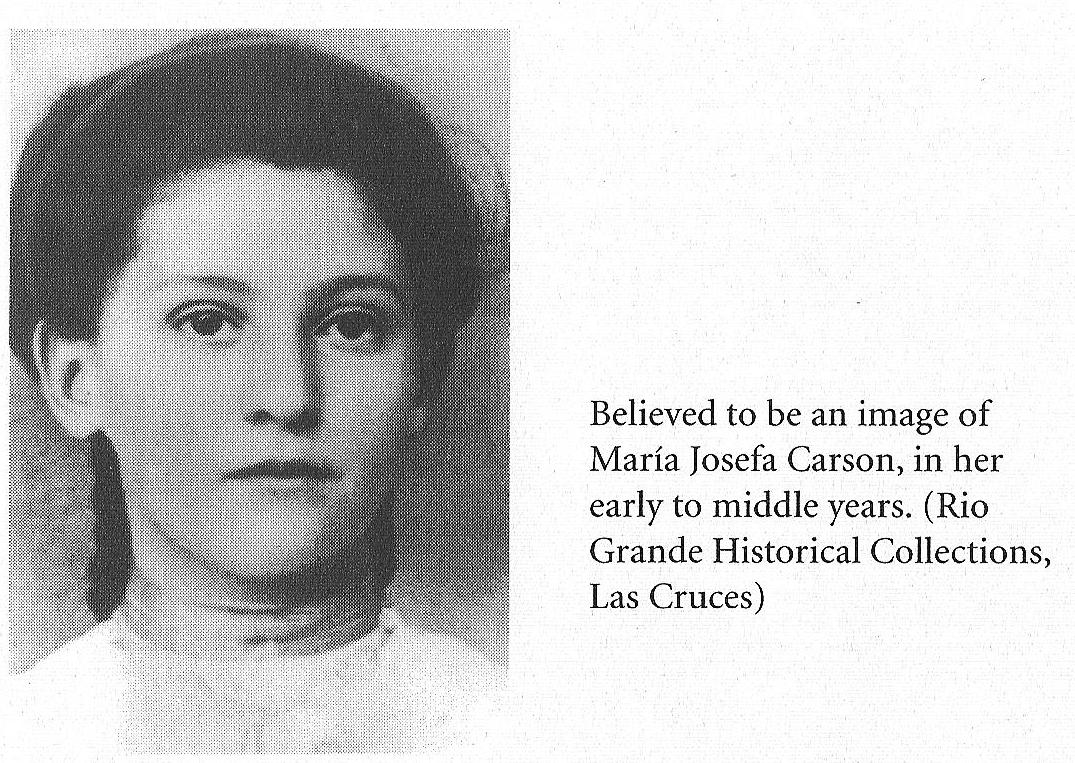
On Thursday, March 27, 1828 in Portrero, New Mexico, María Josefa Jaramillo was born to Francisco Esteban Jaramillo and María Apolonia Vigil in Portrero, New Mexico. Her parents moved to Taos before the end of the year, María Josefa and her older siblings, including three sisters, in tow.

Josefa, called “Josefita” by her family, and her older sister Ignacia would grow up to ally themselves with two prominent americanos—Christopher “Kit” Carson and Charles Bent. In the early 1830s, the now-widowed Ignacia entered into a common-law marriage with American merchant Charles Bent. About ten years later, on February 6, 1843, Josefa married newly-converted Catholic Christopher “Kit” Carson, exactly seven weeks before her fifteenth birthday.

Source: Kit Carson and His Three Wives, Marc Simmons

Four years later in mid-January, while Kit was away and Josefa was staying with Ignacia and Charles in Taos, the Jaramillo girls’ brother and Bent were killed by an angry mob. The nineteen-year-old testified at the trial of the accused men.  Refined in dress and manners, she had a heart-breaking beauty, one observer said, that “would lead a man with the glance of the eye, to risk his life for a smile.”

After that, Josefa’s life settled down a little, though it seems to have never been truly calm. Carson was gone for long stretches of time: trapping and hunting, and serving as a scout for John C. Fremont, as a courier during the Mexican war, as a military officer during the Civil War, and as commander of the troops that forced the Mescalero Apaches and Navajos onto the Bosque Redondo reservation in 1863-64. In the meantime, Josefa moved from Taos to Rayado to Bent’s Fort and back again, then followed Carson to Fort Garland and finally Boggsville, Colorado.

But Carson and the woman he called “Chepita” and “Little Jo” seem to have had a loving relationship. They had eight children, the last one born just ten days before her death in April 1868. Carson followed her a month later. They are buried side by side in a small cemetery in Taos, ending their journey together in the town where it began.

Sources: Don Bullis, New Mexico Biographical Dictionary, 1540-1980, Vol. I, Los Ranchos de Albuquerque: Rio Grande Books, 2007; Lewis H. Garrard, Wah-to-yah and the Taos Trail, Norman: University of Oklahoma Press, 1955; Leroy R. Hafen, Ed., Fur Traders of the Far Southwest, Logan: Utah State University Press, 1997; Howard R. Lamar, Reader’s Encyclopedia of the American West, New York: Harper & Row, 1977; Marc Simmons, Kit Carson and His Three Wives, Albuquerque: University of New Mexico Press, 2003