He entered the Ute camp warily, one hand on the mules’ lead rope, his rifle in the other. A man rose and came forward. Old Bill snorted a laugh. “Three Hands!” he said. “I done found you!”
The man studied him. “You searched for me?”
“Well, not ’xactly. But I sure am glad t’ find you.”
Three Hands nodded. “You are cold.”
“Warmer now than I was,” Old Bill said. “This is quite a little valley you have here.”
“Not so little.” Three Hands gestured to the south. “More below.”
“Sure am glad I stumbled in,” Old Bill said. “I was nigh to freezin’ comin’ over Bobcat Pass.”
The other man looked at the mules. “You trap?”
“I was, but the beavers are iced in nasty hard this winter. Can’t get at ’em.”
On July 4, 1871, up-and-coming lawyer Melvin Whitson Mills delivered the Independence Day oration at Baldy, the center of gold mining activity on the east side of Baldy Mountain north of Ute Park, New Mexico Territory. The celebrations included a parade of 500 people marching to a grove of trees outside town. There, the local newspaper editor read the United States Declaration of Independence and Mills, the young lawyer and would be politician who had so ably defended serial killer Charles Kennedy a year and a half before, delivered a “spread eagle” oration. A formal dance ended the day.
Although there were those who weren’t impressed that Mills had almost succeeded in rescuing Kennedy from the hangman’s noose, he was respected enough in the county to be elected as a delegate to the Republican National Convention in 1873 as well as various other municipal, county, and Territorial positions. Along with his legal practice and his connections to the Santa Fe Ring, these activities gave Mills the financial ability by the end of the decade to construct a handsome three-story mansard-roofed home in Springer which was known throughout the territory for its more than twenty rooms and its maple interior trim. He also owned a large ranch outside in eastern Colfax County, where he raised cattle and planted the fruit trees that can still be seen in what is now Mills Canyon.
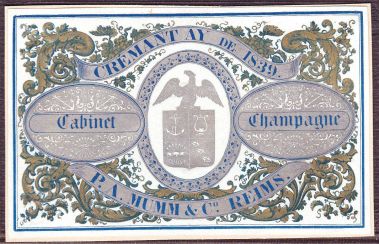
On Wednesday, July 1, 1868, the newly constructed Moreno Hotel opened in Elizabethtown, New Mexico with a dinner for 83 guests, and Etown congratulated itself on its prosperity. The hotel was a living symbol of how far the town had come since its gold-mine camp beginnings early the previous year. This inaugural dinner was served on “the finest china in the territory” and accompanied by bottles of Mumm’s Dry Imperial Champagne. The hotel was nicely located on 3rd Street between Broadway and Washington and would have had a fine view of Baldy Mountain on the eastern side of the valley as well as the various gold mining claims on the Moreno Creek in the valley directly below the town.
It’s not clear who owned the Moreno when it opened, but two months later, it passed into the hands of Augusta Forbes, a German-born woman who, when she divorced her runaway husband the following spring, was granted the right to revert to her maiden name of Augusta Meinert as well ownership of the hotel and “all the personal property, household, and kitchen furniture now on the premises.”
Meinert operated the hotel for about four and a half years. She remarried in late December 1872 and formally handed off the Moreno to her new husband, Chancy Storey a month later. She seems to have retired from active involvement in running the business at that point, because she’s listed as a housewife in the June 1880 census while Chancy is listed as a hotel keeper, presumably of the enterprise that had such an elegant beginning twelve years before.
Sources: Colfax County Real Estate records, 1868-1888; U.S. Census Data, Colfax County, New Mexico Territory, 1870 and 1880.
I’m pleased to announce that my new novel The Pain and The Sorrow is already in print! This is the story of New Mexico Territory’s serial killer Charles Kennedy and his teenage wife, the girl who endured years of his abuse before finally reporting his nefarious activities to the authorities. Order it from your favorite bookseller or online! Here are two online sources: Amazon, Barnes and Noble.
Old Bill and the two mules had been stumbling south, half-blinded by snow, for three days. When he came over the top of the rise and looked into the valley below, he passed his hand over his face. He must be hallucinating.
He looked again. Sure enough, that was a valley below. The snow was thinner there. A herd of elk had worked large patches clear. The wolves patrolling in the snow beyond the herd were breaking through, snow almost to their hocks.
He studied the layout. Elk, snow melt for water. Bound to be Injuns. He passed his hand over his face again, warming his eyes, and looked again. Sure enough, smoke rose near the hills at the valley’s southern end.
He was coming in peace with little more than the mules and his clothes. They’d feed him, sure. Had probably already seen him. “C’mon, you mules,” he said.
On June 26, 1850, while Kit Carson was traveling home from Missouri with trade goods, a band of Native Americans attacked the Carson’s hamlet of Rayado, in the shadow of the Cimarron mountains. Despite the presence of a company of Army dragoons at Rayado, the Indians—no one was sure if they were Ute or Jicarilla Apache—drove off six horses, four mules, and 175 head of cattle valued at over $5000. Two Rayado men were killed: an unarmed Army bugler and a civilian (possibly trapper William New).
The dragoons had been stationed at Rayado in response to the Indian raids against the communities on the eastern mountain slopes and on the Santa Fe Trail on the eastern plains since the middle of 1849. Some of the violence was undoubtedly triggered by events in August 1849, when Jicarilla Apache Chief Chacón took his band to Las Vegas to make peace, but was attacked by an armed party led by Lt. Ambrose E. Burnside, the future Civil War General. Burnside’s men killed fourteen Jicarilla and captured the daughter of Chief White Wolf, who was then incarcerated in a Las Vegas jail. She was shot and killed during an escape attempt later that year.
Source: Fort Union and the Frontier Army of the Southwest by Leo E. Oliva
Following the June attack, the army sent another company of dragoons from Las Vegas and called for citizen volunteers to assist with a campaign against the Indians. The resulting expedition doesn’t seem to have helped much, although people died. Only after Fort Union was constructed in the Spring of 1851 did things settle down a bit.
Rayado had been established in 1848 by Lucien B. Maxwell and Christopher “Kit” Carson on land owned by Maxwell’s father-in-law. The idea seems to have been to raise stock. When the military unit was stationed there, Maxwell took the opportunity to rent out living space to them as well selling them fodder for their animals.
On June 24, 1869 a baby boy was born to Charles and Gregoria Kennedy, presumably at their cabin at the foot of Palo Flechado Pass on the road between Taos and Elizabethtown. Baptized in September that year at Our Lady of Guadalupe church in Taos, he was the only living child of Charles (age 31) and Gregoria (age 17) when the U.S. census taker arrived at the cabin the following summer. Charles Kennedy would become known in New Mexico Territory as the serial killer whose wife turned him in after he killed their child. Following a hung jury in Elizabethtown in Fall 1870, a mob led by Colfax County rancher and gunslinger Clay Allison would spring Kennedy from jail and see that justice was done anyway—at the end of a rope.
Samuel Kennedy (Canady) Christening Record
Legend has it that Allison then took a butcher knife to Kennedy’s neck, severing his neck and presenting it to hotelkeeper Henri Lambert for display outside his establishment as a warning for all evildoers in Colfax County. It is also said that before he died Kennedy confessed to killing twenty-one men. Without the birth and subsequent death of that little boy, many more men might have died at his father’s hands.
If you’re interested in a fictional account of these events, please consider ordering my novel The Pain and the Sorrow, which will be released by Sunstone Press in early August.
Sources: New Mexico, Births and Christenings, 1726-1918; Howard Bryan, Wildest of the Wild West, Clear Light Publishers, 1988; Southwest Sentinel, Silver City, NM, November 24, 1885.
In the summer of 1870, the Maxwell Land Grant and Railway Company closed their sale with Lucien B. and Luz Maxwell for the Beaubien-Miranda Land Grant and the Company began moving to take full possession of the land. This move began with sending notices to anyone who hadn’t arranged with Maxwell for formal title to their land, including miners who had paid Maxwell for the privilege of working their mines or farmers who had been providing produce in lieu of cash money. These “squatters” were informed that they must either make arrangements with the Company or leave. When they didn’t the Company initiated ejectment proceedings. Conveniently, Stephen B. Elkins, a member of the Company Board and the company’s attorney, also happened to be New Mexico Territory’s U.S. Attorney General at the time. None of these cases appeared before the court in the Fall 1870 session, so it appears that there was some time provided to the persons in question who had the resources to make the necessary “arrangements.”
The process was not a smooth or a simple one and the Company’s actions reverberated as far as the East Coast. By the summer of 1875, a series of articles had appeared in a New York newspaper criticizing Santa Fe ring members Elkins, Catron, Palen and others. One of the authors was the Reverend Franklin Tolby, who used his pulpit as a platform for preaching against the Land Grant Company’s eviction process and advocating that the government buy at least of a portion of the grant as a reservation for the local bands of Utes and Arapahos—a solution to the “Indian problem” that Kit Carson and Indian Agent William Frederick Milton Arny had proposed prior to the sale of the grant. After all, they’d been here first. This, of course, didn’t happen and local settlers would continue to be evicted and tensions would continue to rise throughout the first half of the 1870’s, beginning with a riot in Etown in 1870 and reaching a crescendo in 1875 with Reverend Tolby’s death and the lynching of a (possibly) innocent man. Stay with me as I look at Reverend Tolby’s activities and death, and the resulting lynching, in the months to come….
Timothy looked back, down the valley, and kicked at the mule, but it was hot and the mule had been going for a long time. Its pace quickened for a few yards, then dropped back into an easy trot.
The boy groaned and looked back again. His mother had told him to take his slicker, but he’d been in a hurry. “C’mon Boss,” he begged, but the mule just flicked its ears and jogged onward.
Somehow, they made it to the barn before the clouds reached them. Timothy turned the mule into the stall and made a dash for the house. The first raindrops bit into the dust as he reached the steps.
His mother opened the door. “Get wet?” she asked meaningfully.
My novel about New Mexico Territory’s serial killer Charles Kennedy and the teenage wife who turned him in is now available for pre-order!
The Pain and the Sorrow is set in the 1860’s in Taos, New Mexico Territory and the mountains east of Taos. It tells the story of a teenage Hispanic girl who marries an American man who turns out to . . . . Click here or on the cover image to find out more!
Published by Sunstone Press, The Pain and the Sorrow will be available on or before August 1.

 Order it from your favorite bookseller or online! Here are two online sources:

 Fiction and Fact From Old New Mexico