IMPATIENCE
“This gold. They have found it in large quantities?” The lanky teenage boy named Escubal Martinez poked a stick into the logs on the fire, moving them closer together. At the edge of the mountain valley, a coyote yipped. The Martinez clan’s flock of sheep shifted uneasily in the darkness beyond the firelight.
The Prussian-born traveler from Etown grinned. “Ja,” he said. “But it is hard work, the digging for gold.”
Escubal’s uncle Xavier grunted from the other side of the flames, where he was using a knife to carefully smooth out an uncomfortable bump on the grip of his walking staff. “Borregas y carneros.” He nodded at the boy. “That is wealth.”
Escubal scowled at the fire.
The traveler looked puzzled. “Carner?” he asked. “Meat is wealth?”
“No, Borregas y carneros,” Escubal said.”Ewes and rams.” He gestured impatiently toward the flock.
Xavier moved his staff in the firelight and ran his fingertips gently over the wood. “Carne y ropa,” he said meditatively. “Meat and clothes.”
“Ja,” the Prussian answered. “You are correct.”
Escubal scowled at the fire and the traveler smiled sympathetically. It was not easy to be young and impatient.
The boy poked at the fire again. It flared briefly, lighting the night, and the flock moved restlessly, waiting for morning.
ELEGANCE IN ETOWN
The men in Seligman’s Mercantile watched silently as the young woman in the trailing pale blue silk skirts swept out of the store.
“She’s a lardy dardy little thing, isn’t she now?” Charles Idle, the expatriate Englishman, asked. He shook his head and stretched his feet closer to the wood stove. “That dress and hat.”
Joseph Kinsinger spat a stream of tobacco toward the empty lard can by the stove. “Those silks ain’t gonna last long in this mud. And the wind’l take that hat.”
His brother Peter grinned. “You’re just worried Desi’s gonna see her and want a getup just like it,” he said.
“I wonder where’s she’s staying,” Idle said thoughtfully. “Hey Jim, where’d she say to deliver that sterling brush and comb set?”
The clerk hesitated, then shrugged. It would be all over town soon enough anyway. “The Moreno Hotel,” he said.
There was a short silence, then Idle said, “Well, I guess I’d better go see how my mine’s doing this morning,” and rose from his chair.
“I’ll bet,” Peter said sardonically, but Idle only smiled and went out.
Lightning Strikes Missionaries in Cimarron Canyon
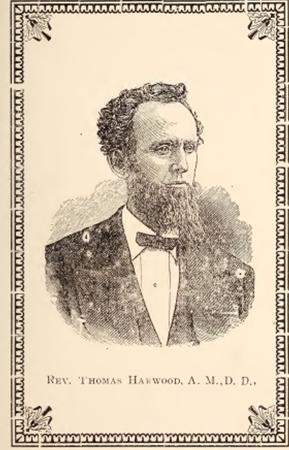
Exactly 146 years ago today, on Friday, August 4, 1871, three Methodist missionaries en route to Elizabethtown, New Mexico were struck by lightning and almost killed in Cimarron Canyon. Illinois natives Reverend N. S. Buckner and his 19 year old wife Annette had recently been appointed to take over Rev. Thomas Harwood’s responsibilities in Etown. They were travelling with Harwood, the man would go on to become the Methodist Bishop of New Mexico and co-found what is now the Harwood School in Albuquerque. The Buckners had just been assigned to assist him by taking over in Elizabethtown, where Harwood had dedicated a church building the year before.
The sun was beginning to set when Harwood and the Buckners reached the first section of Cimarron Canyon. Rev. Harwood’s buggy provided protection from the rain, so they weren’t uncomfortable. In fact, they were enjoying the thunderstorm and discussing the properties of electricity, when suddenly, thunder crashed, lightning flashed, and the smell of sulfur filled the air. The buggy itself had been struck and its passengers stunned to immobility. The force of the strike tore two large holes in the ground underneath the wheels, broke the crossbar behind the horses, and knocked the animals themselves off their feet.
Once the Buckners and Harwood were able to move again, they left the horses and walked back towards Cimarron “under the blazing lightnings and almost deafening thunder, muddy, wet and barefoot, . . . three miles to the nearest American house, and thence in wagon to Cimarron City” (Harwood, Vol. I, 129).

Although they were all still feeling the effects of their lightning experience, the next morning, the little group of missionaries were back in the canyon, this time on the Saturday stage to Elizabethtown, where the men preached at the morning and evening church services the next day.
It was an inauspicious beginning to the Buckner’s work in New Mexico Territory and things don’t seem to have improved much after that. Elizabethtown was a center of resistance to the Maxwell Land Grant Company’s plan to dispossess the area’s miners, ranchers, and farmers of their land. The town was rife with tension. The Buckners returned to Colorado in 1872. A year and a half later, in January 1874, they were replaced by Rev. Franklin J. Tolby, who lived in Cimarron but held services in Elizabethtown on a regular basis. Tolby himself would not last long. He was gunned down on September 14, 1875 on his way home from the Elizabethtown church, a date that many consider to be the beginning of the Colfax County War.
For fiction based on Reverend Tolby’s life and assassination, and historical information about his death, see my May 24, 2017 post and watch for them throughout September.
Source: Thomas Harwood, History of New Mexico Spanish and English Missions of the Methodist Episcopal Church, Vol. I and II, El Albogado Press, Albuquerque, 1910; Lawrence R. Murphy, Philmont, A History of New Mexico’s Cimarron Country, UNM Press, 1972, Albuquerque; ttps://www.timeanddate.com/calendar/?year=1871&country=1 accessed 7/17/2017
OLD BILL – 6 of 6
He had found it.
Old Bill stood on the rocky mountain ridge, hat in hand, and peered into the long green valley below. This was the larger section Three Hands had spoken of, sure as shootin’. Meandering streams glinted in the autumn light and the clouds overhead betokened more rain.
Old Bill laughed aloud, replaced his hat, and scrambled down from the rocks. His credit-bought beaver traps rattled slightly as the new mule carefully followed him down the mountainside. There’d be beaver here, he could feel it in his bones. If not in the valley itself, then surely in the streams flowing out of it through the mountains to the east.
“C’mon mule,” he said. “We’re gonna ’cuperate my losses and make us our fortune. All we gotta do is stay outta the way of the Injuns and the Mexicans chasin’ ’em.” He chuckled. “Not to mention catamount an’ bear.”
OLD BILL – 5 of 6
“Señor, you are still unwell.” The young man assisted the older one back to the fireside chair.
“Don’t know what I woulda done if you hadna found me.”
The younger man shrugged. “Any good Christian would have done the same.”
“Ain’t many good Christians in this world, then. You feedin’ me an’all.”
A young woman materialized behind them and spoke to the young man in Spanish. He smiled. “She says you do not eat enough to maintain a grasshopper.”
“Soon’s I get my strength back, I’ll be outta your hair.”
“Where will you go, if I may ask?”
“Back t’the valley.”
“The valley you spoke of?”
“Aye. It’s a beaut’ and worth the trouble, I’m thinkin’. There’s beaver somewheres there or I’m a bobcat.”
The younger man stared at him quizzically.
“You’re thinkin’ I’m still outa my head.”
“Oh no, señor.”
Old Bill laughed. “Oh yes, señor!” he chuckled.
from Moreno Valley Sketches
The Month of July and Lucien Bonaparte Maxwell
July is a month fraught with meaning in connection with Lucien Bonaparte Maxwell, the man who controlled almost 2 million acres of New Mexico Territory land in the 1860’s.
Lucien Bonaparte Maxwell died on this day, July 25, in 1875, five years after the sale of what was known as the Maxwell Land Grant to a consortium of London investors was recorded in the Colfax County, New Mexico Territory’s record books. It was his daughter Odile’s sixth birthday.
The Beaubien Miranda land grant had come into Maxwell’s hands through his wife’s inherited portion, their purchase of her Beaubien sibling’s sections, and their acquisition of the remainder from the Miranda heirs. There was still some question about the actual size of the grant when Maxwell died, a question which would be settled by the United States Supreme Court in 1887, when they confirmed it at just under 2 million acres.
A portion of the money from the sale, went to the purchase of the decommissioned Fort Sumner from the Federal government. Located in the southeastern part of the Territory, Fort Sumner had been the site of the infamous detainment of Navajos and Mescalero Apaches in the 1860’s. Following their return to their homeland, the Fort had little use to the military control of the Native population. Maxwell purchased it in 1870, renovated the buildings, and ranched and raised race horses there until his death in 1875.

Lucien Maxwell’s family continued to live at the old Fort after his death. Six years later, again in July, another death became associated with the site. Billy the Kid was visiting the Maxwell home at Fort Sumner the night that he was shot and killed by Sheriff Pat Garrett.
Sources: Dean K. Boorman, Guns of the Old West, Lyons Press, 2004; Harriet Freiberger, Lucien Maxwell, Villain or Visionary, Sunstone Press, 1999; Lawrence R. Murphy, Philmont, A history of New Mexico’s Cimarron country, UNM Press, 1972; David G. Noble, Pueblos, Villages, Forts & Trails: A guide to New Mexico’s past, UNM Press, 1994; Stephen Zimmer, For Good or Bad, People of the Cimarron Country Sunstone Press, 1999.
OLD BILL – 4 of 6
Well, he’d got hisself away from the Ute war party, but with only his rifle, one beaver trap, and the clothes on his back. As he headed west into the foothills, Old Bill considered his situation. He was moving into the snow, not away from it, and the cold was devilish fierce. The wind howled into his face, bringing dampness with it. No one but a fool would head into this storm, toward the peaks, ’stead of down. He hoped the Utes would think so, anyways.
He gripped his rifle, resettled the trap looped over his shoulder, and lowered his head, battered hat tilted against the wind. And he’d thought he’d been cold before he entered that valley. He began to climb steadily, careful to conserve his energy, his long legs eating the mountainside.
When he finally stopped to rest, he could see nothing below but blowing whiteness.
Black Jack Ketchum Plays His Last Hand
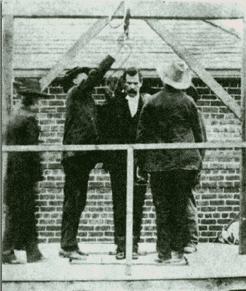
On July 16, 1899, bullets began raining down on Black Jack Ketchum’s Turkey Creek Canyon hideout west of Cimarron, New Mexico Territory, and the outlaw began the last hand in his life’s game of cards.
Two years earlier, Ketchum and his gang had barricaded a cave in the upper reaches of the canyon with logs and built a corral nearby for their horses, in case they needed a hideout, which seemed highly likely. Black Jack had been a brutal teenager with a penchant for malicious activities like burning Hispano sheepherders’ camps and he’d grown into an outlaw with a taste for theft, women, and gambling, hence the name “Black Jack.” In fact, shortly after they’d constructed their Turkey Creek Canyon hideout in 1897, Black Jack and his buddies hit Cimarron’s gambling halls, with Black Jack losing heavily the night before they ventured out to hold up their first Colorado and Southern train near Folsum, New Mexico.
Two years later, Ketchum and his gang robbed another Colorado and Southern train near Folsum, then made a run for Turkey Creek Canyon. But a sheriff’s posse tracked them down and opened fire the morning of July 16. In the ensuing conflict, the sheriff and two posse members were killed, Black Jack’s brother Sam was fatally wounded, and gang member William McGinnis was injured.
Black Jack escaped, but not for long. He was arrested the following month in Union County, New Mexico. The trial and then the plans for the hanging took a while, but in April 1901, when his hand was truly up.

However, Ketchum’s death didn’t come easily. Today, he’s remembered in New Mexico as the man who lost his head in a hanging. The Clayton, NM executioner didn’t calculate the rope weight and length correctly and Ketchum had been indulging during his prison stay, adding extra pounds. When the trap door opened, his body swung through but his head was cut off by the rope: A truly grisly way to die.
Sources: Stephen Zimmer, For Good or Bad, People of the Cimarron Country, Sunstone Press, 1999; Stephen Zimmer and Steve Lewis, It Happened in Cimarron Country, Eagle Trail Press, 2013.
OLD BILL – 3 of 6
At dusk, Old Bill wrapped himself in a buffalo robe and lay quiet against the skin wall of the Ute lodge. This weren’t no hunting party, if he savvied correct. They were layin’ in wait for somethin’ and it weren’t other Injuns, to his thinking. He wasn’t exactly a captive, but Three Hands had made it clear he should stay in camp.
He’d been wandering these parts long enough to have picked up a smattering of Ute lingo. What he’d overheard made him think there were Mexican soldiers headed thisaway. From Taos, mebbe, though it was a darn fool time of year to be comin’ from that direction.
He studied his situation. He didn’t blame the Utes for their plans. It was their country, after all. Theirs and the Taos Injuns. But he didn’t want to be caught in the middle of it neither. He eased out of the robe.