NEWS

There was a knothole in the cabin door, in the fourth board from the right. Kenneth stood on tiptoe and peered through it at the men on the horses.

“It’s Clay Allison!” he hissed.

His little sister Elizabeth stood on tiptoe and tried to shoulder Kenneth out the way so she could see for herself. “Are you sure?” she whispered.

Kenneth nodded. “He’s tall and he’s got those black whiskers and he’s ridin’ that big blond horse Papa says is so dangerous.”

Elizabeth bit her lip and shrank back. She hugged herself tightly around her waist. “I’m scared,” she whimpered. “I’ve heard tell that he’s mean.”

“Ah, he’s only mean to those who are mean,” Kenneth scoffed. But he didn’t open the door. His mother had instructed him to stay inside if anyone came while she and his father were gone. As far as Kenneth was concerned, ‘anyone’ included the gunslinger Clay Allison. If that’s who it was. He wasn’t at all certain, now that he thought about it. He’d never seen the man close up. But he sure wasn’t gonna tell Elizabeth that.

The knothole suddenly went black and there was a thud on the wooden door that shook Kenneth in his boots. “What are we going to do?” Elizabeth gasped.

Kenneth put his hand over her mouth. “Hush!” he hissed. “He’ll hear you!”

Boots scuffed on the porch, as if whoever it was had walked away and then come back. “I believe you two young uns ought to open this door,” a man’s deep voice said. “Your Mama says you won’t be wantin’ too, but I’ve got important news for ya’ll.”

The children looked at each other. Kenneth shook his head.

“But he’ll break the door down!” Elizabeth hissed. “And if he has to do that, he’ll be really mad! And then he’ll be extra mean!”

Kenneth’s lower lip jutted out and he shook his head again. Elizabeth had seen that look before and she knew it was no use arguing with him. She sank to the floor in a heap and tried not to cry.

There was a long silence. Booted feet paced the porch. Then they stopped outside the door again. The man coughed. The children looked at each other apprehensively.

“All right,” the man said. “I guess I’ll just have to tell you my news through the door. Your Mama’s been laid up at your Aunt Ginny’s house and she says you’re to stay here until your Pa comes for you. That’ll more than likely not be till tomorrow. She says to have your chores done and your things ready, because your Pa’s gonna be taking you back to Ginny’s house so’s you can meet your new baby brother.” There was a short pause. “Or sister. Your Mama doesn’t  know yet just which it’ll be.”

The children stared at each other, then Kenneth moved to the door and looked through the knothole again. “Really and truly?” he asked.

“Really and truly,” Clay Allison said.

from Old One Eye Pete

The Mountain Man Novel is Almost Here!

I’m pleased to announce that the New Mexico mountain man novel I’ve been working on since The Pain and The Sorrow is about to be published!

It’s called Not Just Any Man and is both a gripping and gritty mountain man story and a love story. An early reader tells me the love story’s an exciting one!

Not Just Any Man 3d cover

The publication date is November 15. That’s next week! You can place your order for the ebook ahead of time. It’s available for pre-order at Amazon, Barnes and Noble, and  Books2Read. Or mark your calendars for next Thursday and order a paperback online or from your favorite bookstore!

I’m excited about this book. It given me the chance me to continue to research and write about the subject most interesting to me–New Mexico’s history. Or, as I like to put it, the history of Old New Mexico. I hope you’ll check it out!

Here’s an excerpt:

CHAPTER 1

When Gerald tops the low rise and sees the mule-drawn wagons strung out along a rutted track across the prairie, it takes him a moment to adjust. After five days walking westward, he is still absorbing the healing beauty of the wind bending the grass, the bulk of buffalo in the distance. The sweep of the land has been a balm to his eyes. So the eight mule-drawn wagons jolting along the rutted trail below are a bit of a shock.

A loose collection of mules and horses meander to one side. Gerald stops, considering. Approaching the train is the sensible thing to do. It’s pure luck that he hasn’t encountered any Indians so far. But he isn’t quite ready to give up the silent grassland, regardless of the risk to his light brown skin.

Then a long-haired man with a wind-reddened face canters a chestnut-colored horse out from the wagon train. A firearm is braced in the crook of his right arm. Gerald moves toward him, down the slope.

The man on the chestnut reins in at a safe distance, rifle still in a position to be easily lifted and fired. Gerald stops walking and lifts his hands away from his sides, palms out.

“Ya’ll stranded?” the man calls.

Gerald takes off his hat, runs his hand through his curly black hair, and shakes his head. “Headed west.”

The man turns his head and spits. “Lose yer ride?”

“I figure my feet are more dependable.”

The man snorts. “And slower.”

“They also give me a lower profile, out of Indian sight.”

The other man nods begrudgingly, then jerks his head toward the caravan. “Wagon master says come on in, he’ll trade ya for a mount ’n some food.”

“Where are you headed?” Gerald asks.

“Santa Fe, where else?”

“I’m hoping to reach Don Fernando de Taos.”

“Same thing, pretty much. North o’ Santa Fe a couple o’ days.” The man jerks his head toward the wagon train again. “Young’s got a mercantile there.”

“Young?”

“The train master. Ewing Young. He’s been merchanting, bringin’ in goods from Missouri, selling ’em, then goin’ back fer more.” The chestnut stirs restlessly. “Come on in an’ he’ll tell ya himself.”

If he refuses, they’ll suspect him of trouble and who knows where that will lead? Gerald nods and follows the horseman toward the wagons.

As he gets closer, a tall, powerfully built man wearing fringed buckskins and a broad-brimmed felt hat walks out from the lead wagon. In his early thirties, the man’s air of command is enhanced by intelligent brown eyes under a high forehead, a hawkish nose, and a mouth that looks as if it rarely smiles.

“Well now, it’s not often we find someone walkin’ the trail,” he says in a Tennessee drawl. He looks steadily into Gerald’s face.

“A horse seemed like an unnecessary expense and more than likely to make me a target,” Gerald says.

“It’s a slow way to travel, though,” the other man observes.

Gerald glances toward the wagon trundling past at the pace of a slow-walking mule. The way it lurches over the rutted track says it’s heavy with goods. “If I had what you’re carrying, it would be,” he says.

The man sticks out his hand. “I’m Ewing Young, owner of this outfit.” He jerks a thumb toward the rider who’d met Gerald on the hill. “This here’s Charlie Westin, my scout.”

Gerald nods at the scout and reaches to shake Ewing Young’s hand. “I’m Gerald Locke Jr., hoping to one day own an outfit.” He grins, gray eyes crinkling in his square brown face. “Though not a wagon outfit.”

Young chuckles. “Well, out here just about anything’s possible.” The last of the wagons trundles past and he gestures at it. “Come along to camp and we’ll talk about how you can get started on that.”

Gerald falls into step with the older man, cursing himself for a fool. He doesn’t need to tell his intentions to everyone he meets. It comes from not speaking to another living being in the last five days, he thinks ruefully. Solitude makes a man too quick to speech. How often has his father repeated, “Words can be a burden”? He’d do well to heed that idea. Especially until he knows the character of the men he’s fallen in with.

from Not Just Any Man

Shoot out at Fort Stanton Over Indian Deaths!!

In mid October 1862, troops led by Captain James “Paddy” Graydon of  Fort Stanton killed at least eleven Mescalero Apaches at Gallinas Springs, on the west slopes of New Mexico’s Gallinas Peak. The circumstances were murky, but Graydon was thought to have gotten the Mescaleros drunk and then shot them down in cold blood.

Whatever had occurred, Graydon’s fellow officer Major Arthur Morrison believed Graydon had acted improperly. He demanded an official investigation. But when Colonel Christopher “Kit” Carson took command at the Fort Stanton later that month, he declined to get involved. After all, he wasn’t sure what had actually happened at Gallinas Springs.

However, Carson knew what happened next. Dr. John Marmaduke Whitlock of Las Vegas and Santa Fe arrived at Fort Stanton in early November and he wasted no time forming an opinion about Gallinas Springs. He heard all about it from Major Morrison, who he knew from Las Vegas. Whitlock was outraged at the news of the purported massacre, and he wasted no time in jumping into action. He excoriated Graydon at the Fort and also wrote a letter to the Santa Fe Gazette condemning the Captain.

Nov 5 illustration.Arthur Morrison.Felsenthal book.
Major Arthur Morrison, Museum of New Mexico Photo Collection

Graydon was not pleased, to put it mildly. On the evening of Thursday, November 4, he  confronted Whitlock and demanded an explanation. Whitlock put him off, saying he’d give Graydon the “satisfaction you desire” in the morning.

They were both apparently ready to render ‘satisfaction’ the next morning. The two men fired simultaneously. Although they were just yards apart, neither was hit. They continued to exchange shots, with Graydon behind a wagon and Whitlock crouched behind a nearby soldier’s tent in true gunfight style. Eventually, they managed to hit each other at the same time. Graydon was wounded in the chest and Whitlock took bullets in his side and his hand.

Soldiers carried Graydon into a nearby tent while Whitlock retreated into the sutler’s store, pursued by thirty of Graydon’s men,  Lt. Philip Morris in the lead. When bullets started breaking through the store windows and door, Whitlock exited through the back door toward headquarters and Colonel Carson’s protection.

He didn’t make it. He was shot down, thrown into an icy ditch, and then shot some more. Lt. Morris was so beside himself with rage that when he ran out of bullets, he began pelting Whitlock’s body with rocks.

Three days later, 31-year-old Captain Graydon was also dead. One of Whitlock’s bullets had pierced his left lung.

In Carson’s opinion, the men responsible for Whitlock’s death deserved to “swing before sunset.” They got a court-martial instead, a somewhat pedestrian outcome to a bloody deed, especially the one at Gallinas Springs that precipitated the whole episode.

Source:  Jerry D. Thompson, A Civil War History of the New Mexico Volunteers and Militia, UNM Press, Albuquerque, 2015.

DARKER THAN A WOLF’S MOUTH

“No, don’t go out there now,” Maria said. “It is late and there is no moon. El es oscuro como boca de lobo.”

“How d’you know how dark it is inside a wolf’s mouth?” Alvin Little grumbled as he put on his boots. “Leave me be.” He paused again, listening. The sound came again, the rattle of sticks tumbling off the pile of kindling just outside the door. “I spent two hours yesterday cuttin’ that kindling and I’m damned if someone’s gonna go stealin’ it.”

“El noche es más mala que Judas,” she protested. “It is unsafe.”

He reached for the door latch, then turned to look at her. “More evil than who? Judas, you say? Where d’you get this stuff?”

He stopped on the sill and shook his head as he peered into the darkness. A pale sliver of moon and no starlight. Heavy clouds blanketing the sky. He chuckled. So this was what a wolf’s mouth looked like. He leaned forward and peered at the wood piled alongside the cabin. He could just see the once neatly stacked kindling. Sticks lay haphazardly at the foot of the pile, as if someone had tried to climb it. Alvin scowled and stepped into the yard to gather them up.

A slight scratching sound came from the wooden roof, but Alvin didn’t have time to do more than lift his head before the mountain lion was on top of him, or hear more than Maria’s single scream before the big cat’s teeth found his throat.

from Valley of the Eagles

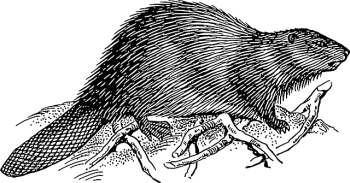
There’s Always a Way – Fur Trapping Under Mexican Law

On Friday, October 29, 1824, Santa Fe Trail originator William Becknell swerved from the Trail he’d inaugurated three years before and instead got a license from the Mexican government to go trapping. He may have been the first American to do so.

Getting a trapping license that October was complicated. Four months earlier, the Mexican government  had ordered New Mexico’s governor to ban all non-citizens from trapping. Only Mexican nationals were allowed to hunt beaver, although even they needed a license to do so. The process required the applicant to pay a fee, provide information about the number of hunters in the party, the type of hunting to be done and the weapons used, and the length of the planned expedition.

The American trappers got around the new restrictions by asking Mexican citizens to apply for the permits, then allow the Americans to hunt under their licenses. This subfertuge seems to have done with the Governor’s knowledge: Becknell sent Governor Baca a letter to confirm receipt of the permission he’d obtained through Manuel Rada, the priest at Santa Cruz de la Canada.

oct 29 illustration.pixabay

And Becknell wasn’t the only trapper to do this. A year later, Sylvester Pratte and Jean Pierre Cabanné went through customs collector Juan Bautista Vigil y Alarid to get a permit.

However, there was a slight problem with this approach. Different officials read the law differently, and difficulties could develop. For example, in May 1826, the Taos alcalde confiscated the pelts of Sylvestre Pratte and Francois Robidoux, even though they both had permits issued by the Governor. (Robidoux’s had been obtained through Juan Bautista Vigil.) When Pratte and Robidoux protested the seizure, Santa Fe officials ordered the alcalde to return the plews.

But this approach made life uncertain. Additional conflicts occurred the following summer over plews brought in by Ewing Young and his trappers.

And there was another solution to the license problem. A naturalized Mexican citizen could obtain one without a go-between.

This fact seems to have triggered a rash of applications for Mexican citizenship. In 1830 alone, thirteen men (Abraham Ledoux, William Wolfskill, Geronimo Lonte, Pedro Laliberte, Antoine Leroux, Jose Bissonette, Amablo Para, Antonio Blanchilla/Blanchard, Jean Baptiste Trudeau, Luis Ambroise, Carlos Guara, Francisco Siote, Pierre Lesperance, and Paul Anderson) all became Mexican citizens. They joined Richard Campbell, Antoine Robidoux, John Rowland, and Gervais Nolan, who’d already made the switch.

These are the men for whom citizenship records are still extant. Who knows how many other men also decided to live by the old adage, “If you can’t beat ’em, join ’em?”

Sources: Daniel J. Weber, The Taos Trappers, Norman: U of Oklahoma P, 1971

THICKER ‘N SNOT

“It’s s’posed to be August, dadburn it.” Julius Fairfield looked gloomily out the door of the long, narrow log cabin that served as the Quartz Mill & Lode Mining Company barracks outside of Elizabethtown. “This fog is thicker’n snot.”

In one of the iron beds lining the walls behind him, somebody sneezed. “And there’s the snot for ye,” Edward Kelly, the company’s lone Irishman, chortled as he added more wood to the pot belly stove halfway down the room.

A door opened at the far end and the chief engineer came out. He ignored the men in the beds as he walked down the room to peer over Fairfield’s shoulder. “That fog’ll lift shortly,” he said. He clapped Fairfield on the back. “Be thankful it’s not rain.”

“That was yesterday’s gift to us all,” Fairfield said gloomily. He shook his head. “And here I thought New Mexico Territory’d be drier than New York.” He grinned and glanced at the engineer. “When’d you say payday was?”

Behind them, Kelly began to sing a song praising Ireland and its green hills, and a chorus of voices yowled at him to be still. The engineer chuckled and turned. “That’s enough now!” he said.

from The Valley of the Eagles

Santa Fe Trail Survey Reaches Point of Rocks

On  Wednesday, October 19, 1825, George Champlin Sibley’s Santa Fe Trail Survey expedition arrived at Point of Rocks, New Mexico. But they didn’t head to Santa Fe.

Sibley was one of three Commissioners named to head up the United State’s survey of the road between Missouri and Santa Fe that had been inaugurated by William Becknell four years earlier. The survey had two purposes: 1. to facilitate trade with Mexico and 2. to negotiate with the Native American tribes along the Trail for safe passage for future travelers.

George Sibley was the only Commissioner to cross the international boundary into New Mexico. However, when he arrived at Point of Rocks, he didn’t continue south along the Trail to Santa Fe. Instead, arguing that it was too late in the year to travel safely to the capitol, Sibley headed west across the Sangre de Cristos to Taos, where his business associate Paul Baillio was located.

Oct 19 illustration.Sibley photo.Source Noble.272.cropped

Sibley spent the winter of 1825/26 in Taos, where he completed the map of the American portion of the Trail and waited for permission to complete the Mexican portion. Although there’s no evidence he ever travelled the portion between Point of Rocks and Santa Fe, he felt confident enough of that section to note that there was no need to make physical alterations it, since “the open nature of the country” enabled wagon to pass “without the least difficulty … with no other labor than removing a few logs, poles, etc.” (Gregg, 201).

In any event, in 1827, Sibley completed his work and returned to Missouri in 1827, where he and his wife established the Linden Wood School for Girls, which would later become the Linden Wood College, and is today Lindenwood University. In Missouri, he is probably best known for this school. In New Mexico, his name is still more closely associated with the survey of the Santa Fe Trail and the mystery of why he didn’t actually travel the full length of the Trail.

Sources: Kate L. Gregg, ed., The Road to Santa Fe, the journal and diaries of George Champlin Sibley, UNM Press, Albuquerque, 1995; Leroy R. Hafen, ed., Fur Traders and Trappers of the Far Southwest, Logan: Utah State UP, 1997; Daniel J. Weber, The Taos Trappers, Norman: U of Oklahoma P, 1971

THE FOURTH TIME

She could be incandescently angry and Gerald’s trip to Santa Fe and back had taken a week longer than he’d told her it would, so he braced himself as he opened the cabin door. But Suzanna barely raised her head from the rocking chair by the fire. She wasn’t rocking. Her shawl was clutched to her chest, her face drawn and gray under the smooth, creamy-brown skin. She glanced at Gerald, then turned her face back to the flames, her cheeks tracked with tears.

Gerald’s stomach clenched. “What is it?” he asked. “The children?”

Suzanna shook her head without looking at him. “The children are fine,” she said dully. She moved a hand from the shawl and placed it on her belly. The tears started again and she looked up at him bleakly. “This is the fourth time,” she said. “There will—” She closed her eyes and shook her head. “There will be no third child,” she choked, and he crossed the room, knelt beside her, and wordlessly took her into his arms.

from The Valley of the Eagles

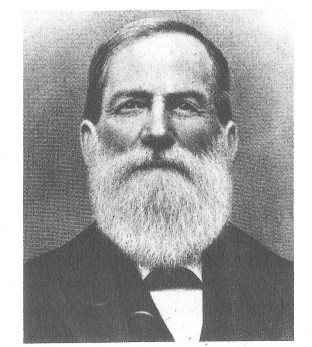
Former Taos Trapper Dies in Los Angeles

On Wednesday, October 3, 1866, trapper William Wolfskill died at age 68 in Los Angeles, California, where he’d emigrated from New Mexico.

Born in Kentucky, Wolfskill had arrived in New Mexico as part of William Becknell’s second (1822) Santa Fe Trail expedition and was based in Taos for the next eight years. During that time, Wolfskill trapped on the San Juan, Gila, and Colorado Rivers, and participated in mule and horse trading missions to Missouri.

On one of those missions, in late 1824, Wolfskill joined an expedition to northwest Chihuahua led by a Captain Owens. There, they purchased horses and mules to export to Missouri. Shortly afterward, Owens was killed in an Indian raid. Wolfskill and another man rounded up the mules that had escaped capture, bought more, and took them all to Alabama, where they sold for a nice profit.

Oct 3 illustration.Wolfskill, William, ca.1831_(CHS-1765)
William Wolfskill

But the two men didn’t keep the money for themselves. Instead, Wolfskill took it to Boone’s Lick, Missouri, where he handed over the funds to Captain Owens’ family.

In late September 1830, Wolfskill left New Mexico and never returned. He led a party of about 20 men acrossed the Great Basin into southern California, in the process opening what is today called the “Old Spanish Trail.”

Wolfskill had originally intended to trap beaver in California, but when this turned out to be impractical, he and fellow trapper George Yount turned to hunting sea otter instead. This project seems to have been lucrative, because by 1838, Wolfskill had the funds to join his brother in buying a  4,000-vine Los Angeles vineyard, which would eventually grow to 85,000 vines.

Agriculture must have been more enjoyable than trapping, because three years later, Wolfskill planted the first commercial orange grove in California. These activities formed the basis of a kind of agricultural empire that would introduce the Australian eucalyptus, the soft-shelled almond, the chestnut, and the persimmon to California.

Certainly, by the time he died, Wolfskill had traveled a long way from Kentucky and accomplished a great deal besides trapping furs.

Sources: Leroy R. Hafen, ed., Fur Traders and Trappers of the Far Southwest, Logan: Utah State UP, 1997; Daniel J. Weber, The Taos Trappers, Norman: U of Oklahoma P, 1971.

DECISION POINT

Three years after the Great Rebellion, Henry still drifted. There was nothing behind him in Georgia and nothing further west than San Francisco. Not that he wanted to go there. The California gold fields were played out.

But he needed to get out of Denver. A man could stand town life only so long and he’d been here three months. The Colorado gold fields were collasping, anyway. Played out before he even got here.

“Been too late since the day I was born,” he muttered, putting his whisky glass on the long wooden bar.

“I hear tell there’s gold in Elizabethtown,” the bartender said. He reached for Henry’s glass and began wiping it out. He knew Henry’s pockets were empty.

“Where’s Elizabethtown?”

“New Mexico Territory. Near Taos somewheres.”

Henry nodded and pushed himself away from the bar. “Elizabethtown,” he repeated as he hitched up his trousers. “Now there’s an idea.”

from Valley of the Eagles