It’s a mere mule track, the man thought, eying the rocky ground on the hillside ahead. A fine silt hovered in the air behind him, marking the path he and the packhorse had followed from Rayado and the Santa Fe Trail at the base of the mountains.
They’d been climbing steadily and the vinegar-scented blue-green junipers had given way to taller, straighter, deeper-green trees: fir and pine. The man looked at them appreciatively, glad it was June and not mid-winter, when the snow that provided these trees with the moisture to live would have made the trail difficult.
He clucked at the packhorse and headed up the rocky slope. At Rayado yesterday, Jesús Abreu had told him there’d be a series of small mountain valleys before he reached the larger one. Then he was to move north, to where the Cimarron River began in a marsh on the east side of the Valley. The Indians met there to trade. The traveler shook his head. It was a long way to go on the chance that they’d be there—and able to pay for the goods he had with him. He hoped this worked.
On Sunday, July 31, 1825, Taos-based physician Rowland Willard had been in Taos since July 2 and the village had received no rain in the past month. The doctor was disappointed.
The New York born Willard had apparently expected to find not only rain but a prosperous community that could afford American fees and make him rich. He was destined to be disappointed on both counts.
Source: Over the Santa Fe Trail to Mexico, Julie L. Poole, ed.
Although Doctor Willard had a number of clients in Taos and as far south as Santa Cruz de la Canada, payment for services in the 1820s tended to be in goods rather than in cash. By September, it was clear that Taos was not the land of opportunity he had sought. On September 15, he headed south, to try his luck in Chihuahua.
The move paid off. Willard developed a successful practice in Chihuahua and remained there for the next two years, where he invested in the Santa Rita copper mines as well as his medical practice.
In 1828 Willard decided to return to the United States. To be eligible to leave the country, Mexican law required a 2% duty payment. The good Doctor paid $80 on the $4000 he declared, but actually left Mexico with $7000 in cash and his “outfit.”
Clearly, trappers were not the only Americans who believed they didn’t need to comply with Mexico’s duty laws.
Source: Julie L. Poole ed., Over The Santa Fe Trail To Mexico, The Travel Diaries And Autobiography Of Dr. Rowland Willard, University of Oklahoma Press, Norman 2015
“It’s June now,” Suzanna said. “These are the Sangre de Christo mountains. It’ll be cold up here, come winter.”
“Come January,” Gerald conceded. “Though snow will make for green summer cattle pastures.”
“Grass will bring game and cougars. Cougars prefer cattle to game.”
“No more than anywhere else.”
“And the Utes will want to know why we’re in their hunting grounds.”
“There’s enough for everyone.” He gestured. “And plenty of trees. You won’t have to live in adobe anymore. Besides, Taos is only a day or so away.”
“Taos is two days through a Pass that’s impassable in winter.”
Gerald studied the valley at their feet. “At the foot of this hill and a little north,” he decided. “A cabin between those two outcroppings would be well sheltered. And your garden won’t get too windblown.”
Clearly, there was no use arguing. Suzanna’s mouth tightened. “I want glass windows,” she said.
They climbed a small hill near the headwaters of the Cimarron River to get a better view. The long narrow valley spread out below them. It was a couple miles wide and probably twelve long. The land slanting toward them was mostly grass. Small creeks meandered across it, creating dark indentations. Pine and fir hugged the banks, spreading out occasionally to absorb moisture from a sloughy spot. The streams met in a marshy area just below where Gerald and Suzanna stood, then drained into the small river that flowed eastward through the rocky canyon.
Suzanna studied the valley warily as Gerald plucked a piece of grass from the hillside. He examined it, then bit into the fleshy end and chewed carefully.
He spit it out. “Sweet,” he said approvingly. He gestured at the view below. “It has everything we could want,” he told his wife. “Water, feed, game, timber.”
Suzanna scowled sleepily at the lopped-off branches that formed the wall of the hillside lean-to and burrowed deeper into the bedding. At least there’s a bear skin to add some warmth, she thought irritably. It was too cold to get up, and if Gerald thought she was going to actually live in this God-forsaken place, he wasn’t thinking clearly.
“Wife?” he asked from the open side of the shelter.
Suzanna burrowed deeper, covering her head.
Gerald chuckled and came to kneel beside her. “I have a fire going,” he said. “I’ve toasted some bread and am heating water for tea.”
Suzanna sighed and reluctantly uncovered her head. “All right,” she said.
“There’s a herd of elk on the other side of the valley,” he said. “I thought I’d try for one after breakfast. We could use the meat. Do you want to come with me?”
“I’m not staying here by myself.” She sat up. “Not until you’ve built me a cabin.”
He leaned in to kiss her forehead. “I love you,” he said.
“And I you.” She shook her head. “Though I still think you’re soft in the head. This valley is so isolated and cold. How does anything grow up here?”
He grinned, stood, and went out. “The water’s hot!” he called from the fireside.
In late June 1868, after five years of exile, the Navajo people began their return to their homeland.
Five years earlier, also in June, U.S. Army General James Henry Carleton had ordered Colonel Christopher “Kit” Carson to march west to starve out the Navajos and move them 450 miles east to Bosque Redondo. Although Carson argued that his health was poor and that he’d joined the Army to fight Confederate Texans, not Indians, Carleton ordered him to go him anyway.
Carson did as he was told. The majority of the Navajos residing in the Southwest were gathered up and marched east to Bosque Redondo, and old meeting ground for Indians of the southern Plains along the Pecos River.
The experience was a disaster.
The Navajos were incarcerated alongside their long-time enemies, the Mescalero Apache, so that was difficult enough.
Then the crops failed, not only at Bosque Redondo, but also in the Taos and Mora Valleys, which reduced the food supplies that could be purchased to feed the captives. In fact, there were so few supplies that General Carleton suspended operations against the Navajos still at large. He didn’t have enough to feed those he had, much less more.
And Kit Carson, who went with the Navajo to Bosque Redondo, proved an inadequate administrator. Not only was he hampered by his illiteracy, but he found that he had no real power or control. Between Carleton’s micromanagement and Army bureaucracy and corruption, he was as overwhelmed with his Bosque Redondo tasks as the captive Navajos were with the miserable conditions there. Carson left in mid September 1864. The Navajo would remain until June 1868.
Finally, two years after Carleton had been relieved of his military command, General Tecumseh Sherman arrived. He agreed with the Navajo leaders’ rejection of the idea of moving to a new reservation in Oklahoma and negotiated a peace with them that would send them home. Three weeks after the treaty was signed on June 1, the People began the 450 miles or more journey home.
Sources: Hampton Sides, Blood And Thunder, an epic the American West, Doubleday, New York, 2006; Jerry D Thompson, A Civil War History Of The New Mexico Volunteers And Militia, U of New Mexico P, Albuquerque, 2015
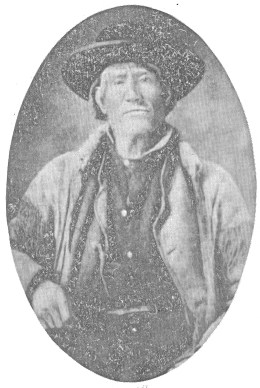
On June 15, 1866 Colonel Henry B. Carrington defied orders from the U.S. War Department to fire mountain man Jim Bridger from his position as Carrington’s expedition guide. Instead, he gave Bridger a raise, to $10 a day.
Carrington’s expedition was tasked with opening a wagon road around the Big Horn mountains to Montana, across Sioux and Cheyenne treaty lands. The road was needed to enable miners to get to the gold fields in the West. The gold from the mines was needed to pay Civil War debts.
It isn’t clear why the War Department wanted to fire Bridger, but Carrington’s response to the order is clearing up. He reported that it was “impossible of execution.” Then he doubled Bridger’s pay from $5 a day to $10 a day. Bridger stayed on, and assisted Carrington not only with opening the road but also “subduing” the Sioux and Cheyenne and building Fort Phil Kearney.
Source: Jim Bridger, Stanley Vestal
This was the last of Jim Bridger’s big adventures. He would return to Missouri, where by 1875 he was completely blind. He died in mid 1881.
Bridger had been active in the West since the early 1820s. He is said to be the first American to discover the Great Salt Lake and crossed South Pass, an important link in the United States’ westward expansion, in 1827. After he founded Fort Bridger in 1843, it became an important stopping place along the Oregon Trail.
Although Bridger spent little if any time in New Mexico, he and trappers and guides like him were instrumental in breaking down the barriers, for good or ill, between New Mexico and the United States. If the story of the War Department’s decision and Carrington’s response has anything to tell us, it’s that even in their own time, the activities of these men met with a mixed reception, even in the United States.
Source: Stanley Vestal, Jim Bridger, mountain man, U of Nebraska P, Lincoln, 1946.
She wasn’t sure what she had been expecting, but it wasn’t this. Her heart sank as she looked down at the low mud-colored town. The clouds were low and threatening.
“Mama?”
She turned, gathering her long calico skirts in one hand and reaching for him with the other.
“Is that it?”
She nodded. They stood together, looking down. The sky grumbled again and she closed her eyes. How was she going to do this, just her and this fragile boy?
“Look!”
She opened her eyes and followed his pointing arm. The clouds had parted above the town and a broad beam of light now danced on the rooftops, turning the walls golden.
She squeezed his hand and they smiled at each other. “Yes, this is it,” she said. “Our new life.”
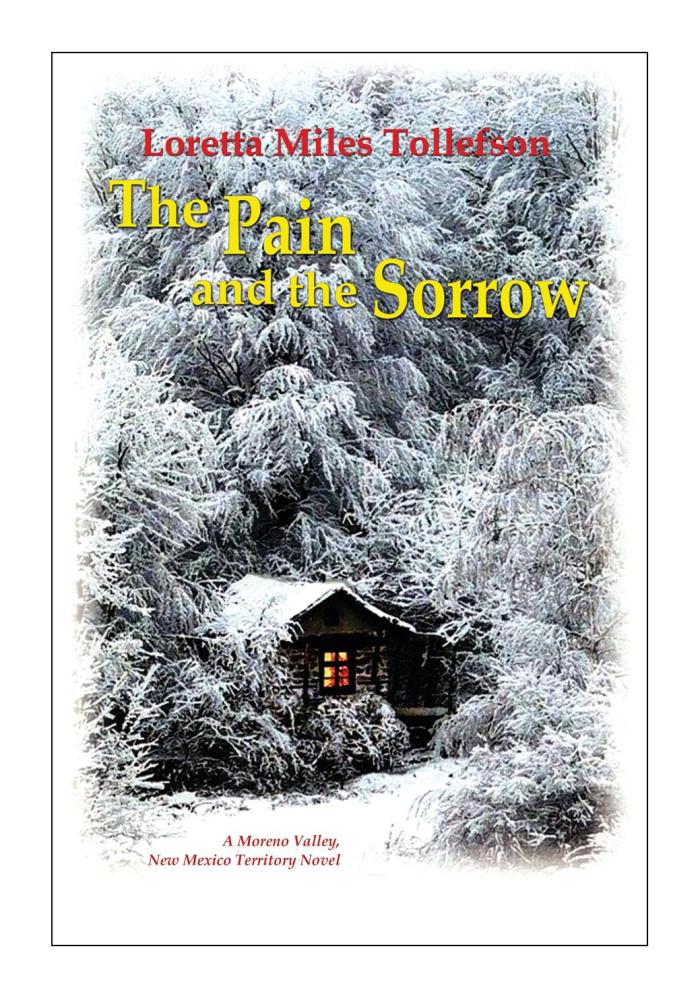
I’m pleased to announce that The Pain and The Sorrow is now available as an ebook from Amazon (for Kindle users) and Barnes and Noble (for Nook users).
This novel about Old New Mexico serial killer Charles Kennedy and the wife who turned him in was published by Sunstone Press last summer and has not been available in ebook form until now.
On this day June 3, 1787, one of the West’s most memorable mountain men, William Sherley Williams, was born in North Carolina. The fourth of nine children, he was called “Will” by family members, although before he was 40, his fellow mountain men were calling him “Old Bill.”
The Williams family moved to Missouri when Bill was 9 years old. Seven years later, at 16, Bill left home to live among the Osage Indians. Twenty-one years later, after the death of his ostrich wife and the dissolution of the reservation, Bill headed west. He would become a legendary mountain man, known as much for his eccentricities as his prowess in the wilderness.
The lean, 6’1”, red-headed Williams was based in Taos and had a propensity for hunting beaver on his own, or with only a camp-follower as a companion. Where he went was anyone’s guess–he also had a propensity for keeping his hunting grounds secret.
Before he left home, Williams had received an education that included training in Greek and Latin. This, along with excellent hunting and tracking skills and a gift for languages, gave him a self-confidence that didn’t suffer fools gladly. Especially people who doubted his geographic knowledge of the West.
This strong personality was bound to get Williams in trouble when he encountered someone with a similar character. In Williams’ case, this was former Army Colonel John C. Fremont.
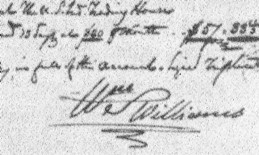
Bill Williams signature. Source: Old Bill Williams, A. H. Favour
In late 1848, Fremont hired Williams as guide for an expedition into the Rocky Mountains to identify an all-season railroad route to California. When Williams insisted that the expedition should veer from the route Fremont had already identified, Fremont relieved Williams of his guide duties and gave them to others.
Unfortunately, Williams was right. Fremont’s route was a mistake. Winter set in with a vengeance and Fremont’s men were trapped in the Rockies. Only 21 men of Fremont’s original 32 made it out alive. Although this would include Williams, he would die a couple months later, trying to retrieve valuable records and medical equipment that had been left behind.
So, while Williams’ vivid personality and self-confidence made him a legend in his own time, it also cut his time short. But the stories of his exploits would live on, and some of us still wonder just where those secret beaver hunting grounds actually were.
Sources: Robert Glass Cleland, This Reckless Breed of Men, UNM Press, Albuquerque, 1976; Leroy R. Hafen, Ed., Fur Trappers and Traders of the Far Southwest, Utah State UP, Logan, 1997; Alpheus H. Favour, Old Bill Williams, Mountain Man, U of Oklahoma P, Norman, 1962


 Fiction and Fact From Old New Mexico