Houses Made of Mud

Houses Made of Mud

In my March 5 post, I mentioned that one of the things that nineteenth century Americans disparaged when they first arrived in New Mexico was what they called “mud houses.” Newspaper correspondent Matt Field wasn’t the only person to describe Santa Fe as a “mud built city” of one-story buildings that reminded him “of an assemblage of mole hills.”

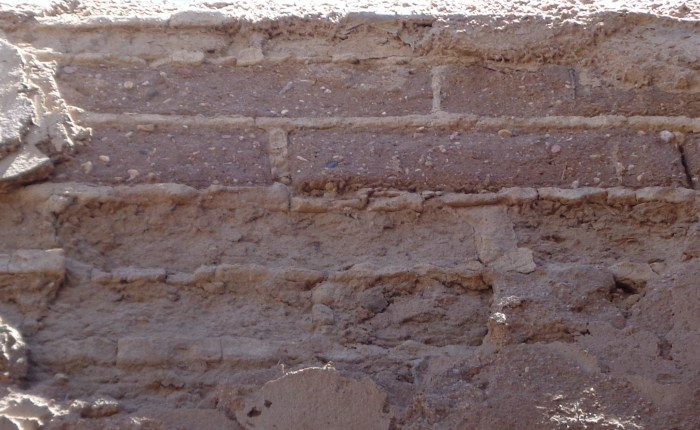
Technically, Field was right. The buildings, even the churches, were in fact built of a mixture of earth and water. These carefully formed bricks had evolved from the indigenous practice of puddled mud construction and by the 1800s were created by packing a stiff, dough-like mud into a rectangular wooden frame that was then lifted away from the resulting block. Two days later, the brick was dry enough to be turned on end and a week later, hard enough to be stacked and cured for another month. To speed up the drying process, adobe makers in the upper Rio Grande region often added straw.

Adobe bricks were used to construct one-story buildings but, with proper buttressing, the walls could be extended higher. Field noted that the Santa Fe parish church was built “as high and quite as large as any of our [U.S.] ordinary size meeting houses.”

He also noted that the adobe walls were strong and durable. In fact, they were so strong and durable that the Fort the invading Americans constructed on the hill overlooking the church in the Fall of 1846 was made of double walls of adobe bricks with a core of rubble between them.  

Diagram of Fort Marcy, constructed Fall 1846. Source: Fort Marcy Park interpretive signage.

Early the following year, the Americans got a taste of just how resilient adobe walls could be. After the January 1847 Taos uprising, the U.S. Army hauled four mounted howitzers and a six-pound cannon north to deal with the rebellion. The insurrectos had retreated to the mission church at Taos Pueblo, but the American artillery made little headway against its adobe walls.  Lt. Richard Smith Elliott reported later that the walls were so thick, the cannon balls would not go through them.

In fact, the artillery crews made little headway against the pueblo church until they positioned the smallest cannon closer to it and began using grapeshot in a spot already damaged by an axe-wielding soldier. Only then were the attackers able to enter the church.

Not even adobe could withstand the fury and tenacity of Americans with newly acquired land to protect.

© Loretta Miles Tollefson

Sources: Bainbridge Bunting, Early Architecture in New Mexico; Stella M. Drumm, Down The Santa Fe Trail and Into Mexico, Diary of Susan Shelby Magoffin 1846-1847; Mark L. Gardner and Marc Simmons, eds., The Mexican War Correspondence of Richard Smith Elliott; Michael McNierny, ed., Taos 1847, The Revolt in Contemporary Accounts; Clyde and Mae Reed Porter, Matt Field on the Santa Fe Trail.

An Unhappy Country – The Countdown Begins!

An Unhappy Country – The Countdown Begins!

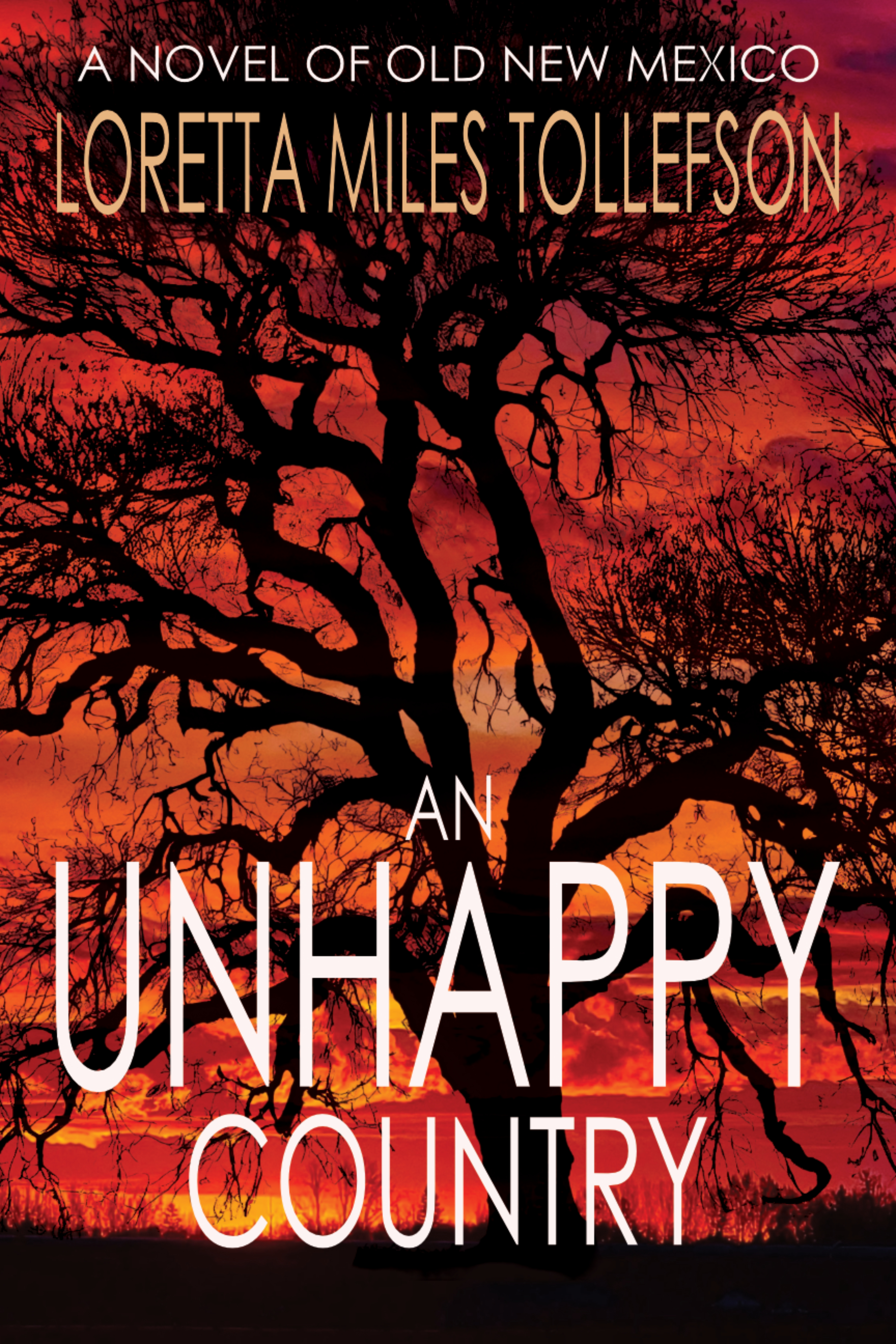
The thirty-day countdown to publication of my novel An Unhappy Country has begun!

It’s August 1846. The U.S. army has taken Santa Fe without firing a shot. The Mexican American War is over in New Mexico. Or is it?

Two days after the Army arrives, seventeen-year-old Jessie Milbank and her friends stumble on a man with a knife in his back in the Santa Fe plaza. Then someone close to Jessie’s friend Juanita is murdered. When an insurrection is suppressed in December, Jessie begins to wonder if the three events are linked. 

Were the murdered men part of a conspiracy to throw out the invaders? And were they the only ones hoping for a fight? After revolt does finally break out and the Americans suppress it at the battle of Taos Pueblo, yet another man is murdered. Will the reasons for his death provide clues to the earlier ones?

Early readers are raving about Jessie, the book’s insight into these little-known events, and the beautiful writing in this novel.

You can pre-order the e-book now for only $.99. It’s available at all e-reader outlets , including Amazon and BarnesandNoble. The paperback is available for pre-order at BarnesandNoble, as well.

Chintz and Coffee in New Mexico

Chintz and Coffee in New Mexico

The Americans in Santa Fe before the U.S. invasion in 1846 were almost all merchants. These men brought a range of goods into New Mexico. Fabric, from calico to cashmere. Butcher and other types of knives. Ready-made clothes, including neckties. And also apothecary scales, snuff, turpentine, canned oysters, champagne, claret, and chintz mugs.

Chintz mugs were not made of fabric, as the term “chintz” would imply, but of china. That these pieces of fragile tableware made it from Missouri to New Mexico is a testament to the shippers’ packing ability. The cups were decorated with an all-over flower pattern copied from 18th century fabric designs. Entire dish sets were and are still being made using these patterns, though only the mugs seemed to have made it to New Mexico in the mid1800s.

Chintz mug. Image courtesy of Replacements.org

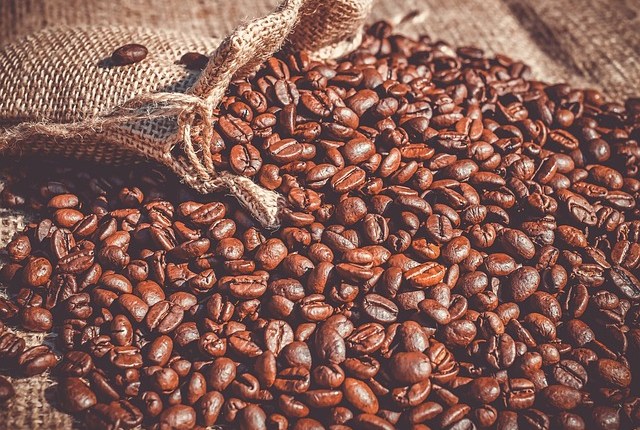
The mugs were undoubtedly used to drink the coffee which was also imported. Although a luxury item in the eastern United States, the beverage seems to have been considered by New Mexico’s Anglo travelers to be an essential, regardless of the cost. And it was expensive: 50 cents a pound in 1846, at a time when a typical male wage earner brought in $2 to $5 a month.

The coffee would have travelled in bean form, probably green beans, as they can be stored up to twelve months in comparison to about thirty days for roasted beans. So purchasers had to roast and grind the beans themselves. Lewis Garrard provided a vivid description of how this was done in on the road.

AWe selected two flat stones from the [water] channel at hand, twenty-five to thirty inches in diameter, which we placed on the fire ’til heated; then one was taken off, the coffee [beans] poured on, and stirred with a stick. The stones served alternately as they became cool. When the coffee was sufficiently burned, a piece of skin was laid on the ground, and a clean stone, a foot in diameter, rested on the knees of the grinder, with one edge on the skin. A smaller stone, held in the hand, reduced the grains between it and the larger one to powder by a rotary motion.@

The resulting grind was poured into boiling milk, where it sank to the bottom of the pan. When the grounds resurfaced, the coffee was ready. “How we feasted!” Garrard reported. “It was splendid!”

It’s unlikely Garrard and his friends drank from chintz mugs that night. They were still on their way to New Mexico. Any china would have been safely packed away. But I’m willing to bet that coffee served in chintz mugs accompanied the September 1846 oyster and champagne supper James Magoffin served his brother and sister-in-law to celebrate their safe arrival in Santa Fe.

Life in New Mexico in 1846-1847 could be quite civilized, for those who could afford it.

© Loretta Miles Tollefson

Sources: David C. Beyreis, Blood in the Borderlands, Conflict, Kindship, and the Bent Family, 1821-1920; Stella M. Drumm, ed., Down the Santa Fe Trail and Into Mexico, Diary of Susan Shelby Magoffin, 1846-1847; Lewis H. Garrard, Wah-to-yah and the Taos Trail; http://www.antiquesandteacups.com/collections/chintz, accessed 2/14/25

Scandalous Smoking Women

Scandalous Smoking Women

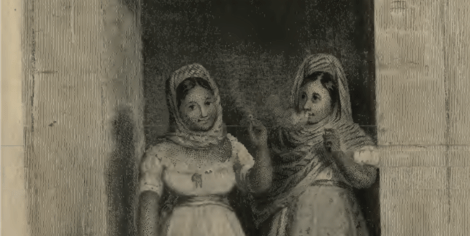
American visitors to 1800s New Mexico found much that was strange to them. “Mud” (adobe) houses, low-impact agriculture, and the clothing styles all gave Anglos something to feel superior about. New Mexican women’s smoking habits were something else entirely. Scandalous, repulsive, and, at least for one young American, titillating.

Seventeen-year-old Lewis Garrard, while decrying the custom, also admitted that smoking enhanced “the charm of the Mexican señoritas, who, with neatly rolled-up shucks [cigarettes] between coral lips,” smiled winningly, “their magically brilliant eyes … searching one’s very soul.” And they offered the treats to him! “These cigarillos they present with such a grace, and so expressive an eye, so musical a tongue, and so handsome a face” that it was impossible to refuse.

New Mexican women smoking. Source: G.W. Kendall, Narrative of the Texan Santa Fe Expedition, Vol. II

What exactly is a cigarillo? Susan Magoffin described them as “a delicate cigar made with a very little tobacco rolled in a corn shuck or bit of paper.” Needless to say, she didn’t try them herself. After all, she was a proper American woman.

The personal production of individual cigarillos was common in the Mexican states of Chihuahua, Sonora, and New Mexico at the time, although elsewhere in the country they were manufactured commercially. The commercial ones always rolled in paper, while New Mexico cigarillos were often made with pre-cut pieces of corn husk, or shuck.

The tobacco used for the New Mexican cigarettes wasn’t necessarily imported, either. They were often made with wild tobacco, or punche. If that wasn’t available, mullein (punchon) was substituted, though the two tasted quite different from each other, with punche being preferred.

The tobacco or its substitute was dried and shredded and carried in a small pouch or silver box. The corn husks or papers for rolling were kept separate, with women often carrying theirs in embroidered cloth cases.

Preparation of the corn shucks consisted of scraping the large pieces smooth, then cutting them into sections roughly three by one and a half inches. When a smoker wanted a cigarette, they (she!) pulled out a piece, moistened it with their mouth, sprinkled tobacco on one end, then rolled it up, pinching the ends to hold the contents.

This process in itself must have been erotic for the teenage Garrard. No wonder he found the cigarillos New Mexican women offered him so irresistible, threatening to draw him into “the giddy vortex of dissipation!”

© Loretta Miles Tollefson

Sources: Stella M. Drumm, ed., Down the Santa Fe Trail and Into Mexico, Diary of Susan Shelby Magoffin, 1846-1847;  Marc L. Gardner and Marc Simmons eds, The Mexican War Correspondence of Richard Smith Elliott; Lewis H. Garrard, Wah-to-Yah and the Taos Trail; Albin O. Korte, Tobacco Tales, La Herencia, Summer 2005; Michael Moore, Los Remedios, Traditional Herbal Remedies of the Southwest.

What’s the Name of That Town Again?

What’s the Name of That Town Again?

The name “Taos” conjures many things. An ancient pueblo. A Mexican outpost. Gringo mountain men. A violent revolt. A funky 21st century village. But the village and pueblo are two separate places. There are Spanish villages and Indigenous pueblos side by side all over New Mexico. As far as I know, only in the Taos valley do the two settlements carry the same name.

And where does the name come from and what does it mean? Now there’s a question. According to F.R. Bob Romero in Santistevan and Moore, Taos, A Topical History, it’s been attributed “to an Indian word meaning ‘Red Willow’ or ‘people of the Red Willow.’” But no one knows for sure. All we know is that it’s what the pueblo was called after the Spanish arrived. Romero says it’s likely a “Tiwa Indian term that perhaps began with the T sound and was Hispanicized as Taos.”

So that explains (or doesn’t!) that. But then there’s the question of the name of the village which is three miles southwest. We call it “Taos,” but it was originally called Don Fernando de Taos, San Fernando de Taos, San Fernandez de Taos, and various forms of these three names, such as Don Fernando, San Fernando, San Fernandez, or simply Fernando or Fernandez. Although the latter two don’t appear very often in the historical record. Even then, if the name is shortened, it becomes simply “Taos.”

As far as I know, Don Fernando de Taos is the only location in New Mexico which has the honorific “Don” attached to it. The Don Fernando for whom it was named was actually a Don Fernando Durán y Chávez, who had a hacienda near Taos Pueblo in the late 1600s. He and his son fled south during the Pueblo Revolt of 1680 and didn’t return. In 1795, the grant was ceded to settlers from the nearby Cañon area, but the village didn’t really start to thrive until French-Canadian and American mountain men [post link here] began to trickle in in the 1820s.The village was a restocking and trading point for the fur trappers. Some of them stayed to set up mercantile businesses and intermarry and the community became the center of americano settlement in the valley.

Ironically, the location that developed in response to the American presence became the flash point of resistance to the 1846 American invasion. Maybe the locals just got sick of us.

© Loretta Miles Tollefson

Sources: Source: Francis L. and Roberta B. Fugate, Roadside History of New Mexico; Robert Julyan, The Place Names of New Mexico, Revised Edition; F.R. Bob Romero in Santistevan and Moore eds., Taos, A Topical History; http://taoscountyhistoricalsociety.org/taoshistory.html, accessed Jan 3, 2017

Book Announcement: An Unhappy Country

Book Announcement: An Unhappy Country

I’m pleased to announce that my Old New Mexico novel An Unhappy Country will be published in April 2025. A murder mystery, this novel is set during the Mexican American war and focuses on events in New Mexico, which was invaded by the U.S. Army in August 1846. It features Jessie Milbank, an American merchant’s daughter who can’t leave well enough alone. Here’s the book description:

August 1846. The U.S. army has taken Santa Fe without firing a shot. The Mexican American War is over in New Mexico. Or is it?

Two days after the Army arrives, seventeen-year-old Jessie Milbank and her friends stumble on a man with a knife in his back in the Santa Fe plaza. Then someone close to Jessie’s friend Juanita is murdered. When an insurrection is suppressed in December, Jessie begins to wonder if the three events are linked. 

Were the murdered men part of a conspiracy to throw out the invaders? Were they the only ones hoping for a fight? After revolt does finally break out and the Americans suppress it at the battle of Taos Pueblo, yet another man is murdered. Will the reasons for his death provide clues to the earlier ones?

You can preorder the e-book from Amazon.com and other retailers at the special introductory price of $.99.

Rebellion Ends With a Bang – TAOS REVOLT, Part 3

Rebellion Ends With a Bang – TAOS REVOLT, Part 3

By Friday, February 5, 1847, the Taos insurrection against the American occupation of New Mexico was over. All that remained was the formal surrender of Taos Pueblo leader Tomás Romero.

The Americans had conditioned the end of hostilities on Romero’s surrender. And the people at the pueblo were eager for things to end. Their church, where the rebels had made their stand, was in ruins. Any further action put the massive housing complexes in danger.

So, Romero surrendered. But he was never tried for his actions in a court of law. While he made it to the Taos village jail, that’s as far as he got. A U.S. dragoon named Fitzgerald shot and killed the Taos leader that morning, instead.  

Fitzgerald later bragged about the killing to seventeen-year-old Lewis Garrard, who reported that Fitzgerald killed Romero and three other men as vengeance for the death of his older brother Archibald Fitzgerald. Archie had been a member of the 1841 Texas Santa Fe Expedition and later died during a prison breakout. Why his younger brother thought the death of Romero and the others avenged him is unclear.

What is clear is that Tomás Romero’s death on February 5 was the last shot fired in the Taos Revolt. Other men would die, but they would do so after a cursory court case and the administration of at least the semblance of law. The Taos leader’s death was simple murder.

Fitzgerald was locked up afterwards in the Taos village courthouse, where he was allowed to escape a month later. On March 18 he was dishonorably discharged from his company at Albuquerque, apparently for desertion. He had fled east by that time and would eventually make his way to Geelong, Australia, become the owner/operator of the Western Sea bathhouse, and die in 1882.

Source: Find-a-Grave.com

Fitzgerald’s action at Taos was one of two links between the revolt and the 1841 Texas Santa Fe Expedition. The Texans had brought along a six-pound cannon which was captured along with them and left behind when they were marched south. The cannon ended up in Santa Fe and was still there when the U.S. Army arrived. They took it with them to Taos, where it was key to the action that breached the pueblo church walls.

While the use of this particular piece of artillery may simply have been convenient, its presence may also have sparked the younger Fitzgerald’s memories of his brother and triggered the subsequent shooting at the Taos village jail. Or maybe he’d planned Romero’s death all along. Or was simply a confused young man with a propensity for killing people.

Like most historical or even current events, it’s doubtful we will ever know why the U.S. dragoon did what he did and why Tomás Romero had to die.

© Loretta Miles Tollefson

Sources: James A. Crutchfield, Revolt at Taos, The New Mexican and Indian Insurrection of 1847; John Durand, The Taos Massacres; Mark L. Gardner and Marc Simmons, eds., The Mexican War Correspondence of Richard Smith Elliott; Lewis Garrard, Wah-to-yah and the Taos Trail; Ralph Emerson Twitchell, The History of the Military Occupation of the Territory of New Mexico; Alberto Vidaurre,” 1847: Revolt or Resistance?” in Corina A. Santisteven and Julia Moore, Taos, A Topical History.  

The Black Avengers of Ceran Saint Vrain – TAOS REVOLT, Part 2

The Black Avengers of Ceran Saint Vrain – TAOS REVOLT, Part 2

When Sterling Price set out from Santa Fe in late January to meet the Mexican insurgency from Taos, he was accompanied by a rag-tag group of men who would be instrumental to his ability to carry out his mission.

He had sworn the group of men Ceran St. Vrain called the Avengers into Federal service the Saturday they left and seen their worth at Santa Cruz de la Cañada they next day, when they were instrumental in keeping the rebels from seizing the U.S. supply wagons.

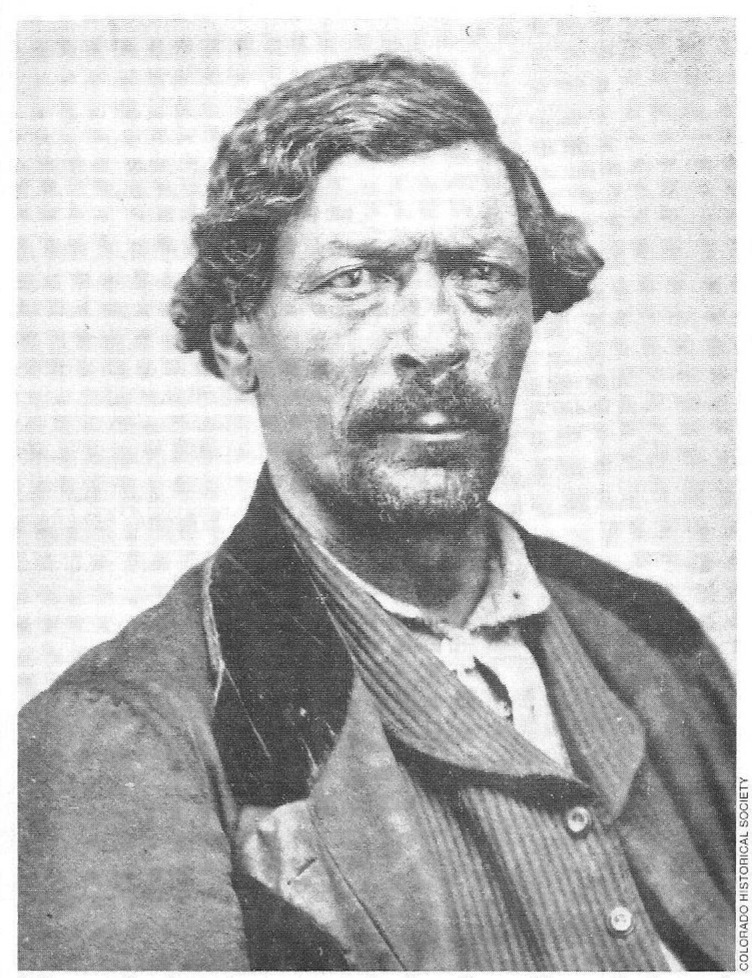
The Avengers were an interesting group of Mexican and American merchants, laborers, and mountain men. One of the mountain men was Jim Beckworth, son of a Virginia plantation overseer and a woman named “Miss Kill,” almost certainly a slave. Renowned for his exploits as a mountain man and his ability to tell a story, Beckworth had more than one thing in common with the Bent family slave who also signed up as an Avenger. Neither of them was supposed to be there.

By law, people of color could not join the U.S. military. They’d been banned from serving since the Federal Militia Acts of 1792. But there Beckworth and Green both were, marching with the rest of the Avengers.

Jim Beckworth, Source: Wild West Magazine, June 1993

And fighting. Although Dick Green was badly wounded at the battle of Embudo Canyon on Friday, January 29, there are reports that he also fought at Taos Pueblo the following week. The Bent family was so grateful for his service that they freed Green, his wife Charlotte, and his brother Andrew. The three of them headed east toward Missouri that summer and, hopefully, some place where they could live in peace.

We don’t know anything more about them. There are some tantalizing clues. The 1829 manifest for a schooner to New Orleans includes a five-foot-tall 14-year-old slave girl named Charlotte Green. Could she have ended up in the Bent household? And there’s an August 1863 New Orleans interment record for a “colored” man named Richard Green. Is this the man who was wounded at Embudo Canyon?

Unfortunately, I have been unable to find any definitive link between these pieces of information and the Dick Green who fought alongside his Mexican and Anglo cohorts in early 1847. And may have been one of only two Black men to enlist in the U.S. Army between 1792 and the Civil War.

© Loretta Miles Tollefson

Sources: James A. Crutchfield, Revolt at Taos, The New Mexican and Indian Insurrection of 1847; Ferguson, Paul-Thomas, “African American Service and Racial Integration in the U.S. Military,” http://www.army.mil/article/243604/, accessed 9/15/24; Mark L. Gardner and Marc Simmons, eds., The Mexican War Correspondence of Richard Smith Elliott; Howard R. Lamar, The Far Southwest, 1846-1912, A Territorial History; Ralph Emerson Twitchell, The History of the Military Occupation of the Territory of New Mexico; Alberto Vidaurre,” 1847: Revolt or Resistance?” in Corina A. Santisteven and Julia Moore, Taos, A Topical History.  

When is a Rebel Not a Traitor?

When is a Rebel Not a Traitor?

In 1846, early in the Mexican American War, General Stephen Watts Kearny led his Army of the West from Missouri to Santa Fe. He received no resistance in New Mexico and raised the American flag over the Santa Fe plaza in mid-August. By early November, he had moved on to assist in the subjugation of California, leaving troops behind to hold New Mexico. Local leaders laid plans to kick out the remaining troops, but the plot was discovered in mid-December and the most of them were apprehended.

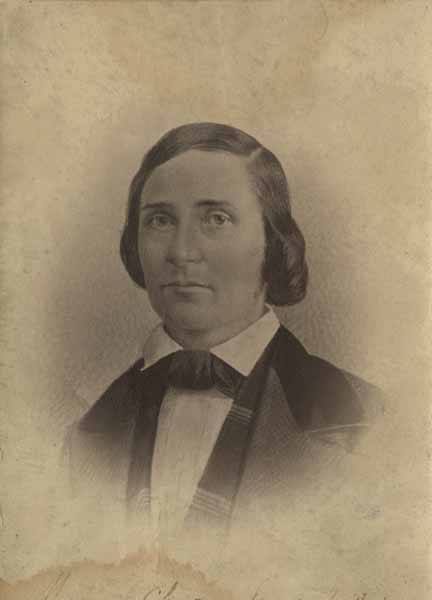
One of the men jailed was Manuel Antonio Chaves, who seems to have been the only one who went to court for his activities. Maybe his was the first and last case at this time because his American lawyer, Captain William Z. Angney, got him off.

Manuel Antonio Chaves, courtesy of Gill Chaves, 2019

Angney’s arguments were powerful. Chaves had been charged with treason against the United States. Angney argued that, since the war was still in progress, New Mexico was technically still part of the country of Mexico, and therefore Chaves was not an American citizen. You can’t try someone for treason against a country they don’t belong to. In fact, it was not treason, but patriotism, that motivated his actions.

Chaves was acquitted and released. His experience with Angney and in the courtroom seems to have permanently changed his view of Americans. Six months earlier, he’d argued fiercely that New Mexico ought to fight the invaders. The month after his release, he was fighting alongside the Americans to suppress the New Mexican revolt that broke out in Taos. He went on to serve in the Civil War on the side of the Union, rising to the rank of Lieutenant Colonel and playing a key role in the pivotal battle of Glorieta Pass. All because his perceived enemy (Captain Angney) defended Chaves’s right to rebel.

Sources: Mark L. Gardner and Marc Simmons, eds., The Mexican War Correspondence of Richard Smith Elliott; Rubén Sálaz Márquez, New Mexico, A Brief Multi-History; Marc Simmons, The Little Lion of the Southwest, a life of Manuel Antonio Chaves; Ralph Emerson Twitchell, The History of the Military Occupation of the Territory of New Mexico.

© Loretta Miles Tollefson, 2025

New Year in Old New Mexico

New Year in Old New Mexico

There were many celebrations connected with the Christmas season in Old New Mexico, ranging from la posadas, or reenactments of the Christ Child’s birth, to midnight masses on Christmas Eve, to dances at the Rio Grande Pueblos.

However, in New Mexico, the merry making didn’t end on December 25. A week later came Los Días de Los Manueles. January 1 is the feast of Emmanuel, another name for Jesus Christ, and therefore the name day of people christened Manuel or Manuela.

To honor these people, the new year would start just after midnight. The entire community came out under the night sky to visit the homes of anyone named Manuel or Manuela, sing songs in their honor, and feast on posole, chile, and bizcochitos, among other New Mexican traditional foods.

If you happened to live in the village of Ranchos de Taos south of Taos, you would also be honored with dances performed by villagers of Comanche and Hispanic heritage. The performers would start at the church in the plaza and then proceed to the homes of the name day honorees. They performed a set of dances at each location, including a buffalo dance (El Toro), an eagle dance (El Áquila), an enemy dance (El Espantao), courtship dances, and a captivity dance (La Rueda) during which someone is captured and ransomed. This tradition has continued into the 21st century and was enacted as late as 2019, as recorded in the video below. Some of the songs date to the middle 1700s.

What a great way to start the new year!

© Loretta Miles Tollefson

Source: Mary C. Montaño, Tradiciones Nuevomexicanas, Hispano Arts and Culture of New Mexico, UNM Press, Albuquerque, 2001