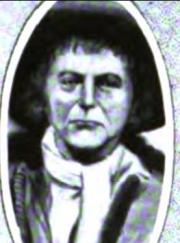
Jim Bridger Keeps His Job

On June 15, 1866 Colonel Henry B. Carrington defied orders from the U.S. War Department to fire mountain man Jim Bridger from his position as Carrington’s  expedition guide. Instead, he gave Bridger a raise, to $10 a day.

Carrington’s expedition was tasked with opening a wagon road around the Big Horn mountains to Montana, across Sioux and Cheyenne treaty lands. The road was needed to enable miners to get to the gold fields in the West. The gold from the mines was needed to pay Civil War debts.

It isn’t clear why the War Department wanted to fire Bridger, but Carrington’s response to the order is clearing up. He reported that it was “impossible of execution.” Then he doubled Bridger’s pay from $5 a day to $10 a day. Bridger stayed on, and assisted Carrington not only with opening the road but also “subduing” the Sioux and Cheyenne and building Fort Phil Kearney.
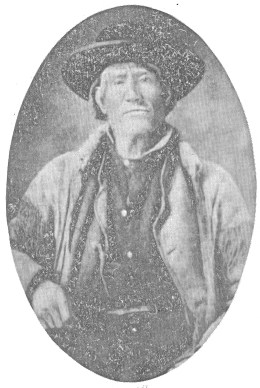
June 15 illustration.Jim Bridger.vestal
Source: Jim Bridger, Stanley Vestal


This was the last of Jim Bridger’s big adventures. He would return to Missouri, where by 1875 he was completely blind. He died in mid 1881.

Bridger had been active in the West since the early 1820s. He is said to be the first American to discover the Great Salt Lake and crossed South Pass, an important link in the United States’ westward expansion, in 1827. After he founded Fort Bridger in 1843, it became an important stopping place along the Oregon Trail.

Although Bridger spent little if any time in New Mexico, he and trappers and guides like him were instrumental in breaking down the barriers, for good or ill, between New Mexico and the United States. If the story of the War Department’s decision and Carrington’s response has anything to tell us, it’s that even in their own time, the activities of these men met with a mixed reception, even in the United States.

Source: Stanley Vestal, Jim Bridger, mountain man, U of Nebraska P, Lincoln, 1946.
Old Bill Williams Begins His Adventurous Life

On this day June 3, 1787, one of the West’s most memorable mountain men, William Sherley Williams, was born in North Carolina. The fourth of nine children, he was called “Will” by family members, although before he was 40, his fellow mountain men were calling him “Old Bill.”

The Williams family moved to Missouri when Bill was 9 years old. Seven years later, at 16, Bill left home to live among the Osage Indians. Twenty-one years later, after the death of his ostrich wife and the dissolution of the reservation, Bill headed west. He would become a legendary mountain man, known as much for his eccentricities as his prowess in the wilderness.

The lean, 6’1”, red-headed Williams was based in Taos and had a propensity for hunting beaver on his own, or with only a camp-follower as a companion. Where he went was anyone’s guess–he also had a propensity for keeping his hunting grounds secret.

Before he left home, Williams had received an education that included training in Greek and Latin. This, along with excellent hunting and tracking skills and a gift for languages, gave him a self-confidence that didn’t suffer fools gladly. Especially people who doubted his geographic knowledge of the West.

This strong personality was bound to get Williams in trouble when he encountered someone with a similar character. In Williams’ case, this was former Army Colonel John C. Fremont.

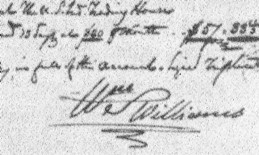
June 3 illustration.Bill Williams signature.favour
Bill Williams signature. Source: Old Bill Williams, A. H. Favour

In late 1848, Fremont hired Williams as guide for an expedition into the Rocky Mountains to identify an all-season railroad route to California. When Williams insisted that the expedition should veer from the route Fremont had already identified, Fremont relieved Williams of his guide duties and gave them to others.

Unfortunately, Williams was right. Fremont’s route was a mistake. Winter set in with a vengeance and Fremont’s men were trapped in the Rockies. Only 21 men of Fremont’s original 32 made it out alive. Although this would include Williams, he would die a couple months later, trying to retrieve valuable records and medical equipment that had been left behind.

So, while Williams’ vivid personality and self-confidence made him a legend in his own time, it also cut his time short. But the stories of his exploits would live on, and some of us still wonder just where those secret beaver hunting grounds actually were.

Sources: Robert Glass Cleland, This Reckless Breed of Men, UNM Press, Albuquerque, 1976; Leroy R. Hafen, Ed., Fur Trappers and Traders of the Far Southwest, Utah State UP, Logan, 1997; Alpheus H. Favour, Old Bill Williams, Mountain Man, U of Oklahoma P, Norman, 1962

The Year of the Little Doves

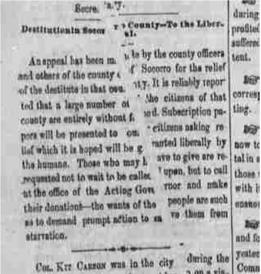
Folks in Socorro County called 1862 the “year of the little doves,” but they weren’t talking about birds. They were speaking of locusts. That Spring, an unusually heavy snow pack in the northern mountains that spring caused major floods along the Rio Grande. In Socorro County, the river was more than a mile wide in places. Newly planted corn and wheat fields, peach orchards and vineyards were inundated, and many acequias were destroyed.

Then the “little doves” arrived. By the time the locusts had left, the County was stripped clean and its inhabitants were close to starvation.

Relief was slow in coming, because the Territory was caught up in pushing back the Navajo depredations that had followed hard on the heels of the Confederate invasion. There were also concerns that the Confederates would try again.

May 28 blog illustration
Source: Santa Fe Gazette, May 2, 1863

But help did eventually arrive. In early May, the Santa Fe Gazette printed a plea for help and donations began to pour in. They came from as far north as Arroyo Seco and as far east as Maxwell’s Ranch on the Cimarron. Leading citizens in Taos, Arroyo Seco, Placitas, Cordova, and Espanola contributed $356.  Antonio Baca and Francisco Aragon of Arroyo Seco, Francisco Sanchez of Placitas, Pascuel Martinez of Ranchita, Jose Dolores Tafolla of Cordova, Pedro Antonio Vigil of Cordilleras, and Juan Antonio Espinosa and Juan Suaso of San Francisco del Rancho donated 141 fanegas of wheat between them, and Taos’ Fr. Gabriel Ussel raised $82 from his parishioners.

So, while the locusts had destroyed their crops in 1862, “little doves” of help came to Socorro’s rescue in 1863. It was a long time to wait, but help did eventually arrive.


Source: Jerry D. Thompson, A Civil War History of the New Mexico Volunteers & Militia, UNM Press, Albuquerque, 2015.   Pages 215-221

Fur Catch Causes Nothing But Trouble

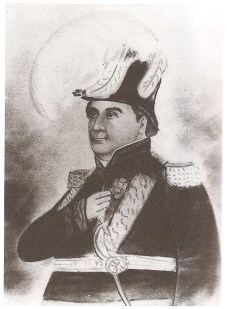
Ewing Young had thirteen 90-pound packs of beaver fur in his possession in early May 1827, and he wasn’t interested in having them confiscated. According to the rumors, outgoing Governor Narbona was cracking down on trappers without the proper permissions and incoming Governor Manuel Armijo was likely to be even stricter than Narbona.

So Young did the only sensible thing an American trapper could do. He hid his furs at the Pena Blanca home of his associate Luis Maria Cabeza de Baca.

But he had neglected to realize that some of the men with him might have different ideas about the most sensible approach to government mandates. A member of his trapping party, Ignacio Sandoval, told officials in Santa Fe what Young was up to.

From that point on, things took a turn for the worse. Governor Narbona ordered soldiers to Pena Blanca to confiscate the furs and, in the process, Luis Maria Cabeza de Baca was killed. Then Manuel Armijo became governor on May 20 and signed an order for Young’s arrest for illegal trapping. Young seems to have talked his way out of that predicament and instead got permission to clean the confiscated furs. He and the Santa Fe alcalde were in front of the governor’s long adobe palace, shaking out and inventorying the furs, when another member of Young’s trapping party appeared on the scene. Milton Sublette grabbed a bundle of pelts and made off with them.

When Sublette and the furs disappeared, the governor blamed Ewing Young. He called Young to the palace and threatened him with jail. Young turned on his heel and walked out of Armijo’s office, but he wasn’t free for long. And when the soldiers did catch up with him, he was thrown in the calaboza, where he languished until he became ill and was finally released.

May 15 blog illustration.Armijo, Manuel.illustrated history of nm
Source: Illustrated History of New Mexico,
Reed

But he didn’t get his furs back. Many of them had been badly damaged by rain leaking through the roof of the building where they were stored, so they were sold for about two-thirds what they would have brought in good condition. The total was still a decent amount, about $3500. But it’s not clear who received the resulting funds. After all, the plews were government-confiscated property.

Sources: Carl P. Russell, Firearms, Traps, and Tools of the Mountain Men, Skyhorse Publishing, 2010; David J. Weber, The Taos Trappers, University of Oklahoma Press, 1970.

Mixed Experiences for Wool Ranchers on the Santa Fe Trail

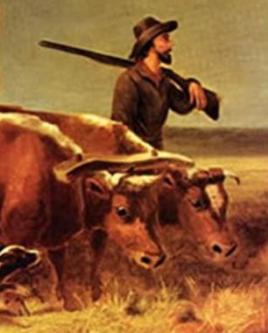
In early May 1868, Hispanic sheep ranchers from across Northeast New Mexico headed east on the Santa Fe Trail from Las Vegas. Five hundred men were taking 200 ox-drawn wagons filled with wool to the Eastern markets. The ranchers had no sacks for theit wool, but that didn’t stop them. They piled their cargo into their wagons, tramped it down, covered it with sheets, and moved out.

The ranchers’ caravan included at least 3200 oxen and over 500 horses and mules. To protect the animals not actually pulling cargo, the wagons traveled in two parallel columns, with the horses and extra oxen between them. About 100 men rode in front to watch for hostile Indians.

May 4 blog illustration
Source: http://www.oregontrailcenter.org/HistoricalTrails/MulesOrOxen.htm


The Arkansas River was in flood when they reached it, and the caravan rested on the south bank for three days and waited for the water to subside. The crossing itself took another six days. The wagons full of wool were so heavy that 14 pairs of oxen were needed to get each one safely to the other shore.

Once everyone was across, relays of escorts from the newly established Santa Fe trail military forts accompanied the train to its destination. All in all, it seems to have been a good experience and the ranchers returned to New Mexico with a satisfactory financial outcome.

Their experience was a good deal more positive than Charles Blanchard’s later that year.  Blanchard, a French-Canadian who’d settled in Las Vegas a few years before, also hauled loose wool east on the Trail that summer. He and 12 other men took their cargo to Ellsworth, Kansas, the then-terminal end of the Kansas Pacific Railroad. They reached Ellsworth in July and Blanchard sold his wool and traded his ox team and $2000 in cash for 66 mules and 10 wagons.

So far so good. But shortly after Blanchard and his friends headed towards home, they were attacked by Indians, who ran off all the caravan’s animals, including Blanchard’s new mules. The 13 men took refuge at Fort Dodge, where they remained until October, when the trail was deemed to be again safe for traffic.

Clearly, the lesson here for men looking for new wool markets in the late 1860’s was to go early in the Summer, and well armed with vecinos.

Source: Howard Bryan, Wildest of the Wild West, 1988, Clear Light Publishers, Santa Fe

Fur Smuggling in New Mexico, 1827

In April 1827, as Thomas L. Smith returned from a rough, though productive, fur trapping season, he learned that there was a new Mexican Governor in New Mexico and he not as sympathetic as past administrations had been to Americans who trapped without the required permits. In fact, the new Governor was on the hunt for Americans with illegal furs.

Smith decided that the only way to protect his plews was to smuggle them to Taos, where the border was more porous and he was likely find someone willing to take the risk of smuggling them over the Mexican/American border to Missouri. Accordingly, Smith and his trapping partners skirted Santa Fe and headed north.

April 27 illustration.Thomas Smith.Hafen Vol IV
Source: Mountain Men and the Fur Trade of the Southwest, Vol. IV, Leroy R. Hafen

After a close brush with the law at an outlying cabin, they made it to the small settlement of Riitos. Here, they hid the packs of furs among the trees and stopped for breakfast. The people were neighborly and came out to offer the trappers tortillas and eggs. However, the local kids  discovered the packs in the trees. Smith did some quick thinking and explained that the furs were hidden because the sun would damage them. No one objected to this explanation, and the trappers continued on their way.

They hid the furs in a cave near the Rio Grande and rode into Taos the next day, where Smith was able to make the necessary arrangements. Although illegal and somewhat dangerous, Smith’s approach seems to have been the wiser one.

Ewing Young’s party cached their furs a little too close to Santa Fe, in the Pena Blanca home of a gentleman named Cabeza de Baca. De Baca’s help led to distaser for his family: When the soldiers arrived to confiscate the furs, there was an altercation and de Baca was killed.

Young’s furs were lost as well. When Young attempted to retrieve them from the Santa Fe authorities, he was imprisoned and only released when he came down with a debilitating fever. Eventually, the furs were sold at a fraction of their value. It’s unclear who ended up receiving the little money they brought in.

So, while Thomas Smith circumvented the law, he did make a profit. Ewing Young wasn’t so fortunate. It was a lesson that the American trappers would take to heart. The Mexican government would continue to try to keep the trappers under control, and the Americans would do their best to avoid that supervision.

Sources: Mountain Men and the Fur Trade of the Far West, Vol. IV, Leroy Hafen, Arthur H. Clarke Company, Spokane, 1966; The Taos Trappers, David J. Weber, U of Oklahoma, Norman, 1971.

Mexico Establishes Citizenship Requirements

On Monday, April 14, 1828, Mexico’s Congress spelled out the conditions under which foreigners could become Mexican citizens. The rules were simple: They had to have lived in Mexico at least two years and be Roman Catholic, employed, and well-behaved. If these conditions were met, the governor of the Deparment could issue a certificate of citizenship.

It seems to have taken a while for word about the new law to get to New Mexico, but once it did, at least twelve French-Canadians and Americans applied for citizenship the following year. One of these men was John Rowland, trapper, trader, and owner of both a Taos flour mill and a Taos Lightning distillery.

April 14 illustration.John Rowland.Hafen Vol IV
John Rowland. Source: Mountain Men and the Fur Trade of the Southwest, Vol. IV, Leroy R. Hafen

Rowland didn’t remain in New Mexico, although he did remain a Mexican citizen. In 1840, he and his England-born distillery partner William Workman, supposedly without their knowledge or consent, were named temporary commissioners for the Republic of Texas. Feelings against Texas were strong in northern New Mexico and the two men’s apparent support for Texas and the hated 1841 Texas-Santa Fe expedition was enough to make New Mexico too hot for them. In 1841, they emigrated to California.

Both men did well in California. Workman became an important figure in the Los Angeles business community and Rowland became one of California’s most important wine manufacturers while continuing his work to produce both flour and distilled spirits. He died in 1873 and was buried in the cemetary of the Catholic church built on the 48,790 acre Rancho la Puente, which he co-owned with Workman.

Sources: Mountain Men and the Fur Trade of the Far West, Vol. IV, Leroy Hafen, Arthur H. Clarke Company, Spokane, 1966; The Taos Trappers, David J. Weber, U of Oklahoma, Norman, 1971.  www.homesteadmuseum.org

By the Judge in His Sternness

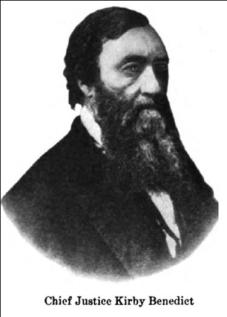
On Thursday, March 28, 1861, in Las Vegas, New Mexico Territory, Judge Kirby Benedict sentenced Sapello resident Paula Angel to hang for murdering her lover Juan Miguel Martin after he broke off the relationship. Inexplicably, Judge Benedict granted Angel’s lawyer, Spruce M. Baird, permission to appeal the verdict, but then ordered that the appeal could not be used as to delay her execution. In addition, Benedict ordered Angel to pay the cost for her trial and hanging.

While this sounds unfair, territorial law called for cost to be “recovered” from a convicted defendant. It was common for the property of convicted defendants to be auctioned off and the proceeds used to pay court costs. The Territory paid a convicted defendants prosecution costs only if the Sheriff certified that they weren’t able to pay and had no salable property.

March 28.Kirby Benedict.Twitchell Leading Facts Vol II
Source: Leading Facts of New Mexico History,
R. E. Twitchell

Paula Angel was hanged on April 26, 1861. She is believed to be the only woman hanged in New Mexico Territory. But she hasn’t been forgotten partly because popular poet, and her cousin, Juan Angel wrote a long folk ballad about her crime and death. Here are a few of the lines.

To Las Vegas I was taken

by the judge in his sternness;

in the jail. I was placed,

surrounded by a thousand fears,

like a disgraced woman

in the town of Sorrows.

The jurors judged me

according to my crime;

to death. They sentenced me

because I killed Miguelitio. . .

Goodbye, pious women,

those of you who know how to feel;

look closely, do not become entangled,

do not allow yourself to be seduced.

Open your eyes, do not desire

a death like mine.

Sources: Howard Bryan, Wildest of the Wild West, Clear Light Publishers, Santa Fe, 1991; Aurelio M. Espinosa, The Folklore of Spain in the American Southwest, U of Oklahoma Press, Norman, 1985; Robert J. Torrez, Myth of the Hanging Tree, U of NM Press, Albuquerque, 2008.


Every Man for Himself

In March 1867 Larry Bronson, Peter Kinsinger, and R.P. Kelley returned to Willow Creek and the gold they found there the previous fall. Now they were back, even though others were there before them. But even though they weren’t first on the scene, they still managed to do well by themselves, with five 200 foot claims near their original discovery point.

It’s not clear whether anyone had yet contacted the man who owned the land that they were so busily excavating. Willow Creek ran from Baldy Mountain into the canyon of the Cimarron River. All of the land in question was part of the Maxwell land grant owned by Lucien Bonaparte Maxwell and his wife Maria de la Luz Beaubien, whose inheritance it was.

Bronson, Kinsinger, and Kelly took out 14 ounces of gold that summer alone, then contracted for water rights from Bear and Willow Canyons so they could proceed on a larger scale. This involved moving from gold pan mining to hydraulic equipment. With 40 inches of water and 6 inch hoses to spray the rocks out of the hillsides, the company they formed became one of most productive operations on Willow Creek.

In the end, even Lucien Maxwell and his wife did well, partly as a result of the value of the Baldy Mountain area mining. In early 1870, they sold the entire land grant to a consortium of European investors, while retaining key portions of the grant, including mining claims on the east side of Baldy and water rights along Willow Creek. The men who bought the grant seem to have been confident that they also would do well from the gold and silver mines. However, things didn’t pan out quite as they’d hoped. The Maxwell Land Grant and Railway Company was in default by the early 1880s.

But then again, right from the beginning, mining in the area had been based on “every man for himself.”

Sources: Moreno Valley Writers Guild, Lure, Lore and Legends of the Moreno Valley, Columbine Books, Angel Fire, 1997; Larry R. Murphy, Philmont, A History of New Mexico’s Cimarron Country, UNM Press, 1972; Leo E Oliva, Fort Union and the Frontier Army in the Southwest, Division of History, National Park Service, Santa Fe, 1993; J. Rush Pierce, Red River City, JRP Publications, Red River, 2008; 1870 U.S. Census Records, Elizabeth City precinct; 1880 U.S. Census Records, Baldy/Ute Park precinct.


Spring Equals Trappers in Taos

It happened every spring in the early 1800s: Taos was invaded by trappers, either future or current. It made law enforcement rather complicated

In 1817, Jules DeMun didn’t even make it to Taos before he was headed off by a contingent of Spanish soldiers, who had been sent out in response to rumors in Taos that DeMun and his partner Pierre Chouteau had 20,000 Americans camped on the Purgatoire River, set to invade New Mexico. Even though the rumors weren’t true, DeMun and Chouteau were ordered to return to St. Louis. Somehow, they talked the soldiers into allowing them to travel north before heading east, ostensibly to avoid the Pawnee. Of course, they didn’t head directly to St. Louis. They trapped, supposedly outside of the boundaries of New Spain.

When news of Mexico’s independence from Spain reached the United States in 1821, things only got worse. Trappers and merchants could now enter New Mexico legally, but they still had trouble following Mexico’s rules. Up to this point, the Sangre de Cristo mountains had provided a protective barrier between Taos and incursions from the eastern plains. But they didn’t stop the Americans. In fact, the mountains were a great place to cache furs before smuggling them east to Missouri without paying export taxes. And Taos was still the favorite way to enter, especially if you were doing something slightly illegal. There were just so many ways to get there from the Santa Fe trail, which paralleled the mountains between it and Taos.

March 8 Illustration.Dick Wootton.Twitchell vol 2 source
“Uncle Dick” Wootton, Source: Leading Facts of New Mexico History, R.E. Twitchell

It got so bad that Mexico Customs Officer Juan Bautista Vigil y Alarid had to deputize Rafael Luna as Taos’ border guard. Even that wasn’t enough. Eventually, Alarid authorized Luna and Taos Alcalde Severino Martinez to use the militia to intercept the Americans.

Calling out the militia seems like overkill until you realize how valuable the furs in question were. In 1837, “Uncle Dick” Wootton brought furs worth $25,000 into Taos. And that’s just what he was willing to pay the tax on. The trappers had incentive to skirt the law. And the Mexican authorities had incentive to try to keep them from doing so.

And so each spring the dance began again….

Sources: Den Galbraith, Turbulent Taos, Sunstone Press, Santa Fe, 1983; Leroy R. Hafen, Fur Trappers and Traders of the Far Southwest, Utah State UP, Logan, 1997; Joy L. Poole, editor, Over the Santa Fe Trail to Mexico, U of Oklahoma Press, Norman, 2015; David J. Weber, The Taos Trappers, U of Oklahoma Press, Norman, 1971.