Manuel Armijo’s Verbal Skills Save Santa Fe!

On Monday, September 18, 1837, word reached Santa Fe that the rebels who had been so successful in August were approaching the capital again. The threat of Manuel Armijo’s troops wasn’t enough to keep them away.

And Armijo had a crises of confidence. He who’d been named head of the New Mexico militia by his rico compatriots asked Judge Juan Estevan Pino to take command.  When Pino declined, Armijo’s political skills kicked in. He might not know military tactics, but he did know people.

He sent word to the rebels that he wanted to negotiate. Pablo Montoya, now head of the rebels, took the bait. The insurgents camped five miles north of the capitol and negotiations commenced via correspondence.

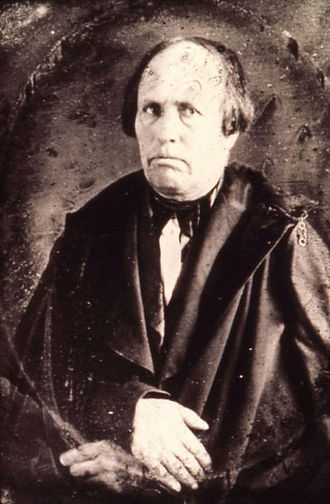
Sept 28 illustration.Manuel Armijo
New Mexico Governor Manuel Armijo

Eventually, Armijo invited Montoya to come into town to talk. The talks, though somewhat contentious, were ultimately successful. The rebels agreed to dissolve their organization, turn over four of the initial instigators, and recognize Armijo as New Mexico’s political and military leader.

The negotiations were undoubtedly facilitated by the fact that the rebels were short on guns and ammunition, and—without Jose Angel Gonzales’ presence—military organization and discipline. In addition, not all of them considered Armijo an enemy. He had a track record as a former governor who did what he could for the people of New Mexico, even if it meant bending or judiciously ignoring Mexican law.

The treaty was signed on Thursday, September 21, and the rebels disbanded. The conflict was over. But not really. As part of the deal, Jose Angel Gonzales was released from the Santa Fe jail where he’d been lingering the last couple weeks. He was back in Chimayo with his wife and family by the end of the month.

It was a decision Armijo would live to regret. Rebellion still stirred in northern New Mexico. It wouldn’t break out again in full force until the following January, but it would break out. Armijo’s political and verbal skills delayed the conflict, but they didn’t end it.


Sources: Lansing B. Bloom, “New Mexico Under Mexican Administration,” Old Santa Fe Magazine, Vol. II, Santa Fe: Old Santa Fe Press, 1914-1915; Fray Angelico Chavez, But Time And Chance, The Story of Padre Martinez of Taos, 1793-1867, Santa Fe: Sunstone Press, 1981; Janet Lecompte, Rebellion in Rio Arriba, 1837, Albuquerque: UNM Press, 1985; Rubén Sálaz Márquez, New Mexico, A Brief Multi-History, Albuquerque: Cosmic House, 1999; F. Stanley, Giant in Lilliput, The Story of Donaciano Vigil, Pampa, TX: Pampa Print Shop, 1963.

INHERITANCE

In the middle of the night, the baby began wailing frantically.

“¡A redo vaya! Good heavens!” Ramona said, sitting up in bed. As she slipped from the blankets, Carlos grunted but didn’t open his eyes. Ramona paused to look down at him, and shook her head. How a man could sleep through that much crying was beyond her comprehension. He must be very tired from the digging he did for the Baldy Mountain miners every day.

As she crossed the room to the baby, she rubbed her ears with her fingers. The Spring wind was howling, which always made them uncomfortable.

She lifted Carlito from his blankets and opened her nightdress. He began suckling eagerly, whimpering a little as he did so, and rubbing his free hand against the side of his head.

So his ears were uncomfortable, too. She looked down at him as she walked the floor, and sighed. He had a lifetime of discomfort before him and there was nothing she could do about it.

from Valley of the Eagles

Manuel Armijo Marches Into Santa Fe

On Thursday, September 14, 1837, former New Mexico governor Manuel Armijo and his combined troops, about 1000 men, marched into Santa Fe to begin the push against the rebels who’d captured the city in early August.

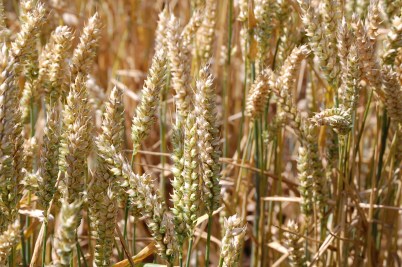
The rebels had already left town. They’d installed Jose Angel Gonzales as governor and returned to their homes in Santa Cruz de la Canada, Chimayo, Truchas, and Taos. After all, it was the harvest season. They had wheat and other crops to harvest in preparation for the coming winter.

In Santa Fe, Manuel Armijo faced a similar lack of resources at the governmental level, but he was apparently less uncomfortable requisitioning what he needed.  This included seizing three large wagons to carry  provisions and also soliciting contributions from American merchants Jesse Sutton, John Scully, Luis and Antonio Robidoux, and David Waldo as well as New Mexico’s ricos, especially those who lived south of Santa Fe.

Money even came from Padre Antonio Jose Martinez in Taos. Martinez was probably feeling particularly anxious that the rebels be quelled. Even though he’d returned to Taos earlier in the month at the rebels’ request and come to terms with them, they still weren’t happy.

Not only did they want him to perform marriages, baptisms, and burials for alms, rather than the customary fees, they also wanted their dead buried inside the church. Martinez refused, saying he didn’t have the authority to do so and warning that anyone who undertook such a burial faced excommunication.

Sept 14 illustration.wheat

Nothing he said made a difference. The rebels seized the Los Ranchos de Taos chapel and buried a corpse by the chancel steps. When the Padre remonstrated, they gave him a document saying they took full responsibility.

By doing this, the rebels denied the priest’s authority in this and other areas of their lives.  While Manuel Armijo, in Santa Fe, was preparing physically for the coming altercation, the rebels in Taos were preparing mentally, establishing themselves and their comrades as the arbiters of their temporal and spiritual destinies.

They would need that self-assurance in the weeks to come.

Sources: Fray Angelico Chavez, But Time And Chance, The Story of Padre Martinez of Taos, 1793-1867, Santa Fe: Sunstone Press, 1981; Paul Kraemer, An Alternative View of New Mexico’s 1837 Rebellion, Los Alamos Historical Society, 2009; Janet Lecompte, Rebellion in Rio Arriba, 1837, Albuquerque: UNM Press, 1985; David J. Weber, The Mexican Frontier, 1821-1846, Albuquerque: UNM Press, 1982.

CULTURE CLASH

Ewing Young and his trappers were well into the Gila wilderness and moving steadily through its rocks and pines the afternoon the string of four men and three mules came into view. The strangers were working their way up a dry arroyo that intersected with Young’s path.

Young held up a hand and his men all stopped in their tracks and watched the other group scramble toward them, though Enoch Jones huffed impatiently at the delay.

“Chalifoux!” Young said when the newcomers got within speaking distance. “I thought you were trapping south with James Baird.”

“Baird, he is dead,” the tallest of the two long-haired Frenchmen said. “La maladie, it got him.”

“I’m sorry to hear that.”

“We came on anyway,” Chalifoux said. He gestured behind him. “Me, my brother, Grijalva, and him.”

The men behind Chalifoux nodded at Young politely. The youngest, the one with the dark skin and tightly-curled black hair, seemed to tense as Young’s gaze landed on him, but Young only nodded absently and turned to Chalifoux. “We’ve got thirty in our troop,” he said. “I figure that’s about all the Gila can handle at any one time. You headin’ that way?”

“It is as God wills,” Chalifoux said. “Perhaps to the north, toward the salt bluffs[1] of the Navajo.” He scratched his bandanna-covered forehead and nodded toward the third man in his small train. “Grijalva here, he shot a buck.” He jerked his head toward the pack animal being led by the dark-skinned young man. “A good size one. You want we share the meat tonight?”

“Sure, why not?” Ewing Young grinned and jerked his head toward the end of his own train. “Fall in behind and we’ll help you to cut that deer down to a more packable size.”

The Frenchman’s party stood and waited as Young’s men filed past. The trappers eyed the dead buck with interest. A good meal of venison would make for a pleasant evening.

But it wasn’t quite as pleasant as it could have been. The visitors produced whisky to accompany the meal and Enoch Jones took more than his share. Jones was apt to be more surly than usual when he drank and the presence of the young black man seemed to aggravate him.

He was leaning sullenly against a large rock that jutted from the ground a few yards beyond the fire, nursing yet another drink, when the younger man approached, a small book in his hand. The stranger crouched down beside the stones that circled the fire, opened the book, and angled its pages so the light would fall on them.

Jones scowled and leaned forward. “What’re ya doin’ there?” he demanded. He set his tin cup on top of the big rock, stepped forward, and nudged at the black man with his foot. “Hey! I asked a question! What’re ya doin’?”

The man looked up. “I’m reading,” he said. He turned the book so Jones could see the spine. “It’s a play by Mr. Shakespeare called Othello.”

Jones scowled at him. “What’s yer name, anyway?”

“I’m called Blackstone.” The man considered Jones for a long moment, then asked. “And what is your name?”

Jones stalked away into the night. Blackstone’s eyes followed him thoughtfully, then returned to his book.

But Jones was back a few minutes later, followed by Chalifoux. Jones jabbed a thumb toward Blackstone. “You see what he’s doin’?” he demanded.

Chalifoux grunted. “It appears to me that he is reading.” He turned away, but Jones blocked his path.

“That’s illegal!” Jones said. “Ya can’t let him do that!”

“He is a free man, Mr. Jones,” Chalifoux said. “He can do as he likes.”

Jones’ face turned red. “He’s a nigger! He ain’t allowed t’ read!”

Chalifoux raised an eyebrow. “This is a new law? One I know nothing of?” He turned to Blackstone. “What is this law?”

The younger man looked up, moved a small ribbon to mark his place, and closed the book. “I believe there is a law in South Carolina which makes it illegal for slaves to learn to read or write.” He shifted the book into his left hand, lifting it as if its very bulk was pleasant to him. “However, as you say, I’m a free man. So the law wouldn’t apply to me even if we were still in the United States.”

“Which it is certain we are not,” Chalifoux said. He bent, picked up a stray pine cone, and tossed it into the fire.

Blackstone glanced at Jones, then away. “And there’s certainly no such law here,” he said.

“Damn uppity nigger!” Jones said. He surged past Chalifoux, leaned down, and grabbed Blackstone’s arm. “You talkin’ back t’ me?”

Blackstone rose in one easy motion, elbowing Jones aside. “I was speaking to Mr. Chalifoux,” he said evenly.

Jones reached for the Shakespeare, but Blackstone lifted it out of his reach. Then Jones’ foot struck sideways, into Blackstone’s shin, and the younger man stumbled and lost his grip on the book, which landed, page end down, on the stones beside the fire.

“You bastard!” Blackstone turned and shoved Jones with both hands. Jones sprawled backward, away from the fire and onto the ground beside the big rock.

Blackstone swung back to the fire and the Shakespeare, but Chalifoux had already leaned down and lifted it away from the licking flames.

As the Frenchman handed the book to Blackstone, Jones heaved himself from the ground. He was halfway to the fire again, his fists doubled and ready for battle, when Ewing Young stepped from the darkness.

“What’s goin’ on?” Young asked.

Jones stopped short. “Nigger bastard sucker punched me!” he growled. He glared at Blackstone. “You ain’t seen the last o’ me.” Then he turned and stalked into the night.

“Is he always so pleasant, that one?” Chalifoux asked Young.

Young spread his hands, palms up. “There’s one in every bunch.”

Chalifoux shrugged expressively, then tilted his head back to study the trees and the stars overhead. “We will move north in the morning,” he said. “My party and me to the salt bluffs, I think. They tell me they are a sight worth the seeing.”

from Old One Eye Pete
Padre Martinez and His Brother Flee Taos!

Early the morning of Saturday, September 2, 1837 someone got news to Padre Antonio Jose Martinez in Taos that his life was in danger. Even though the rebels had taken over New Mexico’s government in August, they were still after anyone who hadn’t complained loudly enough about the men they’d killed on their way to power.

In Taos, that included Padre Martinez and his brother Santiago, a local judge appointed by the authorities in Santa Fe. Apparently, Santiago had been appointed by former Governor Albino Perez. His position and his life were now at risk.

As the oldest of the Martinez siblings, Antonio Jose took charge. The brothers fled south to Santa Fe, probably along the rocky but shorter route that skirted the Rio Grande river. It seems to have been a harrowing journey. By the time they reached Santa Fe on Sunday, Padre Martinez was ready to flee all the way south to Durango and the bishop, perhaps even to give up his Taos ministry.

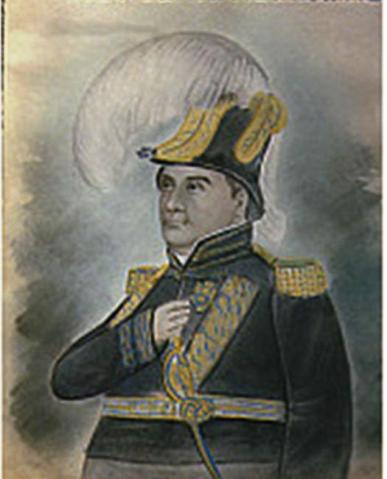
Sept 3 illustration.Martinez, Antonio José
Padre Antonio Jose Martinez

But then his other brother, Jose Maria Martinez, arrived with a message from the rebels. They begged the Padre to return to help restore order in Taos and promised that if he did, they would receive him, and presumably Santiago, well.

So he turned around and headed back, but this time with protection. The rebel-appointed governor, Jose Angel Gonzalez, accompanied him.

Even Gonzales’ presence didn’t smooth the way completely. The rebels had conditions. If Padre Martinez didn’t appear before them and retract his approval of the previous administration, he would still be at risk.

Negotiating with the rebels took time, and Governor Gonzales stayed in Taos several days while they and the Padre reached an agreement: Martinez would disavow his previous allegiances and also promise not to ask for fees for baptisms, marriages, and other church ceremonies.

Then Governor Gonzales headed back to the capital. While he’d been away, the leaders of the counter-revolutionaries had met in Tomé, organized their own men, and issued their own set of ultimatums. Their representatives met Gonzales at the door of the Governor’s palacio and took him into custody. Padre Martinez’ refusal to immediately give in to the Taos rebels’ demands had cost their leader his freedom.

 Sources: Fray Angelico Chavez, But Time And Chance, The Story of Padre Martinez of Taos, 1793-1867, Santa Fe: Sunstone Press, 1981; Paul Kraemer, An Alternative View of New Mexico’s 1837 Rebellion, Los Alamos Historical Society, 2009; Janet Lecompte, Rebellion in Rio Arriba, 1837, Albuquerque: UNM Press, 1985; David J. Weber, The Mexican Frontier, 1821-1846, Albuquerque: UNM Press, 1982.