NOT MY FATHER’S HOUSE – Chapter 6

CHAPTER 6

Her hand is still wrapped in bandages several mornings later. She’s sitting on the front porch, watching the Ute puppies play and studying the pattern of gold on the western slopes, when a scrawny mountain man, his long red hair clumped in rough braids, rides into the yard. He’s hunched forward over his sorrel mare, his shoulders almost touching his knees, which are level with the horse’s withers. A pack mule trails behind him on a leather lead.

Suzanna smiles. “Well, Mr. Old Bill Williams,” she says. “It’s good to see you again. How long has it been? Since last fall? I see you’ve found a horse to match your hair.”

“Well now, you know what they say,” the mountain man says. “Caballo alazán tostado, primero muerto que cansado. A sorrel-colored horse would rather die than show fatigue.” He pats a long red braid. “I figured I’d get me a horse that could righteously match me for stamina.”

Suzanna laughs and stands up. “I’m sure even a horse with her endurance must need rest and sustenance. Let me show you where to house her.”

He glances over his shoulder toward the barn. “Oh, I can find my way,” he says. “You just set there and rest yourself.”

“I’ve been resting all morning and I’m about ready to go out of my mind.” She lifts her bandaged hand. “I can’t clean, I can’t sew, and I can’t garden.”

Old Bill laughs. “Now that is a trial. Are you tellin’ me that your pa sent you into the mountains without a righteously sufficient supply of reading material?”

“Even turning pages is difficult,” Suzanna says. She steps off the porch. “Come, I’ll show you where to store your tack.”

If Suzanna wants someone to talk to her, then Old Bill Williams is the man. He has plenty to tell her. “You know I went huntin’ beaver with Sylvester Pratte and his bunch up in South Park last season,” he says as he settles onto a porch bench with a tin cup of water in his hand. He glances down at the cup, its sides sweating with moisture. “This is righteously tasty well water, but you don’t happen to have anything stronger, do you now?”

Suzanna shakes her head. “But I can make you some tea,” she says. “I’m not completely incapacitated.”

He grins. “Well, now, tea isn’t quite what I had in mind.”

She chuckles. “I didn’t think for a moment that it was.” She tilts her head. “We heard a rumor that Pratte took fifty men with him to South Park. Is that true?”

Williams snorts. “More like thirty. Which was still too many. Pratte always did have ideas that were too big for actual implementation.”

Suzanna frowns. “Did have? Has something happened to him?”

“Got bit by a dog and died. Your old friend St. Vrain up and took over for him and we brought back a righteously good catch, in spite of all the commotion.” Williams salutes her with his cup and takes a long drink. He shakes his head. “Well, it most certainly isn’t whisky, but it’s dandy well water.” He leans forward and studies the well in the center of the yard, the adobe bricks that form the lower half of the log barn, the rows of corn and the hayfields in the vega below, the men at work with their scythes. “You all have been keepin’ yourselves occupied.”

“Gerald and Ramón have worked diligently to get us situated for winter,” Suzanna says. She lifts her bandaged hand. “I was trying to do my part when this happened.”

“Burnt it, did you? Tryin’ to do kitchen work?”

She nods ruefully and Old Bill snorts self-righteously. “Your pa keepin’ you out of that kitchen was a sure-enough mistake, to my way of thinkin’. But he was settin’ you up for bigger things. Better than what your ma ever had. Or was.”

His eyes rake the snow-topped mountains to the west. “Yes sir, and then you went and married a—” He slides her a look, then shifts on his bench, adjusting himself. “Married a farmer,” he says. He tilts his head back. “Hah! And one that’s hell-bent on settlin’ just about as far away as he can get from any kind of righteous civilization.”

He shakes his head and studies the mountain slopes on the other side of the valley. “You seen any Injuns yet?” He turns and looks at the cabin door. “You do have a firearm close enough for grabbin’, don’t you?”

Just then Gerald and Ramón top the path from the valley. They cross the yard to the porch, tools over their shoulders. “Well, that’s the last of the hay,” Gerald says. “Hello, Bill! Where’d you drop in from?”

“You got a firearm she can use while you’re down in the fields?” Williams demands.

“It’s right inside the door,” Gerald answers mildly. He turns to Suzanna. “How’s the hand?”

She grimaces. “Still aching. I wish I had a prickly pear pad to put on it.”

“I haven’t seen any prickly pear up here.” He glances toward the hill behind the house. A few yucca plants are scattered on the drier parts of the slope. Their pointed pale-green spines contrast sharply with the dark-green ponderosa clustered at the top of the hill. “Will yucca do?”

“No, it’s not the same. I wish I’d asked Encarnación to bring me some prickly pear pads to plant.”

“That would be a good food source, if they will grow up here,” Ramón says. “We should send word.”

Suzanna nods and shifts her hand to her shoulder, an old trick Encarnación has always said will speed healing. “In the meantime, I wait,” she says, trying to keep the frustration out of her voice. She turns to Old Bill with a smile. “But Mr. Williams has been keeping me entertained.”

Gerald and Ramón lean their tools against the cabin wall and move forward to clasp the older man’s hand, then go inside to dip their own cups of water from the bucket in the kitchen. When they come back, they settle on the porch benches, and Suzanna turns to Williams. “So tell us what happened to Sylvester Pratte.”

“Well, you know he rounded up a bunch of us to go huntin’ in South Park and along the Platte River last fall. Right before we headed out, he was visitin’ some woman with one of those little yap-hammering dogs and it bit him.”

Ramón chuckles and Williams laughs. “Yep, nobody seems to know who the dog belonged to or why it decided Pratte needed bitin’, poor devil,” he says. “I figure the woman’s true man put a spell on the dog to keep Pratte away.” He grins. “Or maybe Pratte’s wife back there in St. Louis did a little voodoo.” He turns to Suzanna. “Anyhow, the bite got righteously infected and the poison seeped into his blood.” Williams grimaces. “I’d rather get caught by Comanche than die all swelled up like that.”

Gerald glances at Suzanna, then gives Williams a warning look and changes the subject. “Pratte had half that group under contract, didn’t he? What happened with those agreements?”

“Oh, they all got together and talked St. Vrain into takin’ over.” Williams shakes his red head. “I’m not saying it was smart of St. Vrain to agree to do it. It’s risky enough to run your own outfit, much less somebody else’s, with contracts you didn’t set up. But it does say something about the youngster that they asked him to do it. Says he can do more useful things than what he’s been doin’, with his smugglin’ goods in across the mountains and undersellin’ those who don’t.”

“My father believes Ceran will go far,” Suzanna says. “Despite the smuggling rumors, men seem to just naturally trust him, even if he is only in his mid-twenties.”

“He does seem sensible enough,” Williams agrees. “More’n that fool Smith.”

“Smith was with that expedition to the Gila and Colorado that I joined a couple seasons ago,” Gerald says. “That group William Wolfskill and Ewing Young put together. Smith had an opinion about just about everything. Half-way up the Colorado, he and a few of the others split off and headed out on their own.” He shakes his head. “He was so opinionated, I think Young was glad to be rid of him.”

Williams snorts. “That’s Smith, sure enough. I heard he and that little bunch of his had a hell of a time before they made it back to the settlements. Served ’em right.” He stretches his legs into the patch of sunlight that’s moving across the wooden porch. “He was as opinionated this last season as he’s ever been, and now he’s a big hero for cuttin’ off his own foot.”

They all stare at him. Williams grins, flips his braids behind his back, and leans back against the cabin wall.

“Cómo fué eso?” Ramón asks.

Williams chuckles. “How indeed,” he says with a satisfied air. He looks at Suzanna. “You should of seen it. We got in a righteous bit of a scuffle with some Rocky Mountain natives and Smith took an arrow in his left leg.” He gestures toward his ankle. “Right about there. It shattered the bone. There was blood spoutin’ everywhere—” He looks at Suzanna. His gaze rests lightly on her midsection, then flicks away. “It’s a righteously bad thing to be tellin’ a woman.”

“My imagination will probably make it worse than it actually was,” Suzanna says.

“I wouldn’t be too sure about that,” Williams says. He looks away and studies the mountains as he speaks, choosing his words. “An arrow got him in the left ankle.” He waves toward his leg again. “Well, just above. It was quite a sight. He kept his head though, and tied it off quick, so the bleeding stopped soon enough. But the bones were sticking—” He glances at Suzanna apologetically, then turns his eyes back toward the mountains. “He decided it was too mangled to save, so he took a butcher knife to it.” He glances at the two men. “Did it himself.”

Suzanna’s bandaged hand goes to her mouth and Gerald growls, “I think that’s enough.”

Williams scowls. “She wanted to know.”

“I did,” Suzanna says. “Poor Mr. Smith! Is he all right now?”

“He and Milt Sublette got the foot and ankle off clean enough and tied up the leg. It appears to be healin’ well enough. There’s talk of making him a wood stump.” Williams shakes his head. “The man’s all mouth and fire, but he’s got gumption, I’ll say that for him.”

Suzanna shudders. “What a horrible thing. He’ll never be able to trap again.”

“Knowing Smith, I doubt a missing foot will stop him,” Gerald says. He looks at Old Bill. “Do you have anything less graphic and more pleasant to tell us?”

“Well, let’s see.” Williams scratches his head. “St. Vrain’s back in Taos, selling goods and prosperin’ well.” He grins. “Of course, no one he’s sellin’ to is demanding to know if any customs duty was paid on the goods.” He turns to Suzanna. “I saw your Pa as I passed through. He says to tell you hello and that he and that girl cook of his’ll be here for Christmas.”

Suzanna smiles in delight, then shakes her head at him in mock disgust. “That should have been the first thing you told me.”

Gerald laughs. “If you’d told her that first, she wouldn’t have even heard the rest.”

“But thank you for the message,” Suzanna says. She stands and moves into the cabin’s main room and toward the ladder to the loft. “I’ll just toss down some blankets and we can make up a pallet for you by the fire.”

The men move to follow her inside and Ramón heads to the kitchen. Suzanna, halfway up the ladder, suddenly gasps and stops, her bandaged hand in mid-air.

“Are you all right?” Gerald asks.

“I just put too much pressure on my hand.” She turns her head so he can’t see her face. The hand throbs and her stomach churns. She fights to keep her voice steady. “I just need a moment.”

“What’re you puttin’ on that burn?” Williams asks.

“I made an ointment from some dried prickly pear, but it’s not the same as fresh,” Suzanna says. She begins climbing again, careful to grip the ladder with her left hand and use her right forearm for balance. She maneuvers carefully into the loft, but the right hand has to accept some pressure no matter how she positions herself.

She bites her lip and drops onto the floorboards, waiting for the throbbing to lessen. Then she takes a deep breath and goes to the chest for the blankets Williams will need. As she tosses them down with her left hand, a wave of shaky nausea hits her. She takes a deep breath, pushing the acid away, steadying herself. Pain bites her hand and she gasps against it. She gulps hard, blinks the tears away, then peers around the ladder into the room below. “I’m going to remain up here,” she says, trying to keep her voice steady. “It’s too rough on my hand to go back down and then come up again.”

“I can fold my own blankets,” Williams tells her with a grin.

“I’ll bring a plate up to you,” Gerald says.

She nods gratefully to him and moves backward to sit on the pallet. The pain stabs again. As she bends over her hand, biting back the pain, Williams say, “She needs some fresh prickly pear on that.”

“It’s healing, but very slowly,” Gerald says. “Which is making her impatient, of course.”

Williams chuckles. “Suzanna Peabody impatient? That’s just righteously difficult for me to believe!”

Suzanna grins, in spite of the pain. “I heard that!” she calls and the men chuckle and move into the kitchen. “By the way, I hear your Pa’s gone north to the Yellowstone,” Williams says as the door closes behind them.

The red-headed mountain man’s blankets are empty when the others rise the next morning. Gerald returns from the barn to report that the trapper’s packs and mule are still there, but Williams and the sorrel are missing. “So there’s little doubt he’ll be back,” he says as they gather around the breakfast table.

Sure enough, the red horse and rider clop into the yard late that afternoon, a lumpy cloth bag tied behind Williams’ saddle.

“I’ve been down Cimarron canyon,” Williams says as he dismounts. He unties the bag and turns to Suzanna. “This here is what that hand of yours is needin’.”

She takes the bag with her left hand, shakes it slightly open and peers into it. She looks up with a blazing smile. “That is exactly what I need!” She turns to Gerald and tilts the top of the bag toward him. “Prickly pear pads.”

A few minutes later, she’s sitting at the kitchen table and Gerald is removing her bandages while Ramón gingerly disengages a thick pale-green oval pad covered with two-inch spines from Williams’ bag. As Williams hovers in the doorway, Ramón rinses the pad in water, singes it over the fire, then deftly scrapes the remaining needles off with a sharp knife. He fillets the green slab into two half-inch pieces and crosses the room to the table.

Gerald dabs at the wound with a damp cloth, then Ramón places a prickly pear pad, cut-side down on Suzanna’s palm and holds it in place while Gerald secures it with a fresh bandage.

“My palm feels better already,” Suzanna tells Williams. She nods at the lumpy bag on the work table. “And it appears that you’ve collected enough for me to plant some, as well.”

“That’s what I had in mind, all right,” Williams says. “Since there’s yucca on the gravel spots on these hillsides, I’m bettin’ pear cactus will grow up here too, if it’s given half a chance.”

Gerald straightens. “Once more I’m indebted to you.”

“Ah, it ain’t nothin’,” the mountain man says. “You’d of done it yourself, if you’d known where to look.”

Gerald nods, then frowns. “I don’t remember seeing prickly pear in the canyon.”

“It’s further down,” Williams says. “Where I found it really wasn’t canyon anymore.” He grins at Suzanna. “We’ve got to get those hands of yours righteously back in shape so you can take care of that baby that’s coming. That and plantin’ your plants. I saw you had maíz at the bottom of the hill. Are you gettin’ it to grow proper-like up here?”

“What I’ve been able to keep those rapacious raccoons out of has been growing, but it doesn’t seem to want to ripen,” Suzanna says. She moves her hand and winces. It still hurts, though not as much. “The growing season up here is remarkably shorter than it is at Don Fernando. We had snow showers off and on and the ground was half-frozen all through May, so I wasn’t able to plant until early June. Then keeping it watered was a challenge, since we had no rain until the July monsoons began.” Her eyes darken. “I lost a quarter of my plants. When the corn finally did start to form, the raccoons were more than inquisitive, the pernicious beasts. Nothing seems to slow them down much, not even Indian puppies.” She lifts her hands in disgust. “And the deer will be descending pretty soon. I’ll be surprised if there’s anything left to harvest at all.”

There’s a small silence, the men glancing toward the walls and the floors, carefully avoiding Suzanna’s eyes. Then Ramón turns to Williams. “How far north did you all travel this past season, Señor Bill? Did Señor Pratte’s party clean out the Platte River region completely?”

Two weeks later, Bill Williams has gone on his way, Suzanna’s hand is healing nicely, and the little corn that has matured is safely harvested and dried for planting the following season. It and the peas for next year are stored in the root cellar beside the strips of dried squash and ropes of garlic.

At least the squash and garlic crops were good, Suzanna thinks ruefully as she lifts her lantern over the cellar bins and shelves to see the results of her first season in the valley. The potatoes still need to be harvested, but they’re well covered with meadow hay and she hopes to winter them in the ground.

And now she has nothing to do. She hates the end of the growing season. The baby kicks just then and Suzanna chuckles in spite of her low spirits. She rubs her belly. “Yes, I know,” she says. “You’re going to keep me occupied soon enough.” She turns, looking again at the nicely-crowded cellar, then heads toward the door. “But in the meantime, I have nothing to do but clean and sew. How righteously enjoyable, as Old Bill would say.”

As she fastens the root cellar door and moves across the twilight-filled yard, Suzanna reflects that, if she were in Taos, her father would be creating a reading plan for the coming months and deciding which Latin texts she’s ready to tackle.

She could create her own reading and study plan. But somehow she doesn’t feel up to it. She’s just too restless. And bored at the same time. She needs to find something active to do while she still can. Before winter sets in completely.

You’ve just read the sixth chapter of the forthcoming novel Not My Father’s House by Loretta Miles Tollefson. You can order it now from your favorite bookstore or online retailer, including Amazon, Barnes and Noble, or Books2Read.

 

NOT MY FATHER’S HOUSE – Chapter 4

CHAPTER 4

The emptiness has just begun to feel normal again when a band of Ute Indians rides into the cabin yard.

Suzanna is on a bench on the porch, shelling peas, enjoying the mid-August warmth, and congratulating herself that the rabbits seem to be leaving the plants alone. Plants that are still producing. In Taos, their leaves would be turning yellow by now, the stalks withering in the heat.

She just wishes the pestiferous raccoons would stop snooping around her corn. This morning, she found a stalk bent to the ground, as if the furry black-masked lumps of mischief have been inspecting the ears to see if they’re ready to eat.

Her head is bent over the bowl of peas, fingers running appreciatively through the small orbs of damp greenness, when an unshod horse hoof thuds on the hardened-clay soil between the corral and the barn.

Suzanna lifts her head. A tall Indian man, his black hair chopped off at his chin in Ute fashion, watches her from the back of a brown gelding with white spots. Four horseback men and three boys on ponies cluster behind him.

Suzanna rises, clutching her bowl.

Then Ramón is behind her in the doorway, shotgun in the crook of his elbow. “Ah, Stands Alone,” he says. “Buenos días.” He steps onto the porch and waves Suzanna toward the cabin door as he nods at the men behind the Ute leader. “Many Eagles. Little Squirrel.”

“We have met before,” the man called Stands Alone says. He’s looking at Ramón, but his words are clearly for the benefit of the men behind him. “In this valley in the season of many snows.” He waves a hand at the grassland below. “We shared meat and bread in this place.” He nods at Ramón’s gun, his face inscrutable. “And now you have returned. In the place of Señor Locke?”

“El señor and I have returned together.” Ramón motions toward Suzanna, in the doorway now, holding her bowl of peas. “With his woman.”

Stands Alone studies Suzanna for a long moment. “It is well.” He turns to address the group behind him. “I have agreed to this thing.” He turns back to Ramón, whose shotgun still lies in the crook of his arm.

“You are safe here,” Stands Alone says. “My people listen to me.”

From the doorway, Suzanna sees a shadow cross the face of the man Ramón called Many Eagles, the man with a thin, prominent nose and one brow higher than the other. He doesn’t look as if he listens to anyone. Or answers to anyone but himself.

Ramón makes a welcoming gesture with his free hand. “You are welcome.”

“You are here as Señor Locke’s servant?”

“Señor Chávez is my partner.” Gerald says from the end of the cabin. He steps into the yard. “His welcome is my welcome.” He turns toward the porch. “And this is my wife, Suzanna, the daughter of Señor Jeremiah Peabody of Don Fernando de Taos.”

Stands Alone gazes at Suzanna for a long moment, then looks at Gerald. “Your woman is the daughter of the French Navajo girl and the New Englander? The woman called She Who Does Not Cook?”

Ramón chuckles. Gerald throws back his head and laughs. Suzanna shakes her head in embarrassment.

“We prefer to say She Who Plants,” Gerald says.

Stands Alone’s eyes twinkle. “I have heard that it is so.” Behind him, Many Eagles’ stallion moves impatiently. Stands Alone turns and gestures to one of the boys, who moves forward and smiles shyly at Suzanna. Stands Alone says something in Ute and the boy slides from his pony.

“This is my son, Little Squirrel,” Stands Alone says. He turns to Gerald. “I was told of your cabin and that there is maíz growing now in this valley. We have brought you a gift to keep the grazers and the mapache from the crops of your woman.”

A woven pannier with tied-down lids lies across the rump of Little Squirrel’s pony. At a signal from his father, the boy unties the nearest cover and reaches into the space below. He pulls out a bundle of brown and black fur and sets it on the ground. As the bundle resolves itself into a fat puppy, Little Squirrel places another one, this one more yellow than brown, beside it. “Un perro y una perra, a male and a female,” he says shyly.

Suzanna clutches her bowl of peas and eyes the puppies warily. She isn’t sure she wants a dog. Or two of them. They’ll simply be one more thing to see to. She has a baby coming and crops to tend to. That’s enough to worry about.

“They will be grown before the child can walk,” Stands Alone says. Suzanna glances up in surprise. Is her ambivalence that apparent? But the man is looking at Gerald. He nods toward the field below, where the corn plants stand in neat rows, leaves flowing in the sunlight. “They will protect el maíz. If it bears fruit.”

Suzanna’s lips tighten. “The cobs are forming well,” she says. “I see no reason to expect the crop to fail, if I can keep the raccoons out of it.” She glances at the puppies. They seem unlikely to be much use against grown raccoons. Then she looks at the Ute’s impassive face and softens. The young dogs are a goodwill offering, no matter how unhelpful they may turn out to be. “Perhaps the smell of them will be enough to keep the raccoons away.” She gives him a little nod. “I thank you.”

A glimmer of a smile crosses Stands Alone’s face. He nods back at her, then glances at Little Squirrel, who leaps back onto his pony. The boy maneuvers his mount away from the pups and toward the group by the barn.

Suzanna opens her mouth to invite the Utes to a meal, but Stands Alone speaks first. “Los mapaches will leave when the deer come, and they will be here soon. The snow in the hills will push them into the valley.” He looks toward the western slopes, which show no signs of yellow, though the aspens seem brighter than they were in July. “The leaves will drop early this year,” he says. “We go to Taos for winter blankets.” He nods abruptly to Gerald and Ramón and wheels his white-spotted horse toward the barn. He speaks a single word to his men, and then they’re out of the yard and moving due west across the valley.

Suzanna turns to Gerald. “Is there a more direct way to Taos than through Palo Flechado Pass?”

Gerald shrugs but Ramón nods. “There is a way there, past the sacred lake of the Taos Pueblo,” he says. “The trail is rugged, but it is more direct for those wishing to trade at the pueblo. It is also good for travel to the settlements north of Don Fernando, those of Arroyo Hondo and such. But one must go softly there and only in peace. The Taoseños set a watch there that is never broken. They have many sacred places in the mountains.”

The yellow-brown puppy has nosed its way across the yard and is sniffing at Ramón’s boots. He reaches down and lifts it by the scruff of its neck. “This is the female.” He sets the puppy back on its feet and looks at Suzanna. “What will you call them?”

She shrugs. “Perro and Perra? Boy and girl?”

Gerald chuckles. “Surely we can do better than that!”

“I don’t plan on being friends with them,” she says. “I have enough to do.”

Gerald and Ramón trade a look which Suzanna chooses to ignore.

“Spot and Brownie?” Gerald suggests.

“That’s not very original,” she replies.

Ramón grins. “Negro y Amarilla?”

“Black and Gold?” Suzanna chuckles. “That’s just as bad.”

Both dogs are now sniffling busily along the edge of the porch.

“Uno y Dos,” Ramón says.

Suzanna laughs. The two men grin at her. “One and Two,” she says. “Sure. Why not?” Then she grins. “But the yellow-brown female is Uno, not Dos.”

You’ve just read the fourth chapter of the forthcoming novel Not My Father’s House by Loretta Miles Tollefson. You can order it now from your favorite bookstore or online retailer, including Amazon, Barnes and Noble, or Books2Read.
Sabino’s Map: Book Review

Sabinos Map cover
Sabino’s Map, Life in Chimayó’s Old Plaza
by Don J. Usner
Museum of New Mexico Press, Santa Fe, 1995
ISBN 0-89013-289-5

Sabino’s Map is, I suspect, something of a rarity. It combines interviews with aging locals with an anthropologist’s research skills and fine eye for detail. That’s a difficult balance to achieve, but Don J. Usner does an excellent job arriving at and maintaining the necessary equilibrium.

This book is clearly the result of a labor of love, but it is also a very useful book for anyone who wants to know more about the history of the northern New Mexico village of Chimayo, its people, and its landscape.

Usner, who is related by birth to a good number of the people interviewed for this book, provides an extensive history of Chimayo which begins long prior to the first Spanish settlements.

The book is titled Sabino’s Map because in the 1950s a man named Sabino Trujillo hand-drew a detailed map of Chimayó’s Plaza del Cerro as it existed during his boyhood in the early 20th century. Sabino’s map identified each house on the plaza, who owned it at the time, the location of the acequias, where horses were pastured, where trees were located (or not), and a host of other detail. This detail forms the basis for and triggered the oral histories that provide much of the detail in the book.

This much detail, along with extensive interviews with people with plenty of stories to tell, could easily overwhelm a community narrative, but Usner does an excellent job of sifting through a wealth of knowledge and story to give us the nuggets that help the reader see what it might have been like to live in the Plaza del Cerro or its surrounding homes and farms in the late 1800’s and early 20th century.

Sabino’s Map is a beautifully researched and written produced book.

The Wind Leaves No Shadow: Book Review

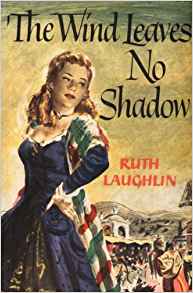
The Wind Leaves No Shadow cover
by Ruth Laughlin
Caxton Printers, 1951
ISBN-13: 978-0870040832

Doña Tules Barceló was one of New Mexico’s most colorful 19th century characters, and The Wind Leaves No Shadow is, as far as I know, the only fictional or non-fictional treatment of her life.

From humble origins, which Ruth Laughlin imagines effectively, Doña Tules became owner of a Santa Fe gambling establishment where political opponents could meet to arrange accommodations that worked for everyone involved. She also acted as a kind of informal bank, lending money to key actors at critical junctures in New Mexico’s history. Because her gambling house gave her access to information not available everywhere, she was a valuable resource for both the Mexican and the American officials. She is said to have provided information in late 1846 to Governor Bent’s administration about the incipient rebellion against the U.S. occupation, the one that would result in his death a couple months later.

Not much is known about Doña Tules’ life, and Laughlin uses this fact to her advantage, weaving a story that places her in Santa Fe by the mid-1820’s and keeps her there until her death in 1852. The result is a story that not only imagines Doña Tules’ life but also provides the opportunity for an inside look at events (the 1837 Tax Revolt, the 1846 U.S. invasion, the 1847 death of Charles Bent) and people (the fur trappers, the ricos, the Santa Fe merchants, the priests) in Santa Fe during this period.

The Wind Leaves No Shadow was originally published in 1951 and reflects the historical information available to the author at the time as well as the prejudices that period. Although I didn’t always agree with Laughlin’s interpretation of historical events, she does a really great job of incorporating them into an effective story line. I was also uncomfortable with her insistence on Doña Tules’ white skin, red hair, and green eyes. In Laughlin’s interpretation, her coloring sounds more Irish than Spanish. In spite of these caveats, I believe this is still a useful book. If you’d like to get some idea of the life and trials of New Mexico’s famous lady gambler might have been like, or you’d like a fictional interpretation of New Mexico’s history in the 1820-1850 time frame, I recommend this book.

The Lizard as Hero: Book Review

The almost-invisible lizard sunning himself on a rock or a log is a common occurrence  in New Mexico. I almost stepped on one in the garden this morning. However, I would never have thought to use a lizard as a metaphor for a detective and “fixer.” But Pamela Christie did, and the resulting books are a fascinating look at New Mexico in the 1780s.

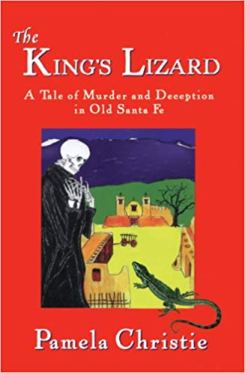
Kings Lizard cover

In The King’s Lizard, Christie introduces us to the Old New Mexico version of the invisible person—the half-Ute, half-Spanish Fernando “Nando” Aguilar who lives in a kind of limbo between his Spanish and Native origins. This liminal status makes Nando easy to overlook. But it also gives him access to both the Native and Spanish worlds, an access which makes him a valuable tool for Governor Juan Bautista de Anza.

Governor Anza has been tasked with creating a lasting peace with the Comanche. But there are men in New Mexico who don’t want peace. Unsettled conditions give them access to human contraband. And contraband sales fund a more-than-comfortable lifestyle. Nando becomes part of these men’s merchandise and then, after he escapes their clutches, the key to destroying the slave network as well as providing the Governor with a path to peace.

Dead Lizards Dance cover

In Dead Lizard’s Dance, Nando once again saves the day, sorting out a plot that not only threatens the Governor, but also his own family’s security. Rumors of witchcraft go hand in hand with the struggle to control the caravan of goods to and from Mexico that is the colony’s lifeline.

This particular novel also highlights the status of women in the colony, and it isn’t a particularly pretty picture. But Nando protects the women he can, including those who’ve exacted revenge on a man who’s made a life’s work of abuse and betrayal.

Lizard’s Kill appears to be the end of the road for Nando’s work for Anza, because the Governor’s term of office has ended.

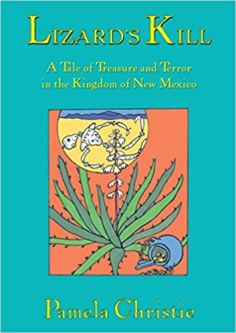
Lizards Kill cover

He’s on his way back to Mexico and retirement. But Anza has one more service he hopes to perform for New Mexico and only Nando Aguilar has the skills to achieve the impossible.

Christie brings a deep knowledge of a complex bygone world  to these three books, a knowledge that seems to expand with each story. Her writing and her observations about New Mexico life and politics in the 1780s grows more deft with each novel. If you’d like to know more about this period and are looking for a good mystery series to dive into I recommend these books.

Long live lizards!

P.S. All of these books are also available directly from Pamela Christie, who says she prefers direct contact with her readers. And she’ll also cut deals! You can contact her at christiepr@gmail.com.

INDECISION

Billy Dupre pulled his ivory-handled Colt pistol from its holster and laid it beside him on the granite boulder. He looked at the revolver thoughtfully, then twisted away to gaze at the valley below. The morning light was just beginning to turn the tops of the western mountains a pinkish-orange. He sighed and shook his head.

“You backin’ and fillin’ again?” a sleepy voice asked from the other side of the burnt-out fire.

Billy glanced around. “I can’t help it, Johnny,” he said. “I just can’t get to makin’ up my mind to killin’ a man just cuz I’m paid to do it. A man who never did nothin’ to me or mine. Someone I don’t even know.”

“You were in the army, same as me,” Johnny Kemp said. “You did it then, didn’t ya?”

“That was war. This is different.”

“And you’re from Missouri, same as me,” Kemp persisted. “Weren’t there no bushwhackers where you come from?”

“Yep, and I shot my share. But that was defendin’ my family and my home, same as when I joined up.” Billy looked toward the sunlit mountain peaks. “Not that it did me much good. By the time I got back, my ma was dead, my pa was half-crazy, and that Sally Ann–” He stood abruptly and nudged at the ashes in the fire ring with his booted toe. “There’s no embers left. You got a match?”

“That girl done and gone, didn’t she?” Johnny sat up and reached for his knapsack. “That Sally Ann?”

“It’s all done and gone.” Billy turned and began moving around the edge of the campsite, collecting small pieces of downed aspen branches. “All of it’s right done and gone.”

“So you should be wrathful enough to shoot just about any varmint that crosses your path.” Kemp stood, stretched, and began buckling his pants. “Cuz there’s no one left back there and no one here neither.” He grinned. “No one ’sides me.” He crossed to the boulder and hefted the Colt, then flipped it expertly, feeling the balance of the thing. “Nice gun,” he said.

“No, you can’t have it,” Billy said. He dropped an armload of wood beside the fire ring.

Kemp grinned, put the pistol back on the rock, and crossed to the firewood. “So what’re you gonna do if you don’t go to shootin’ for pay?” He crouched down, took out his knife, and began shaving bark into a small pile. “You gonna go back to laborin’ at one of those Etown sawmills? Become a mine flunky?”

“I might.” Billy went back to the big rock. He stared down at the valley as he reholstered the pistol. “We had us a farm in Missouri,” he said thoughtfully.

Johnny Kemp rocked back on his heels. An incredulous grin split his face. “You gonna be a farmer? A bug-ridden land-rich cash-poor dirt grubber?”

Billy Dupre stared at the sunlight touching the grasses below and glinting off the small streams that meandered across the valley toward the canyon of the Cimarron. “I might,” he said. “I just might.”

from Old One Eye Pete

Over The Trail to Mexico: Book Review


Over The Santa Fe Trail to Mexico cover
Joy L. Poole, editor
ISBN: 9780806157511
University of Oklahoma press, 2017

Early in the summer 1825, yet another young man joined a wagon train headed over the Santa Fe Trail to New Mexico.

This particular traveler’s name was Doctor Rowland Willard. Dr. Willard’s diary during his time on the Trail and afterwards in New Mexico, Chihuahua, and Durango has now been published with detailed notes and provides a fascinating look at life in Mexico in the second half of the 1820s.

As a medical doctor, Doctor Willard’s perspective was slightly different from other Americans on the Trail and in Mexico. However, in some ways it was very much the same — he was there to make money.

He spent less than six months in New Mexico and did not find there the financial success he was looking for. However, he did find it in Chihuahua. He returned to the States in 1828 with $7000 in cash.

Willard’s diary has actually been published before. Excerpts were included in the Western Travel Review in 1829 and two years later the entire diary was added as an appendix to The Personal Narrative of James Ohio Pattie. The physical diary disappeared into Willard family archives and didn’t resurface until  2005, when it began its journey to publication as Over The Santa Fe Trail To Mexico, the travel diaries and autobiography of Doctor Rowland Willard

This edition provides not only the diary but also Joy L. Poole’s extensive notes and Willard’s autobiography, published here for the first time. This book is worth its price for Poole’s notes alone, which provide the context for fully appreciating Willard’s experiences and observations.

If you’re a student of the Santa Fe trail or of New Mexico history in the late 1820s, Over the Santa Fe Trail to Mexico  will be a valuable addition to your library. If you’re simply looking for a good read about old New Mexico— or old Mexico— I would definitely recommend it.

Rosary Without Beads: Book Review

Rosary Without Beads cover
by Diana Holguín-Balogh
ISBN: 9781432844745
Five Star/Cengage, 2018

Rosary Without Beads has changed my mind about Billy the Kid.

I’d been told that, in addition to being an outlaw, Billy the Kid was also a lady’s man. That didn’t make him more attractive to me. A thug and a womanizer. Why would I find that appealing?

However, Diana Holguín-Balogh’s masterful fictional portrayal of Billy the Kid and a young woman who falls for him has me seeing Billy in a new light.

Rosary Without Beads presents a Billy who’s passionate about justice and fair play, and loyal to a fault—characteristics which end up placing him on the wrong side of the law. He also has a facility with English and Spanish that could sweet talk a rattlesnake out of its rattles.

Billy’s linguistic charm is a primary reason I like this book so much. Holguín-Balogh has a gift for writing broken English/Spanish so that it’s not only comprehensible, but has a music all its own. This is true not only of Billy’s verbal skills, but also of the other characters, especially the female protagonist, Ambrosia.

Ambrosia doesn’t have an easy life. She’s been promised to a man who would really rather have her sister. That’s bound to make a girl feel unattractive. So when Billy shows up and shows some interest, she’s pretty much swept off her feet. She doesn’t succumb to his charms easily, though. Holguín-Balogh does a great job of expressing this girl’s mixed emotions about Billy all the way through the novel.

I suppose I can safely tell you that the Kid dies at the end of this book. I suspect that’s a story most of us know. However, Rosary Without Beads presents a take on the usual explanations for the circumstances of Billy’s death, and what happens afterward, which may surprise you. But you’ll have to read the book for yourself to find out what that take is.

If you’re looking for a historical novel you can sink your teeth into and feel like you’ve learned something in the process, I recommend this book!