An Unhappy Country Has Arrived

An Unhappy Country Has Arrived

Aaaaaand. Drumrolls please! It’s here! My novel An Unhappy Country is now available wherever books are sold. And I’m celebrating with a sale!

It’s August 1846. The U.S. army has taken Santa Fe without firing a shot. The Mexican American War is over in New Mexico. Or is it?

Two days after the Army arrives, seventeen-year-old Jessie Milbank and her friends stumble on a man with a knife in his back in the Santa Fe plaza. Then someone close to Jessie’s friend Juanita is murdered. When an insurrection is suppressed in December, Jessie begins to wonder if the three events are linked. 

Were the murdered men part of a conspiracy to throw out the invaders? And were they the only ones hoping for a fight? After revolt does finally break out and the Americans suppress it at the battle of Taos Pueblo, yet another man is murdered. Will the reasons for his death provide clues to the earlier ones?

Early readers are raving about Jessie, the book’s insight into these little-known events, and the beautiful writing in this novel.

As I said, I’m celebrating with a sale.

The ebook is $.99 through the end of April. This is over 80% off its $5.99 list price. You can purchase it from your favorite e-reader outlet, including BarnesandNoble and Amazon.

The paperback is currently priced at $13.99. This is 26% off its $18.99 list price. You can order it through your local bookstore or from Bookshop.org, BarnesandNoble, and Amazon.

© Loretta Miles Tollefson

An Unhappy Country – The Countdown Begins!

An Unhappy Country – The Countdown Begins!

The thirty-day countdown to publication of my novel An Unhappy Country has begun!

It’s August 1846. The U.S. army has taken Santa Fe without firing a shot. The Mexican American War is over in New Mexico. Or is it?

Two days after the Army arrives, seventeen-year-old Jessie Milbank and her friends stumble on a man with a knife in his back in the Santa Fe plaza. Then someone close to Jessie’s friend Juanita is murdered. When an insurrection is suppressed in December, Jessie begins to wonder if the three events are linked. 

Were the murdered men part of a conspiracy to throw out the invaders? And were they the only ones hoping for a fight? After revolt does finally break out and the Americans suppress it at the battle of Taos Pueblo, yet another man is murdered. Will the reasons for his death provide clues to the earlier ones?

Early readers are raving about Jessie, the book’s insight into these little-known events, and the beautiful writing in this novel.

You can pre-order the e-book now for only $.99. It’s available at all e-reader outlets , including Amazon and BarnesandNoble. The paperback is available for pre-order at BarnesandNoble, as well.

Book Announcement: An Unhappy Country

Book Announcement: An Unhappy Country

I’m pleased to announce that my Old New Mexico novel An Unhappy Country will be published in April 2025. A murder mystery, this novel is set during the Mexican American war and focuses on events in New Mexico, which was invaded by the U.S. Army in August 1846. It features Jessie Milbank, an American merchant’s daughter who can’t leave well enough alone. Here’s the book description:

August 1846. The U.S. army has taken Santa Fe without firing a shot. The Mexican American War is over in New Mexico. Or is it?

Two days after the Army arrives, seventeen-year-old Jessie Milbank and her friends stumble on a man with a knife in his back in the Santa Fe plaza. Then someone close to Jessie’s friend Juanita is murdered. When an insurrection is suppressed in December, Jessie begins to wonder if the three events are linked. 

Were the murdered men part of a conspiracy to throw out the invaders? Were they the only ones hoping for a fight? After revolt does finally break out and the Americans suppress it at the battle of Taos Pueblo, yet another man is murdered. Will the reasons for his death provide clues to the earlier ones?

You can preorder the e-book from Amazon.com and other retailers at the special introductory price of $.99.

Nine Days of Christmas, A Tale of Old New Mexico

Nine Days of Christmas, A Tale of Old New Mexico

by Loretta Miles Tollefson

Christine is the only American girl in her New Mexico village. She badly wants to participate in the village’s traditional nine-day-long Christmas celebration, but her mother thinks she’ll be infected with “foreign” ideas. The village’s old women also think la gringa should stay home. Will Christine find a way to get what she wants? And what will she learn if she does?

Gabriela looked bravely into the young priest’s face. “Christina wants to sing in las posadas,” she said. She squeezed her blond americano friend’s hand. The two girls looked at each other triumphantly. There, she’d said it. She’d really and truly asked.

“For shame!” hissed the old woman at the priest’s elbow. She adjusted the black shawl that covered her head and glared at the two girls. “La americana es no catolica!” She stamped the ground with her cane and moved forward, trying to catch Padre Paul’s eye, but he remained stubbornly focused on the children.

“Have you consulted your parents?” he asked Christine.

The child’s eyes dropped and she shook her head.

“But she wants it!” Gabriela tossed her long black braids over her shoulders and bounced a little on her heels. “It’s important to her!”

The priest gave her a stern look. “What is the fifth commandment?”

The girls looked at each other and repeated in unison, “Honra á tu padre y á tu madre.” Honor your father and your mother.”

He nodded to Christine. “If your parents agree, you may participate in las posadas.” He lifted a stern finger. “But only if they agree.”

The girls nodded solemnly and turned away, heads together, plotting how best to obtain permission. Christine’s father would be easy. It was her mother who would resist.

“Humph!” The old woman moved forward again, boldly blocking the padre’s path. She tilted her black-covered head, looked him in the face, and tapped her cane on the ground authoritatively. “The American girl is not Catholic,” she repeated. “She is not one of us.”

The priest gave her a long look. “What you say is true, Señora Martín,” he said. “But she is a child and wishes to be part of our community. Would you deny her that wish?”

“She is a gringa!” María Antonia Martín snapped. “She knows nothing of la comunidad. And less than nothing of las posadas and its meanings.”

The priest’s mouth twitched. As a Frenchman, he knew only a little more about New Mexico’s  Christmas traditions than did the ten year old Protestant girl. “Participating in the rituals could bring her to a knowledge of the true church,” he said mildly.

“Humph.” The old woman turned away. “It is no matter. I am sure her mother will not allow her to participate.” Her lips twisted and she nodded toward the little village chapel behind the priest. “El sanctuario is undoubtedly safe from such a travesty.” The señora stumped off across the cold and dusty plaza. The priest watched her go. The black reboso that covered her head and shoulders merged with her long black dress and made her look from the back like a cloth-covered tree stump with two black feet.

A smile glimmered on Padre Paul’s lips, then he shook his head wearily and turned back to the church.

* * *

“And why in creation would you want to participate in such a travesty?” Christine’s mother turned from the cook stove, her long-handled wooden spoon in the air. “A clutch of villagers parading down the middle of a muddy street, making what they call music and screeching at the top of their voices.” She shook her head. “It won’t be like the services at Christ Church last Christmas,” she warned.

“I know it will be different from Philadelphia, Mama.” Christine tried to keep the impatience from her voice as she placed the dinner china on the rough wooden table. “But the songs they sing are very old and Gabriela says they are quite beautiful. They reenact the story of Mary and Joseph finding a place to stay in Bethlehem. It’s not for just one night like at Christ Church. It lasts for nine whole nights, and each night ends with food and drink and Christmas carols.”

“Not our Christmas carols, I’ll be bound!” her mother said. “And how will you know what the songs say? They’ll all be in that heathenish Spanish!” She shook her head and turned back to the pot of stew. “Nine days of Christmas. What will they think of next?” She shook her head. “I’ll not have you cavorting around with those Mexican children any more than you absolutely must.” Her eyes narrowed and she turned to look at Christine. “You were up quite early this morning, young lady. When I called you for prayers, you were already outside. Where did you go?”

Christine kept her eyes down as she straightened the knife and fork at her father’s place setting. “I was with Gabriela. She was talking to the priest.”

“What? The priest?” Her mother took a step away from the stove, then recovered herself, placed the dripping spoon on the counter and turned, her hands on her hips. “You stay away from that man, you hear? Catholic priests—” She paused. “Well. They are not good people, that’s all there is to it. They have a propensity—” She stopped again. “Not only is he Catholic, but—.” She shook her head and raised her chin. “I will not permit it!” she declared. “You stay away from that man and that church, or I’ll have your father whip you from here to next week! Do you hear me?”

Christine’s hands dropped to her sides. She stared down at the scarred surface of the wooden table. “Yes, Mama.”

“Good. That’s settled then.” Her mother turned back to the stove and began stirring the stew more vigorously than was strictly necessary. “Not only do I have to contend with primitive conditions and a lack of decent food supplies, but now my own daughter is being sucked down into the Catholic morass.” She lifted the spoon, knocked it sharply against the edge of the pot to remove the excess stew, and moved to the sink. “Nine days of Christmas, indeed. We’ve been six months in this dirty hell hole already and who knows how much longer? What that man was thinking is beyond my comprehension.” The spoon dropped into the sink and she whirled around and glared at her daughter, who still stood staring at the table. “And from now on, we will have prayers every morning and you will attend them,” she said, hands on her hips. “If you do not, you will be restricted to the house for the remainder of that day. Do you hear me?”

“Yes, Mama,” Christine said again, trying not to let the tears show in her voice. “I hear you.”

“Now go out and bring in more wood,” her mother snapped. “But not piñon. I don’t want the oven to get too hot, or the biscuits will burn again. I’d like them to be edible this time, for a change.”

Nothing was said at dinner about Christine’s desire to participate in the village’s Christmas procession, but her father could see that his women had been quarreling. He didn’t ask what the argument was about. He’d learned long ago that he had great authority over his mercantile operation,  but little or none in his household. Especially when his wife sat tight-lipped at the other end of the table and his daughter kept her golden curls between his eyes and her own.

He read to them after dinner, a little something from Miss Austen’s Pride and Prejudice while his women did their handiwork by the light of the fire. But even Mrs. Bennett couldn’t bring a smile to his wife’s lips.

After a bit, he set the book aside. “Something interesting happened at the store today,” he said.

She looked up, eyes smoldering. “I don’t understand how you can think that anything which happens in that shop is the least bit interesting,” she snapped. “Unless you’ve finally come to your senses and discovered that there’s no real money to be made trading in wool and we can leave this God forsaken place once and for all, and return to Philadelphia and civilization!”

He raised his eyebrows, opened his mouth, shut it again, then lifted himself out of his seat. “Well, I’m going to bed,” he said. “It’s been a long day.”

As he left the room, he heard a small sniff from Christine’s chair. He glanced back. The child’s  face was still bent over her work, but her hand had slipped up to wipe away a tear. He sighed and shook his head. Well, if she wanted badly enough for him to know what the quarrel was about, she’d find a way to tell him.

Sure enough, when he left the mercantile for lunch the next day, Christine was waiting at the bottom of the broad wooden steps in the brilliant December sunshine. She wore her bonnet, which he knew she despised, so he guessed that she was trying once again to accommodate her mother. He smiled to himself. The child must want whatever it was she wanted very badly. First the bonnet, and then coming to meet him this way. It wasn’t often that she joined him for his noonday walk home.

He slipped his hand over hers. “Hello, sweet girl of mine,” he said. “How has your day been so far?”

Christine tilted her head to one side. “All right, I suppose,” she said. “How has yours been?”

“Well, something happened yesterday that I thought you’d find interesting,” he said.

She lifted her chin. He could just see a slice of her face beyond the bonnet’s broad rim. “Is it what you were going to tell us last night?” she asked.

He nodded, pleased at the spark of interest in her voice. “Both clerks and all three laborers came to me yesterday,” he said. “They asked to leave early each evening for the nine days before Christmas. In fact, they suggested that I close the store up early on those nights. They want to participate in what they call las posadas. Do you know what that is?”

Her head jerked back and her delighted eyes blazed into his, then she turned back to face the dusty, hard-packed dirt street.  “I’ve heard of it,” she said indifferently. “Gabriela told me a little.”

He gave her a long, considering look. So that’s what she and her mother had been arguing about. “What did she tell you?”

“Just that it’s the old Mexican way to celebrate Christmas,” she said, still watching the street. “Only it’s not right at Christmas, it’s before, and they act everything out. And there’s music and singing, and they go from house to house and people give them good things to eat and the whole village—” She stopped, suddenly aware of the way her voice had risen with excitement and interest.

“That’s more than the men told me,” her father said. “Although it did sound as if the entire village participates in the event. The clerks don’t seem to think we’ll have any customers during those evenings.”

“The entire village except for me,” Christine said to the dusty street.

“What was that?”

Christine looked up at him bleakly. “I wanted to belong—” She caught herself. “To participate. Even if it was just a little of the singing for some of the nights. And Padre Paul said I could—”

“Padre Paul?”

“The priest. The one who comes every two weeks to say mass.”

“Oh yes. The Frenchman.”

“He said I should ask my parents for permission and if you said it was all right, then he would allow—” She bit back her tears. “But Mama said not to even think of it. And she was angry and said he was wicked. And I know he’s not. He’s a very nice man. And he wouldn’t be there anyway, not every night. It’s the village that makes the procession. The celebration goes on for almost a week and a half and the padre has other villages to tend to. Everyone in the village participates in las posadas and sings the different parts for the play, and Gabriela says it’s the most important event of the year and Mama is so—”

“Adamant,” her father said sadly.

Christine sniffed and nodded her head.

“She is afraid for you,” he said gently. “She wishes you to preserve your Protestant Episcopal faith and grow up to be a proper young lady.”

“She’s wrong about Padre Paul,” Christine said stubbornly. “He’s a nice man.”

“I’m sure he is,” her father said. “But I don’t think that’s the best point of argument to use with your mother.”

Christine giggled in spite of herself. She looked up hopefully. “Will you speak with her?”

“I’ll try,” he said soberly. “But I can’t promise you anything. And I’ll have to wait for the appropriate opportunity.”

She squeezed his hand. “I’ll wait,” she said. “And I’ll be patient and good and try not to aggravate her.”

He smiled down at her and they went on to the house, the child hopeful and the man a little sad at the thought that the two of them felt it necessary to plot in this way, that the girl knew so well the strategies she needed to implement to chip away at her mother’s resistance.

* * *

Tía Luz looked up from her handiwork as Gabriela entered the adobe casita. “You should be wearing your chal,” Luz scolded. “The cold is coming on. You don’t want to be sick for las posadas.”

The child crossed the room to sit on the adobe banco beside her aunt. She lifted a strand of the deep red wool yarn Luz was threading into her needle. “What a beautiful color,” Gabriela said. “What are you making?”

Luz lifted a small coverlet of white wool from her lap. Three red flowers bloomed along one edge. “It’s a new blanket for el niño cristo,” she said. “The grandmothers have decided the old one should be replaced and they asked me to create this for him.”

“It is a great honor,” Gabriela said listlessly.

“Oh child,” Luz said. “Are you still fretting about your friend?”

The girl shrugged and got up to poke another stick of wood into the curved adobe fireplace in the corner.

“It is a commandment,” her aunt said. “She must obey it.”

““Honra á tu padre y á tu madre,” Gabriela recited. “I know.”

“Besides, she is not from here.” Luz slid her needle into the soft white coverlet. “She knows nothing of our customs.”

“She could learn.” The girl came back to sit on the banco. She leaned against the adobe wall and watched the red flowers form under her aunt’s fingertips. “I could explain it.”

“She would not experience it in the way that you do.” Luz began to fill in the flower’s petals with long careful stitches. “You have las posadas in your blood. It is part of who you are. She would be merely a spectator.”

Gabriela was silent, not wanting to contradict her aunt, but not believing her either. How was it possible to participate in the Christmas procession and not be moved by its simple richness?

* * *

It had rained in the night and Christina was glad for what her mother called her “good thick American boots.” When she met Gabriela at the village well, she felt a stab of pity for her friend’s feet in their muddy Indian moccasins. But Gabriela met her with smiles. She bounced a little on her heels. “What did your father say about las posadas?”

Christine shrugged, her hands in the air. “He said he’d talk to mi mamá. All I have to do is be patient.”

Gabriela groaned. “How I hate it when adults say that!” The two girls giggled companionably as Gabriela lowered her bucket into the well and Christine once again admired the curve of the brown adobe village walls against the blue sky.

* * *

“This dirty little village in the middle of nowhere!” Christine’s mother sobbed. “I hate it!”

Christine, trying not to listen from her bed in the next room, heard a rustle. Then her father said something in a soothing voice.

“No! It will not be all right!” her mother said. “And Christine! What damage is this doing to her, this being thrown in with these dirty Catholic peasants? There isn’t even a school house! We need to get out of here, Stephen! For Christine’s sake, if not for mine! She needs proper schooling and to know how to behave around civilized people! The mercantile is just not bringing in enough to make coming here worthwhile!”

Christine covered her ears then, knowing what was coming, not wanting to hear her mother’s lamentations yet again. Silent tears seeped from her closed eyelids as despair settled over her. There would be no las posadas for her. Her mother hated this place and all it represented too much to allow her to participate in its rituals. All her mother wanted was to return to Philadelphia and “civilization.” The child turned, flopping onto her belly, and dug her chin into her pillow to stifle her sobs.

She woke the next morning feeling drained of all hope and dressed listlessly. There was no point in hurrying with her chores to meet Gabriela at the well, to see her friend’s disappointment when she heard the news. She might as well stay home, imprisoned between the barren board walls of this americano house, the only wooden house in the village. A house tight with bitterness and the smell of burnt cooking because her mother was unable to adjust to the heat produced so prodigiously by the local piñon firewood.

Christine wandered morosely out of her room and stopped at the end of the hall. Her mother was at the cook stove, pouring pancake batter. Christine’s father stood beside her, speaking firmly, his voice low.

“All right!” Christine’s mother snapped. “I said she could, didn’t I?” She scraped her spatula across the cast iron griddle and lifted a blackened pancake from the stove. “Now see what you’ve made me do! It’s scorched black! I tell you, I hate cooking here!”

He backed away, giving her room, and moved toward the front door. “I need to get to the store.” He smiled sadly at Christine as he turned. “Good morning, sweet girl.”

“Just one minute!” Christine’s mother slapped the burnt pancake into the sink on the other side of the kitchen and turned to glare at Christine, then her husband. “I want you to hear this. I don’t want any confusion about what I’m about to say.”

He stood, watching her warily. She nodded curtly at Christine, her lips tight. “Your father has decided you may participate in this nativity play,” she said. “I am not happy about it, but I won’t stand in your way.”

Christine brightened and opened her mouth. Her mother lifted the spatula. “However, there are conditions. You will not attend that papist mass at that so-called church, do you hear? And I expect you to participate in prayers with me every morning and before bedtime each night.”

“Yes, Mama.”

“Furthermore, you will memorize a psalm of my choosing each day. A psalm a day until Christmas, do you hear me?”

Christine hated memorizing. Let them be short psalms, she thought fervently. But she only said, “Yes, Mama,” again.

“And if I see you slacking in your chores in any way, your father will withdraw his permission.”

Across the room, Christine’s father opened his mouth, but his wife’s head jerked in his direction, her eyes flashing, and he closed it again.

She turned back to the girl. “Do you understand?”

“Yes, Mama,” Christine said meekly. She kept her eyes on the floor, afraid they would show her delight too clearly and cause the permission to be rescinded. She looked up only after she heard the front door close behind her father. Her mother was crouched in front of the cook stove’s open fire compartment, poking angrily at the fire logs in an effort to separate them and thus lower the stove top heat. Christine slipped back to her room to make sure her bed was made properly.

* * *

Gabriela and Christine stood at the edge of the group of villagers and clutched their shawls against the December night’s chill. Long black rebosas created a disapproving wall in front of them, shouldering the girls to the outer edge of the procession. This was the seventh night of las posadas and the cold shoulders didn’t seem to have softened at all.

Christine lifted her chin defiantly. She had worked hard to be here. She wasn’t going  to let her happiness be dimmed by people who disapproved of her simply because she was a gringa. Besides, Gabriela’s arm was linked in hers, and Gabriela’s voice was in her ear, explaining what was about to happen and translating the songs.

After six nights of the event, Christine didn’t really need this information, although she appreciated her friend’s affection and care. She stifled a yawn. Each evening had followed the same pattern: As daylight faded from the turquoise-blue sky, the villagers assembled in front of the tiny adobe church. The man and woman chosen to play Mary and Joseph this year sang the traditional songs for their roles as the small crowd moved slowly through the dark streets under flickering torches. Everyone chimed in on the choruses. The only real difference each evening was the house where the villagers finally stopped, the man who opened the door and sang the part of the innkeeper, and the quality of the refreshments provided afterwards.

Christine didn’t want to admit it, but she was becoming a little bored. The man who sang the part of Joseph had a really beautiful voice and Christine enjoyed listening to him, but it was cold out here on the edge of the crowd and she had heard it all before.

“En nombre del cie-e-e-e-lo os pido posa-a-a-ada,” he sang. Gabriela whispered the translation and Christine nodded impatiently. She already knew what he was singing:  In the name of heaven, I ask for shelter.

“Pues no puede andar-ar-ar-ar-ar ya mi esposa ama-a-a-a-ada,” he sang. Can go no farther, my beloved wife. Christine huddled a little closer to her friend and thought of the hot chocolate Gabriela had said would be served tonight. The host house was one of the wealthier ones in the village and the women there always served New Mexican-style hot chocolate. According to Gabriela, the drink would be different from anything Christine had ever tasted.

Christine licked her lips, thinking of it. They added cinnamon to the chocolate. That sounded odd, but she’d tasted odder things in her time here: burritos, enchiladas, chicharrones. And red chile sauce with everything. Sauce so hot that the inside of her nose burned at the thought of it.

The wind picked up, scattering tiny flakes of snow before it and bringing Christina back to the present. She stood on tiptoe to see the house’s blue-painted door. Its owner was singing the final verse of the innkeeper’s role. “Entren, peregri-i-i-i-nos,” he bellowed in a not very melodious voice. “No los conocí-í-í-í-í-í-í-í-ía.” Enter pilgrims, I didn’t recognize you.

Good, they’d be warm soon. Christina moved forward impatiently, but Gabriela giggled and tugged her back. The villager playing Joseph sang the response, then the crowd surged into the house singing, not all together, and not all in tune, the final refrain.

Christine joyfully lifted her voice. “Esta noche es de alegría, de gusto y de regocijo,” she sang happily. Tonight is for joy, for pleasure and rejoicing. “Porque hospedaremos aquí a la Madre de Dios Hijo.” For tonight we will give lodging to the Mother of God the Son.

The child’s clear little soprano soared above the others and Señora María Antonia Martín, who happened to be just in front of her, turned and scowled. “Silencia, niña!” the old woman snapped. “Tú es indecorosa!”

Gabriela giggled, but Christine flushed and fell silent. Unexpected tears sprang into her eyes and she hastily brushed them away.

Gabriela pulled on Christine’s arm and the girls edged away from the old woman, toward the front of the room. “Pay her no attention,” Gabriela whispered. “La señora is never happy with anything and no girl is ever silent enough for her.”

Christine flashed her friend a thankful smile but didn’t answer. Then they were at the edge of the crowd, where they could see the long wooden table laden with food. The hosts and their assistants moved between the guests and the table, bringing them hot beverages in small silver cups. Gabriela nudged Christine. “Look! It’s chocolate! I told you!”

Gabriela’s Aunt Luz was helping distribute the drinks. She came toward the girls and held out a cup. Gabriela reached for it, but her aunt looked at her reprovingly and said something in Spanish that Christine didn’t understand.

Gabriela stepped back and Luz offered Christine the cup. “Hace calor,” she cautioned. It is hot.

Christine curled her fingers around the warm silver. “It feels good,” she said. “Gracias.”

Luz smiled and turned away. Christine took a small sip. Her eyes widened and Gabriela giggled. Christine blinked hard. It was hot all right, but not from the stove. “Is it chile?” she asked.

Gabriela nodded mischievously. “It is polite to drink the entire cup,” she said. “It is rude to not drink all of it.”

Christine took a deep breath and lifted the cup to her lips. She would drink it all in one gulp and get it over with. She tilted her head and swallowed, but her throat rebelled at the chile’s scorching heat and closed against it. She choked helplessly. The laughing room fell silent and everyone turned to look at her. Chocolate spurted from her mouth and down her chin and Christine turned away, looking wildly for somewhere to hide her embarrassment.  

“Oh dear,” Gabriela giggled helplessly.

Then her Aunt Luz was at Christine’s elbow, a cloth in her hand. She steered Christine onto a cushioned bench in the corner  as she snapped “Leche!” at her niece.

“Lo siento mucho,” Luz said, bending over the girl. I’m so sorry. “Los chiles hacer mucha calor.” The chiles are very hot. She glared at Gabriela as she appeared with a large mug of milk and hissed something that Christine didn’t understand.

Christine drank the milk carefully, grateful for the way it coated and soothed the hot chile burn on her tongue and throat. “Gracias,” she whispered. The voices in the room rose again as the guests refocused on the food and the candy-filled piñata strung from the ceiling.

Luz patted Christine’s arm. “Los chiles hacer mucha calor,” she said again.

“She says the chiles are very hot,” Gabriela offered.

Christine nodded. She knew what the woman had said. More importantly, she heard the sympathy in her voice. She wished she knew enough Spanish to thank her properly for rescuing her. “Gracias,” she said again, looking her full in the face.

Luz smiled kindly. She turned to Gabriela with a frown and said something in rapid Spanish. Then she turned back to Christine, patted her shoulder kindly, and went back to the party.

“I’m sorry,” Gabriela said contritely. “I should have warned you.”

Christine nodded miserably. Then Gabriela giggled. She pointed at Christine’s chest. “The chocolate dripped.”

Christine looked down in dismay. A large brown blob decorated her dress. She closed her eyes against the threatening tears. She couldn’t just return to the party and pretend nothing had happened. Not with this reminder splashed down her front. She felt Gabriela’s hand on her shawl, gently rearranging it so the chocolate wouldn’t show, but she shook her head. “I want to leave,” she said.

Gabriela glanced toward the table. “But we haven’t eaten.”

“I’m not hungry,” Christine said.

Gabriela considered her for a long moment. “I’ll bring you some,” she offered.

Christine nodded and Gabriela disappeared across the room.

Christine hunched on the bench. She clutched the shawl around her shoulders and over her chest. Señora Martín stumped up with her cane, stopped directly in front of Christine, and stared into her face. She said something incomprehensible in Spanish, gave Christine a sharp little nod, thumped her cane twice on the floor, and moved on.

Christine looked bleakly at the crowded room, the bountiful table, the colorful piñata. A little boy’s stick whacked a hole in the piñata and candy rained down on the squealing children. It was all very picturesque. And the music was beautiful and very rich, although very different from home. Home. Wherever that was. Christine closed her eyes, suddenly overcome with a strange sadness.

Gabriela returned with a plate full of goodies and more milk, sent by their hostess to calm the americano girl’s tongue after the hot chiles. Christine accepted the milk gratefully and widened her eyes at the taste of the anise-flavored cookies Gabriela called “biscochitos,” but a part of her remained strangely removed from the evening’s pleasures.

An hour later, as the two girls said their goodbyes and slipped out the door, someone began singing a song from another Christmas play, one about the shepherds. The song was inexpressibly sad, something about Jesus being born to die for our sins. Christine shivered a little at the pain of it, so odd for a Christmas celebration and yet so hauntingly beautiful.

As Gabriela slipped through the big wooden door of her casa, Christine turned and touched the house’s outer wall. The adobe was slightly rough under her fingers and even now, at the end of a December day, it contained a bit of sun warmth. She patted the wall softly and mulled over the week’s events as she moved down the street toward the clapboard house at the village’s edge. Her mother was right. She didn’t belong here. And yet— If her father should give up the mercantile and return to Philadelphia, she suspected she wouldn’t feel that she belonged there, either.

She lifted her face to the now-clearing sky. This was a part of her now. The warm adobe walls, the broad blueness of the sky, the long horizons. Gabriela’s laughter.

Christine drew in a deep breath of spicy smoke. Someone was burning piñon in their fire tonight.  Even the wood smoke was beautiful. It seemed to surround her, then move on, leaving its fragrance behind. Somehow, the smoke reminded her of Tía Luz’s kind eyes. The girl smiled. Yes, it truly was all part of her. And she was part of it, no matter what Señora Martin or her mother might have to say.

THE END

© Loretta Miles Tollefson 2017

All rights reserved

New Mexico Books for the Historical Fiction Reader on Your Gift List

New Mexico Books for the Historical Fiction Reader on Your Gift List

Looking for gift ideas for the historical fiction reader on your list? Here are ten suggestions, alphabetized by author. They’re all set in New Mexico, of course.

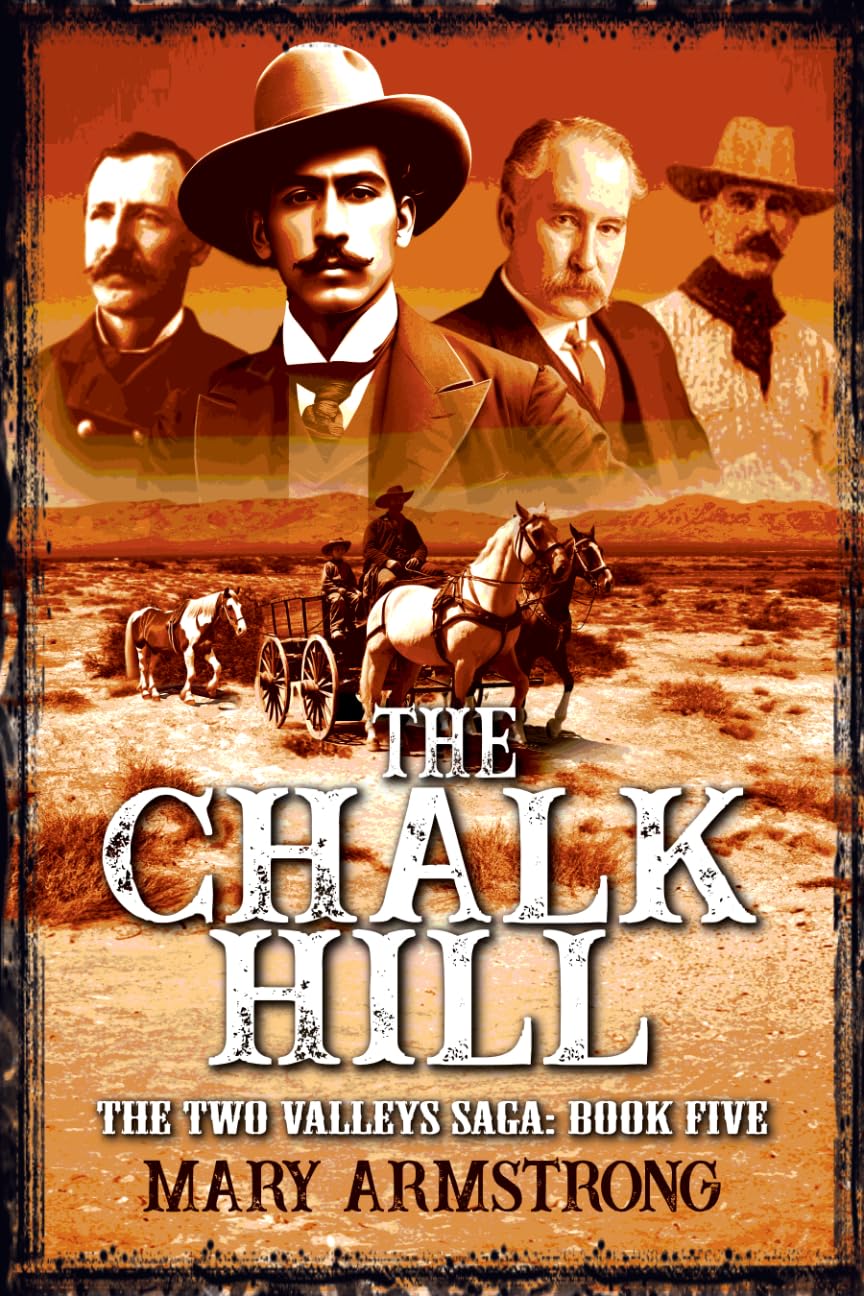
The Two Valleys Saga by Mary Armstrong
Titles: The Mesilla, The San Augustin, The White Sands, The Bisti Badlands. The Two Valleys Saga is a fictional account of the historical conflict between Colonel Albert J. Fountain and the Texas-transplanted ranchers in southern New Mexico’s Tularosa Valley. It is told as a memoir by Jesús Messi, a fictional nephew of the Colonel, writing many years after the late 1800’s events which left the Colonel and his young son dead. The bodies were never found, and no one ever convicted of their murders. A fascinating look at larger-than-life characters and the complexities of southern New Mexico politics and life during this period. This is a four-volume set, though each of the books can be read as a stand-alone novel. They’re available at bookshop.org, and Amazon, or you can buy directly from the author at maryarmstrongauthor.com.

Rebels Along the Rio Grande trilogy by Jennifer Bohnhoff
Titles: Where Duty Calls, The Worst Enemy, The Famished Country. This three-volume set of Civil War action and drama follows three boys through the conflict in New Mexico. Bohnhoff presents the issues of the war from three sides, the Confederate, the Union, and the New Mexican and portrays that complexity in a way that will appeal to young readers, parents, and people like me who just like a good historical fiction. Links to all three books, as well as information about them, the Civil War, and the opportunity to obtain a signed copy directly from the author, are available at jenniferbohnhoff.com

The Iliad and the Odyssey of Geronimo by W. Michael Farmer Geronimo
Titles: The Iliad of Geronimo, a Song of Blood and Fire; Odyssey of Geronimo. These two books provide a fictional account of the life of Apache leader Geronimo beginning ten years before his final capture and continuing during the twenty-three years of his final captivity. This is a character study as much as a biographical fiction, and provides unique insights into the Apache world, the warriors that filled Americans and Mexicans alike with terror, and the way Geronimo navigated captivity to become a national “superstar,” an astute businessman, a justice of the peace, an army scout, and a speaker of truth to power. Authentic, powerful, and exhaustively researched, award-winning author W. Michael Farmer paints Geronimo with an unflinching eye, presenting the good, the bad, and the ugly of one of history’s most feared and famous warriors.

You can find The Iliad of Geronimo at Bookshop.org and Amazon. The Odyssey of Geronimo is available from the same sources: Bookshop.org and Amazon.

Rosary Without Beads by Diana Holguin Balough
This novel made me see Billy the Kid with new eyes. This back-hills narrative of New Mexico’s Lincoln County War reboots the famous outlaw’s legend by showing us a young man who stands up for the oppressed. When he protects a sheepherder’s daughter, Ambrosia, from a drunken assault, he captures her heart. But life isn’t simple for Bonney or anyone he cares about. This novel reflects those difficulties without any easy answers. It’s beautifully written and left me with a more nuanced picture of “The Kid.” It’s available at Bookshop.org and Amazon.

Happy book shopping!

NOT JUST ANY MAN – CHAPTER 40 & Epilogue

NOT JUST ANY MAN – CHAPTER 40 & Epilogue

The following material is an extract from NOT JUST ANY MAN, A Novel of Old New Mexico, Copyright © 2018 Loretta Miles Tollefson. Published by Palo Flechado Press, Santa Fe, NM

A Note about Spanish Terms: This novel is set in northern New Mexico and reflects as much as possible the local dialect at that time. Even today, Northern New Mexico Spanish is a unique combination of late 1500s Spanish, indigenous words from the First Peoples of the region and of Mexico, and terms that filtered in with the French and American trappers and traders. I’ve tried to represent the resulting mixture as faithfully as possible. My primary source of information was Rubén Cobos’ excellent work, A Dictionary of New Mexico and Southern Colorado Spanish (University of New Mexico Press, 2003). Any errors in spelling, usage, or definition are solely my responsibility.

CHAPTER 40

Suzanna scowls sleepily at the lopped-off branches that brace the hillside lean-to. She burrows deeper into the bedding. At least there’s a bear skin to add some warmth. It’s early May in Taos. Everything’s blooming there. Here, it’s icy cold. If that man thinks she’s going to actually live permanently in this God-forsaken place, he isn’t thinking clearly.

“Wife?” Gerald asks from the open side of the lean-to.

She burrows deeper, covering her head.

Gerald chuckles and comes to kneel beside her. “I have a fire going,” he says. “I’ve toasted some of the bread Encarnación sent with us and am heating water for tea.”

Suzanna sighs and reluctantly uncovers her head. “All right,” she says.

“There’s a herd of elk on the other side of the valley,” he says. “I thought I’d try for one after breakfast. We could use the meat. Do you want to come with me?”

“I’m not staying here by myself.” She sits up. “Not until you’ve built me a cabin.”

He leans in to kiss her forehead. “I love you,” he says.

“And I you.” She shakes her head. “Though I still think you’re soft in the head. This valley is so isolated and cold. How does anything grow up here?”

He grins, stands, and goes out. “The water’s hot!” he calls from the fireside.

Suzanna grimaces and pulls the bear skin around her shoulders as she leaves the blanket. The shaggy skin drags the ground around her feet as she steps outside. The fire is crackling with warmth and the sky overhead is a luminous blue. She takes a deep breath of the clear mountain air.

The marsh where the Cimarron heads is at the base of the hill she’s standing on. On the other side of the marsh is yet another hill. Ramón moves among a half-dozen downed and debranched trees. Two mules browse on the grassy slope below, waiting to pull the logs to the cabin site.

Suzanna shakes her head and looks at Gerald, who is carefully pouring steaming water into a tin mug. “You do know that you’re both crazy, don’t you?”

He hands her the mug of steeping tea, then turns and waves his arm toward the valley below. “Just look at it,” he says.

She follows his gaze. The morning sun touches the long grasses on the valley floor and the tiny silver streams that weave through the spring green. A coyote trots purposefully along the base of the hill, where a cluster of elk browses peacefully. Nearer at hand, a red-wing blackbird trills in the marsh.

“There’s plenty of water,” Suzanna acknowledges. “And that vega grass should make excellent hay. I wonder what other plants lurk in it. Wild onions, I would imagine. And garlic.” She purses her lips. “There’s likely to be mint along the stream banks.”

 Gerald chuckles. She narrows her eyes at him, then grins.

He moves to stand beside her. His arm slips around her waist. “Hmmm,” Suzanna says. She tilts her head and lets it rest in the hollow of his shoulder. “I still think moving here is a crazy idea.” She shivers a little. “It’s much cooler here than in Taos. I suppose that’ll be nice in June and July, but right now it seems a bit chilly.”

Gerald nods noncommittally but doesn’t answer. They gaze at the long valley before them, the black-green of the pines on the slopes of the snow-topped mountains opposite, the brighter green of the grassland below.

Suddenly, Suzanna twists out of Gerald’s arms and leans forward to peer at the flat piece of land between the hill they’re on and the marsh. “I wonder if I can get corn to grow up here,” she says. “Certainly potatoes.”

Gerald grins triumphantly, then wipes his face smooth as she turns back to him.

Her eyes narrow. “If you think I’ll be satisfied that easily, you’d better think again, Mr. Locke,” she says severely. Then she laughs. “That cabin had better have glass windows!”

“Yes, ma’am, Mrs. Locke,” he says, his eyes dancing as she leans in to be kissed.


EPILOGUE

“Well, that young Gerald Locke has gone and got himself set himself up in conjugal bliss.” Old Bill turns the bent beaver trap in the firelight. He can’t righteously plan on it holding together until they get back to Taos. He sure hopes Jerry Smith has showed up by then. This needs the touch of an expert.

“Yeah?” Milton Sublette asks. “Who to?”

“Señorita Suzanna Peabody, no less.”

“Well, I’ll be.” Sublette frowns. “Does her daddy know about Locke? What he is?”

“Oh yeah. He knows Locke’s Daddy. Trapped with him back when they both first come out here. Him and Locke and that Ramón Chavez. They were quite a team.”

“And?”

“The girl says she don’t righteously care what Locke is or where he comes from. He’s the man for her.”

“Does she actually know? Did they tell her?”

Old Bill shrugs. “Now that I don’t truly know, but I wouldn’t think so. Not unless she wanted to know. And if she doesn’t, I’m sure not going to be the one to inform her. Our Suzanna’s a strong-willed piece, but she’s ours and I don’t aim to spoil her pleasure for her, if knowing who her man’s Daddy is would spoil it. Besides, Locke’s a good man and that’s all that righteously matters.”

“Yeah, it don’t matter. And the only man stupid enough to care and bastard enough to tell her is dead and gone.”

“And by the hand of her man.”

“Fair fight and a man who deserved to die, if ever there was one.” Sublette stirs, easing his leg and grunting a little at its stiffness. “Well, I wish young Locke luck,” he says. “With that gal’s opinions, they could be in for quite a ride.”

Old Bill chuckles. “That they righteously could be.”

THE END

Copyright © 2018 Loretta Miles Tollefson

NOT JUST ANY MAN – CHAPTER 39

NOT JUST ANY MAN – CHAPTER 39

The following material is an extract from NOT JUST ANY MAN, A Novel of Old New Mexico, Copyright © 2018 Loretta Miles Tollefson. Published by Palo Flechado Press, Santa Fe, NM

A Note about Spanish Terms: This novel is set in northern New Mexico and reflects as much as possible the local dialect at that time. Even today, Northern New Mexico Spanish is a unique combination of late 1500s Spanish, indigenous words from the First Peoples of the region and of Mexico, and terms that filtered in with the French and American trappers and traders. I’ve tried to represent the resulting mixture as faithfully as possible. My primary source of information was Rubén Cobos’ excellent work, A Dictionary of New Mexico and Southern Colorado Spanish (University of New Mexico Press, 2003). Any errors in spelling, usage, or definition are solely my responsibility.

CHAPTER 39

“I have not asked you many personal questions,” the tall thin man in the black coat says. His eyes sharpen on the younger man’s face. “My daughter says they aren’t important. I disagree, but she insists.”

Gerald steadies himself and looks into Jeremiah Peabody’s face. “If you ask it of me, I will tell you everything,” he says.

Peabody’s face darkens. “I have determined not to pry,” he says stiffly. Then his lips twitch and he waves his hand in the air. “It is between you and Suzanna,” he says. “You will answer to her, anyway.”

A great wave of relief unbinds Gerald’s chest. He tries not to smile too giddily. “Suzanna has spirit as well as brains,” he acknowledges.

“And that is what I wish to speak to you about,” her father says. “Your history is a matter between you and my daughter. But your treatment of her is a matter between you and myself.”

Surely it can’t be this easy. Gerald opens his mouth, but Peabody raises a hand to silence him. “As you know, I have not raised Suzanna to be a common household drudge,” he says. “She has been carefully educated. If she wished, she could make her way in the world alone. She does not wish it, and she will be a fine helpmate to any man she chooses. She has chosen you. She was raised to choose, not to be chosen.”

Jeremiah Peabody smiles ruefully, his eyes a little sad. “She has a will, and where her will and her heart are engaged, she will be a strong support. She was not trained to cookery and such. I think you know that she has no aptitude in that direction. She will need assistance. I trust you will be able to provide her that aid.”

All the obstacles are gone now. Gerald tries to keep the gladness from brimming over too far. He works to keep his voice steady. “Suzanna has been clear with me on that point,” he says. “Ramón Chavez has been kind enough to agree to assist with the kitchen work for the time being.”

Jeremiah Peabody raises an eyebrow. “You will employ him?”

“We are to be partners. He will provide me with much needed expertise, and I will contribute what cash I have.” Gerald sobers as he looks into Peabody’s face. “He hopes to make a home for Encarnación and himself alongside us. In the meantime, he will be of great assistance to both Suzanna and me.”

“And this home? It will be in your black valley?”

Gerald smiles. “A portion of the valley I have spoken of, yes. With Suzanna’s agreement.”

Jeremiah Peabody permits himself a small smile as Gerald continues. “It’s a fine country,” the younger man says eagerly. “I believe we can prosper there. And with Ramón accompanying us, I’ll feel more secure in taking her to such a remote location.” He pauses and looks firmly into Jeremiah Peabody’s eyes. “I treasure and respect your daughter, sir. I know I am only a man, but I will do all I can do to make her content.”

The older man’s lips twitches. “She tells me you are not just any man and I’m not sure contentment is something she wishes to find,” he says drily. Then he moves forward and takes Gerald’s hands in his. “But I am relieved to hear that you have considered her safety and her happiness,” he says. “I believe you are sincere, sir, and Suzanna loves you dearly. I give you my blessing.”

They smile into each other’s eyes. “I aim to make you glad that you gave it, sir,” Gerald says.

Copyright © 2018 Loretta Miles Tollefson

NOT JUST ANY MAN – CHAPTER 38

NOT JUST ANY MAN – CHAPTER 38

The following material is an extract from NOT JUST ANY MAN, A Novel of Old New Mexico, Copyright © 2018 Loretta Miles Tollefson. Published by Palo Flechado Press, Santa Fe, NM

A Note about Spanish Terms: This novel is set in northern New Mexico and reflects as much as possible the local dialect at that time. Even today, Northern New Mexico Spanish is a unique combination of late 1500s Spanish, indigenous words from the First Peoples of the region and of Mexico, and terms that filtered in with the French and American trappers and traders. I’ve tried to represent the resulting mixture as faithfully as possible. My primary source of information was Rubén Cobos’ excellent work, A Dictionary of New Mexico and Southern Colorado Spanish (University of New Mexico Press, 2003). Any errors in spelling, usage, or definition are solely my responsibility.

CHAPTER 38

It’s a long two days. Gerald and Ramón try to busy themselves with organizing the campsite, cleaning their equipment, and caring for the mules. Ramón snares a couple rabbits and cooks them, then scrapes the skins and begins the initial tanning process while Gerald chops enough firewood to last them a month.

Late in the afternoon of the second day, a small boy with black hair hanging in his eyes shows up. He carries three small white envelopes, one for Gerald and two for Ramón. When Gerald opens his, he reads:

Mr. Locke,

It would be my pleasure to speak with you tomorrow morning on a matter which I believe to be of some interest to you and my daughter. It is my understanding that what I have to say will be to your mutual benefit.

Yours,

Jeremiah Peabody, Esquire

Gerald’s forehead wrinkles, then he grins. What a formal man. What a generous man. What a good man. If all goes well, this man will be his father-in-law.

Gerald takes a deep breath and swings toward his gear, pushing away the anxiety in his chest. Peabody has the right now to know about his ancestry. Suzanna may say she doesn’t care, but surely her father will.

But first things first. He needs to brush his coat and clean his boots. And perhaps a haircut—

But his planning stops instantly when he sees Ramón’s face. The other man stares blankly at the mountains beyond, shaking his head.

“What is it?” Gerald asks.

Ramón lifts a white square of paper. “She has decided that we must wait two years.” He looks at Gerald, his lips twisting. “I told her I was willing to wait for her. I thought perhaps six months.”

“Perhaps she will change her mind.”

Ramón gives a little snort. “Once that woman decides a thing, that is an end to it.” He lifts the letter helplessly. “That fact was once a comfort to me.”

“Why so long?”

“She will not leave el señor. Not just yet.” He glances at the note. “She says that with la señorita marrying, it is important that she stay. She must find a suitable replacement for herself and train that person to care for him properly.”

“Yet Suzanna will go.”

“She says it is her wedding gift to la señorita, that she may go freely, without worry for her papá.”

“She is a good woman.”

Ramón nods glumly. “She is.”

“So you have time to prepare a home for her.”

The other man nods. “That is true.” He nods to the other envelope. “This is from el señor, asking me to come and speak to him on the day after tomorrow.” He grins ruefully. “It is doubtless to ask about my plans.”

“And what are your plans?” Gerald stops. “I’m sorry. I don’t mean to pry. It’s just —”

Ramón lifts a hand, waving Gerald’s apology aside. “I will provide for her as would any other man. By the sweat of my brow. A little trapping, a little labor in the fields.”

“I know I have no right to ask,” Gerald says. “But would you consider throwing in with me? Going with me to make homes for our wives in the black valley?”

Ramón raises an eyebrow. “Will la señorita go with you?”

It’s not the only question about his future that remains unanswered. He doesn’t yet have Jeremiah Peabody’s approval of his suit. But Gerald steels himself against his anxiety about his appointment with Suzanna’s father, and nods. “I think so. But it’s not a thing for one man to do alone. It would be good to have your assistance. Your partnership.”

“I can bring little silver.”

“But much experience and knowledge of the land. I’d want us to be true partners. You can give Encarnación a home with your portion. And one near Suzanna, which I think they would both like.”

“After two years,” Ramón says glumly.

“Who knows? She might decide to make it shorter. A woman is always free to change her mind.”

Ramón chuckles. “If el diós grants me a miracle.” He holds out his hand. “Partners,” he says. “Gracias, amigo. And I can provide the cooking until Chonita joins us. When she does come, I’m sure she will be delighted to have more than one person for whom to cook.”

“Thank you,” Gerald says, taking his hand. “Thank you, my friend.”

They grin at each other, delight in their eyes.

“They said ‘yes,’” Gerald says wonderingly. For a moment, the anxiety lifts and he breaks away, swinging his hat in the air. “They said ‘yes’!”

Copyright © 2018 Loretta Miles Tollefson

NOT JUST ANY MAN – CHAPTER 37

NOT JUST ANY MAN – CHAPTER 37

The following material is an extract from NOT JUST ANY MAN, A Novel of Old New Mexico, Copyright © 2018 Loretta Miles Tollefson. Published by Palo Flechado Press, Santa Fe, NM

A Note about Spanish Terms: This novel is set in northern New Mexico and reflects as much as possible the local dialect at that time. Even today, Northern New Mexico Spanish is a unique combination of late 1500s Spanish, indigenous words from the First Peoples of the region and of Mexico, and terms that filtered in with the French and American trappers and traders. I’ve tried to represent the resulting mixture as faithfully as possible. My primary source of information was Rubén Cobos’ excellent work, A Dictionary of New Mexico and Southern Colorado Spanish (University of New Mexico Press, 2003). Any errors in spelling, usage, or definition are solely my responsibility.

CHAPTER 37

“He sees me, papá,” Suzanna says. As she settles onto the stool beside his chair, the firelight casts a glow on her creamy-brown face and dark eyes. “He sees me in a way that no other man has ever done. In a way that not even you can.”

“You are my daughter.”

She smiles. “Yes. And I’ll always be a part of you, as you will be a part of me. But you can’t help but see me as your daughter, as part of yourself.” She shakes her head wonderingly at the fire. “He sees me as me.”

“Not as an extension of himself?”

“No.” She twists around to look up at him. “That’s what’s so unusual about him.” She turns back to the fire. “I’ve never met anyone like him.”

“There are many men you have not yet met,” Jeremiah observes mildly.

Suzanna snorts. “I’ve met enough. Including some I wish I never had.”

Jeremiah grimaces, then glances at the book in his hands. “I thought Carlos Beaubien might be interested in you, and you him.”

Suzanna makes a face. “Monsieur Beaubien is only interested in short young Spanish señoritas with a flirtatious air. Also, he wants a Catholic girl. His religion is important to him.” She grins. “I hear Paulita Lovato is interested in him, even if she isn’t quite fourteen. She wants a wealthy man. He comes from aristocracy and money, and I suspect will be wealthy in his own right. She’s young, but she knows what she wants.”

“And you, at not quite sixteen, are so much older than she,” Suzanna’s father says dryly.

She moves to the window and leans toward it to peer through the milky-white panes.

“And Ceran St. Vrain?” he asks.

She sighs in exasperation and turns back to him. “Now, why would I be interested in a man who chases every skirt he encounters? He’s already had a child by at least one of the local women.”

Her father chuckles. “St. Vrain does seem to have a roving eye,” he admits. He turns and puts his book on the small table beside his chair. “Though he would undoubtedly settle down if the right girl encouraged him to do so.”

“I doubt that very much,” Suzanna says tartly. She shrugs. “Besides, he’s also a devout Catholic. If he ever does marry, he’ll want a Catholic girl.”

“And what is Mr. Locke’s view on religion?”

She shakes her head. “We haven’t even spoken of it. It seems to have no weight with him.” She grins at her father. “I’ve noticed that, in all the time he’s spent in this parlor, he’s never expressed an opinion on the matter.”

Her father chuckles. “You mean that he has never contradicted my somewhat Protestant bias.” Then he sobers. “But it is something to consider.”

“Yes.” She gazes out the window again. “I will ask him,” she says absently.

“And what of this young man who came last Sunday with Matthew Kinkaid? This Christopher Carson?”

“He seems nice enough,” Suzanna says carelessly. “Though he’s very young.”

“He is just about your age.”

“Men take much longer to mature.” She gives him a stern look. “You’ve said so yourself.”

He raises his hands in a helpless gesture. “You have an answer for my every argument.”

She chuckles. “I am my father’s daughter.” Then she sobers. “I love him, papá. And we share a love for plants and the land that I’ve never seen in another man.”

“What of his people?”

“What of them?”

“Has he spoken of them? What are they like? After all—”

“I’m a half-breed,” she says. She sighs. “Well, a quarter breed. Although I’m sure there are some men who would consider the French part of my ancestry to also be a cause for concern.” She shakes her head. “No, we haven’t spoken of it. But he isn’t interested in going back to the States. As long as we stay here in nuevomexico, my ancestry won’t be a problem.”

There’s a long pause, then Jeremiah says, “I was thinking of his ancestry, not yours. He has told us of his Irish mother, who is no longer living. What of his father?”

“He hasn’t spoken of him, except in a general sense.” She leans forward. “But I don’t think his father will object to my background. A man of Gerald Locke’s caliber and kindness can only come from parents of the same quality.” Then she straightens and grins at him. “Besides, in this matter, it’s my father who has the final say, not his.”

He grimaces at the fire and her unwillingness to catch his meaning, but then she crosses the room to him, and resettles herself on the stool at his feet. She looks up at him, then into the fire. “I hope you will be glad for me.”

“I will be glad if you are glad.” He says it so stiffly that she turns her head in surprise.

His face is averted, staring at the door to the hallway, his hands clasped tightly in his lap. His lips are pressed together, as if he’s afraid to open them. She looks into his face, then leans her head against his black-trousered leg. “I will always be your daughter,” she says gently. “But I believe that Gerald Locke will make me happy. And if he’s willing to take me as I am then I am willing to take him as he is, with no questions about ancestry or anything else.”

Jeremiah Peabody sighs. His hand caresses her hair. “I agree that Mr. Locke seems to love you very much and that you have much in common,” he says. There’s a long silence, then he says, “And you will do as you see fit.” He leans forward to peer into her face, his blue eyes sharp. “But your happiness must come from within you, not from anyone else. He cannot give you everything. He is only a man.”

She smiles slightly. “He’s not just any man. He’s Gerald Locke Jr., the kindest man I know, besides my father. And he’s the man that I love.” She shakes her head slightly. “I feel a connection to him that I can’t quite express.” Then she tilts her head and looks into her father’s face. “But I take all this to mean that you approve.”

“‘Approve’ may be too strong a word.” His smile is bittersweet. “I cannot happily approve a thing that will deprive me of you. But I acknowledge your right to live your life and Gerald Locke does seem a good man, that we know so little about his background.” He looks again into the fire. “And so yes, I suppose I approve.”

She stands then and kisses his averted face. “Thank you, papá,” she whispers, and slips toward the door.

“And what of Encarnación?” he asks from behind her.

She turns and looks at him sympathetically. “You must ask her that yourself,” she says.

Copyright © 2018 Loretta Miles Tollefson

NOT JUST ANY MAN – CHAPTER 36

NOT JUST ANY MAN – CHAPTER 36

The following material is an extract from NOT JUST ANY MAN, A Novel of Old New Mexico, Copyright © 2018 Loretta Miles Tollefson. Published by Palo Flechado Press, Santa Fe, NM

A Note about Spanish Terms: This novel is set in northern New Mexico and reflects as much as possible the local dialect at that time. Even today, Northern New Mexico Spanish is a unique combination of late 1500s Spanish, indigenous words from the First Peoples of the region and of Mexico, and terms that filtered in with the French and American trappers and traders. I’ve tried to represent the resulting mixture as faithfully as possible. My primary source of information was Rubén Cobos’ excellent work, A Dictionary of New Mexico and Southern Colorado Spanish (University of New Mexico Press, 2003). Any errors in spelling, usage, or definition are solely my responsibility.

CHAPTER 36

Jeremiah Peabody is well enough the following week to sit in his parlor chair and receive visitors. Gerald takes the opportunity to repeat all he’s told Suzanna about the winter’s hunt. The older man listens quietly, his illness making him less likely to interrupt with questions, more likely to watch the younger man’s eyes stray to Suzanna. She sits in the window, demurely stitching a new shirt for her father when she isn’t glancing at Gerald.

Peabody’s eyes close, then open again when Gerald stops speaking. “Go on,” he says. “About the valley?”

“I’m tiring you,” Gerald says apologetically.

“No, no.” Jeremiah’s hand waves toward the window. “The light is a little bright today.”

Suzanna’s eyes lift from her work. “Shall I adjust your chair?”

“No, no.” He smiles. “I like to watch you sitting there. It reminds me of my mother.”

She smiles and looks down at the cotton fabric ruefully. “I don’t sew as well as she did.”

He chuckles. “No, but your knowledge of plants and herbs is far superior to hers.” He turns to Gerald. “The early willow she found saved my life.”

“Oh papá, you exaggerate,” Suzanna says. “You weren’t in any real danger.”

“It felt as if I was.” He takes a deep breath. “It is good to feel my chest expand fully again.”

She looks at him affectionately and turns back to her work. “This thread has knotted yet again,” she grumbles. “How I wish clothes could make themselves as plants do!”

The men look at each other and chuckle. “So, tell me more of this valley,” her father says.

Gerald could sit in the Peabody parlor forever, feeling the calm of its adobe walls and mica-paned windows, talking quietly with Jeremiah Peabody, watching Suzanna stitch her father’s shirts. But she grows restless in the half-light of the parlor and the temporary February thaw.

“I know it isn’t time yet to plant,” she tells the men one afternoon. “But I’d like to at least check on my potato plot. I left some plants in the ground, to test if they would overwinter in place.” She turns to Gerald. “Would you accompany me? I’m hoping to return with enough for a few meals, and the basket will be heavy.”

Jeremiah Peabody raises his eyebrows at the sight of his daughter playing the weak female, but Gerald feels only the sweetness of being asked to help. He’s instantly on his feet.

“You may need an additional wrap,” her father tells her. “I suspect it is cooler out there than it appears.”

As she goes to retrieve her cloak, Gerald turns to him. “I suspect it’s the exercise that she’s truly after. But I’ll make sure she stays warm, sir.”

Peabody smiles at him. “I know you will. I believe you care for her welfare almost as much as I do.”

Gerald’s chest tightens and looks away, his face red. “I do care for her very much, sir.” He forces his eyes up. “I know I am not worthy of her, sir.”

Now Peabody looks away. “No one is worthy of her,” he murmurs. He glances at Gerald, then turns his gaze to the window. He chuckles. “Not until she decides they are, at any rate.”

Gerald waits, his breath suspended, anxiety threading through him. Should he speak now? Should he tell the man the truth about himself? But then Suzanna appears in the doorway, wrapped in a knee-length gray-and-red-striped woolen cloak, a large wicker basket on her arm.

Her father’s head swings toward her. “Do you think that basket will be large enough for a only few meals worth of potatoes?” he teases.

She chuckles. “I’d rather take too large a basket than one that’s too small!” She turns to Gerald. “Are you ready?” She lifts a short spade from the bottom of the basket and waves it at him. “I hope you’re prepared to dig!”

Gerald moves toward her, his heart light.

But as they walk through the village’s adobe-walled streets, Suzanna becomes uncharacteristically silent. Gerald’s heart sinks. Has she heard about Jones? Does she suspect the truth about his race? He slides a look sideways. There’s no longer a smile in her eyes. In fact, she seems to be looking everywhere but in his direction. As if he’s a stranger she’s trying to avoid, not a friend walking beside her.

He tries to think of something to say, but everything that comes to him seems either too innocuous or too intimate. He studies his feet as they move out of the village and onto the network of paths that lead to the acequia and the potato patch.

The only sound is the tramp of their feet on the path and the chatter of an occasional bird in the narrow leaf cottonwoods overhead. Suddenly Suzanna stops and clutches Gerald’s arm.

“Look!” she gasps. She nods at the path ahead, where it curves around the corner of a field. She turns to him, her eyes shining. “Did you see it?”

He shakes his head and tears his eyes away from hers. The path bends to the right, following the line of the irrigation ditch.

Suzanna frowns. “I’m sure I saw a wild turkey. A hen, I think. It went into the field.”

“If we’re quiet, it may still be there,” he whispers.

She nods and they move cautiously ahead. Just before the bend, they step off the path and toward the field, holding their breaths. On the far side of the rows of corn stubble, a lone turkey hen pecks at the debris. Her dark brown feathers gleam in the sunlight.

Suzanna looks at Gerald in delight and he smiles into her eyes, all discomfort gone. She turns back to the field. The turkey, apparently unaware of their presence, moves slowly but steadily toward the row of bushes that divides the field from its neighbor beyond. Gerald and Suzanna look at each other, then the path. If they follow it around the corner of the field, they’ll be closer to the bird.

They move cautiously back to the path and then slowly along it, eyes glued to the bird. As they round the corner, the turkey hen begins to move along the bushes at the edge of the field, and away from the path. Head down, pecking at the grass, it seems to be unaware of the humans. But it still moves steadily away as they approach.

Gerald chuckles. “They’re intelligent creatures,” he murmurs.

Suzanna grins. “You’d think it knows that we’re here,” she says. As she speaks, the turkey slips through the bushes and disappears into the opposite field. Suzanna shakes her head. “They’re so beautiful,” she says. “And so shy.”

“Old Bill and I saw whole flocks of them in the canyon of the Cimarron,” Gerald says. “I suspect they also spend time in the valley above during the summer months.”

“You certainly seem enamored of that valley,” Suzanna teases. Then her face flushes and she looks away, up at the sky and the sun. “It’s getting late.” She turns and strides away from him down the path. “We need to get those potatoes and get home— Get back before dark falls.” She looks up again and laughs awkwardly. “The days are still short, even if it does feel like spring.”

Gerald hurries after her. She seemed so sweet, so normal, just a moment ago and now the curtain has come down again on her face. Despair overcomes him.

Suddenly, Suzanna’s foot twists against a rock in the path and she lurches to one side. Gerald reaches for her elbow, but she pulls away with a little jerk and hurries on.

He feels a sudden surge of anger. He should just turn back, let her gather her potatoes herself. Clearly, she doesn’t want him here. Her attitude toward him has definitely changed over the winter. But he hasn’t done anything to precipitate such a change. Has he? He tries to think back, to what was said in the parlor, to her father’s expression of good will.

Or does she know something her father doesn’t? Has she heard about Enoch Jones or, worse still, learned who Gerald’s father is? His jaw tightens. He should just leave her to her opinions, whatever they are. Yet he finds himself following her down the dusty acequia path. The cheerful early-spring green that dots the bushes and trees seems to mock his discomfort. Yet he follows her.

By the time they reach the potato patch, Suzanna seems to have walked off her irritation, if that’s what it was. She wades eagerly into the middle of her plants and bends over the half dozen hills she’s left to overwinter.

Gerald follows her through the fence and watches her use her hand spade to push aside the slimy, freeze-blackened potato leaves. She shoves the blade into the ground and looks up at Gerald in surprise. “The soil is still quite soft!”

He kneels beside the hill, oblivious to the plant matter under his knees, and begins sifting dirt through his fingers, feeling for knobs of potato. When he finds one, he presses his thumb against its resisting skin. “They’re very firm,” he says. “They seem to have survived nicely.”

Suzanna crouches beside him. “They’re beautiful!” She leans closer, her face inches from his.

He smiles into her eyes. “Beautiful as a turkey?” he teases.

She laughs. “In their own way!” As she reaches for the tuber, her fingers brush his palms.

“Beautiful as you,” he says softly.

She glances up, startled, and he holds her gaze. Then he turns his head and sifts his fingers through the cold and damp earth. “I have no right to speak,” he mutters.

But she’s still looking at him, the potato in her hand. “You have every right,” she says softly. She tilts forward, as if drawn to him by an invisible string.

He lifts a hand, whether to keep her from falling or pull her closer, he doesn’t know. Then he sees the dirt on his fingers and grimaces. “My hands are soiled,” he says.

“We are all soiled, one way or another,” she murmurs. Then her head is on his shoulder and they’re crouched in the middle of the potato patch, his arms around her, kissing her gently.

She moves closer in response and he loses his balance and falls backward into the dirt. Suzanna laughs helplessly. She stands up, drops the potato in her basket, and gives him her hand. “I didn’t mean to topple you!”

He pulls himself up and faces her. His stomach clenches. If he doesn’t say it now, he never will.

Her smile fades. “I—”

“I need to tell you—” He breaks off and looks away. Then he gathers his courage and faces her, his hands clenched. “I killed a man,” he blurts.

She tilts her head enquiringly.

“I stabbed him. In the wilderness.” He turns his head and studies the cottonwoods on the other side of the acequia, not daring to watch her expression change.

“There was cause,” she says gently.

He turns back to her. “You know?”

She nods, watching his face. “Gregorio told his mother.” She smiles slightly. “I don’t believe he told her everything, but enough that she understood that Jones was attacking him when you came upon them. He says you saved his life.”

Gerald shakes his head. “It wasn’t his life Jones was after.”

“I know,” she says simply. “Although I don’t believe Antonia does. There are some things a boy can’t tell even his mother.” Her lips twist. “If Jones had achieved his goal, Gregorio would have been deeply ashamed. There’s no telling what he might have done.” She shudders. “Jones was a beast and much bigger than Gregorio. He—” She turns away, looks at the trees, and takes a deep breath. “I know it’s wrong to be glad for a man’s death, but I can’t help it.” She faces him, her eyes anxious. “I’m glad you did what you did. Does that make you think ill of me?”

Gerald shakes his head. “Given the threat he was to you, I can understand how you feel.”

“But he was no threat to you,” she says. “You acted to protect others, not yourself.”

He absently brushes his hand against his leg, bracing himself to tell her that Jones was indeed a threat to him, that he’d guessed Gerald’s most important secret, but before he can speak she begins to laugh. She points at the the dirt his hands have streaked across his trousers.

“You’re just making it worse!” she says.

He stops brushing and reaches for her, dirty hands and all. “If it makes you laugh, then it doesn’t matter.”

She leans into him again, hiding her face in the curve of his shoulder as his arms slip around her waist. “If you will only do this, nothing else matters,” she murmurs.

He pulls back, holding her at arm’s length, looking into her face. “There is something else I need to tell you. Something about me—”

She shakes her head and puts her fingers to his lips. “I know everything about you that I need to know,” she says firmly. She leans forward, into his chest. “Nothing else matters. Only this is important.”

A wild, unbelieving joy fills his heart as he pulls her still closer against him.

~ ~ ~ ~

They’re a long time returning to the Peabody casa, neither wanting to break the spell that holds them beside Suzanna’s patch of potatoes. Finally, the late afternoon chill drives them back to the village.

When the gate comes in sight, their steps slow.

“I will speak to your father now,” Gerald says. “Though I’m not sure just what to say.” He looks sideways at her and smiles. “You haven’t actually said that you’ll marry me.”

She laughs. “You haven’t actually asked me.”

He chuckles and releases her hand. Then he takes off his hat with a flourish and kneels before her in the dirt street. Out of the corner of his eye, he sees Encarnación at the gate, her hand to her mouth, her eyes gleeful.

Gerald focuses on Suzanna’s face, which is suddenly still. “Señorita Suzanna Peabody, will you do me the immense honor of being my bride?” he asks solemnly.

Suzanna nods wordlessly and Gerald raises an eyebrow. “You have no words?” he teases.

“You have left me speechless,” she says, smiling at him. Then she reaches for his hand. “Yes,” she says simply. “Most certainly, yes.”

He rises and they lean into each other, his lips on her cheek.

At the gate, Encarnación wipes a tear from her face and slips back into the courtyard. Ramón is sitting on a stool near the kitchen door, cleaning out a gourd as a first step to making her a new dipper. She crosses the yard and smiles down at him. “It is as you said.” She gestures toward the gate. “They are just there. He has spoken to her.”

He looks up. “And she has answered?”

Encarnación smiles. “She has answered.”

“And you, sweet Chonita?” Ramón asks. He places the gourd and his knife on the ground and stands, reaching for her hand. “Will you give me the same answer?”

She smiles affectionately. “Ah, Jesús Ramón Chavez. My dearest amigo.”

His face darkens. “Only amigo?”

She closes her eyes. “I swore to myself that you would be merely my friend.” She bites her lip and nods toward the house door. “He needs me. Now more than ever, with Suzanna to marry.” She gives Ramón an anguished look. “When he took me in, I made a vow to stay as long as he needs me. You know that.”

Her suitor nods, remembering the troubled teen who refused ten years before to marry the man her parents had chosen for her, the shelter Jeremiah Peabody gave her in exchange for help with his small daughter and the household work. Peabody never attempted to expand on that exchange and this fact only deepened the girl’s loyalty to him, especially after her parents died.

“Surely your debt to him has been paid,” Ramón says. Then he pauses and reaches gently to turn her chin toward him. “Surely he would not begrudge you this thing.” His eyes look into hers. “You have my heart. Are you ready now to swear another vow? To give me yours?”

She moves, half turning toward the door, but he reaches for her arm and the slight pressure is enough to stop her. “Por favor,” he says gently. “I think you will not deny me.”

Her eyes fill with tears and she gives him a little nod. “Si,” she whispers.

His hands move to her shoulders and she bends her head. He kisses her hair, inhaling the warm fragrance of her skin, mixed slightly with the dust of corn flour and the faint sweet scent of caramelized onion. “But I cannot leave him,” she says into his shoulder. “Not just yet.”

He nods. “There will be time,” he says soothingly. “I must prepare a home for us. And speak to Señor Peabody and the Padre. There will be time.”

She nods and turns her head to smile up at him. “You are a good man, Jesús Ramón Chavez.”

He shakes his head and smiles at her. “I am only a man. And I have waited this long. A little longer will be of no importance.”

As his arms tighten around her again and she lifts his face to his lips, there’s a slight rustle at the gate. They turn, his arm around her waist, to see Gerald and Suzanna, linked in the same way. The two women look at each other and laugh in delight.

Suzanna slips from Gerald’s grasp and crosses the courtyard. She reaches for Encarnación’s hand. “Shall we tell him together?” she asks. She turns to the men and makes a shooing motion. “Go on!” she says, smiling. “We’ll let you know when he’s ready to speak with you.”

Gerald and Ramón look at each other and shrug ruefully. Ramón gives the two women a small bow. “As you wish,” he says.

“We await your summons,” Gerald says from the gateway, and Suzanna flashes him a dazzling smile as she and Encarnación turn to disappear into the house.

Copyright © 2018 Loretta Miles Tollefson