BOOK REVIEW: A Wicked War

BOOK REVIEW: A Wicked War

Amy S. Greenberg’s A Wicked War: Polk, Clay, Lincoln and the 1846 U.S. Invasion of Mexico is a comprehensive look at the war America prefers to forget. The one undertaken in 1846-47 for the sole purpose of stealing territory. The one known in the U.S. as the Mexican American War and in Mexico as “the United States’ intervention in Mexico.” It would result in the annexation of what are today the U.S. states of New Mexico, Arizona, California, Utah, Nevada, and parts of Colorado.

It would also be the impetus for the first national antiwar movement in the United States and the first of Abraham Lincoln’s speeches as a newly minted Congressman from Illinois. A Wicked War provides a comprehensive look at these events, the rationale and excuses for the invasion, the political campaigns and jealousies that affected its trajectory, and the maneuvering of President Polk and his wife to ensure it happened.

Along the way, we meet a young Abraham Lincoln; Nicholas Trist, the U.S. negotiator who disobeyed his instructions in favor of the enemy; Henry Clay in the last great action of his career; and Ulysses S. Grant, a young officer who later wrote that the conflict was one of the most unjust wars ever waged by a strong nation against a weaker one.

If you’re looking for a book that gives you both the background to and events of the Mexican American War, or just a good overview of the events during that period of U.S. history, I strongly recommend A Wicked War.

BOOK REVIEW: The Famished Country

BOOK REVIEW: The Famished Country

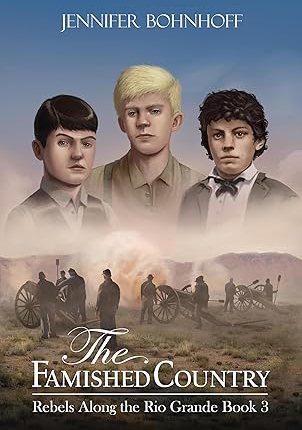
If your mid-schooler has read the first two novel in Jennifer Bohnhoff’s Rebels Along the Rio Grande series, you’ll need to get the final book of the trilogy for them as soon as possible. If they haven’t, you’ll want to get them all.

The Famished Country follows the characters we met in Where Duty Calls and The Worst Enemy through the aftermath of the Civil War battles in New Mexico. It’s not really necessary to read the other books first. Bohnhoff has done an excellent job of providing information about previous events so it’s certainly possible to read this as a stand-alone.

It was fun to catch up with the various characters. The scene in which Union captain’s daughter Annabelle decides she’s going to marry the poor rebel boy from Texas is absolutely hilarious. This humor is balanced by the stress experienced by the boys in the book as they navigate the physical and emotional confusion of war, conflicting loyalties, and the desire to return home intact. We also meet historical characters such as Captain Paddy Grayson, Confederate Henry Hopkins Sibley, and the “angel of Santa Fe,” Louisa Canby.

Bohnhoff has completed a masterful series for young people with The Famished Country. I recommend it!

BOOK REVIEW: Narrative of an Expedition

As a general rule, I only review books that I can recommend wholeheartedly. George Wilkins Kendall’s two-volume Narrative of an Expedition Across the Great Southwestern Prairies from Texas to Santa Fé is an exception to that rule.

The Narrative is Kendall’s report of the experiences of the roughly 300 men who left Austin, Texas in June 1841 to capture New Mexico for the Republic of Texas. Many of the approximately 280 soldiers accompanying the Texas Santa Fé Expedition had been told it was a trading mission. In actuality, the goal was to enforce the Texan claim that its boundaries extended west to the Rio Grande and north to that river’s headwaters.

That enforcement never happened. The rugged landscape between Austin and New Mexico, along with the Expedition’s lack of planning and discipline, weakened the starving Expedition to the point that men threw away their weapons to lighten the load they carried.

Rounded up by the New Mexicans, the Expedition members were taken south to Mexico City in three groups. The third included Kendall and 186 other men. It was escorted by Mexican militia Captain Damasio Salazar and roughly 150 guards.

Salazar, hurrying to get this largest of the three groups south to El Paso del Norte before winter set in, did not spare his guards or the Texans, the majority of whom were still weak from their ordeal on the Eastern Plains. Five died, three from natural causes. Kendall’s Narrative blames Salazar for all these deaths, painting him as such a monster that the Americans who invaded New Mexico five years later made it one of their first tasks to hunt the Captain down.

The fact that these men made finding Salazar a priority points to the popularity of Kendall’s Narrative and its impact in the run-up to the Mexican-American War. Indeed, it could be argued that Kendall accompanied the Texas Expedition with the sole purpose of providing a reconnaissance report for the conflict on the horizon. From El Paso to Mexico City, he provides details about distances, road conditions,  and fortifications, as well as his perception of the make-up and morale of Mexico’s military.

The way Kendall’s Narrative blames the Mexicans for not welcoming the invading Texans with open arms, brushes aside the gifts of food and clothing they did receive, and lays out information useful for a military incursion is almost breathtaking in its audacity. And yet his readers seem to have accepted his assertions without question. This makes the Narrative a useful example of the risks of reading uncritically, something that is still a danger for us today.

If you are interested in exploring historical sources with an eye to reading between the lines and trying to determine what might have really happened, and if you can stomach racist attitudes throughout the text, then I suggest you pick up a copy of Kendall’s Narrative and read it in light of the inception and outcome of the subsequent 1846 invasion. You may find it quite enlightening.

BOOK REVIEW: The White Sands, The Two Valleys Saga, Book 3

The third book in Mary Armstrong’s Two Valleys saga, The White Sands, takes a further dive into the history of southern New Mexico as it explores the events that led up to the famous feud between  Albert Fountain and Albert Fall. While Fall would go on to be implicated in the Teapot Dome scandal, Fountain would disappear into the White Sands in 1896  with his ten-year-old son Henry.

But I’m getting ahead of myself and Armstrong’s novel The White Sands. In this book, her narrator, Jesús Messi, gets to know the Lee family, the clan that was thought by many to be responsible for the Fountain disappearance. What he discovers is that there are two sides to every story, and more than one way to deal with a problem.

Armstrong uses Messi’s memory loss, suffered at the end of Book 2, to place him in the midst of the Tularosa Basin and the Lee network of family and friends. As part of that group, he comes to understand their perspective, which makes things awkward for him when he returns to Las Cruces. The teenage Jesús is caught between two worlds as he realizes that neither side is totally in the right—or the wrong.

His struggles are thoughtfully portrayed and provide a great way for Armstrong to explore the antagonism between the political parties at the time and the way those political divisions became deeply personal. In fact, the attitudes and events she recounts are eerily echoed in today’s news. They involve strong, opinionated personalities, convoluted legal questions, impatient and potentially coerced witnesses, and much more.

If you’re interested in southern New Mexico history in the late 1800s, the way our past is echoed by our present, or simply want an insightful coming-of-age story about an intelligent and perceptive young man, I highly recommend The White Sands.

Book Review: The Odyssey of Geronimo

Book Review: The Odyssey of Geronimo

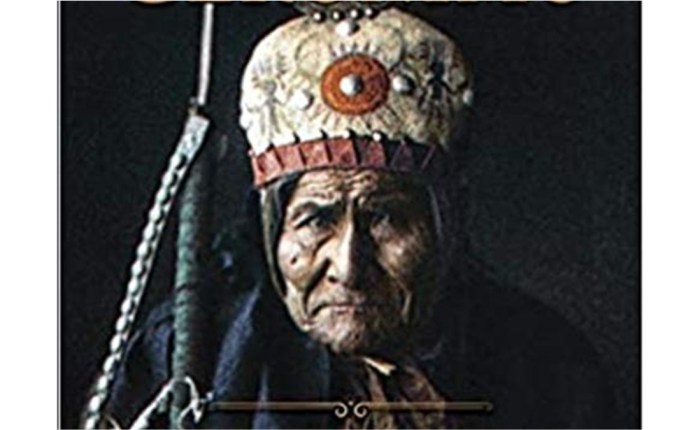
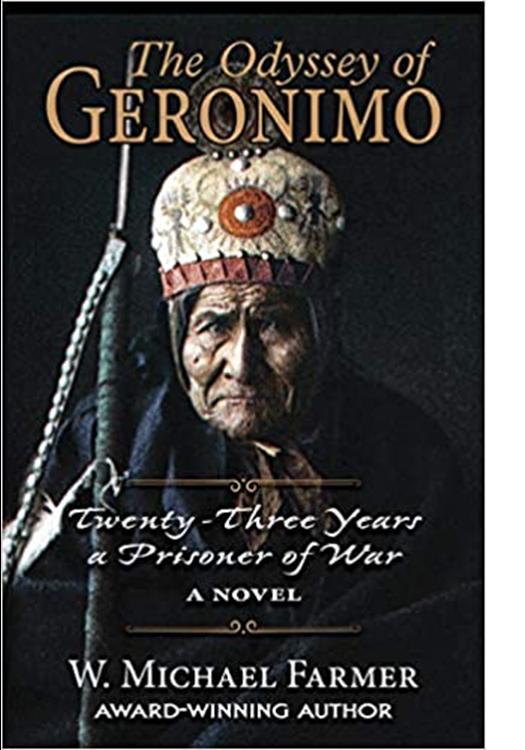
W. Michael Farmer’s The Odyssey of Geronimois one of those rare books, a true biographical fiction that doesn’t sugar-coat the less comfortable characteristics of its protagonist.

I find the title of this book, with its homage to the Odyssey of Homer, especially appealing. Like Homer’s hero, Farmer’s is also a wily man whose actions do not always seem admirable to us today. And yet he lingers in our consciousness. Even though we don’t quite know how to think about it, his story endures. Geronimo, an Apache warrior whose deeds of war made him feared across the American Southwest, continued in captivity and beyond to exert a powerful influence on the American psyche, as Odysseus’s has on the European imagination.

The Odyssey of Geronimo provides context for the old warrior’s actions before, during, and after his capture, and draws an illuminating portrait of a man who spent twenty-three years bridging the gap between his culture and the one he was thrust into by circumstances beyond his control.

This is a book about survival, with all its complexities. I highly recommend it.

Book Review: The San Augustin

Book Review: The San Augustin

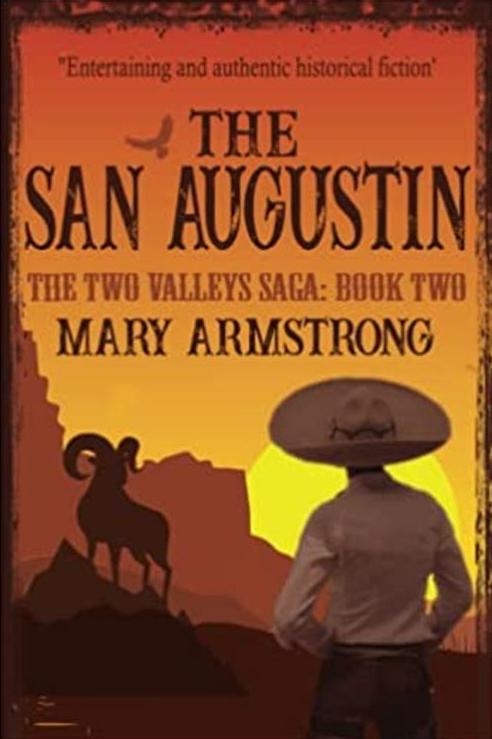
The San Augustin: The Two Valleys Saga, Book Two by Mary Armstrong continues the journey of Jesús Messi, fictional nephew of real-life Colonel Albert J. Fountain, attorney in late 1800s Mesilla, New Mexico and nemesis of cattle rustlers throughout the region.

Jesús’s story began in The Mesilla, when he joined the Fountain family to read law with the Colonel. It continues in The San Augustin as Jesús learns about love and politics as well as law. He plays a growing role in Fountain’s burgeoning practice, meets the young but already ambitious Albert Bacon Fall, and experiences a growing sense of danger as Fall and other men who’ll be blamed for the 1896 disappearance of the Colonel and his young son become active in New Mexico’s Mesilla and Tularosa valleys.

The second of a projected five-book series, The San Augustin moves the Fountain saga along while also allowing the reader to get to know Jesús and the Fountain family more thoroughly. If you’re interested in the history of southern New Mexico and/or the Fountain disappearances, I recommend this book!

Book Review: First Mail West

Book Review: First Mail West
by Morris F. Taylor, UNM Press, 2000

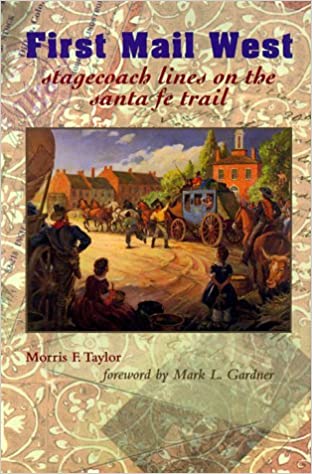
For many Americans, the stagecoach symbolizes the 1800s in the West. And yet, stage mail and passenger service to Santa Fe lasted just thirty years, from 1850 to 1880. In that time, the route grew shorter and shorter, as the railroad crept toward New Mexico and finally ended the stagecoach era completely.

Morris F. Taylor’s book First Mail West: Stagecoach Lines on the Santa Fe Trail tells that story and much more.  It begins with equine transport of military dispatches and goes on to describe when and how the first Post Office Department contracts were put in place and the many details connected with the mail stage system.

But this is not a dry fact-and-figures kind of book. It’s filled with the names of people associated with New Mexico history—the Bent brothers, David Waldo, Ceran St. Vrain, William W.H. Davis, Kit Carson, Governors Lane and Meriwether, and many more. It also identifies lesser-known individuals, including the stage conductors and drivers, and provides fascinating glimpses into life along the route to Santa Fe—descriptions of the stage stops, how they were operated, the people who ran them, and the dangers they encountered. In addition, because the stage had connections into Denver, there’s a good overview of the early Colorado mine fields and the towns that sprang up around them.

First Mail West is a pleasure to read and full of information you never realized you wanted to know. I recommend it to anyone researching New Mexico and Colorado history in the 1846-1880 time frame and also to those who’d simply like another approach to Old West history.

Book Review: Los Capitalistas

Book Review: Los Capitalistas
UNM Press, 1997, ISBN: 0-8263-2235-2


What picture comes to your mind when you hear the words “Santa Fe Trail”? American merchants with wagons full of merchandise heading west and returning with money in their pockets, right? Well, there’s more to that story, and Susan Calafate Boyle’s book Los Capitalistas helps to provide that additional information.

So they did. By 1840, Hispanos were major participants in the trade along the Santa Fe Trail, with extensive trade and financing relationships as far east as New York, London, and Paris. Los Capitalistas explains those relationships and the types of merchandise New Mexican merchants conveyed back and forth and, in the process, expands our understanding of New Mexico. 

The ricos of New Mexico saw pretty early on that hauling merchandising over the Trail could work both ways. After all, they were already taking wool, woven goods, and other items to Chihuahua, Sonora, and other points south. Extending their freighting operations east was the next logical step.

Los Capitalistas is written in a clear, matter-of-face style that conveys a great deal of information and provides a glimpse of New Mexico that most of us haven’t seen before, and is an important book for understanding the history of the Southwest as well as an enjoyable read. I recommend it!

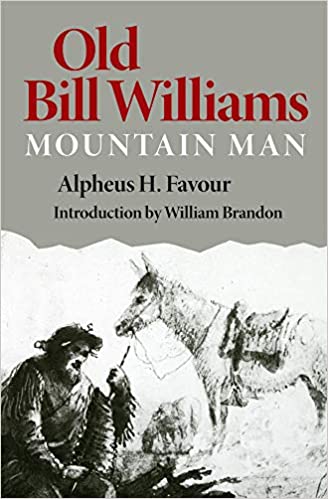
BOOK REVIEW: Old Bill Williams, Mountain Man

ISBN978-08061-1698-3, University of Oklahoma Press, 1962

Those of you who’ve read more than one of my Old New Mexico books may have noticed that I have a special fondness for William Sherley Williams, better known as “Old Bill”.

My initial introduction to Old Bill was through Old Bill Williams, Mountain Man by Alpheus H. Favour. Although written in the 1930s and somewhat infected with the era’s attitudes towards America’s First Peoples, this book still manages to provide a glimpse into Old Bill’s more progressive attitudes.

The red-headed gawky Williams left his Missouri home in his teens to live with the Osage Indians. There he married, found work with the Baptist missionaries to the Osage, then broke with his employers when he decided that Osage spirituality was more meaningful and insightful than the missionaries’.

A skilled linguist, he developed the first Osage-English dictionary and is said to have spoken at least five different languages. After his wife’s death, Williams moved west, guiding the Santa Fe Trail Survey, trapping, hunting buffalo, and scouting. Querulous and opinionated, Old Bill preferred trapping alone in places he refused to divulge to anyone else. He would eventually die as the result of John C. Fremont’s ill-fated fourth expedition through the southern Rockies in the middle of winter.

There are various summaries of Williams’ life. I have yet to find anything as detailed and extensive as Favour’s Old Bill Williams, Mountain Man. I recommend it.

Book Review: Home Ground, Language for an American Landscape

Trinity University Press, 2006
ISBN: 978-1595340573

Do you know what an hourglass valley is? Or a long-lot field? These are just two of the many terms defined in one of my favorite books, Home Ground, Language for an American Landscape. Edited by Barry Lopez and Debra Gwartney, this book is a treasure trove of words that describe the outdoor spaces around us.

One of the things that makes Home Ground different from other dictionaries is that its definitions were provided by writers who live in or are deeply knowledgeable about the areas where the terms are used. For example, William deBuys writes about forms characteristic of New Mexico’s Sangre de Cristo mountains, while Robert Hass contributes definitions connected with the San Francisco area, and Luis Alberto Urrea focuses on the Rocky Mountain Front Range. As a result, the material in this book is a high step above the dry and impersonal explanations you might expect in this type of endeavor.

I bought Home Ground as a research tool. But I find myself dipping into it for the sheer pleasure of the writing and of discovering new terms. For example, just today I learned that the Navajo word for “slot canyon” is tseghiizi. And confirmed that the Moreno Valley, where so many of my Old New Mexico books are set, is an hourglass valley like Mosaic Canyon in Death Valley.

I also discovered a term for the long narrow fields that line up, short-end to the water, along so many of New Mexico’s streams and acequias. They’re long-lot fields. That certainly reduces the number of words I need to use to describe that particular geographical feature!

If you’re looking for a resource to describe and understand the landscape of the U.S., I recommend this book. If you’d simply like an enjoyable and very readable way to learn something new, I also recommend this book. Home Ground is a real treasure!