
When Sterling Price set out from Santa Fe in late January to meet the Mexican insurgency from Taos, he was accompanied by a rag-tag group of men who would be instrumental to his ability to carry out his mission.
He had sworn the group of men Ceran St. Vrain called the Avengers into Federal service the Saturday they left and seen their worth at Santa Cruz de la Cañada they next day, when they were instrumental in keeping the rebels from seizing the U.S. supply wagons.
The Avengers were an interesting group of Mexican and American merchants, laborers, and mountain men. One of the mountain men was Jim Beckworth, son of a Virginia plantation overseer and a woman named “Miss Kill,” almost certainly a slave. Renowned for his exploits as a mountain man and his ability to tell a story, Beckworth had more than one thing in common with the Bent family slave who also signed up as an Avenger. Neither of them was supposed to be there.
By law, people of color could not join the U.S. military. They’d been banned from serving since the Federal Militia Acts of 1792. But there Beckworth and Green both were, marching with the rest of the Avengers.
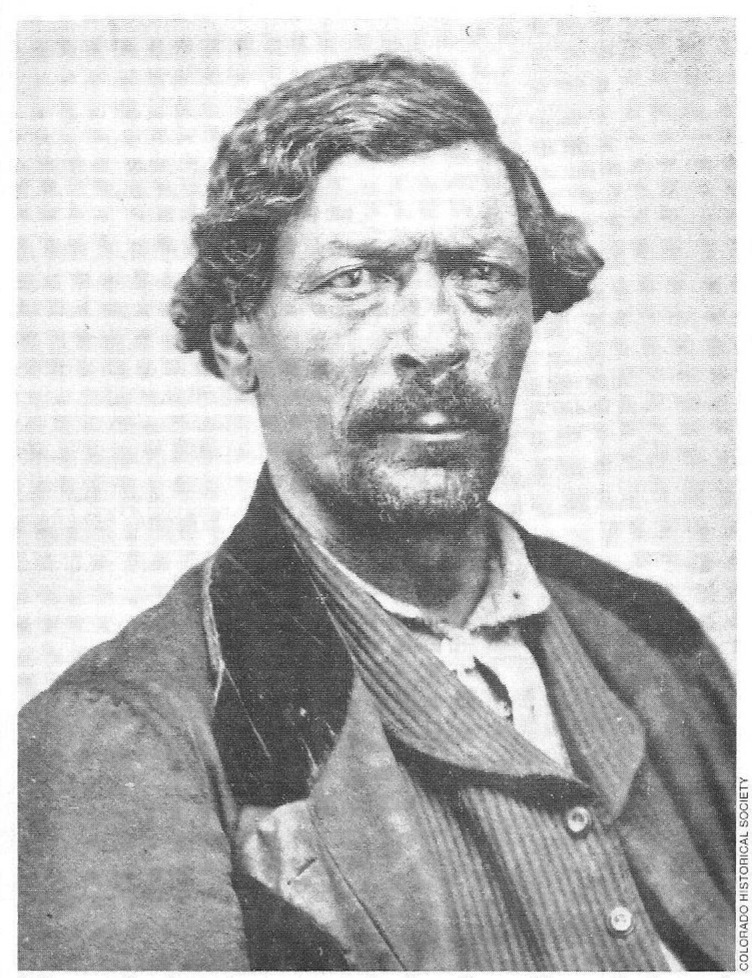
And fighting. Although Dick Green was badly wounded at the battle of Embudo Canyon on Friday, January 29, there are reports that he also fought at Taos Pueblo the following week. The Bent family was so grateful for his service that they freed Green, his wife Charlotte, and his brother Andrew. The three of them headed east toward Missouri that summer and, hopefully, some place where they could live in peace.
We don’t know anything more about them. There are some tantalizing clues. The 1829 manifest for a schooner to New Orleans includes a five-foot-tall 14-year-old slave girl named Charlotte Green. Could she have ended up in the Bent household? And there’s an August 1863 New Orleans interment record for a “colored” man named Richard Green. Is this the man who was wounded at Embudo Canyon?
Unfortunately, I have been unable to find any definitive link between these pieces of information and the Dick Green who fought alongside his Mexican and Anglo cohorts in early 1847. And may have been one of only two Black men to enlist in the U.S. Army between 1792 and the Civil War.
© Loretta Miles Tollefson
Sources: James A. Crutchfield, Revolt at Taos, The New Mexican and Indian Insurrection of 1847; Ferguson, Paul-Thomas, “African American Service and Racial Integration in the U.S. Military,” http://www.army.mil/article/243604/, accessed 9/15/24; Mark L. Gardner and Marc Simmons, eds., The Mexican War Correspondence of Richard Smith Elliott; Howard R. Lamar, The Far Southwest, 1846-1912, A Territorial History; Ralph Emerson Twitchell, The History of the Military Occupation of the Territory of New Mexico; Alberto Vidaurre,” 1847: Revolt or Resistance?” in Corina A. Santisteven and Julia Moore, Taos, A Topical History.


 Fiction and Fact From Old New Mexico