Billy the Kid: The Life Behind the Legend

Billy the Kid: The Life Behind the Legend

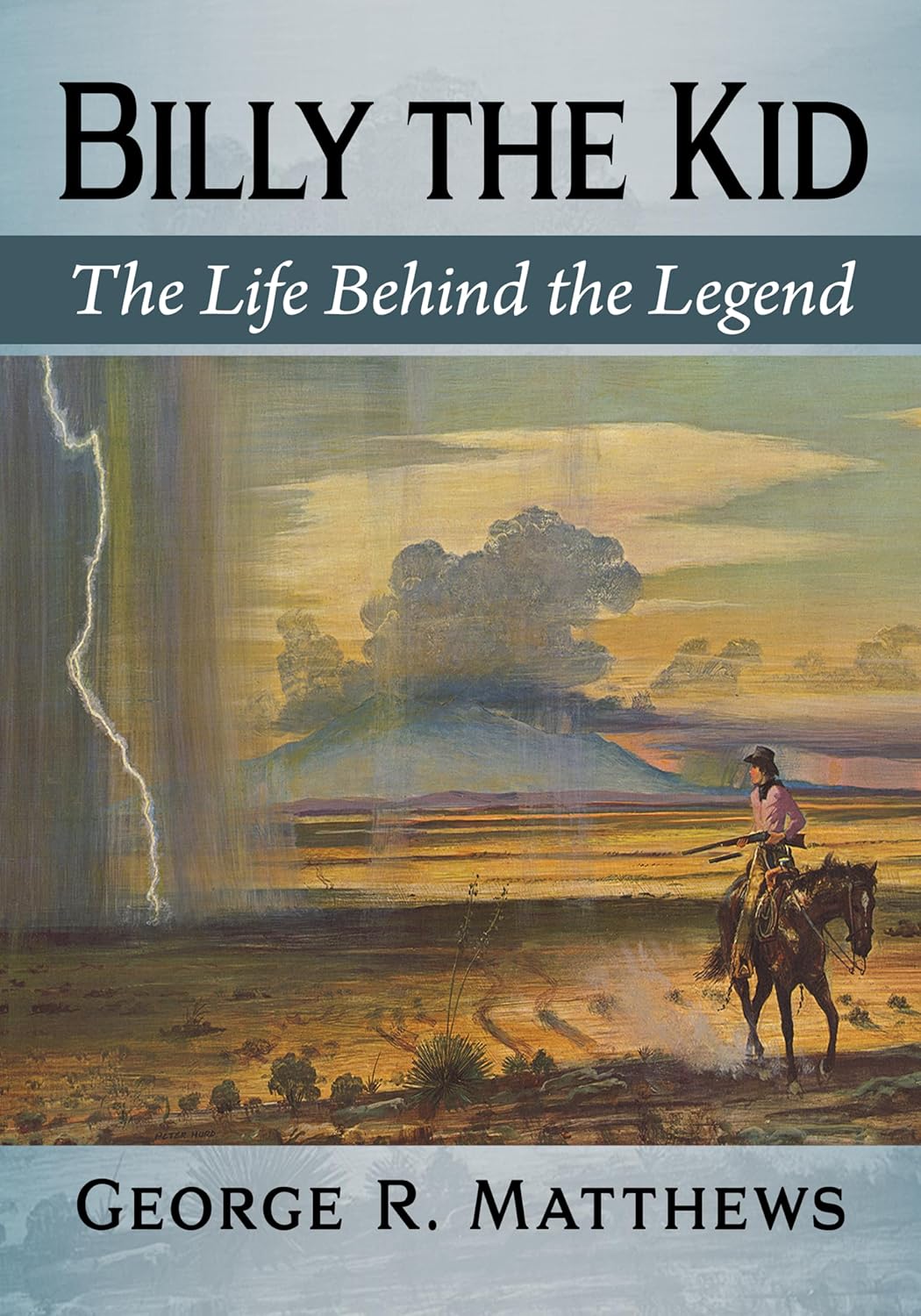
I recently did a quick tally of currently available nonfiction books about Billy the Kid and gave up at twenty-five. I’m sure there are more. However, if you want a clear grip on who Billy the Kid was, where he came from, and the events in his life, George R. Matthews’ recently published book Billy the Kid: The Life Behind the Legend may be the only tome you need.

This book is well researched and superbly written and provides a comprehensive approach to the life and times of William Bonney, aka “The Kid.” Matthews has taken the time to gather information not only about the Kid’s career, but also about his background. I especially appreciated the material about Ireland in his mother’s day and her experiences when she reached the U.S.

Matthews also provides information about the various people Bonney interacted with during his short life, while not bogging down the narrative with endless side notes. He inserts enough background for these individuals to give us context and flesh out their personalities, but maintains his focus on the Kid and his various adventures and misadventures.

I was impressed with this book and recommend it as the one resource for people who are mildly interested in Billy the Kids’ life and as an important addition to the collections of those who are more passionate about learning all you can about him. In my opinion, Billy the Kid: The Life Behind the Legend is a valuable addition to either type of library.

BOOK REVIEW: The Mexican War Correspondence of Richard Smith Elliott

BOOK REVIEW: The Mexican War Correspondence of Richard Smith Elliott

In a recent post, I mentioned Lt. Richard Smith Elliott, who was with General Stephen Watts Kearny’s Army of the West during the August 1846 invasion of New Mexico. Elliott was also a reporter. He started writing for the St. Louis Reveille before he left Missouri in June 1846 and continued sending articles to them until June 1847, when his enlistment ended.

In 1997, 150 years later, historians Mark L. Gardner and Marc Simmons compiled Elliott’s reports from Santa Fe and the sketches he wrote afterward and published them in The Mexican War Correspondence of Richard Smith Elliott. The result is an intriguing account of events in New Mexico during this period.

The pieces the lieutenant sent East were often written and published as letters. Reading them can feel like you’ve been given access to someone’s diary. Much of his reportage sounds like that of any soldier anywhere. He includes lists of men who’ve died from measles and other diseases as well as bullets, reports on the weather, complaints about quartermaster supplies, and grumbling about the attitude, expertise, and morals of both his fellow and superior officers.

When Elliott turns to New Mexico specifically, his letters reflect the prejudices of his time. There are the usual disapproving descriptions of the local priest and of businesswoman and monte dealer Gertrudes Barceló, as well as commentary on the adobe housing and lack of glass windows.

However, I find the lieutenant most engaging when he describes his interactions with the locals. Among other vignettes, there’s a delightful description of a stroll with a couple señoritas. The women turn what the lieutenant thought was to be a social outing into a shopping trip, loading him and his male companions with chickens, onions, and other goods to haul back home for them.  

So the book is an interesting view of Santa Fe from the perspective of an American Army officer in 1846/47. Elliott was unwell a good part of the time and often displays an invalid’s irritableness. His illness kept him from participating in campaigns against the Navajo, expeditions to California and Mexico, as well as the suppression of the Taos Revolt in early 1847. By the time his enlistment was up, he was in a hurry to get home. The written record  he left behind reminds us that not every Anglo who arrived in New Mexico in the 1800s fell in love with the place or found it profitable to stay.

I recommend The Mexican War Correspondence of Richard Smith Elliott to any student of New Mexico history, especially of the early portion of the American occupation. It’s a useful and fascinating look at the attitudes that I suspect the majority of Anglos brought with them to the land of enchantment.

BOOK REVIEW: In The Shadow of Sunrise

BOOK REVIEW: In The Shadow of Sunrise

I normally review books set in or about New Mexico in the 1800s, but I couldn’t resist sharing In The Shadow of Sunrise by Jennifer Bohnhoff with you. This novel tells a story from a much earlier time frame—the Folsum Culture period about 9,000 years ago. So it’s definitely a trip back in time.

And it’s a really special trip. This is one of those stories that linger in your mind long after you’ve read it. Its protagonist is a young man named Earth Shadow, who is physically handicapped and feels inferior to his stronger twin brother, Sunrise. As the boys join the healthy adults of their clan for the annual migration to hunt and meet other groups, Earth Shadow must come to terms with his physical handicaps and learn that his mental capabilities give him a capacity for leadership that his brother will never have.

Although this book is written for middle grade readers, its characters and situations make for fascinating reading for adults, as well. Bohnhoff does an excellent job of presenting her meticulous research in a way that informs but never gets in the way of the story and its characters. I highly recommend In The Shadow of Sunrise to audiences of all ages.

You can find a free teacher’s guide and special rates for class sets at jenniferbohnhoff.com/in-the-shadow-of-sunrise.html. 

© Loretta Miles Tollefson

BOOK REVIEW: A Wicked War

BOOK REVIEW: A Wicked War

Amy S. Greenberg’s A Wicked War: Polk, Clay, Lincoln and the 1846 U.S. Invasion of Mexico is a comprehensive look at the war America prefers to forget. The one undertaken in 1846-47 for the sole purpose of stealing territory. The one known in the U.S. as the Mexican American War and in Mexico as “the United States’ intervention in Mexico.” It would result in the annexation of what are today the U.S. states of New Mexico, Arizona, California, Utah, Nevada, and parts of Colorado.

It would also be the impetus for the first national antiwar movement in the United States and the first of Abraham Lincoln’s speeches as a newly minted Congressman from Illinois. A Wicked War provides a comprehensive look at these events, the rationale and excuses for the invasion, the political campaigns and jealousies that affected its trajectory, and the maneuvering of President Polk and his wife to ensure it happened.

Along the way, we meet a young Abraham Lincoln; Nicholas Trist, the U.S. negotiator who disobeyed his instructions in favor of the enemy; Henry Clay in the last great action of his career; and Ulysses S. Grant, a young officer who later wrote that the conflict was one of the most unjust wars ever waged by a strong nation against a weaker one.

If you’re looking for a book that gives you both the background to and events of the Mexican American War, or just a good overview of the events during that period of U.S. history, I strongly recommend A Wicked War.

New Mexico Books for the Historical Fiction Reader on Your Gift List

New Mexico Books for the Historical Fiction Reader on Your Gift List

Looking for gift ideas for the historical fiction reader on your list? Here are ten suggestions, alphabetized by author. They’re all set in New Mexico, of course.

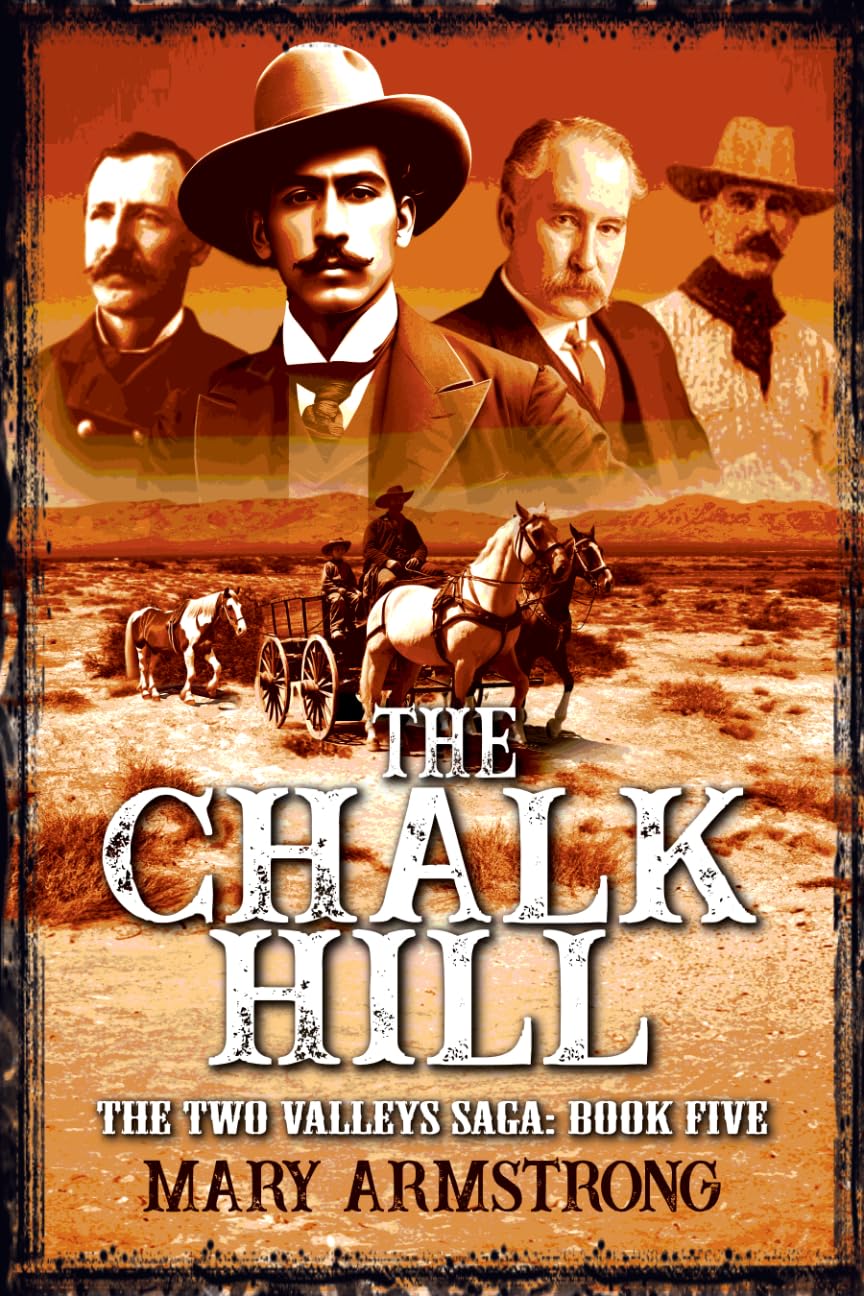
The Two Valleys Saga by Mary Armstrong
Titles: The Mesilla, The San Augustin, The White Sands, The Bisti Badlands. The Two Valleys Saga is a fictional account of the historical conflict between Colonel Albert J. Fountain and the Texas-transplanted ranchers in southern New Mexico’s Tularosa Valley. It is told as a memoir by Jesús Messi, a fictional nephew of the Colonel, writing many years after the late 1800’s events which left the Colonel and his young son dead. The bodies were never found, and no one ever convicted of their murders. A fascinating look at larger-than-life characters and the complexities of southern New Mexico politics and life during this period. This is a four-volume set, though each of the books can be read as a stand-alone novel. They’re available at bookshop.org, and Amazon, or you can buy directly from the author at maryarmstrongauthor.com.

Rebels Along the Rio Grande trilogy by Jennifer Bohnhoff
Titles: Where Duty Calls, The Worst Enemy, The Famished Country. This three-volume set of Civil War action and drama follows three boys through the conflict in New Mexico. Bohnhoff presents the issues of the war from three sides, the Confederate, the Union, and the New Mexican and portrays that complexity in a way that will appeal to young readers, parents, and people like me who just like a good historical fiction. Links to all three books, as well as information about them, the Civil War, and the opportunity to obtain a signed copy directly from the author, are available at jenniferbohnhoff.com

The Iliad and the Odyssey of Geronimo by W. Michael Farmer Geronimo
Titles: The Iliad of Geronimo, a Song of Blood and Fire; Odyssey of Geronimo. These two books provide a fictional account of the life of Apache leader Geronimo beginning ten years before his final capture and continuing during the twenty-three years of his final captivity. This is a character study as much as a biographical fiction, and provides unique insights into the Apache world, the warriors that filled Americans and Mexicans alike with terror, and the way Geronimo navigated captivity to become a national “superstar,” an astute businessman, a justice of the peace, an army scout, and a speaker of truth to power. Authentic, powerful, and exhaustively researched, award-winning author W. Michael Farmer paints Geronimo with an unflinching eye, presenting the good, the bad, and the ugly of one of history’s most feared and famous warriors.

You can find The Iliad of Geronimo at Bookshop.org and Amazon. The Odyssey of Geronimo is available from the same sources: Bookshop.org and Amazon.

Rosary Without Beads by Diana Holguin Balough
This novel made me see Billy the Kid with new eyes. This back-hills narrative of New Mexico’s Lincoln County War reboots the famous outlaw’s legend by showing us a young man who stands up for the oppressed. When he protects a sheepherder’s daughter, Ambrosia, from a drunken assault, he captures her heart. But life isn’t simple for Bonney or anyone he cares about. This novel reflects those difficulties without any easy answers. It’s beautifully written and left me with a more nuanced picture of “The Kid.” It’s available at Bookshop.org and Amazon.

Happy book shopping!

BOOK REVIEW: The Bisti Badlands

BOOK REVIEW: The Bisti Badlands

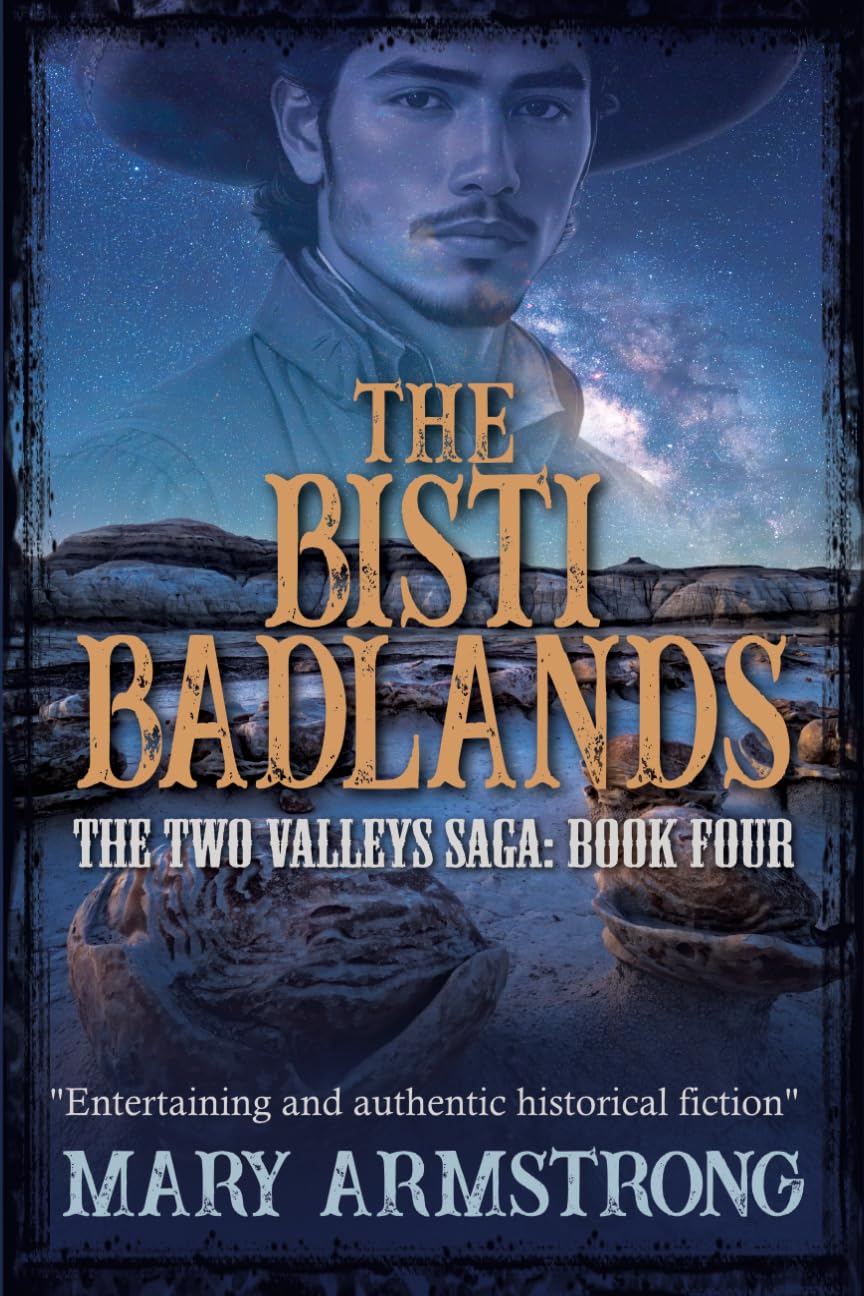
I recently had the privilege of reading an early copy of the latest offering in Mary Armstrong’s Two Valleys Saga. The fourth volume in this insightful look at southern New Mexico in the late 1800s, The Bisti Badlands follows the series’ main character, Jesús Messi as he comes to terms with his heritage, the politics of his day, and the people around him. Along his journey, we get to meet some of the people who make New Mexico’s history so vastly entertaining: Colonel Albert J. Fountain and Oliver Lee and their families, Albert Bacon Fall, Archbishop Jean-Baptiste Salpointe, and feminist Ada McPherson Morley, to name a few.

Jesús is all over New Mexico in this book, from Las Cruces to the Bistis to Santa Fe, and his emotions are all over the place, too. Armstrong does a terrific job of incorporating a young man’s search for purpose into his experience of historical events, seamlessly weaving the factual and fictional into a coherent whole. I can’t tell you more without spoiling the plot, so I’m simply going to say that, if you are interested in the history of New Mexico and the American West, or simply love a good coming-of-age story, I highly recommend The Bisti Badlands.

BOOK REVIEW: Letters and Notes on the Texan Santa Fe Expedition, 1841-1842

In June this year, I posted something very rare for me: a less-than-positive book review. The review was of a book that serves as a primary source for most historical research about the ill-fated 1841 Texan Santa Fe Expedition. I had a number of issues with that text. However, during my own work on the Expedition, I was pleased to discover primary source that I can recommend wholeheartedly: Letters and Notes on the Texan Santa Fe Expedition, 1841-1842 by Thomas Falconer.


Falconer was one of the few British members of the Expedition. A trained barrister with a strong interest in the natural sciences, he traveled to Texas to explore emigrating there and was almost immediately invited by President Lamar to accompany the Expedition as a scientific observer.
Kendall describes Falconer as a “gentleman of high literary and scientific attainments [with] mild and agreeable manners,” who was “extremely sociable and companionable” (Kendall, I, 26-27), rather careless of his appearance, but well equipped with “a number of books and scientific instruments” (Kendall, I, 43).


Falconer’s books, instruments, and notes were, unfortunately, confiscated when the Texans finally reached New Mexico. However, his memory and interest in his surroundings stood him in good stead. After he was released from prison in Mexico City, he went to New Orleans, where he developed a report for Kendall’s newspaper, the New Orleans Picayune. This and his “Notes of a Journey Through Texas and New Mexico,” published in the British Journal of the Royal Geographical Society in 1844, form the core of Letters and Notes.


This book is valuable for several reasons. First, it provides an antidote to Kendall’s more excitable, and not altogether trustworthy, version of events in New Mexico in 1841; second, it gives us valuable information about the geography and plants of the region during the early 1840s; and third, it provides an outsider’s view of the Texans and their foibles, as well as insight into the sort of information about the North American continent that the English found useful.


Falconer’s other books, one about the Oregon question, and another about the discovery of the Mississippi, are also fascinating reads, but if you’re interested in the history of New Mexico, particularly the 1841 Texan Santa Fe Expedition, I highly recommend his Letters and Notes.

Sources: Thomas Falconer, Letters and Notes on the Texan Santa Fe Expedition, 1841-1842, New York: Dauber and Pine, 1930; George Wilkins Kendall, A Narrative of the Texan Santa Fe Expedition, Vol. II, Harper and Brothers: New York, 1847.

BOOK REVIEW: FATHER STANLEY

BOOK REVIEW: FATHER STANLEY

Instead of doing a typical book review this time, I’ve chosen to write about one of my favorite New Mexico authors, the man who wrote under the pseudonym Fr. Stanley. Born in New York in 1908, Stanley Louis Crocchiola was ordained at age 30 in the Franciscan Order of Atonement. He had contracted tuberculosis by this time, so his superiors sent him to Hereford, Texas where they assumed the arid climate would help him heal. Ironically, he arrived there in February 1939 during a black dust storm. He survived that, though, and in 1940 was transferred to Santa Fe, New Mexico. The dry climate does seem to have suited him. He lived to be 87.


He used that time to learn about the history of the various communities he served in New Mexico and, in 1948, began chronicling their history. The resulting books, published under the pseudonym Fr. Stanley, are a charming mixture of stories told by old-timers, newspaper clippings, and on-the-ground observations. Many of them are printed on folded-over 8.5 x 11 paper stapled in the cross-section, or saddle-stitched, a kind of historical chapbook.


Fr. Stanley’s books often have the same simple cover design–a bright yellow background containing a red zia symbol and typeface. At least for the New Mexico books, the titles are also often nearly identical. The four I own are The Stanley (New Mexico) Story, The Elizabethtown (New Mexico) Story, The San Miguel del Bado (New Mexico) Story, and The Miami (New Mexico) Story.


Father Stanley wrote and published over 170 books, the majority in this simple format, though some, like The Duke City: The Story of Albuquerque, New Mexico and The Civil War in New Mexico were published in hardback. They are all a great resource for discovering the details of New Mexican life in the late 19th and early 20th centuries–everything from the types of apples grown in Miami to the names of the men on the Elizabethtown baseball team.

This interest in the minutiae of life is the defining characteristic of Father Stanley’s books and makes them well worth reading because they give us an almost newspaper-like glimpse into a bygone world. The only trouble is, they’re no longer currently being published. If you want a copy of The Bethel (New Mexico) Story, The Texico (New Mexico) Story, The Causey (New Mexico) Story, The Grant That Maxwell Bought, The Magdalena (New Mexico) Story, The Abo (New Mexico) Story, The Golden (New Mexico) Story, or any of the others, you’re going to have to find a secondhand bookseller.


I encourage you to do so, even at the risk of driving up prices on the many Stanley books that I still don’t have in my collection. For sheer joy in New Mexico history, in all its details, I recommend Father Stanley’s work!

BOOK REVIEW: Matt Field on the Santa Fe Trail

BOOK REVIEW: Matt Field on the Santa Fe Trail

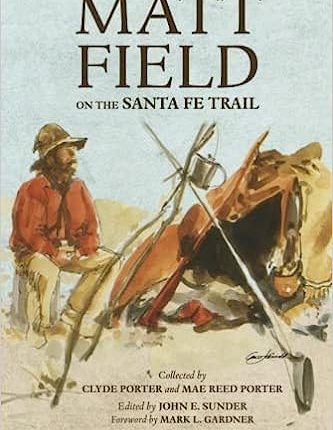
In 1839, a former actor named Matt Field decided to go to Santa Fe, New Mexico to regain his health. Although he failed to recover his physical well-being, Field did collect impressions and notes throughout his journey. After he returned to the U.S., he got a job at what is now the Time-Picayune/New Orleans Advocate and converted his jottings into a series of newspaper articles. The pieces were popular and were reprinted in papers as far away as London. I believe their positive reception inspired Picayune editor George Wilkins Kendall to make his own attempt to reach Santa Fe, a journey he would record in his Narrative of an Expedition Across the Great Southwestern Prairies from Texas to Santa Fé, which I discussed in June.

Over a hundred years after his trip, Matt Field’s articles were collected and published as Matt Field on the Santa Fe Trail. The young actor turned reporter definitely reflected the attitudes of his day, and some readers may find those biases upsetting, but there is also much to enjoy and to learn from this book. Field’s views of Santa Fe specifically and New Mexico in general are excellent examples of how Americans viewed the land and people that blocked their access to the Pacific Ocean. The book is a mixture of admiration for the women’s beauty, fascination with everything from Taos Lightning (wheat-based whiskey) to the New Mexican custom of community dances, and shock at the idea of priests and women who gamble and make money at it.

Matt Field on the Santa Fe Trail can be an exasperating book. His description of Governor Manuel Armijo’s wife as an elephant dancing is just rude and his misunderstanding of the role of Gertrudes Barceló as a business woman is a clear example of one society’s gender expectations being loaded onto another culture. However, these and other passages are precisely why I keep this book in my library. Matt Field on the Santa Fe Trail reminds me that we do not always see ourselves and our biases as clearly as we think we do. Even when we believe we’re open to new experiences, our unexpanded frames of references can still distort our perceptions.

And that is why I recommend Matt Field on the Santa Fe Trail to anyone interested in history in general and New Mexico in particular. It’s a fascinating historical document in itself and can also help keep us honest about our own take on the world around us and remind us that we may also possess attitudes we haven’t completely examined. And may not want others to know about a hundred years from now.

BOOK REVIEW: New Mexican Folk Music

Subscribe to continue reading

Subscribe to get access to the rest of this post and other subscriber-only content.