Unless you’re reading speculative fiction, the only possible outcome for a book about Albert Jennings Fountain is his February 1896 disappearance, along with his eight-year-old son, in the desert of southern New Mexico.
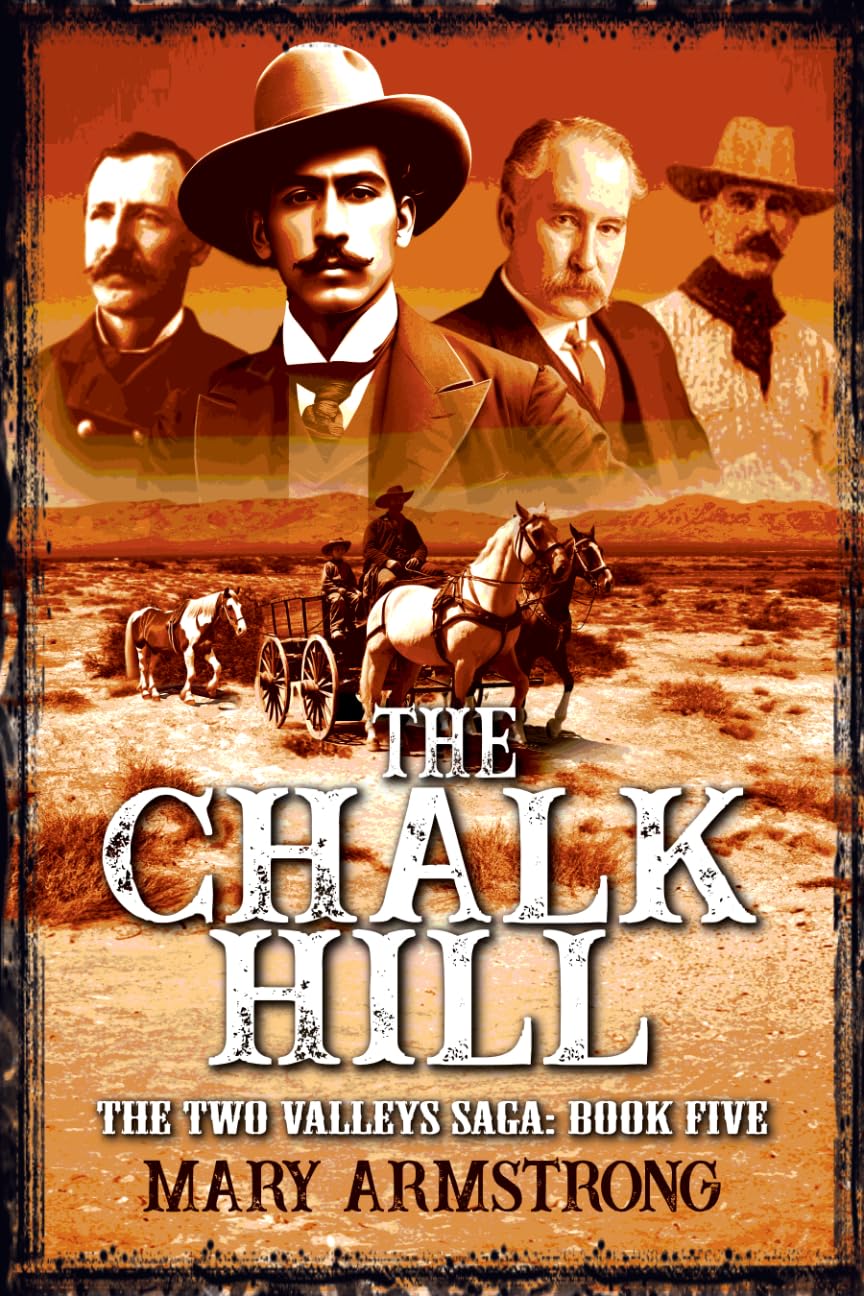
Mary Armstrong’s latest novel, The Chalk Hill, is not speculative. It’s rooted deeply in the New Mexico politics, personalities, and events of New Mexico in the three years leading up to the Fountain disappearance and folds them masterfully into a readable story that kept me thoroughly engaged.
This novel picks up where Armstrong’s The Bisti Badlands left off. If you haven’t read that book, the author and I both suggest you do so before beginning The Chalk Hill, which plunges immediately into the ongoing story with Fountain’s nephew Jesús as narrator.
Much of this book, which is the fifth in Armstrong’s The Two Valleys Saga, focuses on the newly married young lawyer’s relationship with both Fountain and Fountain’s nemesis, Oliver Lee. Jesús, caught in the middle, provides a way for Armstrong to explore both sides of the conflict between southern New Mexico’s Republicans and Democrats, as well as the “new” and “old” ranchers. The conflict which ultimately resulted in the Fountains’ disappearance.
I say “disappearance” because the bodies of father and son have still not been recovered 130 years later. The mystery of what happened to them and who was responsible continues to bedevil southern New Mexico politics and personal relationships, as descendants of Fountain, Lee, and their partisans defend the actions and words of the late nineteenth century.
If you want to understand why, The Chalk Hill may provide the answers you’re looking for. If you simply want to read a masterfully researched historical fiction set in New Mexico, it’ll provide that, as well. I recommend it!

 Fiction and Fact From Old New Mexico