I’m fascinated by Southwestern proverbs, also known as refranes or dichos. In fact, I’m so fascinated that my monthly newsletter always includes one, with a translation.
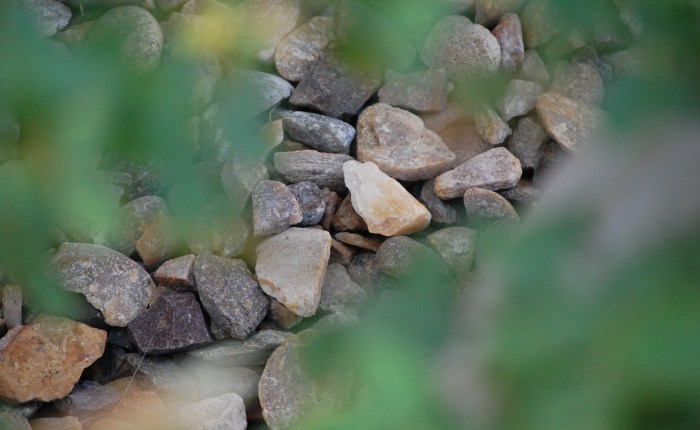
My primary source for that content is Refranes: Southwest Spanish Proverbs, collected and translated by Rubén Cobos. As I was perusing Refranes for this month’s inspiration, I noticed that Cobos included five proverbs for the concept that’s generally expressed in English as “a rolling stone gathers no moss.”
That English expression dates back to sixteenth century translations of Roman author Publius Syrus. It’s generally interpreted as advice to stay in one place. If you don’t, you’re never going to accumulate “green,” meaning dollars.
Here are the proverbs that Rubén Cobos collected, along with the translations he provided:
Piedra movediza el musgo no la cobija: A moving rock allows no moss. (#1368)
Piedra movediza no cría enlame: A moving rock allows no slime. (#1369) Piedra movediza no cría mojo: A rolling rock allows no rust. (#1370)
Piedra movediza nunca mojo la cobija: A moving stone never gets rusty. (#1371)
Piedra que rueda no cría mojo: A rock that rolls doesn’t get rusty. (#1372)
I was puzzled by the fact that only one of these refranes (#1368) actually includes the word “musgo,” or “moss.” The rest of them talk about slime (elame) and rust (mojo).
When I went to the dictionary to confirm Cobos’ translations, I became even more puzzled. The most up-to-date one, The American Heritage Spanish Dictionary), says “mojo” means “gravy” or “juice,” and doesn’t even include an entry for “enlame.” My older (1960) copy of Cassell’s Spanish-English Dictionary doesn’t include a definition for either word, although it does have an entry for “enlamar,” which it defines as “to cover with slime.” This word is also in an even older source (Velasquez’s Pronouncing Dictionary, originally published in 1852), which says it is “applied to inundations.”
Interestingly, Velasquez also says “mojo” is from “remojo,” which means the act of steeping or soaking. So, my older resources do indicate both words have to do with liquid, some of it not very tasty. I suppose you could make the link between these definitions and moss. After all, moss grows in wet conditions. But it seemed odd. Those wet conditions are unpleasant. And could produce other things besides moss. Illness, for example.
At this point, I remembered that I owned another book by Mr. Cobos, his Dictionary of New Mexico and Southern Colorado Spanish. When I pulled it out, I discovered that, in early to mid-nineteenth century New Mexico, “mojo” meant “rust, mold, or mildew.” Perhaps reflecting what happens when things are left steeping in liquid too long? “Enlame” meant “scum, slime; a kind of moss.” So there was the link between scum and moss. Not a very salubrious one, but still a link.
As a result of all this research, I began to wonder if Publius Syrus actually meant that a rolling stone should keep on rolling and not stick around to be loaded down with moss. Or rust, mold, or mildew.
Which reminded me that I originally thought the rolling stone proverb meant “stay home, don’t go adventuring, etc.” And led me to ponder whether a closer look at old proverbs can give us more than interesting images and turns of phrase. Perhaps they can also help us examine what we think we’ve been taught.
This particular set of refranes certainly implies that being a metaphorical rolling stone may be a good thing, at least in terms of our world view. Perhaps keeping ourselves open to new perspectives, not letting ourselves stew in what we think we know, can reduce the possibility of metaphorical moss, rust, mold, slime, or mildew sticking to us.
Even if we consider ourselves a cut above the rocks around us, we still might want to think about examining what we think we know. Because, as refrane #750 (“fierro movedizo no cría mojo”) points out, a moving piece of iron doesn’t get rusty, either.
 Fiction and Fact From Old New Mexico