
I haven’t seen any sandhill cranes in the Santa Fe area yet this year, but recently I ran across a section of Lt. James W Abert’s 1846-47 New Mexico travel diary which definitely evoked them:
Tuesday, October 13: [outside Bernalillo] “… we are now surrounded by cranes that keep up a great whooping all night. Their cry bears some resemblance to that of the red[headed] woodpecker.” The following day, the roadside ponds near Alameda “were covered with cranes, geese, and ducks. All these birds are quite tame and suffered us to approach very close (Abert, 44).”
Not close enough to be killed, though. In fact, whenever Abert or one of his companions appeared with a gun, the birds slipped out of range.
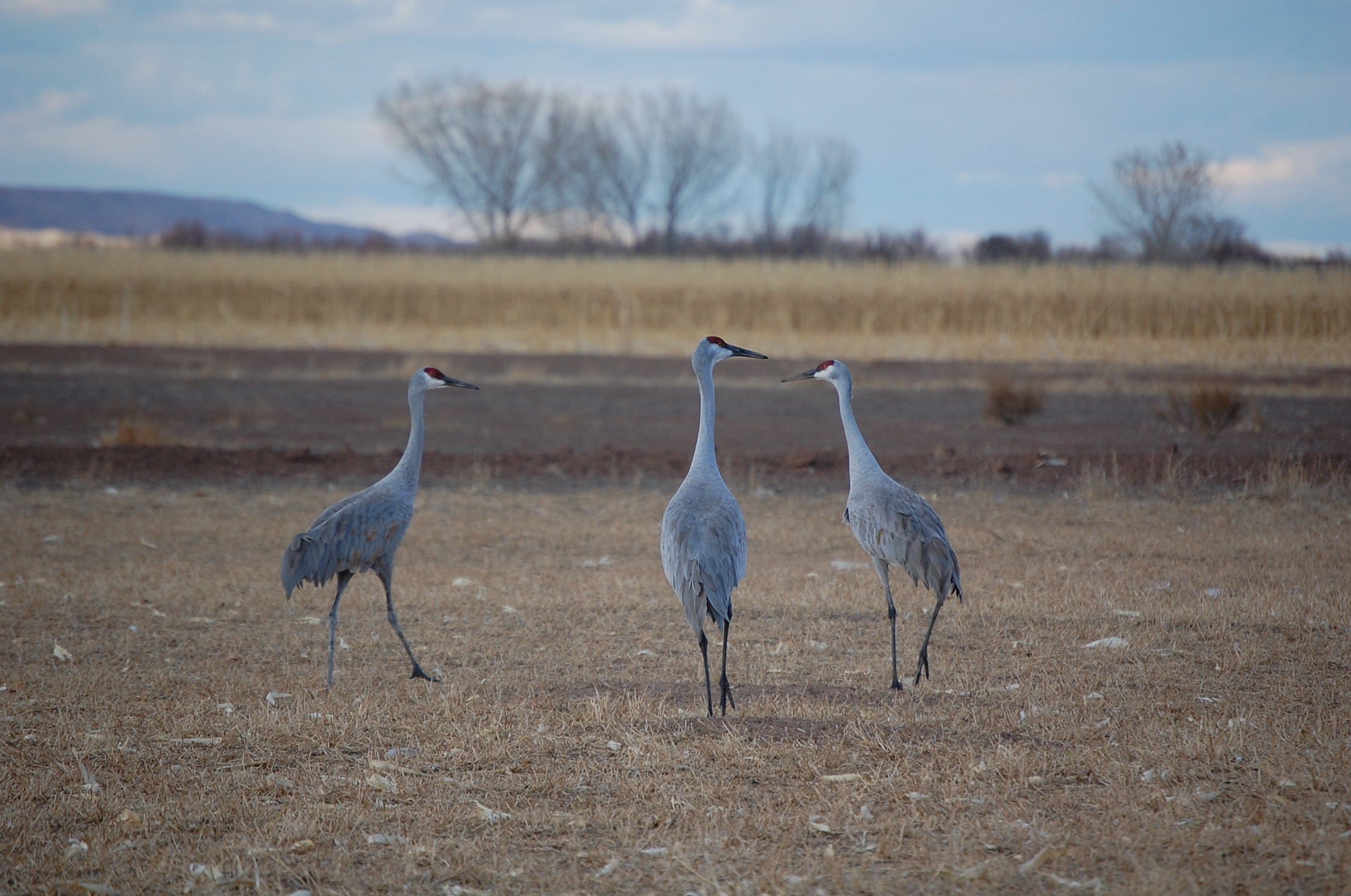
If you’ve had a chance to read The Texian Prisoners, you’ll notice that the men under Damasio Salazar also encounter sandhill cranes, first at Pecos Pueblo and then later along the Rio Grande. The birds, grazing in the stubble of harvested corn and wheat, stay well out of reach. When a horseman canters across the fields, they and the snow geese with them rise in great waves, their cries filling the air.

I have responded viscerally to the call of the cranes since I first heard it here in New Mexico. Abert’s observation that the sound resembled that of the redheaded woodpecker prompted more research. While the woodpecker’s actual call doesn’t seem to have much similarity to the sandhill’s, the sound of its drumming actually does.
Listen for yourself: Here’s the woodpecker drumming (at :31) and here’s the sandhill crane (choose the Garrett McDonald one). Isn’t the similarity amazing?

There’s an important difference to my ear though. The woodpecker is boring a hole in something. The cranes are talking, calling across the sky as they fly overhead through the long shadows of a New Mexico sunset.
How the Texian prisoners must have envied their freedom.
Note: the attached crane images were taken by me at two of my favorite birding places in New Mexico, the Bernardo Waterfowl Area of the Ladd S. Gordon complex south of Belen and the Bosque del Apache National Wildlife Refuge.

 Fiction and Fact From Old New Mexico