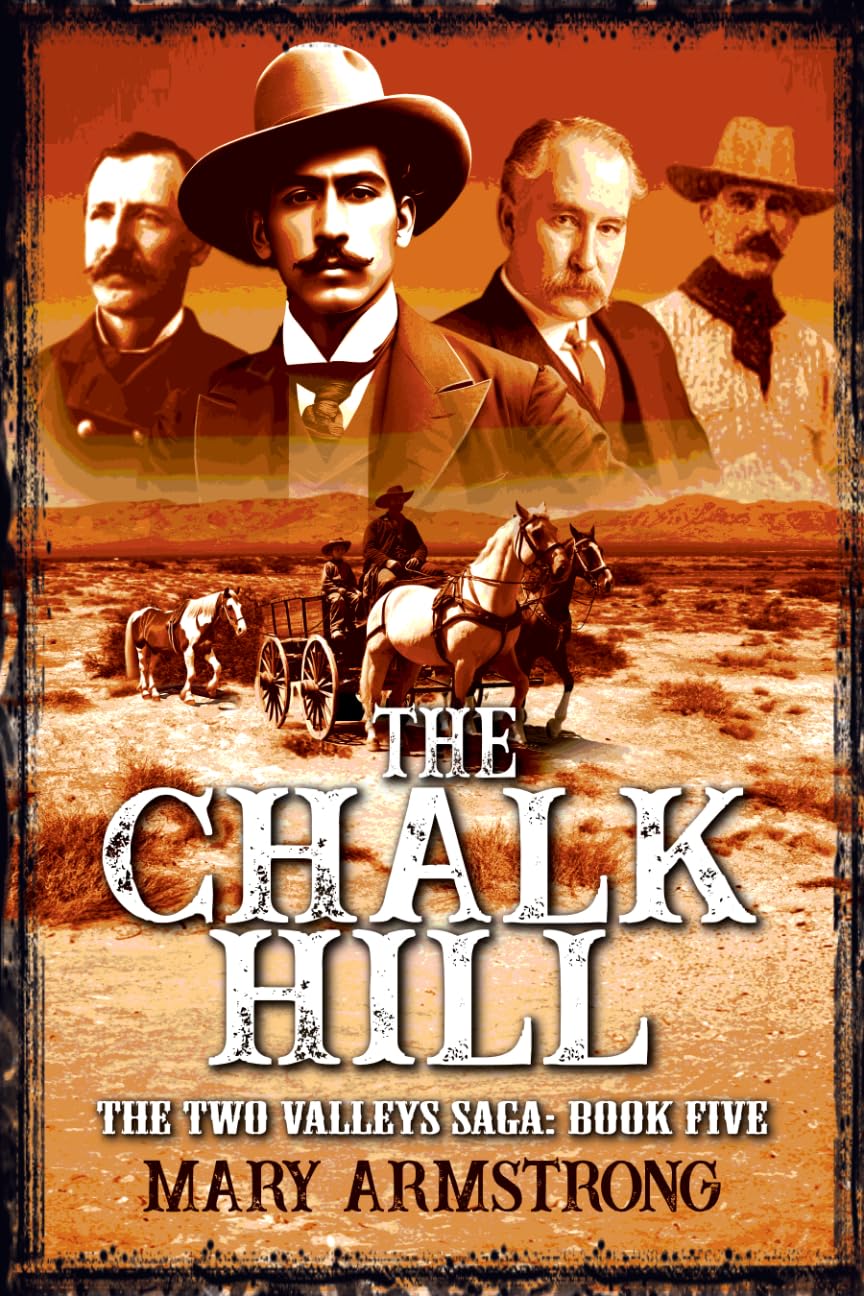
BOOK REVIEW: The Chalk Hill

Unless you’re reading speculative fiction, the only possible outcome for a book about Albert Jennings Fountain is his February 1896 disappearance, along with his eight-year-old son, in the desert of southern New Mexico.

Mary Armstrong’s latest novel, The Chalk Hill, is not speculative. It’s rooted deeply in the New Mexico politics, personalities, and events of New Mexico in the three years leading up to the Fountain disappearance and folds them masterfully into a readable story that kept me thoroughly engaged.

This novel picks up where Armstrong’s The Bisti Badlands left off. If you haven’t read that book, the author and I both suggest you do so before beginning The Chalk Hill,  which plunges immediately into the ongoing story with Fountain’s nephew Jesús as narrator.

Much of this book, which is the fifth in Armstrong’s The Two Valleys Saga, focuses on the newly married young lawyer’s relationship with both Fountain and Fountain’s nemesis, Oliver Lee. Jesús, caught in the middle, provides a way for Armstrong to explore both sides of the conflict between southern New Mexico’s Republicans and Democrats, as well as the “new” and “old” ranchers. The conflict which ultimately resulted in the Fountains’ disappearance.

I say “disappearance” because the bodies of father and son have still not been recovered 130 years later. The mystery of what happened to them and who was responsible continues to bedevil southern New Mexico politics and personal relationships, as descendants of Fountain, Lee, and their partisans defend the actions and words of the late nineteenth century.

If you want to understand why, The Chalk Hill may provide the answers you’re looking for. If you simply want to read a masterfully researched historical fiction set in New Mexico, it’ll provide that, as well.   I recommend it!
Book Review: The Mesilla

Book Review: The Mesilla

If you recognize the name Albert Fountain, you’ll almost certainly associate him with his disappearance in the New Mexico desert in 1896 along with his eight-year-old son. And that’s probably almost everything you know about the man.

But Fountain’s disappearance happened as the result of events that took place well before that early February day. In fact, he’d been a polarizing figure in southern New Mexico for a number of years. He’d defended Billy the Kid in court and made other decisions that brought attention to himself—and not necessarily in a good way.

Mary Armstrong’s novel The Mesilla provides a fictional account of some of the events in Fountain’s career prior to his disappearance. This story, the first in Armstrong’s Two Valleys Saga series, centers around Fountain’s defense of Bronco Sue, a woman who was accused of killing her husband, one of a series of men she’d cohabitated with. The courtroom scenes alone are worth the price of this book.

Armstrong has clearly done her homework. The novel is packed with information and anecdotes about New Mexico’s Mesilla and Tularosa Valleys in the late 1800s, which she feeds seamlessly into the story line. If you’re interested in the history of these areas or are just looking for a well-written historical novel, I recommend The Mesilla.  

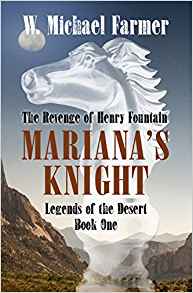
Book Review: Mariana’s Knight


Marianas Knight cover
Publisher: Five Star Publishing (May 17, 2017)
ISBN-13: 978-1432833923

It’s one of New Mexico’s perennial mysteries: What happened to Albert Fountain and his son Henry? By the mid-1890s, southern New Mexico attorney and special prosecutor Albert Fountain had made a lot of enemies. It wasn’t surprising that those enemies would take advantage of Fountains’ trip across the Tularosa basin to take him out.

As a matter of fact, he and his wife expected as much. That’s why Fountain’s wife insisted that he take their eight-year-old son, Henry, with him to Lincoln, where Fountain was scheduled to present evidence against suspected cattle rustlers. Surely no one was wicked enough to kill a little boy, or murder his father while he watched.

When Fountain and the boy disappeared, the entire Territory was stunned.

And that’s where Mariana’s Knight diverges from the historical record. To this day, no one knows what happened to Albert and Henry Fountain in early February 1896. All that remained of them was a patch of blood soaking into the southern New Mexico sand.

Michael Farmer provides an interesting and vivid take on what might have happened that day and afterward and, in the process, gives his reader a look at New Mexico in the late 1800s.

If you’re interested in the Fountain mystery or the history of southern New Mexico, or if you’re just looking for a riveting Western tale, you’ll find Mariana’s Knight a fascinating read. I recommend it!